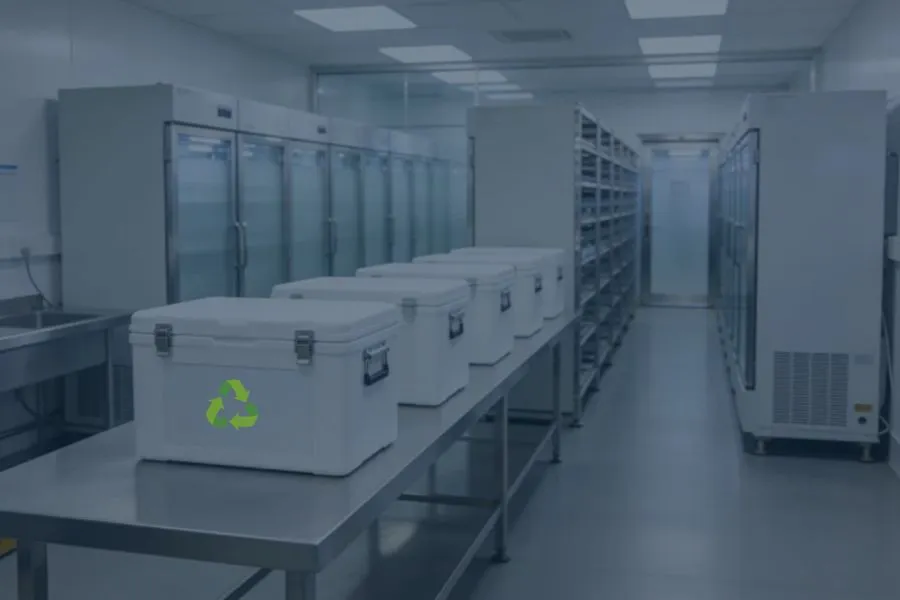
Medical freezer recycling is the right next step when a laboratory freezer, vaccine freezer, or other healthcare cold-storage unit reaches the end of its useful life.
These units are common in hospitals, research labs, pharmacies, universities, clinics, and other healthcare facilities. Unlike a basic household appliance, they may contain refrigerants, compressors, digital controls, circuit boards, wiring, metals, insulation, and other components that need to be handled through the proper recycling process.
For larger healthcare or laboratory cleanouts, EACR Inc. can help coordinate medical equipment recycling alongside other electronics and equipment being retired.
What is a Medical or Laboratory Freezer?
Medical and laboratory freezers are designed to keep sensitive materials within controlled temperature ranges.
How Medical Freezers Differ From Household Freezers
A household freezer is mainly designed for food storage. Medical and laboratory freezers may be used for materials such as:
- Medications
- Vaccines
- Laboratory samples
- Biological materials
- Research materials
Because temperature stability can be critical, these units often include more advanced monitoring, alarms, digital controls, and temperature-management systems than a typical residential freezer.
That also means disposal can involve more than simply removing a large appliance.
Common Types of Laboratory Freezers
Medical and research facilities may use several different freezer styles, including:
- Standard medical freezers
- Upright laboratory freezers
- Chest-style laboratory freezers
- Ultra-low temperature freezers
- Pharmacy freezers
- Vaccine storage freezers
The exact recycling process may vary depending on the size, refrigeration system, condition, and electronics built into the unit.
What Is Inside a Laboratory Freezer?
A laboratory freezer can contain a mix of appliance and electronic components, including
- Compressor
- Refrigerant system
- Copper tubing
- Steel and aluminum
- Electrical wiring
- Circuit boards
- Digital temperature controls
- Sensors
- Insulation
- Plastic components
That mix is why proper dismantling and material separation matter during recycling.
Can Medical Freezers Be Recycled?
Yes. Medical and laboratory freezers can be recycled, but they need to go through an appropriate equipment and appliance recycling process.
Yes, But They Need Proper Processing
A freezer is not one single recyclable material.
Different parts need different handling. Metals such as steel, aluminum, and copper can be separated for recovery. Electronic controls and circuit boards may enter electronics recycling streams, while the refrigeration system needs to be handled correctly before the unit is dismantled.
Large medical freezers should not simply be abandoned, placed into ordinary trash, or dismantled casually.
Medical Freezer Recycling vs. Regular Freezer Recycling
The basic recycling principles are similar to standard appliance recycling, but medical and laboratory environments can add another layer of preparation.
Healthcare facilities may need to consider the following:
- Equipment decontamination
- Inventory tracking
- Internal facility procedures
- Larger quantities
- Documentation
- Coordinated removal from controlled areas
For a broader look at how standard freezer disposal works, see EACR’s freezer recycling guide.
When Should a Laboratory Freezer Be Recycled?
Medical freezers do not need to fail completely before retirement makes sense.
The Freezer No Longer Holds Temperature Reliably
Reliable temperature control is one of the main reasons these units exist.
If a freezer begins drifting outside required temperature ranges, cycling inconsistently, or generating frequent alarms, it may no longer be suitable for sensitive medical or laboratory storage.
Once the unit is removed from service, recycling may be the most practical next step.
Repairs Are No Longer Practical
Older freezers can become expensive to maintain.
Repeated compressor problems, control failures, sensor issues, or refrigeration repairs may eventually cost more than replacing the equipment.
When maintenance becomes a recurring problem, continuing to store or repair the unit may not make operational sense.
The Unit Is Outdated or Unsupported
A freezer may still run but become difficult to maintain because replacement parts, controls, or manufacturer support are no longer available.
That can be especially frustrating for facilities that need dependable cold storage and cannot afford extended downtime.
A Facility Is Upgrading Equipment
Hospitals, laboratories, pharmacies, and universities may replace several units at once during the following:
- Department renovations
- Equipment upgrades
- Lab expansions
- Facility moves
- Energy-efficiency projects
These projects can create multiple large units that need to be removed and recycled together.
The Freezer Has Been Removed From Service
Sometimes a freezer simply is not needed anymore.
Once it has been emptied, cleared for removal, and taken out of active use, recycling is usually better than letting the equipment occupy valuable storage space indefinitely.
How to Prepare a Medical Freezer for Recycling
Preparation should happen before the freezer leaves the facility.
Step 1: Empty the Freezer Completely
Remove everything from inside the unit.
That includes:
- Samples
- Medications
- Biological materials
- Packaging
- Containers
- Storage trays where necessary
No stored medical, laboratory, or research material should remain inside the freezer when it enters the recycling process.
Step 2: Follow Facility Decontamination Procedures
Medical and laboratory equipment may need to be cleaned or decontaminated before removal.
Follow the facility’s existing procedures for equipment that may have been exposed to biological materials, chemicals, or other controlled substances.
The recycler should not receive equipment with unknown contamination still present.
Step 3: Disconnect and Secure the Unit
Once the freezer has been cleared for removal:
- Unplug the unit
- Secure loose shelves and components
- Keep doors controlled during handling
- Make sure cords are not dragging
- Do not cut or puncture refrigerant lines yourself
The refrigeration system should remain intact for proper downstream handling.
Step 4: Identify the Equipment
For larger projects, basic equipment information makes planning much easier.
Record details such as:
- Manufacturer
- Model
- Approximate dimensions
- Quantity
- Condition
- Location in the building
This is especially useful when units are located in basements, upper floors, laboratories, or areas with limited loading access.
Step 5: Arrange the Right Collection Method
The best collection method depends on the project.
A smaller unit may be manageable through an appropriate drop-off or removal arrangement. Hospitals, research labs, universities, and healthcare systems replacing several units may be better suited to coordinated pickup.
If medical freezers are being retired alongside other electronics or laboratory equipment, combining everything into one larger recycling project can make the process much easier to manage.
What Happens During Medical Freezer Recycling?
Medical freezer recycling involves separating the refrigeration system, electronics, metals, and other materials so each can be handled through the appropriate downstream process.
Refrigerant Handling
Medical and laboratory freezers contain refrigerants that need to be properly recovered before the refrigeration system is fully dismantled.
The refrigerant lines should not be cut, punctured, or opened casually before recycling. Proper recovery keeps the refrigerant separate from the rest of the equipment processing.
Compressor and Metal Recovery
Once the refrigeration system has been addressed, major metal components can be separated.
That can include:
- Compressor
- Copper tubing
- Steel housing
- Aluminum components
- Wiring and other metals
These materials can then move into their appropriate recovery streams.
Electronics Processing
Modern laboratory freezers often contain more electronics than a standard household appliance.
Digital displays, temperature controllers, sensors, circuit boards, alarms, and wiring may be separated and processed through electronics recycling channels.
Plastic and Other Material Separation
Plastic housings, insulation, shelving, and other remaining materials are also separated where practical.
Available recycling options depend on the material type and downstream processor, so not every component follows the same path.
Medical Equipment Often Recycled With Laboratory Freezers
Healthcare and laboratory cleanouts rarely involve one piece of equipment at a time. A freezer replacement may be part of a much larger facility upgrade.
Patient Monitor Recycling
Hospitals replacing laboratory or pharmacy equipment may also have older bedside and clinical electronics ready for retirement.
Patient monitors contain displays, circuit boards, wiring, batteries, and potentially stored information that require their own recycling considerations. Learn more about patient monitor recycling.
CPAP Machine Recycling
Hospitals, long-term care facilities, sleep clinics, and other healthcare organizations may also have older respiratory equipment in storage.
CPAP machines contain motors, circuit boards, electronics, and sometimes stored therapy data. EACR’s guide to CPAP machine recycling explains how those devices can be handled.
X-Ray Machine Disposal
Larger healthcare renovation projects may include imaging equipment alongside laboratory and cold-storage units.
Because those systems are much larger and more complex, they require a more structured removal and recycling process. See EACR’s guide to X-ray machine disposal.
Combining several retired equipment types into one organized project can be much easier than arranging separate disposal for every device.
Medical Freezer Recycling for Healthcare and Laboratory Facilities
The scale of a medical freezer recycling project depends heavily on the type of facility and how much equipment is being replaced.
Hospitals and Health Systems
Hospitals may replace several freezers during department upgrades, renovations, or system-wide equipment changes.
Because units may be spread across multiple floors or departments, planning matters. Equipment location, loading access, quantity, and other retired electronics should all be considered before pickup.
Research and Testing Laboratories
Research laboratories may retire freezers because of age, unreliable temperature control, lab relocations, or equipment upgrades.
These projects can also include other laboratory electronics, instruments, computers, and equipment, making a broader recycling plan useful.
Pharmacies and Clinics
Pharmacies and clinics may deal with smaller vaccine or medication-storage freezers.
Even when only one or two units are involved, they still need to be emptied, cleared for removal, and handled through an appropriate recycling process.
Universities and Research Institutions
Universities can generate larger quantities through laboratory renovations, research-program changes, or campus-wide equipment replacement.
Several departments may be retiring freezers and electronics at the same time, making coordinated pickup more practical than handling each unit separately.
Frequently Asked Questions About Medical Freezer Recycling
Can medical freezers be recycled?
Yes. Medical freezers can be processed through appropriate equipment recycling programs that handle refrigeration components, metals, electronics, and other materials.
Are laboratory freezers considered e-waste?
Laboratory freezers contain electronic controls and components, but the entire unit is more accurately treated as a piece of refrigeration equipment with electronic components rather than ordinary small e-waste.
Can an ultra-low temperature freezer be recycled?
Yes. Ultra-low temperature freezers can be recycled, although their size and refrigeration systems may require additional planning before removal.
Do medical freezers contain refrigerant?
Yes. Medical and laboratory freezers typically use refrigerants as part of their cooling systems.
Should refrigerant be removed before recycling?
Refrigerant needs to be properly recovered as part of the recycling process. Facilities should not cut or puncture refrigerant lines themselves.
Do laboratory freezers need to be decontaminated first?
If the freezer has been used around biological, chemical, or other controlled materials, the facility should follow its applicable cleaning and decontamination procedures before releasing the unit for recycling.
Can vaccine freezers be recycled?
Yes. Vaccine freezers can be recycled once medications and other stored materials have been removed and the unit has been properly prepared.
Can medical freezers be recycled with other hospital equipment?
Yes. Medical freezers may be included in broader healthcare equipment recycling projects involving electronics, monitors, respiratory equipment, computers, and other devices.
Can EACR pick up multiple laboratory freezers?
Yes. Pickup can be a practical option for facilities retiring several freezers or combining them with a larger equipment recycling project.
What should I do with materials still stored inside the freezer?
Remove all medications, samples, biological materials, research materials, and other contents before the freezer enters the recycling process. Those materials need to be handled separately under the facility’s own procedures.
Conclusion
Medical and laboratory freezers contain refrigeration systems, compressors, metals, wiring, electronics, insulation, and other materials that need more than ordinary disposal.
Before recycling, completely empty the freezer, follow any required decontamination procedures, keep the refrigeration system intact, and organize basic equipment information for removal.
A single unit may be manageable as an individual recycling project. Hospitals, universities, laboratories, and healthcare organizations replacing multiple freezers may benefit from coordinated pickup alongside other retired medical equipment.
If your facility is replacing laboratory freezers or completing a larger healthcare equipment cleanout, EACR Inc. can help with medical equipment recycling and organized equipment pickup.