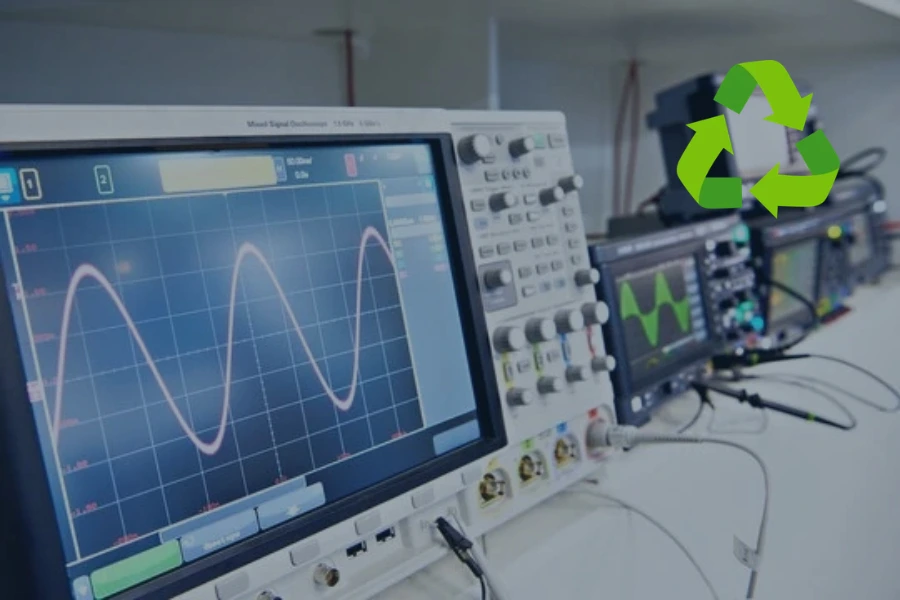
Oscilloscopes are essential tools used by engineers, electronics technicians, laboratories, and manufacturers to measure and analyze electrical signals. As technology advances, older instruments are often replaced with digital models offering improved measurement capabilities, data storage, and connectivity.
However, outdated oscilloscopes contain recyclable materials, including copper wiring, circuit boards, metal housings, and electronic displays. Older analog models may also contain cathode-ray tubes (CRTs), while digital oscilloscopes can store measurement data that requires attention before disposal.
EACR Inc. is an electronics recycling company helping businesses, laboratories, schools, and industrial facilities responsibly recycle outdated test equipment and other qualifying electronics.
Can Oscilloscopes Be Recycled?
Yes. Both analog and digital oscilloscopes can be recycled through appropriate electronics recycling programs. These instruments contain metals and electronic components that can be separated and processed for material recovery.
Common recyclable components include:
- Copper Wiring: Found in electrical connections, internal wiring, and power supplies.
- Aluminum and Steel: Used in protective housings, frames, and internal components.
- Printed Circuit Boards: Contain electronic components used to measure and process signals.
- Electronic Displays: CRTs, LCD screens, and other display technologies.
- Power Supplies: Contain electrical components and recoverable metals.
Different oscilloscope models require different handling. Older CRT instruments may contain leaded glass and high-voltage components, while digital models may have internal batteries or stored data.
Oscilloscopes should be recycled through appropriate electronics collection programs rather than placed in regular curbside recycling.
What is Inside an Oscilloscope?
Oscilloscopes contain a combination of electronic components, metals, and display technologies. Their construction varies depending on whether they’re analog, digital, portable, or designed for industrial use.
Circuit Boards and Microprocessors
Circuit boards control how oscilloscopes receive, process, and display electrical signals.
Modern digital models also contain microprocessors, analog-to-digital converters, memory chips, and other electronics.
These assemblies contain metals and other materials that can be recovered through appropriate circuit board recycling processes.
Copper Wiring and Metal Components
Copper is commonly found in internal wiring, electrical connections, and power supply components.
Oscilloscopes may also contain aluminum heatsinks, steel frames, and metal housings that protect their internal electronics.
These metals can be separated and directed toward suitable recycling processes.
Displays and Screens
The type of display depends on the oscilloscope’s design.
- Analog Oscilloscopes: Traditionally use cathode-ray tubes (CRTs) to display electrical waveforms.
- Digital Oscilloscopes: Commonly use LCD screens or other flat-panel displays.
Older CRT displays require specialized handling because they may contain leaded glass and other materials requiring controlled processing.
Power Supplies and Capacitors
Oscilloscopes contain power supplies, capacitors, and other electrical components that regulate power during operation.
Certain capacitors can retain dangerous electrical charges even after an instrument has been unplugged.
For safety, avoid opening the housing or attempting to remove internal components yourself.
Memory and Data Storage
Many digital oscilloscopes can store waveforms, screenshots, instrument settings, and measurement results.
For businesses and research laboratories, this information may contain sensitive project or testing data.
Organizations retiring digital instruments should review stored information and arrange appropriate removal when necessary. EACR Inc. also offers data destruction services for qualifying electronic storage equipment.
Types of Oscilloscopes That Can Be Recycled
Oscilloscopes come in several designs, each with different components and recycling considerations.
Analog Oscilloscopes
Traditional analog oscilloscopes typically use cathode-ray tubes to display electrical signals.
They often contain bulky metal housings, circuit boards, power supplies, and high-voltage components that require careful handling.
Digital Storage Oscilloscopes (DSOs)
Digital storage oscilloscopes capture and process electrical signals electronically.
They commonly contain microprocessors, memory chips, circuit boards, and flat-panel displays. Some models also store measurements and screenshots.
Mixed-Signal Oscilloscopes (MSOs)
Mixed-signal oscilloscopes combine traditional analog signal measurement with digital signal analysis.
They’re frequently used in electronics engineering, circuit design, and troubleshooting. Their internal components are similar to those found in other digital test instruments.
Handheld and Portable Oscilloscopes
Portable oscilloscopes are compact instruments used by field technicians, electricians, and maintenance personnel.
Some models contain rechargeable batteries that require appropriate handling during recycling.
PC-Based and USB Oscilloscopes
These smaller instruments connect directly to a computer to display and analyze measurements.
Although they may not have built-in screens, they still contain circuit boards, measurement electronics, and metal components that can be recycled.
Are Oscilloscopes Considered Electronic Waste?
Yes. Oscilloscopes are considered electronic waste because they contain circuit boards, electrical wiring, displays, power supplies, and other electronic components.
Like other electronic test equipment, they require appropriate recycling methods to recover suitable materials and manage components that need special handling.
Older CRT-based oscilloscopes have different recycling considerations than modern digital instruments, particularly because CRTs may contain leaded glass and high-voltage components.
Disposal requirements can vary depending on the equipment, its condition, and applicable local regulations. Recycling through a qualified electronics collection program is generally the preferred option.
Safety and Data Considerations Before Disposal
Before recycling an oscilloscope, it’s important to consider potential electrical hazards, display materials, stored information, and internal batteries.
Stored Electrical Energy
Oscilloscopes contain capacitors and other electrical components that may retain dangerous electrical charges after the equipment has been turned off.
Older CRT instruments can also contain high-voltage circuitry.
Avoid opening, dismantling, or attempting to discharge internal components. Any necessary servicing should be performed by qualified personnel.
CRT Displays in Older Oscilloscopes
Traditional analog oscilloscopes often use CRT displays containing glass and other materials that require specialized handling.
Certain CRT components may contain lead, and damaged tubes can present additional physical hazards.
Keep CRT-based oscilloscopes intact and protect their screens during storage and transportation.
Stored Measurements and Research Data
Some digital oscilloscopes store waveforms, screenshots, instrument configurations, and test results.
Businesses and research laboratories should check for stored information before recycling, particularly when instruments have been used for confidential projects.
Rechargeable Batteries
Certain handheld oscilloscopes contain rechargeable lithium-ion or other battery packs.
Check the manufacturer’s instructions and notify your recycling provider about any installed batteries.
Damaged or swollen batteries may require separate handling arrangements.
What Happens During Oscilloscope Recycling?
Oscilloscope recycling involves several steps to safely manage electronic components and recover suitable materials. The exact process depends on the instrument’s design, condition, and the recycling facility.
The general process includes:
- Collection and Inspection: Oscilloscopes are evaluated based on their type, condition, and potential handling requirements, including CRT displays and internal batteries.
- Data Management: Digital instruments may be checked for stored measurements, screenshots, or removable storage that requires appropriate data handling.
- Electrical Safety Assessment: Qualified personnel address potential hazards involving capacitors, high-voltage components, and rechargeable batteries.
- Component Separation: Metal housings, displays, circuit boards, wiring, and other components are separated using appropriate processing methods.
- Material Recovery: Copper, aluminum, steel, and other recoverable materials are directed toward suitable recycling processes.
- Documentation: Businesses and institutions receive certificates of recycling when available for their collection program.
Not every oscilloscope follows the same process. Older analog instruments and modern digital models may require different recycling procedures.
Oscilloscope Recycling for Businesses, Schools, and Laboratories
Oscilloscopes are used across many industries, and organizations often accumulate outdated equipment during upgrades, renovations, and technology replacements.
Electronics and Engineering Laboratories
Research and engineering laboratories frequently replace oscilloscopes as measurement technology improves or project requirements change.
Older instruments can be included in larger laboratory electronics recycling projects.
Schools and Universities
Schools, colleges, and universities often use oscilloscopes in electronics courses, engineering programs, and teaching laboratories.
Outdated analog and digital instruments may be retired when educational facilities upgrade their equipment.
Manufacturing and Quality Control Facilities
Manufacturers use oscilloscopes to analyze electrical signals, troubleshoot machinery, and test electronic products.
These instruments may be replaced during production upgrades or equipment modernization.
Electronics Repair and Calibration Businesses
Repair shops and calibration laboratories rely on oscilloscopes for testing and diagnostics.
As older instruments become difficult to maintain or no longer meet measurement requirements, they may be recycled alongside other laboratory equipment.
How to Prepare an Oscilloscope for Recycling
Preparing an oscilloscope before recycling helps protect its components, address potential safety concerns, and simplify collection.
Step 1: Identify the Oscilloscope
Record the manufacturer, model number, approximate weight, and whether the instrument is analog or digital.
Common manufacturers include Tektronix, Keysight, Rigol, Rohde & Schwarz, and Hantek.
This information helps recycling providers understand the equipment being collected.
Step 2: Disconnect the Equipment
Power down the oscilloscope and disconnect external power, probes, and signal connections according to the manufacturer’s instructions.
Avoid opening the housing or touching internal electrical components, which may retain dangerous electrical charges.
Step 3: Review Stored Data
Check whether the oscilloscope contains saved measurements, screenshots, instrument settings, or removable storage.
Businesses and laboratories should arrange appropriate data removal when necessary.
Step 4: Separate Accessories
Organize probes, test leads, power cables, and other removable accessories.
Functional accessories may be retained for reuse with compatible equipment. Unneeded accessories can be included in recycling arrangements when accepted.
Step 5: Protect the Equipment During Storage
Keep oscilloscopes in a dry, secure location before collection.
Avoid stacking heavy equipment on displays or exposed connectors. Older CRT-based oscilloscopes should remain intact, with their screens protected from damage.
Step 6: Arrange Recycling With EACR Inc.
Contact EACR Inc. with the oscilloscope’s type, condition, approximate quantity, and location.
Our team can discuss available commercial collection options and facility drop-offs for qualifying electronic test equipment.
Where Can You Recycle Old Oscilloscopes?
Several recycling options are available depending on the type of oscilloscope, its condition, and the quantity being collected.
- Commercial Electronics Recycling Pickups: EACR Inc. coordinates pickups for qualifying electronics from businesses, laboratories, manufacturers, and educational institutions.
- Facility Drop-Off: Approved oscilloscopes may be brought to EACR Inc. at 1950 Rutgers University Blvd, Lakewood, NJ 08701. Call (732) 370-4100 beforehand to confirm acceptance.
Frequently Asked Questions About Oscilloscope Recycling
Can Oscilloscopes Be Recycled?
Yes. Analog and digital oscilloscopes contain recoverable metals, circuit boards, and electronic components that can be processed through appropriate electronics recycling programs.
Can You Throw Away an Old Oscilloscope?
Recycling is generally preferable to ordinary disposal, particularly for oscilloscopes containing CRT displays or electrical components requiring specialized handling. Disposal restrictions vary by location and equipment type.
Are Oscilloscopes Considered E-Waste?
Yes. Oscilloscopes are electronic test instruments containing circuit boards, displays, wiring, and other electrical components, making them a form of electronic waste.
Can Old Analog Oscilloscopes Be Recycled?
Yes. Older analog oscilloscopes can be recycled, although their CRT displays and high-voltage components may require additional handling.
Are Digital Oscilloscopes Recyclable?
Yes. Digital oscilloscopes contain processors, circuit boards, electronic displays, wiring, and metal components that may be recovered through specialized recycling.
Do Oscilloscopes Contain Hazardous Materials?
Some older oscilloscopes contain CRT displays with leaded glass, while certain electrical components may require special handling depending on their construction.
Do Oscilloscopes Store Data?
Some digital oscilloscopes store waveforms, screenshots, settings, and measurement results. Businesses should review stored information before recycling these instruments.
Can Broken Oscilloscopes Be Recycled?
Yes. Nonworking oscilloscopes may still contain recoverable metals and electronic components, although damaged equipment may require additional precautions.
Where Can I Recycle an Oscilloscope Near Me?
Specialized electronics recycling facilities may accept oscilloscopes and related test equipment. EACR Inc. offers recycling arrangements for qualifying equipment, including commercial pickups and approved drop-offs at its Lakewood, New Jersey facility.
Recycle Your Old Oscilloscopes With EACR Inc.
Analog and digital oscilloscopes contain recyclable metals, circuit boards, displays, and other electronic components. Proper handling is especially important for older CRT instruments, equipment with stored electrical energy, and digital models containing measurement data.
EACR Inc. is an electronics recycling company helping laboratories, businesses, schools, and industrial facilities recycle outdated test equipment and other qualifying electronics.
Contact our team at (732) 370-4100 to discuss oscilloscope recycling, equipment acceptance, commercial pickups, and facility drop-off arrangements.