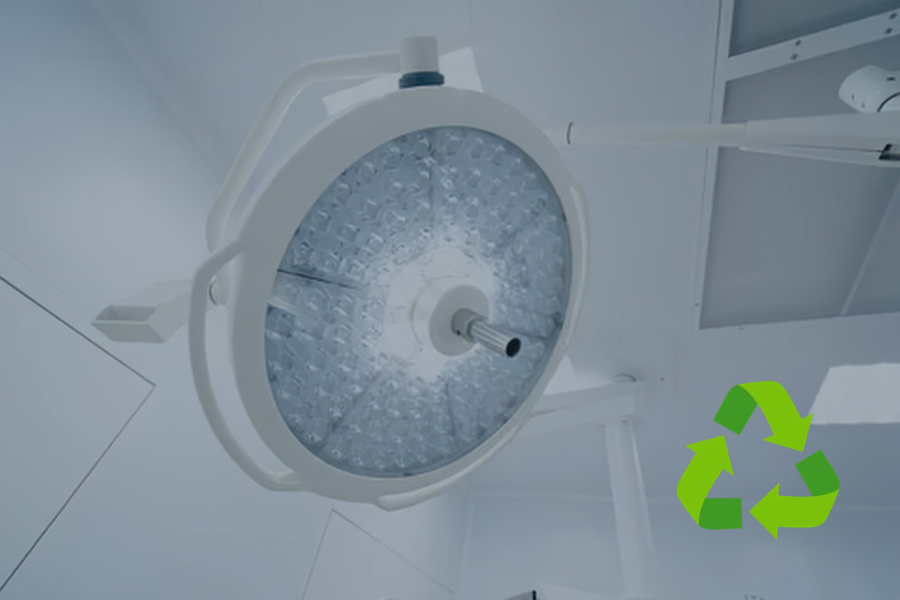
Hospitals and surgical centers regularly upgrade operating rooms with newer equipment, including modern LED surgical lighting systems. Whether a facility is replacing outdated halogen lights, renovating operating rooms, or retiring damaged equipment, old surgical lights contain materials that may be recycled.
Unlike ordinary light fixtures, surgical lights often feature heavy metal support arms, electrical wiring, circuit boards, and specialized lighting components. Many are permanently installed in ceilings or walls, making professional removal an important part of the recycling process.
At EACR Inc., we’re an electronics recycling company helping hospitals, surgical centers, dental practices, and healthcare organizations manage outdated medical electronics. We provide commercial equipment recycling pickups, facility drop-offs, and collection solutions for larger medical equipment replacement projects.
Can Surgical Lights Be Recycled?
Yes. Surgical lights contain recyclable metals, electrical components, and other materials that can be recovered through suitable electronics and metal recycling programs.
Common recyclable components include:
- Steel and Aluminum: Found in mounting assemblies, suspension arms, and structural supports.
- Copper Wiring: Used in electrical connections and internal wiring.
- Circuit Boards: Found in control panels, electronic drivers, and lighting systems.
- LED Assemblies: Contain electronic components and materials that may be recovered through specialized recycling.
- Mounting Hardware: Includes metal brackets, fasteners, and mechanical components.
Surgical lights also contain glass lenses, plastic covers, and other materials that may require separate handling.
The recycling process depends on the lighting system’s construction, technology, and condition. Equipment must also be properly disconnected, removed, and cleaned before entering the recycling process.
Types of Surgical Lights That Can Be Recycled
Surgical lights are designed to provide focused illumination during medical procedures. They’re commonly installed in operating rooms, surgical centers, examination rooms, and other clinical environments.
Different types of surgical lighting systems have different components and recycling requirements.
Ceiling-Mounted Surgical Lights
Ceiling-mounted surgical lights are commonly used in hospital operating rooms and surgical centers.
These systems are installed above surgical tables and typically feature adjustable suspension arms that allow medical professionals to position the light over the treatment area.
Depending on the design, ceiling-mounted surgical lights may have one or multiple lighting heads.
Common components include:
- Steel or aluminum suspension arms
- Ceiling mounting assemblies
- Electrical wiring and power connections
- Lighting heads and control panels
- Mechanical joints and positioning systems
Because these systems can be large and heavy, removing them requires careful planning.
Ceiling mounts and suspension arms should be disconnected and removed by qualified personnel following the manufacturer’s instructions.
Wall-Mounted Surgical Lights
Wall-mounted surgical lights are attached to a wall rather than suspended from the ceiling.
They’re commonly used in procedure rooms, examination areas, and certain smaller treatment spaces.
These systems typically include adjustable arms, lighting heads, electrical connections, and wall mounting hardware.
During recycling, metal support arms and mounting components may be separated from the electrical and lighting assemblies.
Wall-mounted systems that are hardwired or permanently installed should be professionally disconnected before removal.
Mobile Surgical Lights
Mobile surgical lights are portable lighting systems that can be moved between treatment areas.
Unlike permanently mounted systems, these lights generally feature a wheeled base, adjustable support arm, and electrical power connection.
Some models also contain rechargeable backup batteries.
Mobile surgical lights may be easier to relocate than ceiling-mounted systems, although their weight, electrical components, and potential batteries still require consideration during recycling.
LED vs. Halogen Surgical Lights
Surgical lighting systems can also be classified according to the technology used to produce light.
Two common types include:
- LED Surgical Lights: Use light-emitting diodes, electronic drivers, control circuitry, and heat management components to produce illumination.
- Halogen Surgical Lights: Use halogen bulbs, lamp sockets, reflectors, and electrical components to direct light toward the surgical area.
Modern LED surgical lights are generally more energy-efficient and have longer light-source lifespans than traditional halogen systems.
However, both types contain recoverable metals and electrical components. The type of lighting technology helps determine how individual components should be handled during recycling.
What Are Surgical Lights Made Of?
Surgical lights contain a combination of metals, electrical systems, lighting components, and protective materials.
The exact construction varies by manufacturer, model, and mounting configuration.
Steel and Aluminum Frames
Steel and aluminum provide structural support for surgical lighting systems.
These metals may be found in ceiling mounts, suspension arms, wall brackets, lighting housings, and mobile bases.
Because steel and aluminum can be recovered through established recycling processes, they represent an important part of surgical light recycling.
Copper Wiring and Electrical Components
Surgical lights require electrical connections to power their lighting systems and controls.
Copper wiring is commonly found inside support arms, power connections, control assemblies, and lighting heads.
This wiring may be recovered through appropriate wire recycling processes, while other electrical components may require separate handling.
LED Modules and Halogen Bulbs
The lighting assemblies themselves vary depending on the system.
Modern surgical lights typically contain LED modules, circuit boards, and electronic drivers. Older systems may use replaceable halogen bulbs and reflective components.
Bulbs and integrated lighting assemblies may require different recycling methods depending on their design and materials.
Circuit Boards and Control Systems
Many surgical lights contain electronic controls that allow medical professionals to adjust lighting intensity, positioning, and other functions.
These systems may include circuit boards, sensors, switches, dimming controls, and electronic drivers.
Certain metals and electronic materials can be recovered through specialized electronics recycling processes.
Lenses, Reflectors, and Protective Covers
Surgical lights use lenses and reflective materials to distribute illumination across the surgical area.
These components may contain glass, plastic, coated reflectors, or other specialized materials.
Unlike metal frames and wiring, not every lens, plastic housing, or protective cover can be recycled through conventional material recovery programs.
Surgical Light Recycling Options With EACR Inc.
EACR Inc. offers several recycling arrangements for healthcare facilities replacing surgical lights and related medical equipment.
- Commercial Medical Equipment Pickups: EACR Inc. coordinates commercial recycling pickups for qualifying surgical lighting systems and other retired healthcare electronics.
- Facility Drop-Off: Approved surgical light components may be brought to EACR Inc. at 1950 Rutgers University Blvd, Lakewood, NJ 08701. Call (732) 370-4100 before visiting to confirm acceptance. Hours are Monday–Friday, 8 AM–4 PM.
- Operating Room Equipment Cleanouts: Hospitals and surgical centers can inquire about coordinated recycling for surgical lights, patient monitors, electronic equipment, and other accepted medical devices.
- E-Waste Recycling Containers: EACR Inc. offers e-waste recycling containers for larger equipment replacement projects, subject to equipment dimensions, weight, and acceptance requirements.
Why Surgical Lights Require Special Handling Before Recycling
Surgical lights aren’t always as simple to remove as ordinary electrical fixtures.
Many systems are installed in operating rooms, attached to heavy mounting structures, and used in clinical environments where additional preparation may be necessary.
Ceiling Mounts and Suspension Arms
Ceiling-mounted surgical lights often contain heavy suspension arms, mechanical joints, and counterbalanced or spring-loaded positioning systems.
These components are designed to support the lighting heads while allowing precise movement during medical procedures.
Improper removal can create falling-object hazards or unexpectedly release stored mechanical energy.
Qualified personnel should handle electrical disconnection, mounting hardware, and suspension arm removal according to manufacturer instructions.
Patient-Contact Components and Decontamination
Surgical lights are used in clinical environments where positioning handles and other surfaces may come into contact with healthcare professionals during procedures.
Before recycling, facilities should follow established infection-control procedures and the manufacturer’s cleaning instructions.
Reusable handles and other patient-care surfaces may require cleaning or decontamination.
Disposable sterile covers, contaminated materials, and other clinical waste should be removed and managed separately rather than included in ordinary electronics recycling.
Integrated Cameras and Electronics
Some modern surgical lighting systems include integrated cameras, video equipment, or connections to operating room recording systems.
These components may contain additional circuit boards, wiring, and electronic hardware.
If the equipment stores patient images or other protected information, healthcare facilities should follow their approved data removal procedures before recycling.
Connected recording devices and related electronics may also require separate handling.
How to Prepare Surgical Lights for Recycling
Before recycling surgical lights, healthcare facilities should identify the equipment, arrange safe removal, and address any components requiring separate handling.
Step 1: Confirm the Equipment Is Being Retired
Start by confirming that the surgical light is no longer needed for clinical use.
Hospitals and surgical centers should coordinate equipment retirement with their facilities management, maintenance, or biomedical engineering teams.
Determine whether the lighting system will be repaired, relocated, donated, or permanently removed from service.
Step 2: Identify the Lighting System
Determine whether the equipment is ceiling-mounted, wall-mounted, or mobile.
Record the manufacturer, model, and lighting technology.
It’s also helpful to identify additional components, including cameras, control panels, backup batteries, and mounting assemblies.
These details can help the recycling provider assess the equipment before collection.
Step 3: Clean and Decontaminate the Equipment
Surgical lights should be appropriately cleaned and decontaminated before leaving a clinical environment.
Follow the manufacturer’s instructions and your facility’s infection-control procedures.
Remove disposable sterile covers, patient-care materials, and any other clinical waste.
Equipment with unusual contamination may require additional assessment before recycling.
Step 4: Arrange Safe Electrical Disconnection and Removal
Permanently installed surgical lights should be disconnected and removed by qualified personnel.
This includes safely isolating electrical power and addressing heavy ceiling mounts, suspension arms, and wall brackets.
Improper removal can damage surrounding structures or create safety hazards.
Avoid attempting to dismantle counterbalanced assemblies or disconnect hardwired electrical systems without appropriate training.
Step 5: Identify Components Requiring Separate Handling
Before recycling, check whether the surgical light contains components that may need additional preparation.
Examples include:
- Rechargeable backup batteries
- Halogen or other replaceable bulbs
- Electronic control panels
- Cameras and recording equipment
- Broken lenses or glass components
Notify your recycling provider about damaged components or other special handling considerations.
Step 6: Contact EACR Inc. About Recycling
Once the lighting system has been prepared for removal, contact EACR Inc. to discuss available recycling arrangements.
Helpful information includes the manufacturer, model, equipment dimensions, quantity, condition, and whether the system has already been disconnected and removed.
Our team can review the equipment and discuss suitable recycling options for accepted materials.
What Happens to Surgical Lights During Recycling?
Once a surgical lighting system reaches an appropriate recycling facility, its components may be separated and processed according to their materials.
The process generally involves:
- Equipment Inspection: Surgical lights are evaluated based on their construction, materials, and overall condition.
- Component Separation: Lighting assemblies, electrical wiring, circuit boards, and structural components may be separated for processing.
- Metal Recovery: Steel, aluminum, copper, and other suitable metals are directed toward appropriate recycling streams.
- Electronic Component Recycling: Circuit boards, LED drivers, and other electronic materials undergo suitable electronics recycling processes.
Plastic covers, lenses, and other mixed materials may require additional handling.
The exact processing methods and materials recovered depend on the equipment and recycling facility.
Should You Repair, Refurbish, or Recycle Old Surgical Lights?
Not every surgical light needs to be recycled simply because a healthcare facility is upgrading its equipment.
Depending on its condition, several options may be worth considering:
- Repair: Replacing bulbs, fixing electrical problems, or servicing mechanical components may restore a surgical light to working condition.
- Refurbishment: Some functioning lighting systems may qualify for professional refurbishment and continued use after appropriate inspection and testing.
- Recycling: Equipment with significant damage, obsolete components, unreliable performance, or impractical repair costs may be better suited for recycling.
Any surgical lighting system being considered for continued clinical use should undergo appropriate professional evaluation to confirm its safety and performance.
Frequently Asked Questions About Surgical Light Recycling
Can Surgical Lights Be Recycled?
Yes. Surgical lights contain recyclable metals, electrical wiring, circuit boards, and other components that can be recovered through suitable recycling processes.
Are Surgical Lights Considered Electronic Waste?
Powered surgical lights contain electrical and electronic components, including wiring, circuit boards, and control systems, making them suitable for specialized electronics recycling.
Can LED Surgical Lights Be Recycled?
Yes. LED surgical lights contain recyclable metals, wiring, circuit boards, and electronic drivers, although individual lighting components may require separate processing.
Can Old Halogen Surgical Lights Be Recycled?
Yes. Older halogen surgical lights contain recoverable metals and electrical components. Halogen bulbs and other lighting materials should be handled according to the recycling provider’s requirements.
Can Ceiling-Mounted Surgical Lights Be Recycled?
Yes. Ceiling-mounted surgical lights contain recyclable materials, but they should be safely disconnected and removed by qualified personnel before recycling.
Do Surgical Lights Need to Be Decontaminated Before Recycling?
Surgical lights should be assessed and appropriately cleaned or decontaminated according to the healthcare facility’s infection-control procedures and the manufacturer’s instructions.
Can Broken Surgical Lights Be Recycled?
Yes. Even surgical lights with damaged lighting heads, faulty controls, or mechanical problems may contain recoverable metals and electronics.
Can Hospitals Recycle Multiple Surgical Lights at Once?
Yes. Hospitals and surgical centers can inquire about commercial recycling pickups for qualifying surgical lighting systems and larger medical equipment replacement projects.
Can Surgical Lights Be Recycled With Other Medical Equipment?
Yes. Qualifying surgical lights may be included in coordinated recycling projects involving patient monitors, medical electronics, dental equipment, and other accepted devices.
Where Can You Recycle Old Surgical Lights?
Contact EACR Inc. about recycling qualifying surgical lights at our facility located at 1950 Rutgers University Blvd, Lakewood, NJ 08701. Call (732) 370-4100 to confirm equipment acceptance, drop-off requirements, or commercial pickup availability.
Recycle Your Old Surgical Lights With EACR Inc.
Surgical lighting systems contain steel, aluminum, copper wiring, electronic controls, and mechanical components that may be recovered through appropriate recycling processes. Before recycling, healthcare facilities should arrange safe removal, complete any necessary decontamination, and identify components requiring separate handling.
At EACR Inc., we’re an e-waste recycling company helping hospitals, surgical centers, dental practices, and healthcare organizations manage outdated medical equipment. We offer qualifying commercial recycling pickups, facility drop-offs in Lakewood, New Jersey, and e-waste container solutions for larger projects.