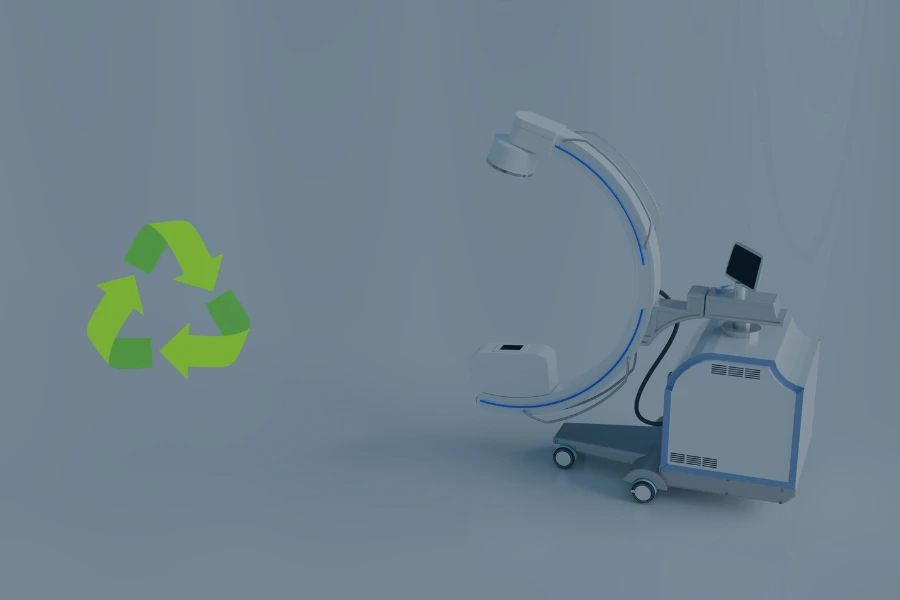
A hospital may replace an outdated C-arm machine, a surgical center might upgrade its fluoroscopy equipment, or a medical facility may have an unused imaging system taking up storage space.
These machines contain substantial amounts of metal, electronic components, wiring, and specialized imaging technology that may be recoverable through recycling. However, their X-ray components and medical applications require careful preparation before disposal.
This guide explains how to recycle C-arm machines, what materials they contain, and how to prepare them for collection. EACR Inc. is an experienced electronics recycling company helping medical facilities and other organizations recycle qualifying electronic equipment.
How to Recycle C-Arm Machines: Options & Quick Answer
C-arm machines can often be recycled through specialized medical equipment recyclers and electronics recycling programs after proper decommissioning. Facilities must address X-ray equipment regulations, specialized components, and any stored patient information before disposal.
Here are five options:
- Electronics Recycling Companies: Contact EACR Inc. to discuss recycling qualifying C-arm components and associated electronic equipment.
- Bulk Recycling Pickups: EACR offers scheduled electronics recycling pickups. Hospitals and surgical centers can discuss larger equipment retirement projects and collection requirements.
- Facility Drop-Offs: Contact EACR’s Lakewood, New Jersey facility to confirm equipment acceptance and arrange an approved drop-off.
- E-Waste Recycling Containers: Organizations can use EACR’s e-waste container programs for approved cables, monitors, and electronic components. Complete C-arm systems generally require separate handling arrangements.
- Manufacturer or Medical Equipment Programs: Check whether the manufacturer or a specialized medical equipment company offers trade-in, refurbishment, or take-back services.
Before collection, have the machine professionally evaluated and decommissioned according to applicable requirements.
What is a C-Arm Machine?
A C-arm is a medical imaging device that uses X-rays to produce images during surgical, orthopedic, and other medical procedures.
Its name comes from the C-shaped structure connecting the X-ray source and imaging detector. This design allows medical professionals to position the equipment around a patient and capture images during procedures.
Common components include:
- X-Ray Tube: Generates X-rays during imaging.
- Image Detector: Captures images using an image intensifier or flat-panel detector.
- C-Shaped Arm: Supports and positions the imaging components.
- Control System: Manages imaging settings and equipment operation.
- Monitor or Workstation: Displays and processes medical images.
Unlike MRI systems, which use magnetic fields and radio waves, C-arm machines use X-ray radiation. Learn more about retiring magnetic resonance equipment in our MRI System Recycling Guide.
What is a C-Arm Machine Made Of?
C-arm machines contain a combination of structural metals, electrical components, imaging hardware, and specialized materials.
Their exact composition depends on the manufacturer, model, and imaging technology.
Steel and Aluminum
The C-shaped support structure, mobile base, equipment frame, and mounting brackets commonly contain steel, aluminum, or other structural metals.
These materials may be separated for recycling after appropriate dismantling.
Copper Wiring and Electrical Components
Copper is found in wiring, electrical connections, transformers, motors, and other internal components.
These electrical assemblies support the machine’s imaging functions, movement, and power distribution.
Circuit Boards and Imaging Electronics
C-arm systems contain printed circuit boards, processors, electrical controls, and components that manage imaging operations.
Modern systems may also include digital imaging hardware, monitors, and computer workstations.
X-Ray Tubes and Shielding Materials
C-arm machines contain X-ray tube assemblies and shielding components that may include lead and other materials requiring special handling.
Certain X-ray components may also contain materials such as beryllium or specialized insulating oils.
X-ray tubes should not be broken or dismantled by unqualified personnel. Their construction and potential hazardous materials require proper evaluation.
For more information about disposing of X-ray-generating equipment, read our X-Ray Machine Disposal Guide.
Plastic Housings and Other Components
Protective covers, cable insulation, handles, and other external components may contain different plastics.
Material recovery depends on the machine’s construction and the recycling facility’s processing capabilities.
How to Prepare a C-Arm Machine for Recycling
C-arm machines require more preparation than ordinary electronic equipment. Medical facilities should address equipment regulations, patient information, potential contamination, and transportation before arranging collection.
1. Confirm the Machine Is Ready for Retirement
Determine whether the equipment will be recycled, refurbished, sold, or returned to the manufacturer.
Record the manufacturer, model number, serial number, and current equipment condition.
This information helps recycling and removal providers identify the machine and determine appropriate handling requirements.
2. Arrange Professional Decommissioning
Have qualified medical equipment technicians or authorized service personnel disconnect and decommission the C-arm.
These machines contain high-voltage electrical components and specialized X-ray assemblies that require appropriate precautions.
Do not attempt to dismantle the imaging system without the necessary qualifications.
3. Address Radiation Equipment Requirements
Check with the appropriate state radiation control authority about registration, transfer, and disposal requirements.
Conventional C-arm machines generate X-rays when operating and do not remain radioactive after being switched off. However, simply unplugging a functional machine may not satisfy applicable decommissioning requirements.
For example, New Jersey requires registered X-ray equipment owners to notify the state when machines are sold, relocated, stored, or disposed of.
4. Remove Stored Patient Information
Determine whether the C-arm or its connected workstation stores patient images, examination records, or other protected health information.
Follow the facility’s data retention and secure erasure procedures before releasing the equipment.
Include associated computers, hard drives, removable media, and other storage devices in this review.
5. Clean and Decontaminate the Equipment
Follow facility infection control procedures to clean equipment previously used in operating rooms or other patient care areas.
Potential biological or chemical contamination must be addressed through appropriate medical or hazardous waste procedures.
6. Identify Specialized or Hazardous Components
Have qualified personnel evaluate X-ray tubes, shielding materials, batteries, and older electrical components.
Certain materials may require separate handling or specialized downstream processing.
Do not crush, break, or unnecessarily dismantle these components.
7. Arrange Safe Transportation and Recycling
Contact your recycling provider to confirm acceptance and discuss equipment dimensions, weight, facility access, and collection arrangements.
Secure movable parts and coordinate appropriate handling of the C-arm structure, mobile base, and associated workstation.
What Happens to C-Arm Machines During Recycling?
After a properly decommissioned C-arm reaches an appropriate recycling operation, it may undergo several processing steps:
- Inspection and Sorting: Equipment is identified and evaluated for materials requiring specialized handling.
- Component Separation: Qualified personnel separate designated X-ray assemblies, electronics, and other components where appropriate.
- Material Processing: Suitable metals, circuit boards, wiring, and plastics are separated through appropriate recycling methods.
- Material Recovery: Recoverable materials are directed to downstream recycling operations.
- Documentation: Applicable certificates of recycling are provided according to project requirements.
The exact process varies by equipment type and facility. Specialized X-ray components may require different processing methods than ordinary electronics.
Frequently Asked Questions About C-Arm Machine Recycling
Can C-Arm Machines Be Recycled?
Yes. Many C-arm machines contain metals, wiring, electronics, and other materials that can be recovered through appropriate recycling processes. Professional decommissioning and recycling acceptance checks are necessary.
Are Old C-Arm Machines Radioactive?
Conventional C-arm machines generate X-rays during operation and do not remain radioactive after shutdown. However, their X-ray tubes and other components may contain materials requiring specialized handling.
Do C-Arm Machines Contain Hazardous Materials?
Some C-arm machines contain lead shielding, specialized X-ray tube materials, and other components requiring careful management. Older equipment may contain additional regulated materials depending on its construction.
Can Hospitals Sell or Donate Old C-Arm Machines?
Yes. Functional C-arm machines may qualify for resale, refurbishment, or donation to facilities authorized to operate them. Damaged, obsolete, or unsupported equipment may be better suited for recycling.
Can You Scrap a C-Arm Machine for Metal?
C-arm machines should not be sent directly for ordinary metal scrapping without proper evaluation. X-ray components, regulated materials, and equipment decommissioning requirements must be addressed first.
Do C-Arm Machines Store Patient Information?
Some digital C-arm systems and connected workstations store patient images or examination information. Medical facilities should securely manage this information before recycling or transferring the equipment.
How Much Does C-Arm Machine Recycling Cost?
Costs depend on the machine’s size, weight, location, removal requirements, transportation, and any specialized material handling. Facilities should request a quote based on their specific equipment.
Can Other Medical Equipment Be Recycled During the Same Project?
Yes, depending on the equipment and recycling provider. Hospitals may also retire computers, monitors, and smaller medical devices during equipment upgrades.
Different devices have different recycling requirements. For example, see EACR’s CPAP Machine Recycling Guide for information about recycling respiratory equipment.
Recycle Old C-Arm Machines With EACR Inc.
C-arm machines contain structural metals, wiring, circuit boards, imaging components, and specialized materials that require proper management when equipment is retired.
Professional decommissioning, secure handling of patient information, and evaluating regulated components are important steps before recycling.
EACR Inc. provides electronics recycling services for qualifying equipment from hospitals, surgical centers, medical offices, and other organizations.
We offer bulk electronics recycling pickups, approved facility drop-offs, and collection programs for related medical electronics, subject to equipment acceptance.
Contact EACR Inc. at (732) 370-4100 to discuss your C-arm recycling needs and confirm available arrangements.