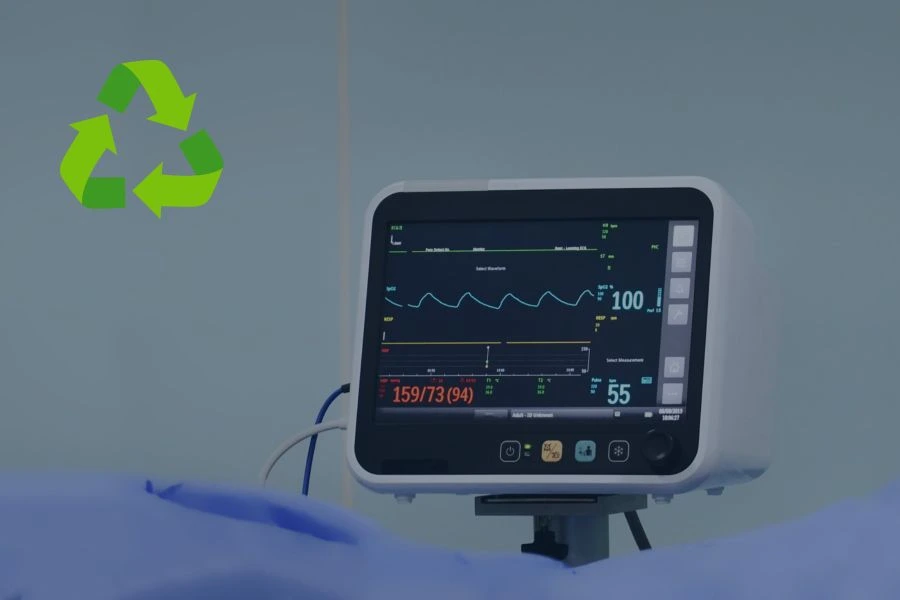
Patient monitor recycling matters because these devices are used everywhere from hospitals and surgery centers to clinics, long-term care facilities, and medical offices. Once a monitor becomes outdated, unreliable, or no longer supported, it should not simply be treated like ordinary office equipment.
Patient monitors contain displays, circuit boards, wiring, power components, and in some cases internal storage that may hold patient or device information. That makes proper medical electronics recycling the better route. If your facility is replacing monitors or clearing out older equipment, EACR Inc. can help with electronics recycling services built around organized collection and processing.
What is Inside a Patient Monitor?
Patient monitors may look like simple screens from the outside, but internally they are complex electronic systems.
Display and Touchscreen Components
Most modern patient monitors use LCD or LED displays, often paired with touchscreen controls.
These screens are surrounded by plastic and metal housing that protects the internal electronics. Depending on the model, the display assembly may need to be separated from the rest of the unit during recycling.
Circuit Boards and Processors
Inside the monitor are control boards, microprocessors, sensors, and communication components that manage readings and device functions.
These electronic boards may contain recoverable metals and other materials, but they need to be processed through proper electronics recycling channels.
Power Supplies and Batteries
Patient monitors may use internal power supplies along with rechargeable backup batteries.
Those batteries allow the device to continue operating during transport or short power interruptions. Once the monitor is retired, the battery may need to be separated and handled through the appropriate battery recycling process.
Cables, Sensors, and Connectors
Patient monitors can also include:
- Patient leads
- Power cords
- Network connections
- Sensor ports
- Peripheral connectors
These accessories may be removed and sorted separately depending on the recycling process.
Data Storage Components
Some patient monitors contain internal memory, removable storage, or other components that store information.
That may include patient records, monitoring history, device settings, or system data. Before recycling, healthcare facilities should understand what information is stored and whether any media needs to be removed or securely erased.
Are Patient Monitors Considered E-Waste?
Yes. Patient monitors are electronic medical devices, which means they fall into the broader category of electronic waste once they are retired.
They should not be treated like normal office trash, and they are also different from regulated medical waste such as used sharps, contaminated materials, or biological waste.
A retired patient monitor contains electronics, circuit boards, wiring, metals, plastics, and sometimes batteries. Proper electronics recycling allows those components to be separated and routed appropriately instead of sending the entire device into ordinary waste.
Data Security and Disposal Considerations
Recycling a patient monitor is not only about the physical device. Data security can matter too.
Patient Information May Be Stored on the Device
Depending on the model and how the monitor was used, stored information may include the following:
- Patient records
- Monitoring history
- Device settings
- Network information
Healthcare facilities should not assume a monitor is empty just because it has been taken out of service.
Remove or Secure Stored Data Before Recycling
Before recycling, facilities should review the device for internal storage or removable media.
That may involve:
- Performing a factory reset
- Removing SD cards or other media
- Clearing stored records
- Using secure data destruction where necessary
For healthcare organizations, this step is especially important when equipment may contain protected information.
Keep Patient Monitors Separate From Regulated Medical Waste
Patient monitors should not be mixed with contaminated medical waste.
The electronics themselves belong in an electronics recycling stream. Any disposable accessories or contaminated components should be handled according to the facility’s normal medical-waste procedures.
Keeping those streams separate makes the recycling process much cleaner.
When Should a Patient Monitor Be Recycled?
There is no single age when every patient monitor needs to be replaced. The decision usually comes down to condition, support, reliability, and operational needs.
The Monitor No Longer Functions Reliably
If a monitor has recurring display problems, inconsistent readings, failing ports, battery issues, or other reliability concerns, continued use may no longer make sense.
Once it has been removed from clinical service, recycling becomes the next step.
The Device Is Outdated or Unsupported
Older equipment may still power on but no longer receive manufacturer support, software updates, or replacement parts.
That can make it difficult for a hospital or clinic to keep the device in active service.
The facility is upgrading equipment.
Healthcare facilities regularly standardize or upgrade equipment across departments.
A hospital replacing dozens of monitors may suddenly have a large group of functioning but retired units that need an organized recycling plan.
Repairs Cost More Than Replacement
At some point, repairing an older monitor may no longer be practical.
If replacement parts are difficult to source or repair costs keep increasing, facilities may decide to retire the device instead.
The Monitor Has Been Removed From Clinical Use
Sometimes a unit is simply no longer needed.
That can happen during a department renovation, equipment consolidation, facility closure, or move. Once the monitor is no longer being redeployed, it should be processed properly rather than left in storage indefinitely.
Patient Monitor Recycling Process
A structured recycling process helps keep equipment, data, batteries, and accessories organized.
Step 1: Inventory the Equipment
Start by identifying what is actually being retired.
Useful details include:
- Number of monitors
- Manufacturer and model
- Overall condition
- Batteries
- Accessories
- Potential stored data
For larger healthcare facilities, even a basic inventory makes pickup and processing easier.
Step 2: Remove Patient Data
Before the equipment is recycled, stored information should be addressed.
Remove removable media where appropriate, perform approved data-clearing steps, and use secure destruction if the device contains storage that cannot simply be reset.
Step 3: Separate Accessories and Batteries
Power cords, batteries, patient leads, and other removable components may need separate handling.
Sorting these items before collection can make the recycling process more efficient.
Step 4: Dismantle the Equipment
During processing, the monitor can be separated into major material streams, such as:
- Circuit boards
- Wiring
- Plastics
- Metal housings
- Displays
- Batteries
This allows different components to move into the appropriate downstream recycling channels.
Step 5: Process Circuit Boards and Recoverable Materials
Circuit boards, wiring, and metal components are routed to processors that can recover usable materials.
The goal is to separate and process the electronic components rather than treating the entire monitor as one piece of waste.
Step 6: Provide Recycling Documentation
Healthcare organizations and commercial generators may also need documentation for internal records.
EACR can provide certificates of recycling for qualifying projects, helping facilities document how retired electronics were handled.
Medical Equipment Often Recycled With Patient Monitors
Healthcare facilities rarely retire one type of device at a time. Patient monitors are often part of a larger equipment replacement or cleanout.
Blood Pressure Monitor Recycling
Standalone blood pressure monitors are frequently used alongside patient monitoring systems in clinics, hospitals, and long-term care settings.
If those units are being replaced too, they can often be included in the same broader electronics recycling project. Learn more about blood pressure monitor recycling.
CPAP Machine Recycling
Sleep clinics, respiratory departments, and healthcare facilities may also have older CPAP devices that are no longer in service.
These machines contain electronics, motors, circuit boards, and sometimes stored therapy data. EACR has a full guide to CPAP machine recycling.
Nebulizer Machine Recycling
Nebulizers are another common piece of respiratory equipment that may become part of a medical electronics cleanout.
Older or non-working devices should be separated from contaminated accessories and handled through the appropriate electronics recycling process. See the guide to nebulizer machine recycling.
X-Ray Machine Disposal
Larger healthcare equipment projects may extend well beyond small bedside devices.
Hospitals and imaging facilities replacing older systems may also need to coordinate X-ray machine disposal as part of a broader equipment retirement project.
When multiple device types are being removed at once, handling them through one organized medical electronics recycling program is usually much easier than treating every piece as a separate disposal problem.
Patient Monitor Recycling for Healthcare Facilities
Different healthcare organizations generate retired patient monitors in different ways. The right recycling setup depends on how much equipment is involved, how often devices are replaced, and whether data or documentation needs to be handled as part of the project.
Hospitals
Hospitals can generate patient monitors in much larger quantities, especially during equipment upgrades, department renovations, or system-wide replacements.
That makes organization important. Facilities may need to track the number of devices being retired, handle stored data properly, separate batteries and accessories, and keep documentation for internal records.
For larger hospital projects, scheduled pickup is usually more practical than trying to manage devices one at a time.
Clinics and Medical Offices
Clinics and smaller medical offices may only replace a few monitors at a time.
In those cases, the recycling process can be simpler, but the same basic concerns still apply. Stored information should be addressed, removable accessories should be separated where appropriate, and the monitors should be kept out of normal trash.
Long-Term Care Facilities
Long-term care facilities often manage a mix of medical electronics across resident rooms, nursing stations, and treatment areas.
Patient monitors may be replaced alongside blood pressure equipment, respiratory devices, computers, and other electronics. A recurring or centralized recycling process can make equipment turnover much easier to manage.
Surgery Centers and Outpatient Facilities
Surgery centers and outpatient facilities use patient monitoring equipment throughout treatment and recovery areas.
When those devices are upgraded or removed from service, facilities may need to coordinate multiple units at once while also making sure patient information and accessories are handled properly.
Medical Equipment Providers
Medical equipment providers may receive returned, outdated, damaged, or non-functional monitors that cannot be placed back into circulation.
Instead of letting those units accumulate in storage, an organized electronics recycling program provides a clear path for equipment that has reached the end of its useful life.
How to Prepare Patient Monitors for Recycling
A little preparation before collection can make the entire recycling process much cleaner.
Remove Patient Information
Before recycling, review the monitor for stored patient or facility information.
Depending on the device, preparation may include:
- Performing a factory reset
- Removing SD cards
- Removing other storage media
- Following the facility’s approved data-clearing process
If internal storage cannot be cleared normally, secure data destruction may be appropriate.
Disconnect Accessories
Remove loose or detachable accessories when practical, including:
- Power cords
- Batteries
- Patient leads
- Sensors
- Removable peripherals
These components may need to be sorted or recycled separately from the main monitor.
Identify Damaged Units
Severely damaged equipment should be identified before collection.
A cracked housing, damaged battery, exposed wiring, or other physical problem may require different handling than an intact monitor.
Keep Equipment Organized
For larger healthcare cleanouts, keep retired equipment grouped by device type and maintain an approximate count.
You do not need a perfect inventory, but knowing whether you have five monitors or fifty makes planning pickup and processing much easier.
Arrange Drop-Off or Pickup
Smaller quantities may be manageable through drop-off.
Hospitals, long-term care facilities, medical providers, and other organizations dealing with larger equipment volumes may find scheduled pickup much more practical.
The collection method should match the size of the project instead of making the process harder than it needs to be.
Why Choose EACR Inc. for Patient Monitor Recycling
Medical Electronics Recycling Support
Patient monitors are not ordinary consumer electronics.
EACR can support recycling projects involving electronics from hospitals, clinics, medical offices, long-term care facilities, and other healthcare environments.
Pickup and Collection Options
Larger equipment projects often need more than a simple drop-off option.
Pickup and collection support can make it easier to manage multiple patient monitors or broader medical equipment cleanouts without moving everything individually.
Data Destruction Support
Some patient monitors may contain internal storage or other components holding sensitive information.
When data security is part of the project, EACR can help coordinate appropriate data destruction alongside the electronics recycling process.
Certificates of Recycling
Healthcare facilities may need documentation showing how retired electronics were handled.
Certificates of recycling can provide a useful record for internal tracking, compliance procedures, and facility documentation.
Broader Medical Equipment Recycling
Patient monitors are often only one part of the equipment being retired.
A facility may also be replacing CPAP machines, blood pressure monitors, nebulizers, imaging equipment, computers, and other electronics at the same time. Combining those devices into a larger recycling project can make collection and logistics much easier.
Frequently Asked Questions About Patient Monitor Recycling
Can patient monitors be recycled?
Yes. Patient monitors can be processed through electronics recycling programs that handle circuit boards, wiring, displays, plastics, metals, batteries, and other components.
Can hospitals throw away old patient monitors?
Old patient monitors should generally be routed through an appropriate electronics recycling process rather than placed in normal facility trash.
Do patient monitors store patient information?
Some models can store patient data, monitoring history, device settings, or other information. Facilities should review each device before recycling.
Should data be erased before recycling a patient monitor?
Yes. Stored data should be removed or securely handled before the equipment leaves the facility.
Do patient monitors contain batteries?
Many portable or mobile patient monitors contain rechargeable backup batteries.
Can the batteries be recycled separately?
Yes. Batteries can often be removed and routed through the appropriate battery recycling process.
Can blood pressure monitors be recycled with patient monitors?
They can often be included in the same broader medical electronics recycling project, depending on the recycler and the equipment involved.
Can CPAP machines and nebulizers be recycled at the same time?
Yes. Healthcare facilities may be able to combine multiple types of retired electronic medical equipment into one organized recycling project.
Does EACR recycle larger medical equipment like X-ray machines?
Yes. EACR also supports recycling and disposal projects involving larger medical electronics, including X-ray equipment.
Can healthcare facilities schedule pickup for multiple devices?
Yes. Scheduled pickup is often a practical option for hospitals, clinics, medical providers, and facilities managing larger quantities of retired equipment.
Are certificates of recycling available?
Yes. Certificates of recycling can be provided for qualifying commercial and healthcare recycling projects.
Conclusion
Patient monitors contain circuit boards, displays, wiring, power components, batteries, and sometimes stored information, which makes them much more than ordinary trash.
Proper patient monitor recycling gives healthcare facilities a cleaner way to manage outdated equipment while addressing data security, battery handling, and material recovery at the same time.
Smaller quantities may work well through drop-off, while hospitals and other healthcare organizations managing larger cleanouts may benefit from scheduled pickup and a more structured recycling program.
If your facility has patient monitors or other medical electronics ready for retirement, EACR Inc. can help with organized electronics recycling, pickup, and broader medical equipment recycling support.