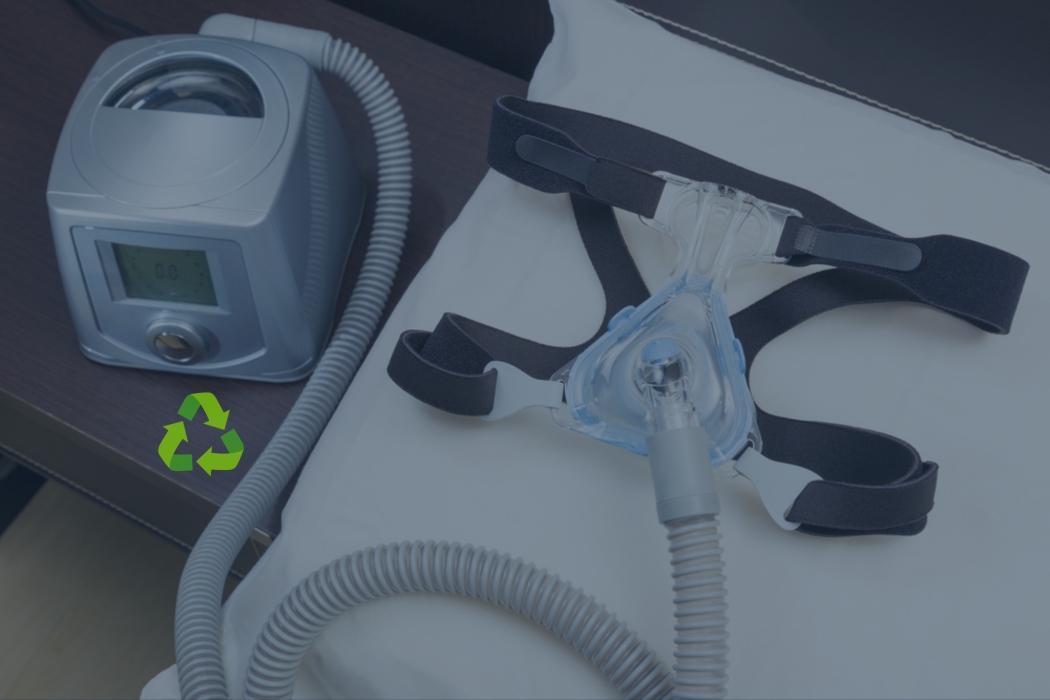
CPAP machine recycling is not the same as throwing away a small appliance. More than 8 million people in the United States use CPAP therapy every night, and each of those devices is an electronic medical unit, not just a plastic box with a hose (CPAP.com, 2025). Inside every CPAP machine are motors, circuit boards, wiring, and data storage components.
Because they contain electronics, most municipalities classify them as e-waste, which means they cannot legally be placed in regular trash. On top of that, many CPAP machines store therapy data, which raises legitimate privacy concerns if the device is discarded improperly.
There is also a big difference between donation, resale, and recycling. CPAP machines are regulated as prescription medical devices under FDA oversight. That means they cannot legally be sold directly from one individual to another without proper authorization. Meanwhile, masks, tubing, and filters are replaced regularly, creating a growing waste stream that most curbside recycling programs will not accept. Donation may be possible in limited cases, but recycling is often the safest and most compliant path—especially for older, damaged, or recalled units.
If you need structured CPAP machine recycling for your facility or healthcare organization, EACR is an electronics recycling company providing reliable e-waste recycling services.
What is Inside a CPAP Machine?
CPAP machines are compact, but internally, they are complex electronic systems. Understanding what is inside helps explain why proper recycling matters.
Compressor Motor Assembly
At the core of every CPAP device is a small electric motor that generates continuous air pressure. This assembly typically includes a metal housing and copper windings. These materials have recoverable value, but they must be separated properly through electronics recycling processes.
Circuit Boards and Microprocessors
Modern CPAP units contain multiple circuit boards that control airflow, pressure calibration, and therapy tracking.
These boards include microprocessors, pressure sensors, and memory chips that record sleep data. Because they contain electronic components, they must be processed as e-waste.
Power Supply and Capacitors
CPAP machines rely on internal transformers and voltage regulation systems to convert household electricity into stable operating power. Capacitors within the device store small electrical charges and regulate performance. These components should be handled carefully during dismantling.
Plastic Housing
The exterior housing is usually made of ABS or polycarbonate plastic. These mixed polymers are durable but are not typically accepted in standard curbside recycling streams. Controlled material separation is required for proper recovery.
Humidifier Chamber
Many CPAP units include an integrated humidifier chamber made of polycarbonate plastic. Inside are heating plates, seals, and gaskets. While some parts may be recyclable, they must be dismantled and sorted correctly.
Data Storage Components
CPAP machines often contain SD cards or internal memory that store sleep therapy data. This information may qualify as protected health information (PHI). Devices should be factory reset and storage media removed before recycling.
CPAP machines are electronic medical devices, not simple consumer gadgets. Their internal components require structured recycling—not landfill disposal.
Are CPAP Machines Considered E-Waste?
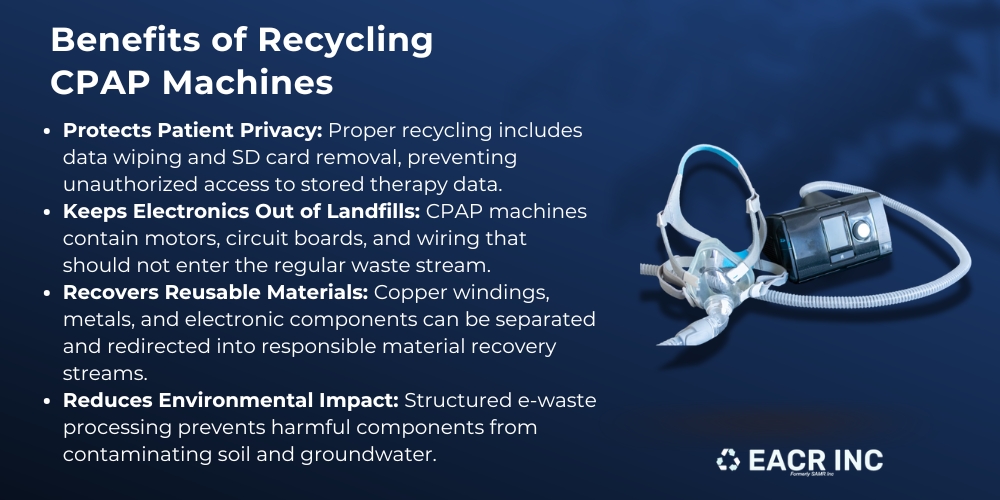
Yes, in most jurisdictions, CPAP machines are classified as electronic waste.
Because they contain circuit boards, wiring, and electrical components, many municipalities prohibit placing them in regular trash. Landfill bans on electronics are common, and curbside recycling programs do not accept devices like CPAP machines.
Legal Considerations Before Disposal
Disposing of a CPAP device involves more than environmental responsibility. There are legal factors to consider as well.
Prescription Medical Device Rules
CPAP machines are regulated prescription medical devices. Individuals cannot legally resell them directly to other consumers without proper authorization. Only approved resellers and medical equipment providers can handle resale under FDA oversight.
Data Privacy and HIPAA
Many devices store sleep therapy data, including usage hours and pressure settings. In healthcare settings, this data may fall under HIPAA protections. Before recycling, users should perform a factory reset and remove any SD card or storage media to protect personal information.
Recall Considerations
In 2021, Philips issued a major recall related to degrading internal foam components in certain CPAP devices. Recalled machines are generally not eligible for donation and should instead follow manufacturer’s repair or replacement programs. Donation organizations typically exclude recalled units to prevent the redistribution of potentially unsafe equipment.
Understanding these legal and regulatory factors ensures CPAP machine recycling is handled safely, ethically, and in compliance with current standards.
Donation vs Recycling — What is Realistic?
When people think about CPAP machine recycling, donation is often the first idea. Sometimes that works. Often, it does not. Understanding the difference helps you make the right call.
When Donation Makes Sense
Donation can be appropriate if the machine is in solid working condition, typically under five to six years old, and replacement parts are still manufactured. Many organizations also require the device to come from a smoke-free household.
If the unit powers on properly, maintains pressure, and has no known defects or recalls, it may qualify.
Even then, organizations have strict intake guidelines. Machines must usually be complete, clean, and functional.
Why Many Machines Cannot Be Donated
A large percentage of older devices do not qualify for donation. Broken motors, pressure instability, outdated firmware, or excessive wear automatically disqualify many units. Recalled models, especially those involved in the 2021 foam recall, are typically rejected outright. Donation programs do not want to redistribute potentially unsafe equipment.
If the device is unreliable, damaged, or unsupported by the manufacturer, recycling is the responsible option.
What Donation Programs Actually Accept
Most donation programs accept:
- CPAP or BiPAP machines in working condition
- Unopened, factory-sealed supplies
- Accessories that are still in original packaging
Used masks, tubing, and filters are generally not accepted. Hygiene limitations are strict. Once a mask or hose has been used, it cannot safely be redistributed because it has been exposed to respiratory moisture and bacteria. This is a medical device, not a blender. Cleanliness standards are high for a reason.
CPAP Supply Disposal: Masks, Tubing, Filters
This is where CPAP machine recycling becomes more complicated. The machine itself is recyclable. The accessories are far more limited.
Silicone Masks
CPAP masks are made from medical-grade silicone and plastics. Once worn, they cannot be reused or donated. There are very few recycling programs that accept used silicone masks, and most communities do not have a dedicated processing stream for them.
In reality, used masks typically end up in a landfill unless a specialty recycler is available.
PVC Tubing
CPAP tubing is usually made from PVC or mixed plastics. These materials are durable but difficult to recycle through standard municipal programs. Some people repurpose tubing for non-medical uses, but regulated recycling options are limited.
If no specialty program exists locally, tubing often becomes general waste.
Disposable Filters
Disposable filters are contaminated by normal use. Because they capture dust and respiratory particles, they cannot be recycled. These must go in the regular trash.
Humidifier Chambers
Humidifier chambers are often made from polycarbonate, sometimes marked as #7 plastic. While technically recyclable in certain facilities, acceptance varies widely. Many curbside programs do not accept this plastic type.
The reality is simple: CPAP accessories generate waste, and recycling options remain limited for most used components.
CPAP Machine Recycling Process
Proper CPAP machine recycling follows a structured, compliance-based workflow. It is not junk hauling.
Step 1: Intake and Inspection
Devices are logged, evaluated, and categorized for processing.
Step 2: Data Wiping and Media Removal
Internal memory is cleared. SD cards are removed or destroyed to protect personal health data.
Step 3: Electrical Discharge and Safety Verification
Capacitors and internal components are discharged to eliminate stored electrical risk.
Step 4: Dismantling and Component Separation
Units are carefully opened and separated into major material streams.
Step 5: Metal Recovery
Motor assemblies and copper windings are directed into metal recovery channels.
Step 6: Circuit Board Processing
Electronic boards are routed to specialized processors for responsible recovery.
Step 7: Plastic Sorting
Housing materials are separated and evaluated for downstream recycling options.
Step 8: Documentation Issuance
For commercial and healthcare generators, certificates of recycling can be provided.
Structured medical electronics recycling ensures traceability, safety, and regulatory alignment.
Business & Healthcare CPAP Recycling
Consumer advice is only part of the picture. Facilities generate CPAP equipment in volume.
Sleep Clinics
Sleep clinics regularly upgrade equipment or rotate inventory. Bulk unit turnover requires organized removal and tracking.
DME Providers
Durable Medical Equipment providers often receive returned inventory, expired models, or non-compliant units. These cannot simply be discarded.
Hospitals and Long-Term Care Facilities
Patient turnover and inventory rotation create steady equipment flow. Compliance and documentation matter.
VA Facilities & Public Health Agencies
Public agencies must meet strict documentation and compliance standards. Chain-of-custody and data security are critical.
Professional CPAP recycling programs for facilities can include:
- Scheduled pickups
- Certificates of recycling
- Secure electronics handling
This structured approach separates regulated electronics recyclers from basic consumer junk removal services.
Step-by-Step: How to Recycle a CPAP Machine
Recycling a CPAP device does not require technical expertise.
- Confirm the device condition. Determine whether donation is realistic or recycling is appropriate.
- Remove the SD card and retain or destroy it securely.
- Perform a factory reset to clear stored therapy data.
- Separate unopened accessories if you plan to donate them.
- Do not disassemble the motor or internal electronics yourself.
- Schedule e-waste pickup or arrange drop-off with a qualified recycler.
- Request documentation if you are a commercial generator or healthcare provider.
Avoid opening the unit. Internal components should be handled by trained recycling professionals.
CPAP Machine Recycling Near You
If you are searching for CPAP machine recycling near you, structured electronics recycling is the appropriate solution.
EACR provides service across the East Coast with both pickup and drop-off options available. Facilities can utilize e-waste container programs for ongoing collection of medical electronics. Residential and commercial generators are both supported through organized scheduling and compliant processing.
Frequently Asked Questions on CPAP Machine Recycling
Can you throw away a CPAP machine?
In most areas, CPAP machines should not be placed in regular trash because they are classified as electronic waste.
Can CPAP machines be recycled?
Yes. CPAP machines can be processed through electronics recycling facilities that separate metals, circuit boards, and plastics.
Can I sell my CPAP machine?
Direct sales to individuals are restricted because CPAP machines are prescription medical devices. Only authorized resellers can legally facilitate resale.
Can recalled CPAP machines be donated?
Most donation programs will not accept recalled units. Follow the manufacturer’s recall instructions instead.
Can CPAP masks be recycled?
Used masks typically cannot be recycled through standard programs and cannot be donated once worn.
How much does CPAP recycling cost?
Costs vary by location, condition, and volume. Most facilities charge a processing fee due to the labor involved in recycling CPAP machines.
Will I receive documentation?
Commercial and healthcare generators can request certificates of recycling for compliance purposes.
Conclusion
CPAP machines are electronic medical devices. Landfill disposal is not appropriate. Data security matters. Donations have limits. Structured recycling ensures compliance, protects patient information, and allows materials to be recovered responsibly. Contact us today to recycle your CPAP machine.