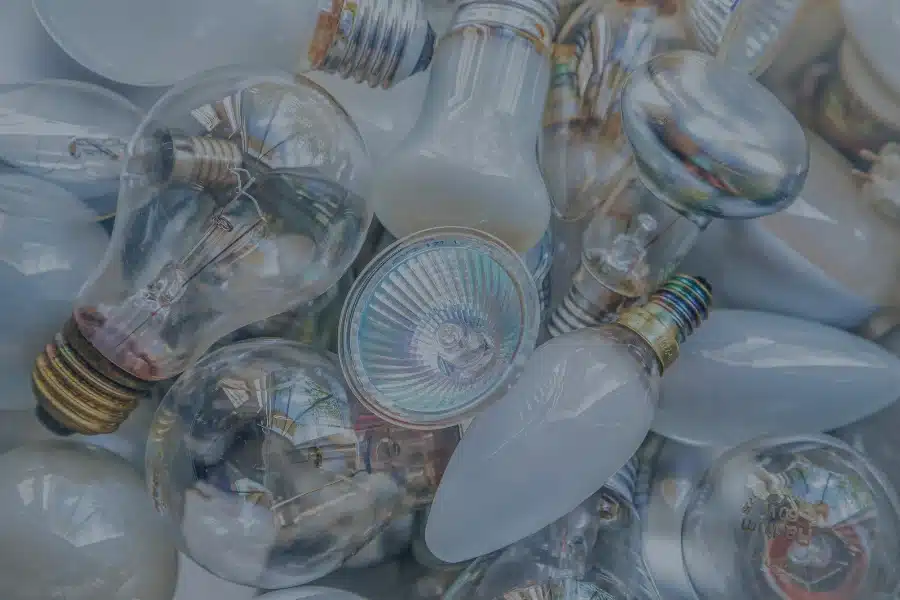
Have a collection of old light bulbs sitting around and aren’t sure what to do with them? Whether you’re replacing a single burned out bulb or upgrading the lighting throughout an entire building, proper disposal depends on the type of bulb you’re dealing with.
Light bulbs contain different combinations of glass, metals, electronic components, and sometimes mercury. Some can be recycled through electronics recycling programs, while others require more specialized handling.
EACR Inc. is an experienced electronics recycling company that helps individuals, businesses, and organizations manage unwanted lighting equipment.
This guide explains which light bulbs can be recycled, your collection options, how different bulbs should be handled, and how to prepare them for recycling.
How Can You Recycle Old Light Bulbs?
You can recycle old light bulbs through professional recycling services, designated drop-off centers, participating retailers, and community collection programs. The best option depends on the type of bulb, how many you have, and your local recycling requirements.
Scheduled Light Bulb Recycling Pickup
For larger quantities of light bulbs, scheduled recycling pickups are often the most convenient option.
EACR Inc. coordinates collections for businesses, schools, hospitals, warehouses, and other organizations managing lighting replacements or routine maintenance. Pickup arrangements depend on bulb types, quantities, packaging, and location.
Light Bulb Recycling Drop-Off
Drop-off services are another option for smaller quantities of light bulbs.
EACR offers drop-off arrangements for accepted lighting materials, including services through its facility in Lakewood, New Jersey. Contact EACR beforehand to confirm which bulbs are accepted and arrange a suitable drop-off.
E-Waste Recycling Containers
Businesses and facilities undergoing large lighting upgrades may benefit from dedicated e-waste collection containers.
These containers support broader electronics recycling projects, although light bulbs may require separate packaging or designated storage because of their construction and potential hazardous materials.
Retail Recycling and Collection Programs
Some hardware stores, municipalities, and community recycling programs accept specific types of light bulbs, particularly compact fluorescent lamps.
For smaller quantities, EACR also offers mail-back recycling options. Visit our lamp recycling services page to learn more about available collection arrangements.
What Types of Light Bulbs Can Be Recycled?
Most common light bulb types can be recycled through programs equipped to handle their materials. However, the recycling process differs depending on whether the bulb contains a filament, electronic circuitry, or mercury.
Incandescent Light Bulbs
Incandescent bulbs are traditional light bulbs that produce light by heating a tungsten filament inside a glass enclosure.
They typically contain glass, metal bases, and small amounts of other metals. While they generally do not contain mercury, recycling programs for incandescent bulbs can be limited. Not every local recycling facility accepts them.
Halogen Light Bulbs
Halogen bulbs work similarly to incandescent bulbs but use halogen gas to improve performance. They are often found in floodlights, older household fixtures, and specialty lighting applications.
These bulbs contain glass, tungsten filaments, and metal components. They are generally not accepted in curbside recycling bins, so look for a program that specifically accepts halogen lighting.
LED Light Bulbs
LED bulbs are widely used in homes, offices, warehouses, and commercial buildings because of their energy efficiency and long lifespan.
Unlike fluorescent lamps, standard LED bulbs do not contain mercury. However, they contain electronic components, circuit boards, metals, and sometimes aluminum heat sinks that can be processed through appropriate recycling programs.
For more specific instructions, see our LED light bulb recycling guide.
Fluorescent Light Bulbs
Fluorescent tubes are commonly found in offices, schools, warehouses, hospitals, and industrial facilities.
These bulbs use mercury vapor and phosphor coatings to produce light. Because they contain mercury, they require careful handling and appropriate recycling rather than ordinary disposal.
Our fluorescent light recycling guide explains their collection and processing requirements in greater detail.
Compact Fluorescent Light Bulbs (CFLs)
Compact fluorescent lamps, commonly called CFLs, use the same basic technology as fluorescent tubes in a smaller format. Many have a recognizable spiral shape, although other designs exist.
CFLs contain small amounts of mercury and should be kept intact during storage and transportation. Many retail and municipal recycling programs specifically accept these bulbs.
HID and Specialty Light Bulbs
High intensity discharge (HID) lamps are commonly used in streetlights, parking lots, warehouses, gymnasiums, and industrial facilities.
Common types include:
- Metal halide lamps
- High pressure sodium lamps
- Mercury vapor lamps
Many HID lamps contain mercury or other materials requiring specialized handling. Other specialty lamps, including certain projector and equipment lighting, may have different recycling requirements.
Large lighting replacement projects may also involve separate electrical components, including ballasts and fixtures.
What Are Light Bulbs Made Of?
Light bulbs contain a combination of materials that varies considerably by technology. Some contain mostly glass and metal, while others include electronic circuitry and substances requiring specialized management.
Common materials include:
- Glass: Used in bulb enclosures, fluorescent tubes, and protective coverings.
- Metals: Copper, aluminum, steel, tungsten, and other metals found in bases, filaments, wiring, and internal supports.
- Mercury: Present in fluorescent lamps, CFLs, and certain HID lighting products.
- Phosphor coatings: Materials used inside fluorescent lamps to convert ultraviolet energy into visible light.
- Electronic components: Circuit boards, LED drivers, semiconductor components, and electrical contacts found in modern lighting.
- Plastics and insulation: Used in housings, diffusers, bases, and internal electrical components.
These differences affect how light bulbs are recycled. For example, mercury-containing lamps require specialized processing to separate and manage mercury, while LED bulbs are processed for their electronic components and recoverable materials.
Can You Throw Light Bulbs in the Trash?
Whether a light bulb can legally go in household trash depends on its type and local disposal regulations. However, recycling is generally the preferred option when an appropriate program is available.
The main differences include:
- Fluorescent and CFL bulbs: Contain mercury and should be taken to appropriate lamp recycling programs.
- LED bulbs: Generally do not contain mercury but have electronic components and recyclable materials.
- Incandescent and halogen bulbs: May be permitted in household trash in some locations, although recycling is preferable when available.
- HID lamps: Many contain mercury and require specialized disposal or recycling.
The EPA recommends recycling mercury-containing light bulbs rather than placing them in ordinary household waste.
Businesses may also have additional legal obligations. For example, New Jersey regulates certain hazardous waste lamps under its universal waste rules.
What Happens During Light Bulb Recycling?
Once collected, light bulbs are processed according to their construction and materials. Different recycling methods are used for fluorescent, LED, incandescent, and other lighting technologies.
The general process includes:
- Collection and sorting: Bulbs are identified, inspected, and separated by type and condition.
- Specialized processing: Appropriate equipment is used to manage the materials inside each lamp, including mercury-containing components where applicable.
- Material separation: Glass, metals, electronic components, and other materials are separated into appropriate processing streams.
- Recovery and documentation: Recoverable materials are directed toward recycling, while relevant service records and certificates of recycling support project documentation.
EACR Inc. works with appropriate downstream processing facilities to manage different types of lighting waste.
How to Prepare Light Bulbs for Recycling
Proper preparation helps prevent broken bulbs, simplifies transportation, and ensures different lighting materials are handled appropriately.
Follow these six steps before arranging recycling.
1. Identify Your Light Bulb Types
Determine whether you have incandescent, halogen, LED, fluorescent, CFL, HID, or specialty bulbs.
Check the bulb’s label or manufacturer information if you cannot identify it by appearance. This is particularly important for lamps that may contain mercury.
2. Separate Different Bulbs
Organize your bulbs by type whenever possible.
Keep fluorescent tubes, CFLs, LEDs, and other lighting products in separate groups. This makes it easier for recycling providers to identify the appropriate packaging and processing requirements.
3. Inspect for Broken or Damaged Bulbs
Check whether any bulbs are cracked, broken, or missing components.
Do not mix damaged mercury-containing lamps with intact bulbs. If a fluorescent or CFL bulb breaks, follow the EPA’s cleanup instructions before handling the debris.
Notify your recycling provider about any damaged bulbs before collection.
4. Package Light Bulbs Securely
Place intact bulbs in appropriately sized boxes or protective containers that minimize movement and prevent breakage.
Long fluorescent tubes should be stored in suitable lamp boxes whenever possible. Avoid overfilling containers or stacking heavy objects on fragile bulbs.
Keep packages closed and labeled when required by applicable regulations.
5. Keep Bulbs Separate From General Waste
Do not place loose light bulbs in regular curbside recycling bins or mix them with construction debris.
Store bulbs somewhere dry and secure until they can be collected. Keep fragile and mercury-containing lamps protected from accidental damage.
6. Arrange an Appropriate Recycling Service
Contact EACR Inc. with information about the bulb types, approximate quantities, condition, and collection location.
For larger projects, provide details about packaging, loading access, and your desired pickup schedule.
EACR can help determine whether a scheduled pickup, drop-off, or another collection arrangement is appropriate.
Frequently Asked Questions About Light Bulb Recycling
Can You Put Light Bulbs in Your Recycling Bin?
Generally, no. Most curbside recycling programs do not accept light bulbs because they contain mixed materials, fragile glass, or substances requiring specialized handling. Check your local recycling program for designated bulb collection options.
Do All Light Bulbs Contain Mercury?
No. Standard LED, incandescent, and halogen bulbs generally do not contain mercury. Fluorescent tubes, CFLs, and certain HID lamps contain mercury as part of their lighting technology and require more careful disposal.
What Should You Do If a Light Bulb Breaks?
The appropriate cleanup method depends on the bulb type. Ordinary broken incandescent glass can typically be collected carefully, but mercury-containing bulbs require additional precautions. For broken CFLs or fluorescent lamps, the EPA recommends ventilating the area, keeping people and pets away, and avoiding vacuuming during the initial cleanup. Follow its complete cleanup and disposal instructions.
Can You Recycle Light Bulbs at Home Depot or Lowe’s?
Some Home Depot and Lowe’s locations offer recycling programs for certain light bulbs, particularly intact CFLs. However, acceptance policies vary by retailer and location. Contact your local store before bringing fluorescent tubes, LEDs, or other bulb types.
Can You Recycle Old Incandescent Light Bulbs?
Yes, but you need a recycling program that specifically accepts incandescent bulbs. Their combination of glass and metal can make them unsuitable for ordinary curbside recycling. Availability varies by location.
Can You Recycle Light Bulbs With Their Fixtures?
Light bulbs and light fixtures often require different recycling processes. When safe to do so, remove bulbs from their fixtures and keep them separate. Fixtures may contain wiring, ballasts, drivers, and other electrical components that require their own handling procedures.
Does EACR Inc. Accept Large Quantities of Light Bulbs?
Yes. EACR Inc. works with businesses, schools, municipalities, contractors, and facilities managing bulk light bulb recycling. Services include scheduled collections, recycling programs for lighting upgrades, and certificates of recycling to support organizational recordkeeping.
Recycle Old Light Bulbs With EACR Inc.
Light bulb recycling starts with identifying the type of bulb, understanding its disposal requirements, and selecting an appropriate collection method. Whether you’re replacing household bulbs or managing a large commercial lighting upgrade, proper recycling helps keep unwanted lighting materials out of landfills.
With more than 25 years of experience, EACR Inc. supports businesses, institutions, municipalities, and other organizations through scheduled pickups, drop-offs, and customized recycling programs. We also provide certificates of recycling for project documentation.
Need help recycling old light bulbs? Contact our electronics recycling company to discuss your lighting materials and arrange a recycling solution that fits your needs.