Replacing an outdated fire alarm system in an office building, school, or commercial property? Upgrading safety equipment often leaves behind old alarm panels, smoke detectors, wiring, and other electronic components that need proper disposal.
Many fire alarm components contain recyclable materials, including circuit boards, copper, steel, aluminum, and plastics. However, certain detectors and backup batteries require special attention.
This guide explains how to recycle fire alarm equipment, what materials these systems contain, and how to prepare them for collection. EACR Inc. is an experienced e-waste recycling company that helps businesses, municipalities, schools, and other organizations recycle qualifying electronic equipment.
How to Recycle Fire Alarms: Options & Quick Answer
Fire alarm systems can often be recycled through electronics recycling companies, municipal collection programs, and commercial e-waste services. The best option depends on the equipment type, quantity, and whether it contains batteries or specialized components.
Here are five recycling options:
- Electronics Recycling Companies: Work with an electronics recycler like EACR Inc. to recycle qualifying fire alarm control panels, wiring, sounders, and electronic components.
- Bulk Recycling Pickups: EACR Inc. offers scheduled pickups for businesses, schools, and organizations disposing of larger quantities of outdated equipment.
- Facility Drop-Offs: Contact EACR Inc. to arrange an approved equipment drop-off at its Lakewood, New Jersey recycling facility.
- E-Waste Recycling Containers: EACR offers e-waste container programs for organizations collecting approved electronics during building renovations and equipment upgrades.
- Municipal or Manufacturer Programs: Check local recycling facilities or manufacturer take-back programs, particularly for smoke detectors requiring specialized handling.
Before removing any equipment, make sure the building’s required fire protection remains operational or has been appropriately replaced.
What is a Fire Alarm System?
A fire alarm system is a network of devices designed to detect potential fires and alert building occupants.
Unlike standalone residential smoke alarms, commercial fire alarm systems typically connect multiple detection and notification devices to a central control panel.
Common components include:
- Fire Alarm Control Panels: Central units that monitor connected devices and manage alarm signals.
- Smoke and Heat Detectors: Sensors that detect smoke or abnormal temperatures.
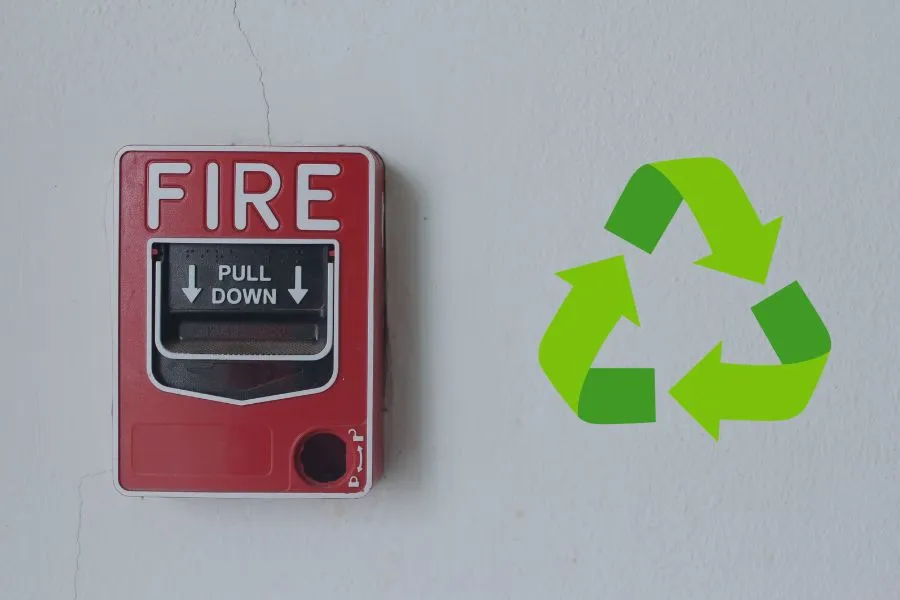
- Manual Pull Stations: Wall-mounted devices that allow occupants to activate the alarm.
- Horns, Bells, and Strobes: Equipment that produces audible or visual warnings.
- Backup Power Supplies: Batteries and electrical components that keep the system functioning during power interruptions.
When an older system is replaced, many of these components can be evaluated for electronics recycling.
What is a Fire Alarm Made Of?
Fire alarm equipment contains several materials commonly found in other electronic devices. The exact composition varies depending on the component and manufacturer.
Circuit Boards and Electronic Components
Fire alarm control panels and electronic detectors typically contain printed circuit boards, microchips, capacitors, resistors, and other components.
Circuit boards contain combinations of metals, plastics, and other materials that may be recovered through appropriate processing.
Copper Wiring and Conductive Metals
Copper is commonly found in electrical wiring, transformers, connectors, and internal circuitry.
These conductive components are important parts of many fire alarm systems.
Steel and Aluminum
Fire alarm panels, mounting brackets, and other structural components may contain steel or aluminum.
These metals can often be separated and directed to appropriate recycling processes.
Plastic Housings
Smoke detectors, pull stations, and alarm devices frequently have plastic casings that protect their internal components.
Whether these plastics can be recycled depends on their composition and the recycling facility’s capabilities.
Sensors and Specialized Components
Smoke and heat detectors contain sensors that vary by detection technology.
Some ionization smoke detectors contain a small sealed amount of americium-241, a radioactive material used in smoke detection.
According to the U.S. Environmental Protection Agency, these detectors are safe when used as directed and left intact. However, they should not be dismantled or crushed. Confirm appropriate handling and recycling acceptance before including them with other electronic equipment.
What Batteries Are Used in Fire Alarms?
Fire alarm systems use several battery types, depending on their design and power requirements.
9-Volt Batteries
Some older residential smoke alarms use replaceable 9-volt batteries to provide power or backup power.
AA Batteries
Certain residential smoke alarms use AA batteries, including some interconnected and battery-operated models.
Lithium Batteries
Some modern smoke alarms contain sealed lithium batteries designed to provide power for approximately 10 years.
These batteries are often built into the alarm and are not intended to be removed by the user.
Sealed Lead-Acid Batteries
Commercial fire alarm control panels commonly rely on sealed lead-acid (SLA) batteries for backup power.
Certain systems use two 12-volt batteries connected in series to provide a nominal 24-volt backup supply.
Because these batteries contain different chemistries, they should be identified and handled according to their specific recycling requirements.
EACR Inc. provides battery recycling services for qualifying battery types, including those used in commercial equipment.
How to Prepare Fire Alarm Equipment for Recycling
Proper preparation helps make recycling safer and simplifies the collection process.
1. Have the System Properly Decommissioned
Commercial fire alarm systems should be disconnected and removed by qualified personnel following applicable fire safety requirements.
Never disable an active system simply to prepare it for recycling. Required fire protection must remain in place during equipment replacement.
2. Identify the Equipment
Organize retired equipment into categories, such as:
- Fire alarm control panels.
- Smoke and heat detectors.
- Manual pull stations.
- Horns, bells, and strobe devices.
- Wiring and backup power components.
This makes it easier to identify equipment requiring separate handling.
3. Identify and Separate Batteries
Have qualified personnel identify removable batteries and backup power supplies.
Follow manufacturer instructions when disconnecting batteries, protect exposed terminals against short circuits, and keep damaged or leaking batteries separate.
4. Check for Ionization Smoke Detectors
Inspect detector labels to determine whether they contain radioactive materials.
Do not disassemble ionization smoke detectors or attempt to remove their sealed radioactive components.
Contact the manufacturer or recycling provider to confirm the appropriate disposal method.
For additional information, read our Smoke Detector Recycling Guide.
5. Keep Components Intact and Organized
Avoid crushing, breaking, or unnecessarily dismantling electronic equipment.
Store similar components together and protect delicate devices during transportation.
6. Confirm Recycling Acceptance
Before scheduling collection, confirm which fire alarm components your recycling provider accepts.
Discuss battery types, specialized detectors, equipment quantities, and whether a bulk pickup or drop-off arrangement is appropriate.
What Happens to Fire Alarms During Recycling?
Once accepted fire alarm equipment reaches an electronics recycling facility, it may undergo several processing steps:
- Inspection and Sorting: Equipment is identified and separated according to its components and handling requirements.
- Battery and Component Separation: Batteries and other materials requiring specialized management are removed when appropriate.
- Material Processing: Suitable equipment may be dismantled or mechanically processed to separate metals, plastics, and circuit boards.
- Material Recovery: Recovered materials are directed to appropriate downstream recycling operations for further processing.
The exact process depends on the equipment and facility. Not every component is suitable for the same recycling method, particularly when specialized sensors or batteries are involved.
Frequently Asked Questions About Fire Alarm Recycling
Can Fire Alarms Be Recycled?
Yes. Many fire alarm components, including control panels, wiring, alarm sounders, and certain detectors, can be recycled through appropriate electronics recycling programs. Acceptance depends on the equipment and its internal components.
Can You Throw Away an Old Fire Alarm?
Some individual devices may be legally disposed of as ordinary waste, depending on local requirements, but recycling is preferable for suitable electronic components. Batteries and certain detectors may require separate handling.
Do Fire Alarms Contain Lithium Batteries?
Some residential smoke alarms contain replaceable or sealed lithium batteries. Commercial fire alarm control panels commonly use sealed lead-acid batteries for backup power.
Do Fire Alarms Contain Radioactive Materials?
Some ionization smoke detectors contain small sealed amounts of americium-241. Other fire alarm components, such as control panels, horns, and pull stations, generally do not contain radioactive detection sources.
How Long Do Fire Alarm Batteries Last?
Battery lifespan depends on the chemistry, manufacturer, operating conditions, and application. Commercial backup batteries should be inspected, tested, and replaced according to manufacturer guidance and applicable fire safety requirements.
Can Smoke Detectors Go in E-Waste Recycling?
Some recycling facilities accept smoke detectors, while others restrict ionization models because of their radioactive components. Always check with the recycling provider before including smoke detectors in an e-waste collection.
Where Can Businesses Recycle Fire Alarm Equipment in Bulk?
Businesses can contact EACR Inc. to discuss electronics recycling pickups, approved facility drop-offs, and container programs for qualifying fire alarm equipment.
Recycle Old Fire Alarms With EACR Inc.
Old fire alarm systems contain electronics, metals, plastics, and batteries that should be managed appropriately when equipment is replaced. Proper decommissioning, battery identification, and checking specialized detectors are important steps before recycling.
EACR Inc. provides electronics recycling services for qualifying equipment from commercial properties, schools, municipalities, and other organizations. We offer bulk recycling pickups, approved facility drop-offs, and e-waste container programs to accommodate different collection needs.
Contact EACR Inc. at (732) 370-4100 to confirm accepted equipment and discuss your fire alarm recycling arrangements.