Replacing an outdated smart lock with a newer model? Maybe you’re upgrading the electronic locks throughout an apartment building, hotel, or commercial property. Either way, old smart locks contain more than traditional metal hardware.
These devices often include circuit boards, copper, plastics, batteries, and other electronic components that can be recovered through appropriate recycling programs. They may also store access codes and remain connected to online accounts.
This guide explains how to recycle smart locks, what materials and batteries they contain, and how to prepare them for disposal. EACR Inc. is an experienced electronics recycling company helping businesses and organizations recycle qualifying electronic equipment.
How to Recycle Smart Locks: Options & Quick Answer
Smart locks can often be recycled through electronics recycling companies, approved drop-off facilities, and commercial e-waste collection programs. Before recycling, remove accessible batteries when appropriate, clear stored access information, and disconnect the device from associated accounts.
Here are five options for recycling old smart locks:
- Electronics Recycling Companies: Work with an electronics recycling company like EACR Inc. to recycle qualifying electronic deadbolts, keypad locks, and related components.
- Bulk Recycling Pickups: EACR Inc. offers scheduled pickups for businesses, hotels, apartment buildings, and organizations replacing larger quantities of electronic locks.
- Facility Drop-Offs: Arrange an approved equipment drop-off at EACR’s recycling facility in Lakewood, New Jersey, after confirming acceptance.
- E-Waste Recycling Containers: Organizations can use EACR’s e-waste container programs to collect approved equipment during renovations or property upgrades.
- Municipal or Manufacturer Programs: Check local electronics collection facilities or manufacturer take-back programs for accepted smart locks and batteries.
Before removing a smart lock, make sure an appropriate replacement or alternative security arrangement is in place.
What is a Smart Lock?
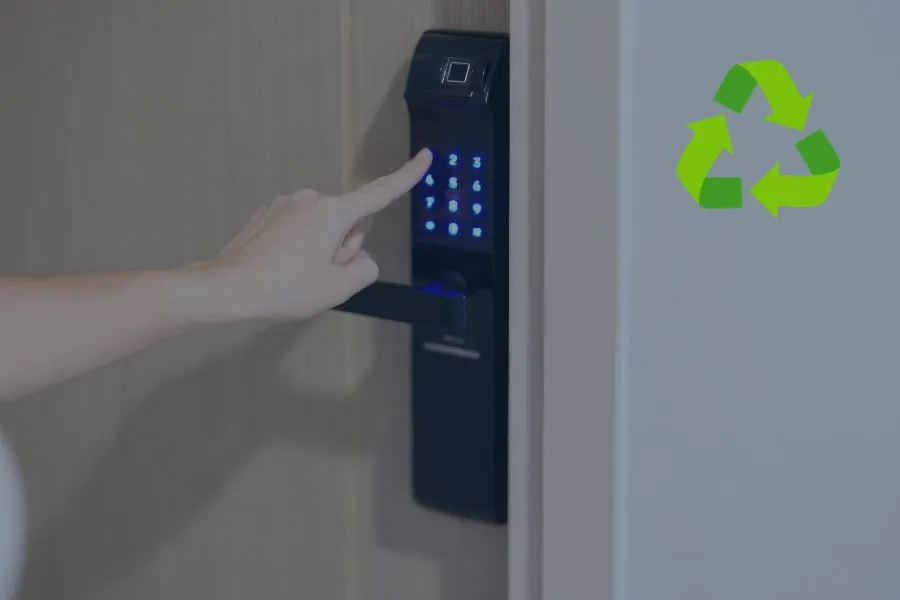
A smart lock is an electronic locking device that allows users to control access to a door through digital credentials, wireless connections, or electronic keypads.
Unlike traditional door locks, many smart locks can connect to smartphones, building access systems, or smart home platforms.
Common types include:
- Keypad Smart Locks: Use numerical PIN codes to unlock doors.
- Bluetooth Smart Locks: Connect to authorized smartphones or nearby devices.
- Wi-Fi Smart Locks: Allow compatible applications to manage locks remotely.
- Fingerprint Smart Locks: Use biometric sensors to identify authorized users.
- Commercial Smart Locks: Help businesses, hotels, and apartment buildings manage access across multiple doors.
Most smart locks still contain mechanical locking components, including deadbolts, latches, and metal housings.
What is a Smart Lock Made Of?
Smart locks combine traditional mechanical hardware with electronic components. Their exact materials vary by manufacturer, model, and locking mechanism.
Circuit Boards and Electronic Components
Smart locks contain printed circuit boards, microchips, wireless communication modules, and other electronic components.
These parts control functions such as keypad access, wireless communication, and electronic locking.
Steel, Brass, and Zinc Alloys
Many smart locks contain steel, brass, zinc alloys, or other metals in their deadbolts, lock cylinders, latches, and outer housings.
These metals may be recovered through appropriate recycling processes.
Copper Wiring and Electrical Connections
Copper can be found in internal wiring, electrical connections, and small motors that operate electronic locking mechanisms.
Plastic Components
Battery covers, internal supports, keypad housings, and certain exterior components may contain various plastics.
Whether those plastics can be recycled depends on their composition and the processing facility.
Motors and Electronic Sensors
Some smart locks use small electric motors to engage or retract locking mechanisms.
Others contain position sensors, fingerprint readers, or touch-sensitive keypads that allow users to control access electronically.
For more information about electronic materials, read EACR’s guide on what circuit boards are made of.
What Batteries Are Used in Smart Locks?
Most smart locks require batteries to power their electronic components. The battery type depends on the lock’s design and manufacturer.
AA Alkaline Batteries
AA alkaline batteries are among the most common batteries used in residential smart locks.
Many models operate using four AA batteries, although some require different quantities.
AAA Alkaline Batteries
Certain compact electronic locks and related accessories use AAA alkaline batteries.
These provide power for electronic controls, sensors, or other low-power components.
Lithium Batteries
Some smart locks use primary lithium batteries, such as CR123A cells, or manufacturer-specific lithium battery packs.
These batteries can offer different operating characteristics than standard alkaline batteries.
Rechargeable Lithium-Ion Batteries
Some smart locks contain rechargeable lithium-ion battery packs that can be charged or replaced according to manufacturer instructions.
Always use the battery type specified by the manufacturer. Some locks are designed specifically for alkaline batteries and should not use rechargeable or lithium alternatives unless approved.
When batteries reach the end of their useful lives, EACR Inc. provides battery recycling services for qualifying battery types.
How to Prepare Smart Locks for Recycling
Before recycling an old smart lock, take a few steps to protect stored access information and ensure batteries are handled appropriately.
1. Remove the Smart Lock From the Door
Follow the manufacturer’s instructions to uninstall the lock without damaging surrounding hardware.
For commercial properties, coordinate removal with maintenance personnel or the facility’s access control provider.
Make sure the door remains properly secured after removal.
2. Reset the Smart Lock
Perform a factory reset according to the manufacturer’s instructions.
This typically removes custom access codes and stored settings, although the exact information erased varies by model.
Some factory resets restore default programming or access codes, so do not assume every credential is permanently erased.
3. Disconnect Connected Accounts and Devices
Remove the smart lock from its associated mobile application, smart home platform, or commercial access management system.
Revoke shared digital keys and access permissions associated with the retired lock.
A factory reset does not always remove a smart lock from its connected account. For example, certain Schlage commercial locks require separate account removal.
4. Remove Batteries When Appropriate
Remove accessible batteries according to the manufacturer’s instructions.
Identify the battery chemistry and protect exposed terminals against short circuits when necessary.
Do not force open sealed battery packs or attempt to remove batteries that are not designed to be user-replaceable.
Lithium batteries should not be placed in household trash or curbside recycling.
5. Keep Components Together
Avoid unnecessary dismantling or breaking electronic components.
Keep lock housings, keypads, electronic assemblies, and related hardware organized for recycling.
6. Confirm Recycling Acceptance
Contact your recycling provider to confirm which smart locks and battery types are accepted.
Discuss equipment quantities, special handling requirements, and whether a pickup, drop-off, or container program is appropriate.
What Happens to Smart Locks During Recycling?
After accepted smart locks arrive at an electronics recycling facility, they may undergo several processing steps:
- Inspection and Sorting: Equipment is identified and organized according to its components and materials.
- Battery Separation: Removable batteries are directed to appropriate handling and recycling processes.
- Disassembly and Processing: Suitable components may be dismantled or processed to separate metals, circuit boards, and plastics.
- Material Recovery: Recovered materials are directed to appropriate downstream recycling operations.
Depending on the lock’s construction, materials such as steel, brass, copper, aluminum, and certain electronic components may be recovered.
Not every component is recyclable through the same process, and recovery methods vary by facility.
Frequently Asked Questions About Smart Lock Recycling
Can Smart Locks Be Recycled?
Yes. Many smart locks contain metals, circuit boards, and other electronic components that can be processed through appropriate electronics recycling programs. Acceptance depends on the equipment and recycling facility.
Can You Throw Away an Old Smart Lock?
Smart locks are better directed to electronics recycling programs rather than ordinary household trash. Batteries may also require separate recycling or disposal depending on their chemistry and local requirements.
Do Smart Locks Have Lithium Batteries?
Some smart locks use primary lithium batteries or rechargeable lithium-ion battery packs. Many other models operate using standard AA or AAA alkaline batteries.
Do You Need to Reset a Smart Lock Before Recycling?
Yes, when the device supports it. A factory reset can remove stored access codes and settings, but you should also disconnect the lock from associated accounts and revoke digital access permissions.
How Long Do Smart Lock Batteries Last?
Battery life varies by manufacturer, connection type, usage, and environmental conditions. Many battery-powered smart locks operate for several months or longer before their batteries need replacement.
Can Smart Lock Batteries Be Recycled?
Yes. Many smart lock batteries can be recycled through appropriate battery collection programs. Lithium batteries should be kept out of household trash and curbside recycling and directed to suitable battery recycling or hazardous waste facilities.
Can You Recycle Electronic Keypad Door Locks?
Yes. Electronic keypad locks contain mechanical hardware, circuit boards, and other components that may be accepted by electronics recyclers.
Where Can Businesses Recycle Smart Locks in Bulk?
Businesses, apartment complexes, hotels, and property managers can contact EACR Inc. to discuss qualifying equipment, scheduled bulk recycling pickups, facility drop-offs, and e-waste container programs.
Recycle Old Smart Locks With EACR Inc.
Old smart locks contain metals, plastics, electronic components, and batteries that should be managed appropriately when equipment is replaced. Before recycling, remove stored access information, disconnect associated accounts, and identify any batteries requiring separate handling.
EACR Inc. provides electronics recycling services for qualifying smart locks and related equipment from businesses, commercial properties, and other organizations. We offer bulk recycling pickups, approved facility drop-offs, and e-waste container programs to accommodate different collection needs.
Contact EACR Inc. at (732) 370-4100 to confirm accepted equipment and discuss your smart lock recycling arrangements.