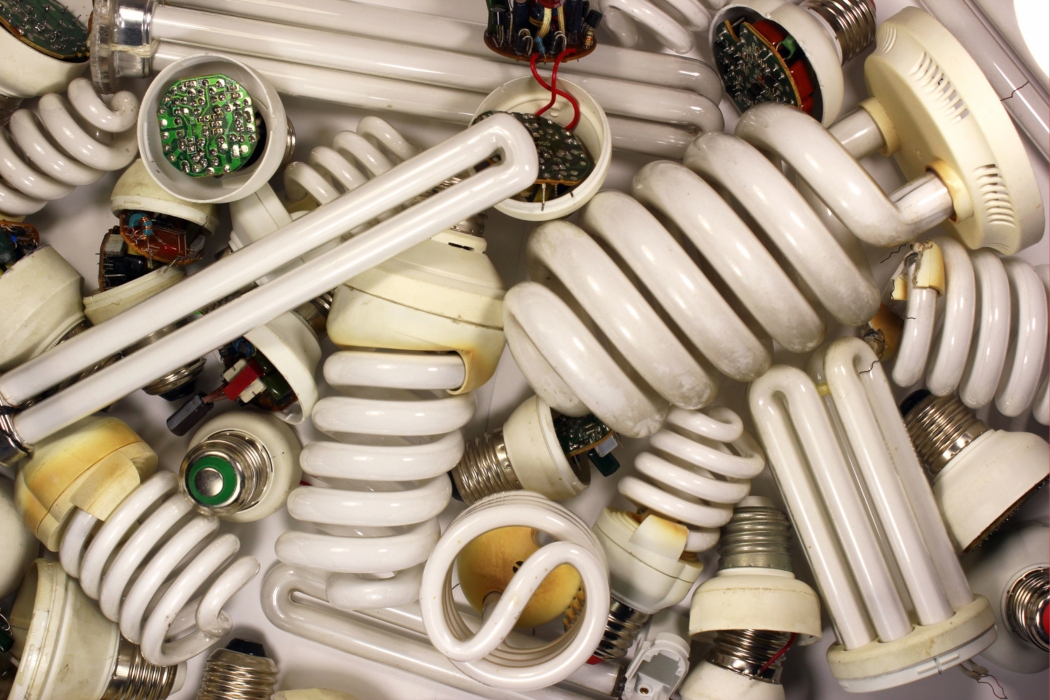
Fluorescent light recycling is the process of safely collecting, processing, and repurposing fluorescent bulbs, tubes, and ballasts instead of throwing them in the trash. These lighting products found in homes, schools, offices, and industrial buildings contain small but significant amounts of mercury and other materials that require special handling. If they’re broken or improperly discarded, they can release toxic substances into the environment.
Fluorescent lights come in several forms, including long glass tubes, compact fluorescent lamps (CFLs), and ballasts that regulate electrical current. While they’ve been widely used for decades because of their efficiency, their safe disposal is often overlooked. Improper disposal not only wastes reusable materials like aluminum and glass but also risks mercury contamination in landfills and waterways.
In this guide, we’ll explore why fluorescent light recycling is essential, what’s inside these lights that makes them hazardous, how the recycling process works, and how EACR Inc. helps businesses and organizations stay compliant with environmental regulations while keeping recyclable materials out of landfills.
Understanding Fluorescent Lights and Their Components
Common Types of Fluorescent Lights
Fluorescent lighting comes in several shapes and sizes, each with its own recycling considerations:
- Tubular fluorescent lamps (T8, T12, T5): Commonly used in office ceilings, warehouses, and schools.
- Compact fluorescent lamps (CFLs): The spiral-shaped bulbs once popular in homes before LEDs became mainstream.
- UV and specialty fluorescent bulbs: Found in tanning beds, aquariums, laboratories, and medical facilities.
Each of these contains mercury vapor, phosphor coating, and other materials that can be recovered and reused when handled by a professional electronics recycling company.
What’s Inside a Fluorescent Light
Inside every fluorescent bulb is a mix of materials that make them efficient—but also potentially hazardous when broken.
- Mercury vapor and phosphor powder: Mercury gas interacts with phosphor coating inside the glass to produce visible light. If released, it can contaminate air and water.
- Aluminum end caps and glass tubing: These can be separated and recycled into new products, keeping reusable materials in circulation.
- Ballasts and wiring: These components manage current flow. Older magnetic ballasts may contain PCBs (polychlorinated biphenyls), which require special disposal, while modern electronic ones are recyclable.
Because of these materials, fluorescent lights can’t simply be thrown away. Proper fluorescent light recycling ensures mercury and other substances are contained, while reusable parts are safely recovered and reintroduced into manufacturing.
Why Fluorescent Light Recycling Is Essential
Environmental Impact of Improper Disposal
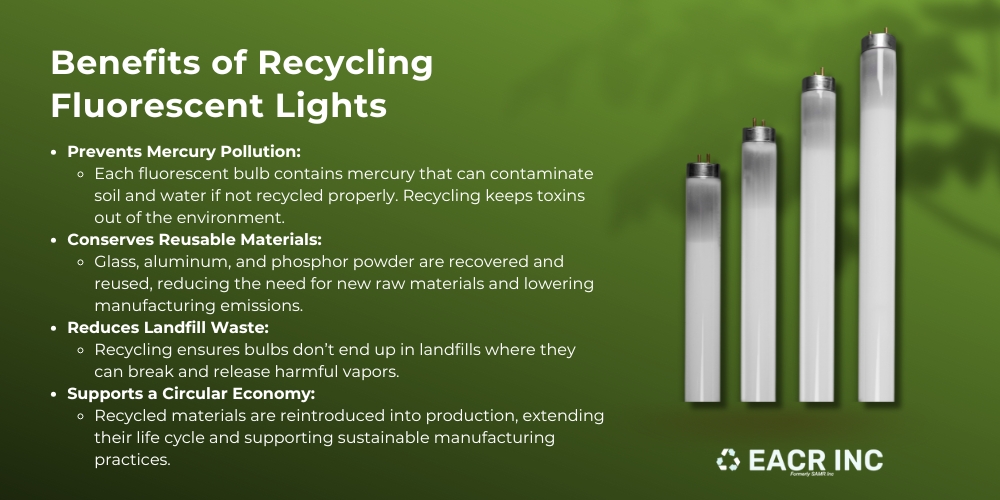
Fluorescent bulbs may seem harmless, but they contain mercury, a neurotoxin that poses serious risks to the environment and human health. When a bulb breaks, mercury vapor is released into the air and can settle into soil and water, contaminating ecosystems. Fish, wildlife, and even humans can be affected through the food chain.
Even one broken fluorescent tube can release enough mercury to exceed local safety thresholds in a small space. That’s why strict recycling procedures are in place to keep mercury sealed, captured, and reused rather than released.
Legal and Regulatory Requirements
Under the Resource Conservation and Recovery Act (RCRA), fluorescent bulbs are classified as universal waste, meaning they must be stored, transported, and recycled according to specific federal and state guidelines. The Environmental Protection Agency (EPA) enforces these rules to ensure safe handling and prevent mercury pollution.
Improper disposal, such as tossing bulbs in a dumpster, can result in fines and environmental violations.
Reusable Materials Recovered from Fluorescent Lights
Beyond compliance and environmental protection, fluorescent light recycling allows for the recovery of multiple reusable materials, including:
- Glass: Cleaned and melted down for new glass products.
- Aluminum: Recycled into building materials or new lighting components.
By recycling, these materials remain in circulation instead of contributing to landfill waste. EACR Inc. ensures that every component is recovered responsibly.
The Fluorescent Light Recycling Process
Collection and Sorting
Fluorescent light recycling begins with careful collection and sorting. Recyclers gather spent bulbs from homes, schools, offices, and large commercial facilities that rely on fluorescent lighting. These lights are categorized by type, such as tubes, compact fluorescent lamps (CFLs), and specialty bulbs, to ensure each is handled correctly.
EACR Inc. makes this step simple with dedicated container and pickup programs designed for both small and large-scale recycling needs. Businesses can request on-site collection containers that are serviced regularly, while individual or one-time recyclers can use local drop-offs.
Crushing and Mercury Separation
Once collected, the bulbs move through a controlled destruction process that safely captures mercury vapor. This is done using specialized equipment that seals and filters the air during crushing, ensuring that mercury and glass particles never escape into the environment.
Material Recovery and Reuse
After mercury removal, the remaining components, glass, aluminum, and phosphor powder are separated for reuse. Clean glass can be melted and remade into new lighting products or industrial materials. Aluminum parts are recycled into new metal goods, while phosphor powder is refined and repurposed for manufacturing or research applications.
Under EACR Inc.’s zero-landfill policy, no part of a fluorescent lamp goes to waste. Every recoverable material is repurposed or recycled, ensuring full environmental compliance and resource conservation.
Where to Recycle Fluorescent Lights
Local Drop-Off Centers
Most communities offer designated drop-off locations for fluorescent lights through municipal waste programs or e-waste collection events. Check your local waste authority’s website or recycling directory to confirm where and when drop-offs are available. These programs are ideal for homeowners or small businesses with limited quantities of bulbs to recycle.
Retail and Manufacturer Take-Back Programs
Some major hardware stores accept small quantities of compact fluorescent lamps (CFLs) for recycling. However, these programs often have limitations; they typically do not accept large fluorescent tubes or bulk commercial loads. Manufacturer programs may also offer mail-in options for specific lamp types, but they rarely include full recycling of ballasts or specialty bulbs.
Partnering with a Licensed Recycler like EACR Inc.
For businesses, schools, hospitals, and government facilities, partnering with an electronics recycling company like EACR Inc. is the most reliable and compliant solution. EACR provides on-site electronics recycling containers and scheduled pickups for facilities across the Northeast and beyond.
Every load is documented from pickup to processing, providing proof of proper disposal and full compliance with EPA and state universal waste laws. By working with EACR Inc., organizations can ensure their fluorescent light recycling process is efficient, transparent, and environmentally responsible.
Fluorescent Light Recycling for Businesses
Commercial and Industrial Programs
Fluorescent light recycling is especially important for businesses that manage large facilities such as schools, hospitals, office buildings, and multi-property complexes. These organizations often replace hundreds or even thousands of bulbs each year, which makes having a structured recycling plan essential.
EACR Inc. offers tailored recycling programs designed specifically for commercial and industrial clients. This includes on-site container placement for easy collection, routine pickup schedules that fit your maintenance cycle, and secure transport to licensed recycling facilities. Each program is built around your facility’s needs, ensuring minimal disruption to daily operations while keeping you fully compliant with environmental standards.
Whether your organization is upgrading to LED lighting or simply maintaining existing systems, EACR’s programs make the process seamless, sustainable, and worry-free.
Frequently Asked Questions
Can fluorescent lights go in regular trash?
No. Fluorescent bulbs contain mercury and must be recycled as universal waste at an approved facility. Throwing them in the trash can lead to contamination and potential violations of environmental regulations.
How are fluorescent bulbs different from LED bulbs?
Fluorescent bulbs rely on mercury vapor to produce light, while LEDs do not. Because of this, fluorescent light recycling requires special handling to capture mercury safely, whereas LEDs can often be recycled through standard electronic waste programs.
Does EACR Inc. recycle fluorescent lights in bulk?
Yes. EACR Inc. specializes in large-scale recycling for businesses, schools, and industrial facilities. We provide on-site containers, scheduled pickups, and drop-offs.
Conclusion: Recycling Fluorescent Lights the Right Way
When handled correctly, fluorescent light recycling prevents toxic mercury from contaminating the environment and helps recover reusable materials like glass and aluminum. It’s one of the simplest ways for homes and businesses to reduce waste and operate sustainably.
Every bulb recycled through EACR Inc. contributes to a cleaner, safer planet. By choosing a trusted, licensed recycler, you can ensure that every step of the process from collection to reporting is handled with care and compliance.
Contact EACR Inc. to learn how we make fluorescent light recycling easy, compliant, and sustainable for your home or business.