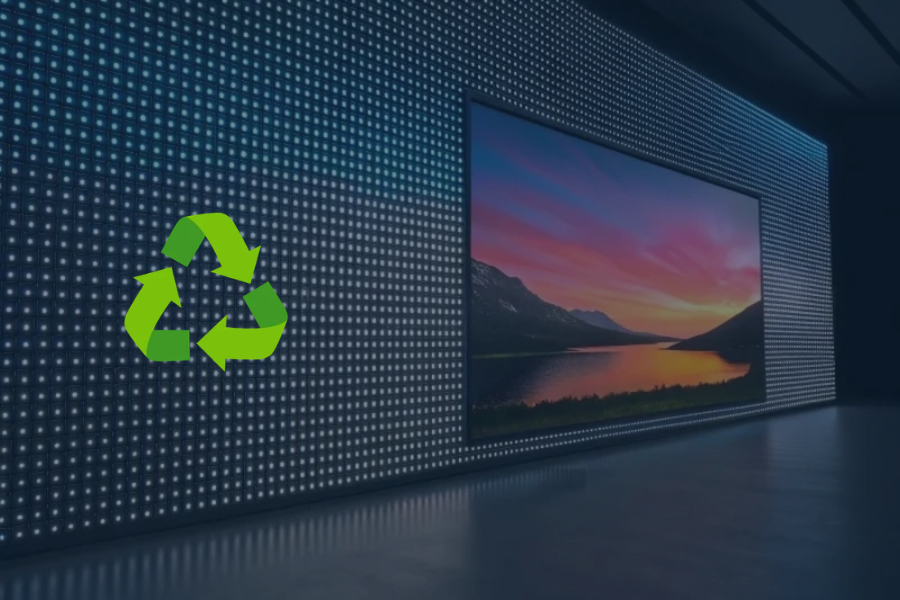
Event production companies, AV rental providers, and entertainment venues rely on LED walls and high-resolution displays for concerts, trade shows, conferences, and live productions. However, after years of use, damaged panels, outdated technology, and equipment upgrades can leave businesses with stacks of unused LED modules and display cabinets.
These systems contain circuit boards, LED components, aluminum frames, copper wiring, and other materials that may be recovered through recycling.
EACR Inc. is an e-waste recycling company helping event production companies, AV rental providers, venues, and businesses recycle qualifying electronic equipment. This guide covers LED display recycling options, recyclable components, preparation steps, and commercial collection arrangements.
Can LED Displays and Video Walls Be Recycled? Where Are the Options?
Yes. Many LED displays, video walls, and individual display modules can be recycled through appropriate electronics recycling programs.
These systems contain recoverable materials, including aluminum and steel cabinets, copper wiring, printed circuit boards, power supplies, and other electronic components.
Here are four options for recycling old LED displays and video walls:
- Electronics Recycling Companies: EACR Inc. can discuss recycling arrangements for qualifying LED displays, video wall modules, and related commercial electronics.
- Manufacturer and Equipment Supplier Programs: Certain LED display manufacturers, distributors, and equipment suppliers may offer take-back or equipment retirement programs.
- E-Waste Recycling Containers: EACR Inc. offers e-waste recycling containers for businesses collecting larger quantities of qualifying LED panels, display modules, and related electronics.
Available options depend on the equipment’s construction, condition, quantity, and location. Always confirm acceptance and transportation requirements before scheduling collection.
What Types of LED Displays and Video Walls Can Be Recycled?
LED display systems are used across the entertainment, advertising, and commercial industries. Although their designs vary, many contain recoverable metals and electronic components.
Rental LED Video Walls
Rental LED walls consist of modular panels that can be assembled into large displays for concerts, trade shows, conferences, and corporate events.
Because they’re frequently transported, installed, and dismantled, individual modules and cabinets can become damaged over time.
Fixed Installation LED Walls
Permanently installed LED walls are commonly found in theaters, convention centers, corporate offices, and entertainment venues.
These systems may be retired during building renovations, equipment upgrades, or display replacements.
Outdoor LED Displays and Digital Billboards
Outdoor LED displays are used for advertising, stadium scoreboards, and public signage.
They often feature weather-resistant cabinets, structural frames, power supplies, and electronic modules that require appropriate handling during removal.
Indoor LED Signage and Commercial Displays
Retail stores, hotels, conference facilities, and commercial buildings use LED signage to display advertisements, announcements, and other digital content.
These displays may be recycled when businesses replace or upgrade their equipment.
Transparent and Specialty LED Displays
Transparent LED panels and other specialty displays use different designs and materials.
Their recycling requirements depend on how the display modules, supporting structures, and electronics are constructed.
LED vs. LCD Displays: What’s the Difference for Recycling?
LED and LCD displays are often grouped together, but they use different technologies and can require different recycling processes.
Direct-View LED Displays
Direct-view LED displays create images using arrays of individual light-emitting diodes mounted on electronic modules.
These systems are commonly used for large video walls, concert backdrops, scoreboards, and commercial digital signage.
LCD Video Walls and LED-Backlit Screens
LCD video walls use liquid crystal display panels to form images, typically illuminated by LED backlights.
They contain LCD glass, backlight assemblies, circuit boards, and protective frames.
An LED-backlit LCD screen is not the same as a direct-view LED wall. Both may be recyclable, but their internal components and processing requirements differ.
EACR Inc.’s TV recycling guide provides additional information about common flat-panel display technologies.
What Materials Are Found Inside LED Displays and Video Walls?
Professional LED display systems contain much more than illuminated pixels. Their internal components include electronics, conductive metals, protective materials, and structural supports.
LED Modules and Diodes
LED modules contain rows of light-emitting diodes that produce the images displayed on the screen.
Depending on their construction, these components may include semiconductor materials, copper, and small quantities of other metals.
Certain LED technologies also use gallium-based compounds.
Printed Circuit Boards and Driver Electronics
Circuit boards control the operation of individual LEDs and help regulate the signals needed to display images.
They contain copper, solder, and other electronic materials that may be recovered through specialized circuit board recycling.
Aluminum and Steel Cabinets
Modular LED walls often use aluminum cabinets because they provide structural support without excessive weight.
Steel may also be used in frames, mounting assemblies, and supporting structures.
These metals can often be separated for recycling.
Power Supplies and Control Systems
LED wall systems use power supplies, receiving cards, processors, and other electronic controls.
These components contain circuitry and electrical materials that may require separate processing.
Copper Wiring and Display Cables
Internal wiring, power cords, and display cables connect individual modules to the rest of the system.
Many contain copper conductors and metal connectors that can be recovered during recycling.
Plastics and Protective Materials
LED panels may contain plastic masks, protective coatings, insulating materials, and other nonmetallic components.
Not all these materials are recoverable through the same recycling process.
What Are the Safety Considerations When Recycling LED Walls?
Large LED displays contain electrical components and structural assemblies that require careful handling.
Damaged LED Modules
Broken panels may have sharp edges, exposed wiring, or damaged circuit boards.
Avoid handling exposed electronic components without appropriate precautions.
Electrical Components
Power supplies and capacitors can retain electrical energy after equipment has been disconnected.
Unqualified individuals should not open or dismantle internal electrical assemblies.
Heavy Cabinets and Rigging Equipment
Large LED walls may involve heavy cabinets, overhead mounting systems, and specialized rigging hardware.
Installed or suspended displays should be removed by qualified AV or rigging professionals.
Materials Requiring Special Handling
Certain display components may contain lead-based solder, flame-retardant plastics, or other substances requiring specialized handling.
The materials present depend on the equipment’s age and construction.
How to Prepare LED Walls and Displays for Recycling
Preparing LED displays for recycling helps protect the equipment during transportation and makes large commercial collections easier to coordinate.
Step 1: Identify the Display Equipment
Record the manufacturer, model number, panel quantity, and approximate total weight.
If available, include the display’s pixel pitch, such as P2.6 or P3.9, to help identify the equipment.
Step 2: Arrange Professional Removal
Fixed installations and suspended LED walls should be disconnected and dismantled by qualified personnel.
Avoid attempting to remove electrical connections, rigging systems, or heavy cabinets without appropriate training.
Step 3: Separate Working and Damaged Panels
Organize functional modules separately from broken or nonworking equipment.
This allows equipment suitable for potential reuse to be identified before recycling.
Step 4: Gather Display Accessories
Collect unused power supplies, receiving cards, processors, power cables, signal cables, and other accessories.
Ask the recycler whether these components should be packed separately.
Step 5: Secure Panels for Transportation
Use appropriate road cases, pallets, or protective packaging based on the recycling provider’s instructions.
Protect exposed LED surfaces, electrical connectors, and cabinet edges from additional damage.
Step 6: Confirm Pickup Requirements
Contact EACR Inc. with the equipment type, panel quantity, approximate weight, and pickup location.
For larger collections, confirm loading responsibilities, transportation requirements, and available scheduling arrangements.
What Happens During LED Display Recycling?
LED display recycling involves separating electronic assemblies and structural components so suitable materials can undergo further recovery.
The process generally includes:
- Collection and Inspection: LED panels, cabinets, and accessories are evaluated based on their construction, condition, and processing requirements.
- Component Separation: LED modules, circuit boards, power supplies, metal cabinets, and wiring may be separated using appropriate procedures.
- Metal Recovery: Aluminum, steel, copper, and other recoverable metals are directed toward suitable recycling operations.
- Electronic Component Processing: Circuit boards and LED-containing assemblies may undergo further mechanical processing or specialized recovery methods.
- Additional Material Management: Plastics, protective materials, and other remaining components undergo further processing or appropriate management.
Actual recycling methods depend on the equipment and receiving facility. Not every facility recovers every material, and some components require specialized downstream processing.
What Does Research Say About Recycling LED Display Panels?
A 2026 study titled Recycling Strategies of Waste LED Display Panels: Environmental and Economic Assessment examined the environmental impacts and costs of different LED display recycling approaches.
The researchers compared material recovery strategies using life cycle assessment and life cycle costing.
Three findings stand out:
- Copper Recovery: Recovering copper from LED components demonstrated particularly strong carbon-reduction benefits within the study’s evaluated scenarios.
- Other Metals: The study examined recovering gallium, and silver, noting that certain recovery approaches required additional energy and chemicals.
The research shows that recovering materials is important, but the methods used to recover them also matter.
LED Wall Recycling for Event Companies and Commercial Facilities
Many businesses accumulate outdated LED panels during equipment upgrades, renovations, and display replacements.
Event Production and AV Rental Companies
Production companies may retire entire inventories of LED panels after years of transportation, installation, and repeated use.
Recycling provides a way to manage damaged modules, unused cabinets, and outdated electronic accessories.
Concert Venues, Theaters, and Convention Centers
Permanent LED walls may be replaced when venues renovate their facilities or upgrade their display technology.
These projects can involve significant quantities of electronic equipment.
Stadiums and Entertainment Facilities
Stadiums and entertainment venues use large-format LED displays for scoreboards, advertising, and live entertainment.
Replacing these systems can generate substantial collections of display modules and electrical components.
Corporate Offices and Retail Businesses
Corporate lobbies, retail stores, hotels, and commercial buildings may retire digital signage or video walls during renovations and technology upgrades.
Commercial electronics recycling can help coordinate the collection of this equipment.
Frequently Asked Questions About LED Display Recycling
Can LED Video Walls Be Recycled?
Yes. LED video walls contain metal cabinets, electronic modules, circuit boards, wiring, and other components that may be processed through appropriate electronics recycling programs.
Can Broken LED Panels Be Recycled?
Yes. Damaged LED panels may still contain recoverable metals and electronic components, although broken displays may require additional handling.
Are LED Walls Considered E-Waste?
Yes. LED walls contain circuit boards, electrical wiring, power supplies, and display modules, making them a form of electronic equipment waste.
Can LCD Video Walls Be Recycled?
Yes. LCD video walls can be recycled, although their liquid crystal panels, backlighting systems, and other components require different processing methods than direct-view LED displays.
Can Event Production Companies Recycle LED Panels in Bulk?
Yes. Event production companies and AV rental providers can inquire about coordinated commercial recycling for larger quantities of qualifying LED displays and related equipment.
Can LED Display Cabinets Be Recycled?
Many LED display cabinets are made from aluminum or steel and may be suitable for metal recycling after appropriate separation from electronic components.
Can LED Wall Power Supplies Be Recycled?
Yes. LED wall power supplies contain wiring, metals, and electrical components that may be recovered through suitable electronics recycling processes.
Can Old LED Billboards Be Recycled?
Yes. Many LED billboard components, including metal cabinets, circuit boards, wiring, and electronic modules, may be recycled through appropriate programs.
Recycle LED Displays and Video Walls With EACR Inc.
LED walls and commercial display systems contain circuit boards, metal cabinets, copper wiring, power supplies, and other components that may be recovered through appropriate recycling. Safe removal, equipment preparation, and transportation planning are especially important for larger installations.
EACR Inc. is an electronics recycler helping event production companies, AV rental providers, entertainment venues, and commercial facilities recycle qualifying electronic displays and equipment.
Contact EACR Inc. at (732) 370-4100 to confirm LED display acceptance and discuss available commercial recycling and collection arrangements.