Upgrading a server room, replacing office computers, or cleaning out old IT equipment often leaves businesses with outdated KVM switches they no longer need. These devices may be small, but they contain circuit boards, copper wiring, metal connectors, and other materials that can potentially be recovered through recycling.
Whether you have a single desktop KVM switch or several rackmount units, proper recycling helps manage these electronics responsibly.
EACR Inc. is an electronic waste recycling company helping businesses, organizations, and individuals recycle qualifying electronic equipment. This guide covers KVM switch recycling options, recyclable components, preparation steps, and what happens during processing.
Can KVM Switches Be Recycled? Yes. Where Are the Options?
Yes. KVM switches can generally be recycled through appropriate electronics recycling programs. These devices contain printed circuit boards, copper wiring, metal housings, electrical connectors, and other materials that may be recovered.
However, KVM switches should not be placed in ordinary household curbside recycling bins.
Here are options for recycling an old KVM switch:
- Electronics Recycling Companies: Specialized recyclers may accept KVM switches and related computer equipment. EACR Inc. can confirm acceptance for qualifying devices.
- Municipal E-Waste Collection Programs: Some municipalities accept computer peripherals and networking equipment through designated electronics recycling events or collection centers.
- Manufacturer or Retailer Take-Back Programs: Certain electronics manufacturers and retailers offer take-back programs for qualifying computer accessories and electronic devices.
- E-Waste Recycling Containers: EACR Inc. offers e-waste recycling containers for organizations collecting larger quantities of qualifying IT equipment.
Before recycling, confirm the provider’s acceptance requirements, potential fees, and available pickup or drop-off arrangements.
What is a KVM Switch?
A KVM switch is a device that allows someone to control multiple computers or servers using a single keyboard, monitor, and mouse. KVM stands for Keyboard, Video, and Mouse.
For example, an IT administrator might use a KVM switch to access several servers without installing a separate monitor and keyboard for each machine.
KVM switches are commonly used in:
- Data centers and server rooms.
- Corporate offices and IT departments.
- Control rooms and technical facilities.
- Workstations connected to multiple computers.
Over time, these devices may become outdated due to changing connection standards, damaged ports, hardware upgrades, or replacement with newer equipment.
When a KVM switch is no longer needed, recycling provides an appropriate disposal option.
What Types of KVM Switches Can Be Recycled?
Different KVM switches serve different purposes, but most contain electronic components and metals that may be recovered through recycling.
Desktop KVM Switches
Desktop KVM switches are compact devices that allow users to control two or more computers through shared peripherals.
They’re commonly used in home offices, professional workstations, and smaller business environments.
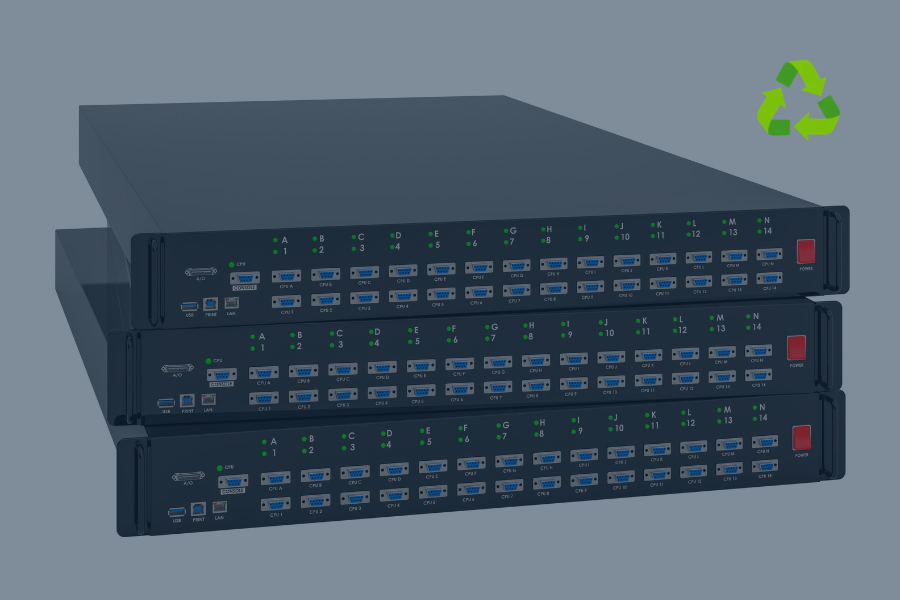
Rackmount KVM Switches
Rackmount KVM switches are designed for installation inside server racks and can provide access to multiple connected servers.
These devices are commonly retired during server upgrades, IT infrastructure replacements, and data center decommissioning projects.
KVM Over IP Switches
KVM over IP switches allow administrators to access computers or servers remotely through a network connection.
Unlike basic models, some network-enabled switches retain administrative settings, credentials, and configuration information that should be cleared before recycling.
KVM Console Drawers
KVM console drawers combine a keyboard, display, and pointing device into a rack-mounted unit.
Many include LCD screens and additional electronic components that may require separate handling during recycling.
What Are KVM Switches Made Of?
KVM switches contain a combination of electronic circuitry, conductive metals, plastic components, and structural materials.
While their exact construction varies by manufacturer and model, several components are commonly found inside.
Printed Circuit Boards
Circuit boards are responsible for managing the connections between computers, monitors, keyboards, and other peripherals.
These boards contain copper traces, electronic chips, solder, and other materials that may be recovered through specialized processing.
Appropriate circuit board recycling helps recover suitable metals and manage electronic assemblies.
Copper Wiring and Internal Connections
KVM switches contain electrical connections and, depending on their design, small amounts of internal wiring.
Copper may be found in wiring, connectors, and circuit board traces. It is commonly recovered during electronics recycling.
Metal Housings and Internal Supports
Larger KVM switches, particularly rackmount models, often feature steel or aluminum enclosures.
These metal housings provide structural protection and may be separated for recycling once the electronic components have been appropriately handled.
USB, HDMI, DisplayPort, and VGA Connectors
KVM switches use different connection types depending on their age and intended application.
Older models may feature VGA and PS/2 connections, while newer devices commonly use USB, HDMI, or DisplayPort.
These connectors contain metal contacts and other materials that may be recovered through suitable processing.
Power Supplies and Electronic Components
Some KVM switches use external power adapters, while others contain internal power supply circuitry.
These components may include copper, electronic assemblies, and other recoverable materials.
Plastic Housings and Buttons
Smaller desktop KVM switches frequently use plastic enclosures, buttons, and insulating materials.
Not every plastic component can be recycled through the same process, and some may require separate management.
How to Prepare a KVM Switch for Recycling
Preparing an old KVM switch for recycling is relatively straightforward. A few basic steps can help protect your information and make equipment collection easier.
Step 1: Disconnect the KVM Switch
Disconnect the switch from its connected computers, monitors, and other peripherals according to the manufacturer’s instructions.
If the device uses an external power supply, unplug it from the electrical outlet.
Step 2: Remove Attached Cables and Accessories
Disconnect USB cables, video cables, power adapters, and other attached accessories.
Many of these items contain recoverable materials and may be accepted through appropriate computer cable recycling and electronics recycling programs.
Ask your recycling provider whether cables should be packed separately.
Step 3: Clear Stored Settings if Applicable
If you’re recycling a network-enabled KVM switch, remove administrative credentials, network configurations, and other stored settings.
Follow the manufacturer’s instructions for resetting the device.
Step 4: Inspect the Equipment
Check for visible damage, broken connectors, loose components, or damaged power adapters.
If the device contains a battery, inspect it for signs of damage or leakage without opening the equipment.
Do not attempt to dismantle damaged electrical components yourself.
Step 5: Organize Multiple Devices
Businesses recycling several KVM switches should organize the equipment and prepare an inventory if required.
Larger collections may include retired servers, network switches, routers, and other IT equipment.
Step 6: Confirm Recycling Requirements
Contact the recycling provider to confirm KVM switch acceptance, packaging requirements, potential fees, and collection options.
For commercial quantities, ask about available pickup arrangements.
What Happens During KVM Switch Recycling?
Once a KVM switch reaches an appropriate electronics recycling facility, its components may be separated and processed to recover suitable materials.
The general process includes:
- Collection and Inspection: KVM switches are received and evaluated according to their construction, condition, and handling requirements.
- Component Separation: Metal housings, circuit boards, wiring, and other internal components may be separated.
- Circuit Board Processing: Electronic assemblies are directed toward appropriate recycling and material recovery operations.
- Metal Recovery: Recoverable copper, steel, aluminum, and other metals are processed through suitable recycling streams.
- Additional Material Processing: Plastics, electronic components, and remaining materials undergo further processing or appropriate management.
The exact procedures vary between recycling facilities, and not every component can necessarily be recovered.
Frequently Asked Questions About KVM Switch Recycling
Can KVM Switches Be Recycled?
Yes. KVM switches contain circuit boards, wiring, connectors, and other materials that may be processed through appropriate electronics recycling programs.
Are KVM Switches Considered E-Waste?
Yes. KVM switches contain electronic circuitry and computer connectivity components, making them a form of electronic waste.
Can You Recycle a Broken KVM Switch?
Yes. Damaged or nonworking KVM switches may still contain recoverable metals and electronic components.
Can Rackmount KVM Switches Be Recycled?
Yes. Rackmount KVM switches contain electronic assemblies, metal enclosures, and other materials that may be recovered through suitable recycling processes.
Can KVM Over IP Switches Be Recycled?
Yes. Network-enabled KVM switches can be recycled, although stored configurations and administrative credentials should be cleared beforehand.
Can KVM Switch Cables Be Recycled?
Yes. Many USB, HDMI, DisplayPort, VGA, and other computer cables contain recoverable metals and may be accepted by electronics recyclers.
Can KVM Console Drawers Be Recycled?
Yes. KVM console drawers contain electronic controls, metal housings, and often LCD screens that may require additional processing.
Recycle Your Old KVM Switches With EACR Inc.
KVM switches contain circuit boards, copper wiring, metal connectors, and other materials that may be recovered through appropriate electronics recycling. Before disposal, disconnect attached accessories, clear stored configurations when applicable, and confirm recycling acceptance.
EACR Inc. is an e-waste recycling company helping businesses, IT departments, data centers, and organizations recycle qualifying electronic equipment.
Contact EACR Inc. at (732) 370-4100 to confirm KVM switch acceptance and discuss available pickup or drop-off arrangements.