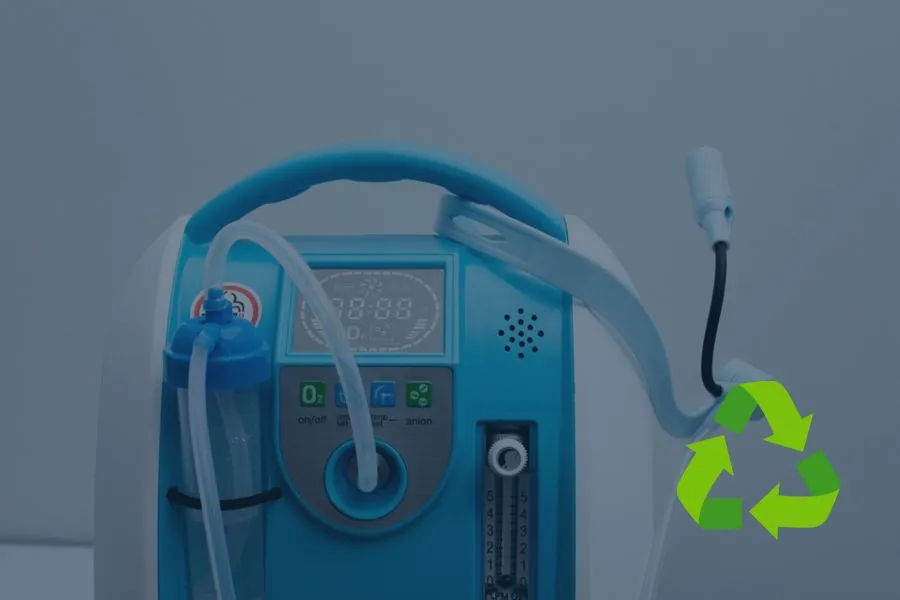
Oxygen concentrators are powered medical devices that take in surrounding air and separate out oxygen for the user. They are commonly used in homes, healthcare facilities, assisted living settings, and other medical environments.
Although they may look simple from the outside, oxygen concentrators can contain compressors, motors, circuit boards, sensors, displays, wiring, power supplies, cooling components, and plastic or metal housings. When a unit is broken, outdated, replaced, or no longer needed, it should not automatically be treated like ordinary trash.
EACR is an electronics recycling company that can help individuals, healthcare providers, businesses, and organizations recycle retired oxygen concentrators and other electronic medical equipment.
Can Oxygen Concentrators Be Recycled?
Yes. Oxygen concentrators can be recycled as electronic medical equipment.
They contain a mix of electronic, mechanical, plastic, and metal components that can be separated during the recycling process.
Complete units are generally better handled through an electronics recycling program than ordinary disposal. If a concentrator still works and is appropriate for continued use, reuse may be worth considering. If it is damaged, outdated, or no longer practical to use, recycling is usually the better end-of-life option.
What is Inside an Oxygen Concentrator?
The exact design varies by model, but oxygen concentrators can contain components such as:
- Air compressor
- Electric motor
- Circuit boards
- Control panel or display
- Oxygen sensors
- Pressure sensors
- Cooling fan
- Wiring and connectors
- Power supply
- Plastic housing
- Steel or aluminum components
- Filters
- Molecular sieve beds
These parts work together to draw in air, separate oxygen, monitor system performance, and deliver the concentrated oxygen.
Portable oxygen concentrators may also contain rechargeable batteries. Those batteries should remain part of the recycling process and be identified when the unit is turned in.
Oxygen Concentrator Recycling Options
There are several ways to recycle an old oxygen concentrator depending on how many units you have and where they are located.
Scheduled Electronics Recycling Pickup
Scheduled pickups are often the best option for organizations retiring multiple oxygen concentrators or other electronic medical devices.
This can work well for:
- Hospitals
- Medical offices
- Assisted living facilities
- Home healthcare providers
- Equipment rental companies
- Warehouses
- Organizations replacing multiple units
Oxygen concentrators can often be collected alongside other accepted medical electronics and general electronic equipment during the same pickup.
Electronics Recycling Drop-Off
Drop-off recycling can make sense for individual units or smaller quantities.
It is often a practical option for:
- Individuals
- Small medical offices
- Businesses with only a few units
- Organizations that do not need a scheduled pickup
Before bringing the equipment in, confirm that the recycling provider accepts oxygen concentrators and other electronic medical devices.
E-Waste Containers
E-waste containers can be useful for organizations that regularly generate retired electronics.
Depending on the program, oxygen concentrators may be collected alongside other accepted equipment such as:
- Computers
- Monitors
- Printers
- Medical electronics
- Power supplies
- Small appliances
- Networking equipment
This can be especially useful for larger facilities that want a consistent way to collect outdated electronics over time.
Manufacturer or Medical Equipment Programs
Some manufacturers, distributors, and medical equipment suppliers may offer return, trade-in, replacement, or take-back programs.
Availability varies by company and equipment type, so it is worth checking with the manufacturer or supplier before deciding how to handle the unit.
Reuse or Donation
If the oxygen concentrator still works properly and is suitable for continued use, resale, donation, or reuse may be possible.
Because it is medical equipment, this should be handled more carefully than a typical consumer electronic device. The unit’s condition, maintenance history, included accessories, and suitability for continued medical use should all be considered before it is passed on to someone else.
How to Prepare an Oxygen Concentrator for Recycling
Preparing an oxygen concentrator for recycling is usually straightforward. There is no need to take the machine apart yourself.
1. Disconnect the Unit From Power
Unplug the oxygen concentrator and secure the power cord before moving or transporting it.
If the power cord is removable, keep it with the unit unless the recycling provider gives different instructions.
2. Remove Personal Accessories
Remove patient-use accessories such as:
- Cannulas
- Tubing
- Humidifier bottles
- Masks
- Other removable accessories
These items should not automatically be placed into the same recycling stream as the electronic equipment. Follow the appropriate disposal instructions for each accessory.
3. Identify Any Battery
Portable oxygen concentrators commonly use rechargeable batteries.
Let the recycling provider know that the device contains a battery so it can be identified and handled appropriately during processing.
4. Keep the Unit Intact
Do not remove compressors, motors, circuit boards, sensors, wiring, or other internal components unless specifically instructed.
Keeping the equipment intact makes it easier for the recycler to identify and properly process the different components.
5. Arrange the Appropriate Recycling Method
Choose the option that makes sense for the amount of equipment you have.
That may include:
- Scheduled pickup
- Electronics recycling drop-off
- E-waste container
- Larger medical equipment cleanout
A single unit may be easy to drop off, while healthcare facilities and businesses retiring multiple devices may benefit from a scheduled collection.
Oxygen Concentrator Recycling for Healthcare Facilities
Healthcare organizations may generate much larger quantities of retired oxygen concentrators than an individual household.
Hospitals and medical providers may replace several units during equipment upgrades. Home healthcare companies can accumulate returned, damaged, or outdated concentrators, while assisted living facilities and medical equipment suppliers may also need to manage multiple devices at once.
Larger recycling projects can often include oxygen concentrators alongside other electronic medical equipment.
Related devices may include:
- CPAP machines
- Nebulizers
- Blood pressure monitors
- Patient monitors
- Ventilators
Facilities retiring respiratory equipment can also review our guides to CPAP machine recycling and old nebulizer recycling for information specific to those devices.
Combining multiple types of retired electronics into a coordinated recycling project can make equipment replacement and facility cleanouts easier to manage.
What Happens After an Oxygen Concentrator Is Recycled?
The exact process can vary, but complete oxygen concentrators generally move through several basic stages.
Intake and Sorting
The concentrator is identified and sorted with the appropriate electronic or medical equipment.
Electronic and Mechanical Components Are Removed
The unit can be dismantled so components such as circuit boards, motors, compressors, wiring, sensors, fans, and power supplies can be separated.
Metals Are Recovered
Steel, aluminum, copper wiring, and other metals can be separated and routed into appropriate recycling streams.
Plastics and Other Materials Are Separated
Plastic housings and other remaining materials are sorted based on their type and the recycling process being used.
Frequently Asked Questions About Oxygen Concentrator Recycling
Can Oxygen Concentrators Be Recycled?
Yes. Oxygen concentrators contain electronic, mechanical, metal, and plastic components that can be separated through an electronics recycling process.
Are Oxygen Concentrators Considered E-Waste?
Powered oxygen concentrators contain circuit boards, wiring, motors, sensors, power components, and other electronics, so they can be handled as electronic waste when retired.
Can You Throw Away an Old Oxygen Concentrator?
Electronics recycling is generally a better option than treating the complete unit like ordinary trash because of its electronic and mechanical components.
Can Portable Oxygen Concentrators Be Recycled?
Yes. Portable oxygen concentrators can be recycled, but their rechargeable batteries should be identified so they can be handled appropriately.
Do Oxygen Concentrators Contain Batteries?
Portable models often contain rechargeable batteries, while stationary concentrators may operate primarily from an electrical outlet. Battery configuration varies by model.
Can Hospitals Recycle Oxygen Concentrators in Bulk?
Yes. Hospitals, healthcare providers, assisted living facilities, and medical equipment companies can arrange recycling for multiple retired units through pickups or larger equipment recycling projects.
Can Oxygen Concentrators Be Recycled With Other Medical Electronics?
Often, yes. Oxygen concentrators may be collected alongside other accepted medical electronics during scheduled pickups, facility cleanouts, or e-waste container programs.
Conclusion
Oxygen concentrators contain much more than a plastic housing. Compressors, motors, circuit boards, sensors, power supplies, wiring, batteries, metals, and other components all need to be considered when the equipment reaches the end of its useful life.
If a unit still works and is appropriate for continued use, reuse may make sense. When it is damaged, outdated, replaced, or no longer practical to keep, EACR is an electronics recycling business that can help hospitals, healthcare facilities, businesses, organizations, and individuals recycle retired oxygen concentrators through pickups, drop-offs, e-waste containers, and larger equipment recycling projects.