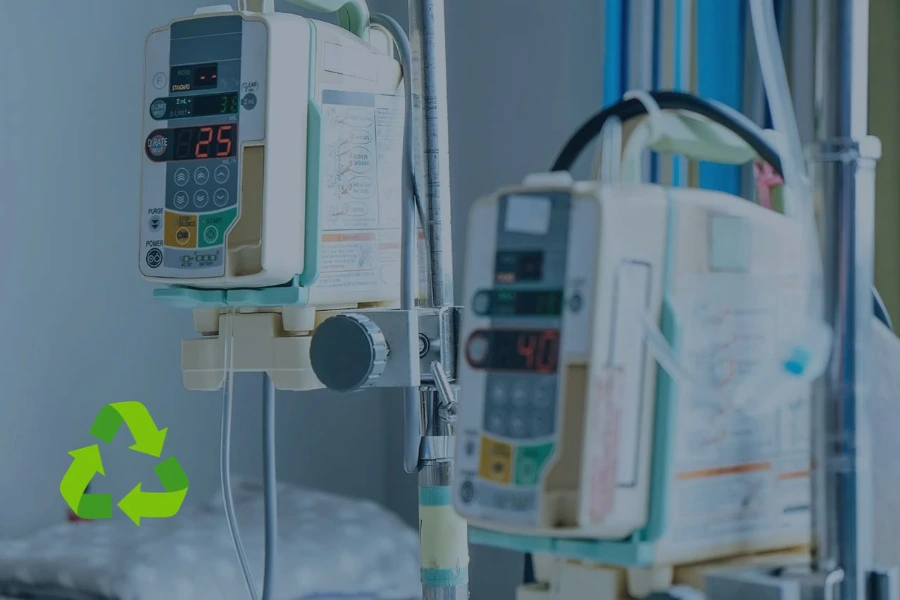
Hospitals and healthcare facilities regularly replace infusion pumps as older equipment wears out, technology improves, or maintenance becomes too expensive. When these devices are retired, proper recycling helps recover materials while keeping medical waste out of the electronics recycling process.
Infusion pumps contain circuit boards, electric motors, batteries, wiring, and other recyclable components. However, equipment previously used in patient care requires appropriate preparation before disposal.
At EACR Inc., we’re an electronics recycling company helping hospitals, clinics, nursing homes, and healthcare organizations manage outdated medical equipment. We offer commercial recycling pickups, facility drop-offs, and collection solutions for larger equipment replacement projects.
Can Infusion Pumps Be Recycled?
Yes, electronic infusion pumps can be recycled. These devices contain metals, batteries, motors, and electronic components that may be recovered through appropriate medical equipment and electronics recycling processes.
Common types of infusion pumps include:
- Volumetric IV Pumps: Deliver controlled amounts of medication or fluids, commonly in hospitals and healthcare facilities.
- Syringe Pumps: Use motor-driven mechanisms to deliver precise amounts of fluid from a syringe.
- Ambulatory Infusion Pumps: Portable devices that allow patients to receive medication while moving around.
- Patient-Controlled Analgesia (PCA) Pumps: Allow patients to administer prescribed pain medication within programmed limits.
- Insulin Pumps: Small wearable devices that deliver insulin and may use rechargeable or replaceable batteries.
Not all infusion devices are electronic. Single-use elastomeric pumps, for example, rely on mechanical pressure rather than electric motors and require different disposal considerations.
Your Infusion Pump Recycling Options
EACR Inc. offers several recycling arrangements for healthcare facilities replacing outdated infusion pumps and related medical electronics.
- Commercial Recycling Pickups: EACR Inc. coordinates scheduled pickups for qualifying hospital and healthcare equipment recycling projects, including larger infusion pump replacements.
- Facility Drop-Off: Healthcare organizations can inquire about recycling infusion pumps at our facility at 1950 Rutgers University Blvd, Lakewood, NJ 08701. Call (732) 370-4100 to confirm acceptance and preparation requirements. Hours are Monday–Friday, 8 AM–4 PM.
- Medical Equipment Cleanouts: Hospitals and clinics can discuss coordinated recycling for infusion pumps, patient monitors, defibrillators, and other accepted medical electronics.
- E-Waste Recycling Containers: Larger healthcare facilities can inquire about e-waste container programs for collecting accepted electronic equipment during upgrades and replacements.
What Parts of an Infusion Pump Can Be Recycled?
Modern infusion pumps contain a combination of electronic, mechanical, and structural components. While many materials can be recovered, the recycling process depends on the pump’s design.
Circuit Boards and Electronic Controls
Infusion pumps use electronic systems to regulate medication delivery, monitor performance, and alert healthcare professionals to potential problems.
These systems contain circuit boards, processors, control panels, and other electronic components.
Circuit boards may contain recoverable copper and other metals that can be separated through specialized electronics recycling processes.
Electric Motors and Mechanical Components
Many infusion pumps use electric motors, gears, and mechanical assemblies to control the movement of medication or fluids.
These components may contain steel, aluminum, copper, and other recyclable metals.
Even when a pump no longer operates correctly, its motor and internal mechanical components may still be suitable for material recovery.
Rechargeable Batteries
Many hospital and portable infusion pumps contain rechargeable batteries that allow the devices to operate during transportation or temporary power interruptions.
Depending on the model, these may include lithium-ion or other rechargeable battery types.
Batteries require appropriate handling and may need to be separated from the equipment during recycling.
Damaged batteries should not be dismantled or mixed into ordinary scrap-metal collections.
Metal and Plastic Housings
Infusion pump housings protect the internal electronics and mechanical components.
Some models contain steel or aluminum structural parts, while others use durable plastic enclosures.
Metal components can often be recovered through established recycling processes. Plastic housings may be more difficult to recycle, particularly when combined with other materials.
Displays, Sensors, and Wiring
Modern infusion pumps may include digital displays, pressure sensors, alarm systems, and other electronic features.
These components contain wiring, circuit boards, and small amounts of metal that may be recovered during recycling.
Copper wiring and suitable electronic components can be separated and processed according to their material composition.
How to Prepare an Infusion Pump for Recycling
Before recycling an infusion pump, healthcare facilities should complete several preparation steps to address patient safety, medical waste, stored information, and battery-related concerns.
Step 1: Remove the Pump From Clinical Service
Before recycling, confirm that the infusion pump has been officially retired from patient care.
The device should no longer be connected to a patient or used to administer medication.
Healthcare facilities should update their equipment inventories and follow internal procedures for retiring medical devices.
Step 2: Remove Disposable Medical Supplies
Remove detachable tubing, syringes, medication containers, and other patient-use accessories according to established clinical procedures.
Sharps, pharmaceutical waste, and potentially contaminated materials must be kept separate from the electronic pump.
Do not include used needles or medication-filled accessories in the recycling collection.
Step 3: Clean and Decontaminate the Equipment
Infusion pumps should be cleaned and appropriately decontaminated before leaving the healthcare facility.
Follow the manufacturer’s instructions and the organization’s infection-control procedures.
Pay attention to frequently touched surfaces, control panels, and areas where fluids may have spilled.
Equipment with unusual contamination may require additional assessment or clearance before recycling.
Step 4: Remove Stored Patient Information
Some modern infusion pumps store treatment histories, medication information, patient identifiers, device logs, or network settings.
Before recycling, healthcare facilities should determine whether the device contains electronic protected health information.
If stored information is present, follow the organization’s approved data removal or destruction procedures.
Healthcare organizations subject to HIPAA must address the secure disposal of electronic protected health information and the equipment or media on which it is stored.
Step 5: Identify Batteries and Damaged Components
Check the manufacturer’s documentation to determine whether the infusion pump contains a rechargeable or replaceable battery.
Depending on the model and recycling provider’s requirements, batteries may need separate handling.
Do not attempt to dismantle swollen, leaking, or otherwise damaged batteries.
If the pump has a compromised battery or other unusual damage, notify the recycling provider before collection.
Step 6: Arrange Recycling With EACR Inc.
Once the infusion pump has been prepared, contact EACR Inc. to discuss available recycling arrangements.
Helpful information includes:
- Manufacturer and model
- Number of infusion pumps
- General equipment condition
- Battery type, if known
- Decontamination status
- Equipment location and pickup requirements
Our team can review the equipment and discuss suitable drop-off or commercial collection options.
When Should an Infusion Pump Be Recycled Instead of Repaired?
Infusion pumps are important medical devices, so reliable performance is essential. Equipment with recurring problems may need replacement when repairs are no longer practical.
Common reasons facilities retire infusion pumps include:
- Repeated mechanical or electrical failures
- Inaccurate or unreliable fluid delivery
- Recurring battery problems
- Manufacturer discontinuation or loss of support
- Unavailable replacement parts
- Hospital-wide equipment upgrades
- Repair costs that are no longer practical
Before deciding whether an infusion pump can remain in service, healthcare facilities should have it evaluated by qualified personnel and review applicable manufacturer guidance and recalls.
When a device is permanently retired, recycling can help recover its electronic and metal components.
Frequently Asked Questions About Infusion Pump Recycling
Can Infusion Pumps Be Recycled?
Yes. Electronic infusion pumps contain recyclable metals, batteries, motors, wiring, and circuit boards that may be recovered through appropriate recycling processes.
Are Infusion Pumps Considered Electronic Waste?
Electronic infusion pumps contain electrical and electronic components, making them suitable for specialized medical equipment and electronics recycling.
Can You Recycle a Broken Infusion Pump?
Yes. Even a damaged or nonworking infusion pump may contain recoverable metals, motors, and electronic components.
Do Infusion Pumps Contain Batteries?
Many hospital and portable infusion pumps contain rechargeable or replaceable batteries, depending on the model and manufacturer.
Do Infusion Pumps Store Patient Data?
Some infusion pumps store patient identifiers, treatment histories, or other information that may require secure removal before recycling.
Can Hospitals Recycle Infusion Pumps in Bulk?
Yes. Hospitals and healthcare organizations can inquire about commercial recycling pickups for qualifying infusion pump collections and larger equipment replacement projects.
Where Can You Recycle an Old Infusion Pump?
You can contact EACR Inc. about recycling accepted infusion pumps at our facility at 1950 Rutgers University Blvd, Lakewood, NJ 08701. Call (732) 370-4100 to confirm drop-off requirements or commercial pickup availability.
Recycle Your Old Infusion Pumps With EACR Inc.
Outdated infusion pumps contain recyclable metals, electric motors, batteries, wiring, and circuit boards that may be recovered through appropriate recycling processes. Before recycling, healthcare facilities should remove disposable medical supplies, complete necessary cleaning, address stored patient information, and identify batteries requiring special handling.
At EACR Inc., we’re an e-waste recycling company helping hospitals, clinics, nursing homes, and healthcare organizations manage retired medical electronics. We offer facility drop-offs in Lakewood, New Jersey, scheduled commercial pickups, and recycling solutions for larger medical equipment projects. Contact our team at (732) 370-4100 to discuss infusion pump recycling or arrange a qualifying equipment collection.