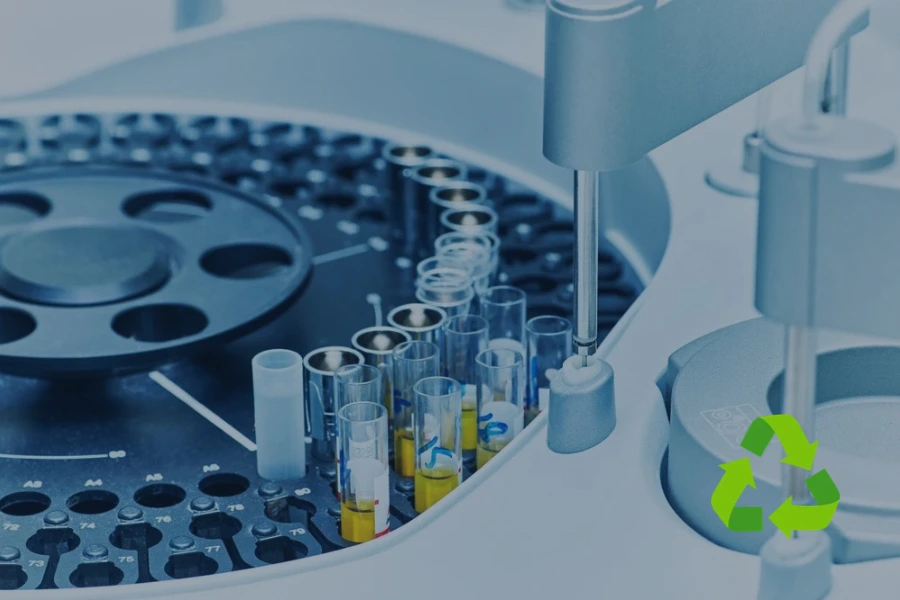
Laboratories regularly replace equipment as technology improves, older machines stop working, or facilities upgrade their testing capabilities. When a centrifuge reaches the end of its useful life, proper disposal involves more than simply removing it from the laboratory.
Old centrifuges contain recyclable metals, electric motors, wiring, circuit boards, and other mechanical components. However, equipment previously exposed to biological samples, chemicals, or radioactive materials may require decontamination before recycling.
At EACR Inc., we’re an electronics recycling company helping laboratories, hospitals, universities, and research facilities manage outdated equipment. We offer commercial recycling pickups, facility drop-offs, and collection solutions for larger laboratory equipment recycling projects.
Can Centrifuges Be Recycled?
Yes, laboratory centrifuges can be recycled. Most contain recoverable metals, electrical components, and mechanical parts that can be processed through suitable electronics and medical equipment recycling programs.
Common types of recyclable centrifuges include:
- Benchtop Centrifuges: Compact laboratory equipment containing electric motors, metal housings, and electronic controls.
- Microcentrifuges: Smaller centrifuges used to process small sample tubes, often containing plastic housings and electronic components.
- Floor-Standing Centrifuges: Larger machines with heavy metal frames, powerful motors, and substantial mechanical assemblies.
- Refrigerated Centrifuges: Equipment with integrated cooling systems that may require refrigerant recovery before final disposal.
Although these centrifuges contain recyclable materials, preparation requirements depend on their design, condition, and previous laboratory use.
Equipment exposed to hazardous substances may require additional handling before it can enter a recycling program.
Where Can You Recycle an Old Centrifuge?
EACR Inc. provides several recycling options for laboratories and healthcare organizations retiring outdated centrifuges and related equipment.
- Commercial Recycling Pickups: EACR Inc. coordinates pickups for qualifying laboratory and healthcare equipment recycling projects. This is particularly useful for facilities replacing multiple centrifuges or larger machines.
- Facility Drop-Off: Laboratories can inquire about recycling accepted centrifuges at our facility located at 1950 Rutgers University Blvd, Lakewood, NJ 08701. Call (732) 370-4100 before visiting to confirm acceptance and preparation requirements. Hours are Monday–Friday, 8 AM–4 PM.
- Laboratory Equipment Cleanouts: Facilities replacing centrifuges, microscopes, analyzers, and other laboratory electronics can discuss coordinated recycling arrangements for qualifying equipment.
- E-Waste Recycling Containers: EACR Inc. offers e-waste container programs for larger equipment collections. Container suitability depends on equipment dimensions, weight, and accepted materials.
What Parts of a Centrifuge Can Be Recycled?
Laboratory centrifuges contain several different materials, many of which can be recovered through appropriate recycling processes.
The exact components vary depending on the manufacturer, model, and type of centrifuge.
Metal Housing and Frame
Many centrifuges contain steel, aluminum, and other metals used in their housings, internal frames, and structural supports.
Larger floor-standing centrifuges often have substantial metal components designed to support their weight and withstand high-speed operation.
These metals can be separated and processed through suitable scrap-metal recycling methods.
Electric Motor and Copper Wiring
Centrifuges use electric motors to spin samples at high speeds, separating substances based on their density.
These motors commonly contain copper windings, steel, and other recoverable metals.
Even when a centrifuge’s motor no longer functions, its internal metal components may still be recycled.
Electrical wiring and power connections may also contain recoverable copper.
Centrifuge Rotors and Buckets
Rotors are the components responsible for holding and spinning sample tubes or containers.
Depending on the centrifuge, rotors and buckets may be manufactured from aluminum, stainless steel, titanium, or other materials.
Damaged, worn, or retired metal rotors may still contain recyclable materials, even when they are no longer suitable for laboratory use.
However, rotors previously exposed to hazardous substances must be appropriately decontaminated before recycling.
Circuit Boards and Electronic Controls
Modern centrifuges contain electronic systems that control rotational speed, timing, temperature, and other functions.
These systems may include circuit boards, digital displays, sensors, switches, and electrical connections.
Electronic components contain small amounts of metals and other materials that may be recovered through specialized electronics recycling processes.
Refrigeration Components
Refrigerated centrifuges contain cooling systems designed to maintain specific temperatures during operation.
These systems may include compressors, refrigerant lines, and other mechanical components.
While the metal components may be recyclable, refrigerants require separate handling and must be properly recovered before final disposal under applicable requirements.
Laboratories should never attempt to cut open refrigerant lines or release refrigerants during equipment preparation.
How to Prepare a Centrifuge for Recycling
Before recycling a centrifuge, laboratories should take several steps to prepare the equipment for safe removal and material recovery.
Because centrifuges may be used with biological samples, chemicals, or other hazardous substances, proper preparation is particularly important.
Step 1: Disconnect and Empty the Equipment
Turn off the centrifuge and disconnect it from its electrical supply according to the manufacturer’s instructions.
Make sure the rotor has completely stopped before opening the equipment.
Remove all sample tubes, containers, and other laboratory materials from the centrifuge.
Check the chamber for leftover samples, spills, or debris that may require additional handling.
Step 2: Clean and Decontaminate the Centrifuge
Laboratory centrifuges may be exposed to biological materials, chemicals, or radioactive substances during normal operation.
Before recycling, equipment should be assessed and appropriately decontaminated according to the laboratory’s safety procedures and the manufacturer’s instructions.
This may involve cleaning the rotor chamber, lid, interior surfaces, and removable accessories.
Laboratory environmental health and safety personnel may need to review the equipment, oversee specialized decontamination, or authorize its removal.
Do not send potentially contaminated equipment for ordinary electronics recycling without appropriate assessment and clearance.
Step 3: Inspect the Rotor and Accessories
Once the centrifuge is safely disconnected and cleared for handling, inspect its rotor assemblies, buckets, and removable accessories.
These components may need to be separated from the main unit according to the manufacturer’s instructions.
Check for corrosion, cracks, or other signs of damage that could affect handling.
Damaged rotors should remain out of service, while accessories previously exposed to hazardous materials may require additional decontamination before recycling.
Step 4: Check for Refrigerants or Other Special Components
Determine whether the centrifuge contains a refrigeration system, batteries, or other components that need separate handling.
Refrigerated models may require refrigerant recovery before the equipment can be processed.
Do not attempt to dismantle sealed refrigeration systems or release refrigerants yourself.
If the centrifuge contains other potentially hazardous components, notify your recycling provider before arranging collection.
Step 5: Confirm Recycling Requirements
Before scheduling a pickup or drop-off, contact EACR Inc. with information about your equipment.
Helpful details include:
- Manufacturer and model
- Number of centrifuges
- Equipment dimensions and approximate weight
- Whether the units are refrigerated
- General operating condition
- Previous exposure to hazardous materials
- Decontamination status
Our team can review your equipment and discuss available recycling arrangements and preparation requirements.
What Should You Do With Old Centrifuge Rotors?
Centrifuge rotors experience repeated mechanical stress during operation, particularly in high-speed and ultracentrifuge applications.
Over time, corrosion, fatigue, physical damage, or exceeding manufacturer-recommended service limits can make a rotor unsuitable for continued use.
Laboratories should inspect rotors regularly and follow manufacturer recommendations for maintenance and retirement.
Important considerations include:
- Rotor Retirement: Rotors should be removed from service when they reach applicable manufacturer limits or develop defects that make continued use unsafe.
- Physical Damage: Cracked, corroded, or structurally damaged rotors should not be reused without appropriate manufacturer evaluation.
- Metal Recycling: Aluminum, steel, and certain other metal rotors may qualify for recycling once properly prepared.
- Decontamination: Rotors exposed to biological, chemical, or radioactive materials require appropriate assessment and decontamination before recycling.
Even when a rotor is no longer safe to operate, its metal components may still be recoverable through suitable recycling processes.
Frequently Asked Questions About Centrifuge Recycling
Can Laboratory Centrifuges Be Recycled?
Yes. Laboratory centrifuges contain recoverable metals, electric motors, wiring, and electronic components that can be processed through suitable recycling programs.
Are Centrifuges Considered Electronic Waste?
Powered centrifuges contain electrical and electronic components, making them suitable for specialized electronics recycling. They also contain mechanical parts and metals that may require separate processing.
Can You Recycle a Broken Centrifuge?
Yes. Even centrifuges with failed motors or damaged components may contain recyclable metals and electronics.
Do Centrifuges Need to Be Decontaminated Before Recycling?
Centrifuges previously exposed to biological, chemical, or radioactive materials require appropriate assessment and decontamination before recycling. Laboratories should follow their safety procedures and applicable equipment clearance requirements.
Can Centrifuge Rotors Be Recycled?
Yes. Metal centrifuge rotors may be recycled after appropriate preparation and decontamination, depending on their composition and the recycling facility’s requirements.
Can Refrigerated Centrifuges Be Recycled?
Yes. Refrigerated centrifuges contain recyclable materials, but their cooling systems may require refrigerant recovery and additional preparation before final disposal.
Where Can You Recycle an Old Centrifuge?
EACR Inc. accepts qualifying laboratory equipment at its recycling facility at 1950 Rutgers University Blvd, Lakewood, NJ 08701. Call (732) 370-4100 to confirm centrifuge acceptance, drop-off requirements, or commercial pickup availability.
Recycle Your Old Centrifuge With EACR Inc.
Outdated and broken centrifuges contain recoverable metals, electric motors, wiring, circuit boards, and other materials that can be processed through appropriate recycling methods. Before recycling, laboratories should remove samples, complete necessary decontamination, and identify any refrigeration components or other materials requiring special handling.
At EACR Inc., we’re an e-waste recycling company helping laboratories, hospitals, universities, and research facilities manage outdated electronic equipment. We offer facility drop-offs in Lakewood, New Jersey, commercial pickups, and recycling solutions for larger laboratory equipment projects. Contact our team at (732) 370-4100 to discuss centrifuge recycling or arrange a qualifying equipment collection.