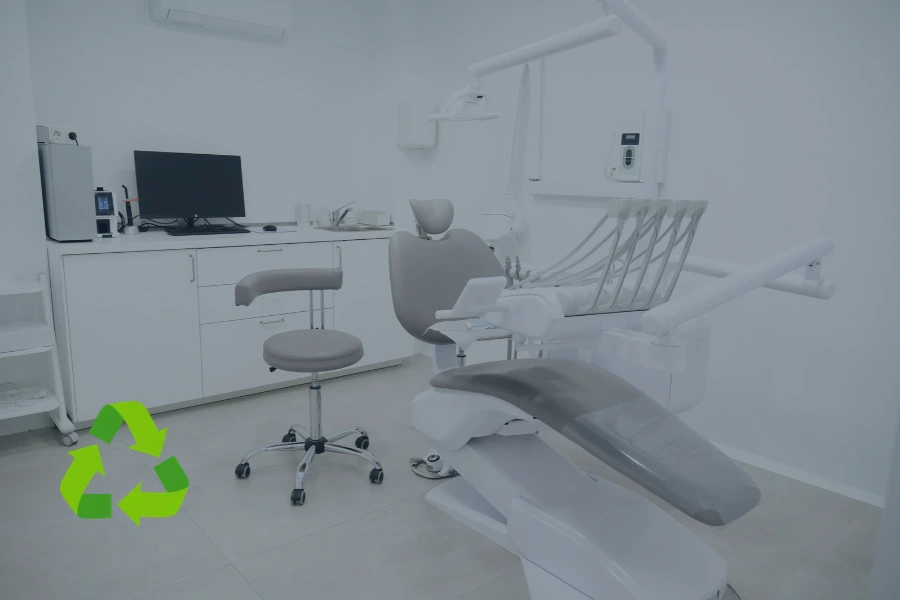
Upgrading dental chairs is a common part of renovating a dental practice, replacing outdated equipment, or opening a new location. But once the new chairs are installed, what happens to the old ones?
Dental chairs aren’t ordinary furniture. Many contain electric motors, hydraulic systems, wiring, electronic controls, and heavy metal frames. While these components can often be recycled, dental chairs require proper preparation before they’re removed from a clinical setting.
At EACR Inc., we’re an e-waste recycling company helping dental practices, healthcare facilities, and organizations manage outdated medical and electrical equipment. We offer commercial equipment pickups, facility drop-offs in Lakewood, New Jersey, and recycling solutions for larger equipment replacement projects.
Can Old Dental Chairs Be Recycled?
Dental chairs can be recycled, and many contain recoverable steel, aluminum, copper, electric motors, and other components that can be processed through appropriate recycling facilities.
However, the recycling process depends on the type of chair and its construction.
- Manual Dental Chairs: Primarily contain metal frames, mechanical adjustment components, upholstery, and padding.
- Electric Dental Chairs: Use powered motors, wiring, switches, and electronic control systems to adjust seating positions.
- Hydraulic Dental Chairs: Contain hydraulic pumps, cylinders, and fluid reservoirs that may require additional handling before recycling.
Some dental chairs combine electric controls with hydraulic lifting systems, making their construction more complex.
Because of these components, powered dental chairs should not automatically be treated as ordinary furniture or mixed scrap metal. Proper recycling involves identifying the different materials and handling any fluids or electrical components appropriately.
Why Dental Chairs Require Special Handling Before Recycling
Dental chairs are large, heavy pieces of equipment that may be connected to other systems throughout a treatment room.
Before recycling, dental practices should consider the chair’s electrical components, potential hydraulic fluids, clinical surfaces, and any attached dental equipment.
Electrical and Hydraulic Systems
Many modern dental chairs use electric motors, control boards, and foot-operated switches to adjust the chair’s height, backrest, and positioning.
Some models also use hydraulic pumps and cylinders to raise, lower, or reposition the chair.
These systems contain recyclable metals and electrical components, but certain hydraulic models also have sealed fluid reservoirs that require appropriate handling.
Dental practices should avoid opening hydraulic systems, disconnecting pressurized components, or draining fluids without following the manufacturer’s instructions or consulting a qualified equipment technician.
Patient-Contact Surfaces and Upholstery
Dental chairs are used in clinical environments where patients and dental professionals regularly come into contact with the equipment.
Before a chair leaves the practice, its surfaces should be cleaned and appropriately decontaminated according to the facility’s infection-control procedures and manufacturer instructions.
This includes addressing visible contamination and removing disposable barriers or other patient-care materials.
Chair upholstery also presents a separate recycling consideration. Synthetic coverings, foam cushions, and padding generally cannot be processed alongside recyclable metal components.
Depending on their condition and composition, these materials may require separate handling.
Attached Dental Equipment
A dental chair may be part of a larger operatory setup rather than a standalone piece of equipment.
Depending on the installation, it may be connected to:
- Dental delivery units
- Operatory lights
- Air and water lines
- Suction equipment
- Foot controls
- Instrument holders
- Other mounted dental accessories
These systems may need to be disconnected or removed before recycling.
Some attached equipment may contain additional electrical components, fluid lines, or clinical waste that must be handled separately.
A dental chair itself isn’t automatically classified as regulated medical waste simply because it was used in a dental practice. Its handling requirements depend on its condition, contamination, and attached components.
Your Dental Chair Recycling Options
Dental Chair Recycling Pickups
EACR Inc. coordinates commercial equipment pickups for dental office renovations, relocations, closures, and large-scale upgrades. Availability depends on equipment quantity, location, and accessibility.
Facility Drop-Off
Dental practices can inquire about dropping off accepted equipment at EACR Inc.’s facility at 1950 Rutgers University Blvd, Lakewood, NJ 08701. Call (732) 370-4100 before visiting. Hours are Monday–Friday, 8 AM–4 PM.
Complete Dental Operatory Recycling
Practices replacing entire treatment rooms can arrange recycling for qualifying dental chairs, operatory lights, delivery units, computers, and other electronic equipment. Learn more in our dental instrument recycling guide.
E-Waste Recycling Containers
EACR Inc. offers e-waste container programs for larger dental equipment replacement projects. Container availability depends on equipment dimensions, weight, and accepted materials.
What’s Inside a Dental Chair?
Dental chairs contain a combination of structural metals, mechanical systems, electrical components, and cushioning materials.
Their exact construction varies depending on the manufacturer, model, and whether the chair uses manual, electric, or hydraulic adjustments.
Common materials and components include:
- Steel: Found in chair bases, structural frames, support brackets, and lifting mechanisms.
- Aluminum: Used in certain structural components, protective housings, and accessories.
- Copper: Found in electrical wiring, motors, and internal electrical connections.
- Electric Motors: Power chair positioning, lifting mechanisms, and other adjustable functions.
- Hydraulic Components: Include pumps, cylinders, reservoirs, and lifting mechanisms in certain models.
- Circuit Boards and Controls: Operate switches, foot controls, chair positioning, and other electronic functions.
- Plastic: Used in protective covers, housings, control panels, and other exterior components.
- Foam and Upholstery: Provide padding, comfort, and support for patients during treatment.
- Hydraulic Fluid: Found in certain hydraulic systems and may require separate handling before recycling.
Because these materials serve different purposes, they don’t all follow the same recycling process.
Metal frames, motors, and electrical components may be recoverable, while upholstery, foam, and certain plastics can be more difficult to process.
What Parts of a Dental Chair Can Be Recycled?
Several dental chair components contain recyclable metals and electrical materials. However, actual material recovery depends on the chair’s construction and the capabilities of the recycling facility.
Metal Frame and Base
The frame and base support the chair’s weight while providing stability during patient positioning.
These components commonly contain steel, aluminum, and other metals that can be separated and recovered during recycling.
Once processed, suitable metals may be used in manufacturing new equipment, machinery, and other metal products.
Electric Motors and Adjustment Mechanisms
Powered dental chairs use electric motors and adjustment mechanisms to control the chair’s movement.
These components commonly contain copper wiring, steel, and other metals that may be recovered through appropriate processing.
Even if a motor no longer works, its internal materials may still be suitable for recycling.
Control Panels and Electrical Wiring
Electronic dental chairs contain wiring, switches, circuit boards, power supplies, and foot controls.
These components operate the chair’s positioning and other powered functions.
Electrical wiring may contain recoverable copper, while circuit boards and electronic controls may require specialized electronics processing.
Hydraulic Pumps and Components
Hydraulic dental chairs use pumps, cylinders, and related mechanisms to control movement.
These components often contain recyclable metals, including steel and aluminum.
However, hydraulic systems may also contain oil or other fluids that require assessment before recycling.
The presence of hydraulic fluid doesn’t necessarily prevent recycling, but it may affect preparation and acceptance requirements.
Upholstery, Foam, and Plastic Covers
Dental chairs also contain materials designed for patient comfort and equipment protection.
These include cushions, synthetic upholstery, foam padding, armrests, and plastic covers.
Unlike metals, these materials aren’t always recyclable through standard equipment recycling processes.
Some may need to be removed or handled separately, depending on their composition and condition.
How to Prepare a Dental Chair for Recycling
Preparing a dental chair for recycling involves more than simply unplugging it and moving it outside.
Because dental chairs can contain electrical systems, hydraulic components, and attached clinical equipment, proper preparation helps reduce handling problems during removal and recycling.
Step 1: Confirm the Chair is Ready for Retirement
Before removing a dental chair, confirm that it is no longer needed for patient care.
Determine whether the equipment will be repaired, transferred to another location, sold, donated, or permanently retired.
It’s also helpful to document the chair’s manufacturer, model, and general condition.
This information can help your recycling provider understand the equipment and identify any special handling requirements.
Step 2: Clean and Decontaminate the Chair
Dental chairs should be cleaned and appropriately decontaminated before leaving a clinical environment.
Follow your practice’s infection-control procedures and the equipment manufacturer’s instructions.
Preparation may include:
- Cleaning patient-contact surfaces
- Removing disposable barriers
- Removing patient-care supplies and waste
- Addressing visible contamination
- Separating sharps and regulated medical waste
Sharps, contaminated clinical waste, and other regulated materials should never be mixed into ordinary equipment recycling loads.
If equipment has unusual contamination or requires specialized decontamination, consult the appropriate infection-control professional before arranging removal.
Step 3: Disconnect Power and Attached Equipment
Before removing a powered dental chair, make sure it has been safely disconnected from its electrical supply.
Depending on the installation, other equipment may also need to be disconnected, including foot controls, operatory lights, delivery units, and attached accessories.
Some installations also involve air, water, or suction connections.
Hardwired electrical connections, plumbing, and complicated equipment assemblies should be disconnected by qualified professionals or dental equipment technicians.
Avoid attempting unfamiliar disconnections that could damage equipment or create safety hazards.
Step 4: Identify Hydraulic Fluids and Other Special Components
If your dental chair uses a hydraulic lifting system, check the manufacturer’s documentation to determine whether it contains hydraulic fluid.
Some chairs have sealed reservoirs, pumps, and cylinders that require special handling during equipment retirement.
Notify your recycling provider about any known hydraulic systems, fluid leaks, batteries, or other potentially problematic components.
Do not attempt to open sealed reservoirs, drain hydraulic fluid, or dismantle pressurized components without appropriate training and instructions.
Step 5: Separate Dental Waste and Clinical Accessories
Before recycling the chair, remove detachable clinical supplies and accessories that don’t belong in the equipment recycling stream.
This may include disposable items, certain suction-related components, and other patient-care materials.
Particular attention should be given to components associated with dental amalgam waste, such as chair-side traps or related collection systems, when present.
Materials containing amalgam residue require appropriate handling and should not be mixed with ordinary scrap metal or electronic equipment.
Keep clinical waste separate from the chair’s recyclable structural and electrical components.
Step 6: Prepare the Chair for Safe Removal
Dental chairs can be heavy and difficult to move through treatment rooms, hallways, and doorways.
Before removal, make sure adjustable sections are secured and cannot shift unexpectedly.
Additional preparation may include:
- Securing movable chair components
- Organizing loose wiring and cables
- Checking doorway and hallway clearance
- Identifying stairs, elevators, and loading areas
- Arranging appropriate lifting or moving equipment
- Avoiding unnecessary disassembly
For larger chairs or complicated installations, professional equipment removal may be necessary.
Step 7: Contact EACR Inc. About Recycling
Once the chair is ready for retirement, contact EACR Inc. to discuss available recycling arrangements.
When reaching out, provide information such as:
- Number of dental chairs
- Manufacturer and model
- Manual, electric, or hydraulic construction
- Whether delivery equipment remains attached
- Equipment location
- Building access and loading conditions
- Any known fluids or special handling concerns
These details help our team evaluate the equipment and discuss appropriate collection options.
What Happens to a Dental Chair After Recycling?
Once a dental chair reaches a suitable recycling facility, its different materials may be separated and processed for recovery.
The exact process depends on the chair’s construction and the recycling facility’s capabilities.
Equipment Inspection and Sorting
The first step involves identifying the materials and components inside the dental chair.
This may include evaluating its metal frame, electric motors, wiring, control systems, and mechanical assemblies.
The recycler may also identify upholstery, plastics, or other materials that require separate handling.
Separation of Electrical and Mechanical Components
Depending on the chair’s construction, electrical and mechanical components may be separated from the structural frame.
Electric motors, wiring, circuit boards, and control panels can require different processing from larger metal parts.
Hydraulic systems may also need special attention if fluids remain inside their components.
Metal Recovery
Steel, aluminum, copper, and other suitable metals may be sorted and prepared for recycling.
These materials can then enter appropriate metal recovery processes.
Recovered metals may eventually be used to manufacture new machinery, equipment, and other products.
Handling Remaining Materials
Not every dental chair component can be recycled through conventional metal or electronics processing.
Foam padding, upholstery, certain plastics, and mixed-material components may require separate handling.
The amount of material ultimately recovered depends on the equipment and available processing methods.
Frequently Asked Questions About Dental Chair Recycling
Can Dental Chairs Be Recycled?
Yes. Many dental chairs contain recyclable metals, electric motors, wiring, and other components that can be recovered through suitable recycling processes.
Are Dental Chairs Considered Electronic Waste?
Powered dental chairs contain electrical and electronic components that may require e-waste processing. Manual dental chairs primarily contain mechanical components and structural materials.
Can You Recycle a Broken Dental Chair?
Yes. Even a dental chair with failed motors, broken controls, or mechanical damage may contain recoverable metals and electrical components.
Can Dental Offices Recycle Multiple Chairs at Once?
Yes. Dental practices can inquire about bulk equipment recycling arrangements for office renovations, equipment upgrades, relocations, and closures.
Does a Dental Chair Contain Hydraulic Oil?
Some dental chair models use hydraulic systems containing fluid reservoirs, while others rely on electric actuators or mechanical adjustment systems.
Where Can You Recycle an Old Dental Chair?
You can contact EACR Inc. about recycling old dental chairs at our facility located at 1950 Rutgers University Blvd, Lakewood, NJ 08701. Call (732) 370-4100 to confirm equipment acceptance, drop-off requirements, or available commercial pickup options.
Recycle Your Old Dental Chair With EACR Inc.
Dental chairs contain steel frames, electric motors, wiring, electronic controls, upholstery, and sometimes hydraulic systems that require appropriate handling at the end of their useful life. Before recycling, dental practices should safely disconnect the equipment, address any clinical contamination, and identify components that may require special preparation.
At EACR Inc., we’re an e-waste recycling company helping dental offices, healthcare facilities, and organizations manage outdated medical and electronic equipment. We offer scheduled commercial pickups, facility drop-offs in Lakewood, New Jersey, and container solutions for qualifying projects. Contact our team at (732) 370-4100 to discuss dental chair recycling or a larger dental equipment recycling project.