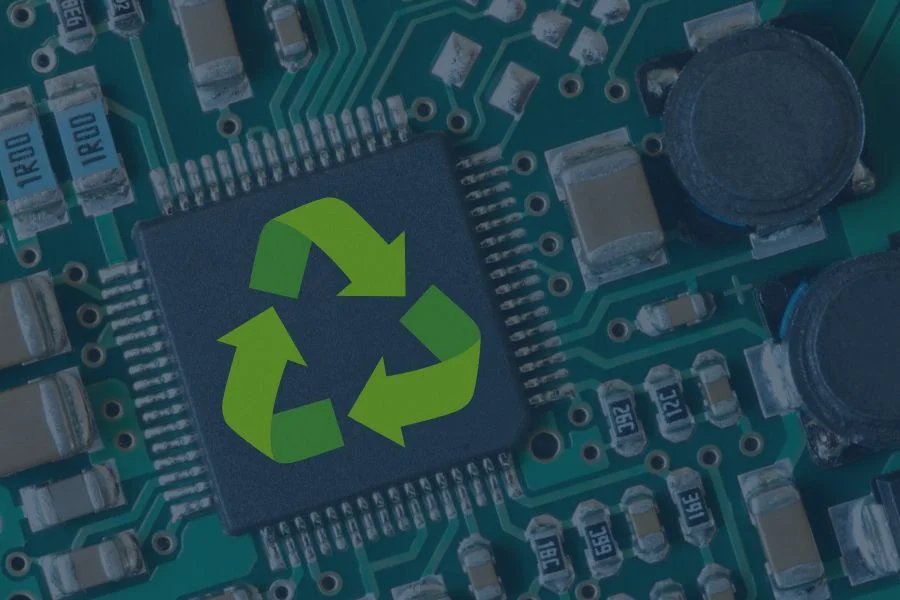
Circuit boards are found inside computers, servers, networking equipment, appliances, industrial machinery, medical electronics, and many other devices.
They contain copper, fiberglass, plastics, solder, electronic components, and other metals. Businesses may generate loose circuit boards on their own or have them still installed inside retired electronics.
EACR is an electronics recycling company that helps businesses, schools, healthcare organizations, municipalities, and other organizations recycle circuit boards and electronic equipment.
Quick Answer: How to Recycle Circuit Boards
The best circuit board recycling option mainly depends on how much material you have.
Scheduled Pickups for Bulk Circuit Boards
Scheduled pickups are best for organizations handling larger quantities of circuit boards or mixed electronic equipment.
This can include:
- Businesses
- Data centers
- Electronics repair operations
- Manufacturers
- Warehouses
- Large cleanouts
- Mixed electronics loads
EACR can coordinate electronics recycling pickups for larger commercial quantities.
Electronics Recycling Drop-Off
Drop-off is a simple option for:
- Individuals
- Small quantities
- A few loose circuit boards
- Small electronics containing circuit boards
Contact EACR before arriving to confirm the material and current drop-off details.
E-Waste Containers
E-waste containers are useful for organizations that accumulate circuit boards and other electronics over time.
They can work well for:
- Schools
- Municipalities
- Warehouses
- Businesses
- Healthcare facilities
- Ongoing electronics replacement
Circuit boards can be collected alongside other accepted electronic equipment instead of arranging a separate pickup every time material is generated.
Why Should You Recycle Circuit Boards?
Circuit boards contain much more than plastic and metal.
They combine copper, fiberglass, solder, plastics, electronic components, and other metals into a single piece of electronic equipment.
Recycling allows these boards to enter appropriate processing streams instead of being treated like ordinary trash.
Businesses can also generate significant quantities of circuit boards during:
- IT upgrades
- Electronics repair
- Equipment replacement
- Manufacturing
- Data center upgrades
- Facility cleanouts
Even when individual boards are small, large projects can generate substantial quantities.
What is Inside a Circuit Board?
The exact composition depends on the type of circuit board, its age, and the equipment it came from. Common materials and components include:
- Fiberglass and resin: These materials form the rigid base of many circuit boards and provide the structure that supports the electronic components and conductive pathways.
- Copper: Copper carries electrical signals and power through traces, internal layers, contacts, and connections throughout the board.
- Solder: Solder bonds electronic components to the circuit board and creates the electrical connections between them.
- Integrated circuits: These small chips perform functions such as processing information, storing data, controlling equipment, and managing electrical signals.
- Capacitors: Capacitors temporarily store electrical energy and help regulate voltage, filter signals, and stabilize power within the circuit.
- Resistors: Resistors control the flow of electrical current and help protect components from receiving too much power.
- Transistors: Transistors act as electronic switches or amplifiers and help control how electrical signals move through the board.
- Connectors: Connectors allow the circuit board to communicate with cables, drives, power sources, displays, and other components.
- Plastics: Plastics are commonly used in connectors, sockets, protective housings, coatings, and other insulating components.
- Aluminum: Aluminum may be used in heat sinks, structural components, and other areas where lightweight metal or heat dissipation is needed.
- Tin: Tin is commonly associated with solder and protective coatings used on electrical connections and conductive surfaces.
- Nickel: Nickel may be used as a coating or intermediate layer on connectors and contacts to improve durability and corrosion resistance.
- Silver: Silver may be used in contacts, conductive materials, and certain electronic components because of its electrical conductivity.
- Gold: Gold is commonly used in small amounts on connectors, contacts, and other areas where corrosion-resistant electrical connections are important.
- Palladium: Palladium may be found in certain electronic components and coatings, particularly in more complex or specialized circuit boards.
The amount of each material can vary significantly between a simple appliance control board and a densely populated server or telecom board.
How to Recycle Circuit Boards
The process is straightforward, and there is usually no need to completely dismantle electronic equipment yourself.
1. Identify What You Have
Determine whether you have:
- Loose circuit boards
- Boards still installed inside equipment
- Mixed electronics
- Bulk quantities
This helps determine the most practical recycling option.
2. Leave Boards Inside Equipment When Appropriate
You usually do not need to take apart an entire computer, server, appliance, or other device just to remove the circuit board.
If the board is still installed, the complete electronic device can often be handled through an electronics recycling program.
3. Identify Batteries and Data-Bearing Equipment
Some electronics may contain batteries or data-bearing devices in addition to their circuit boards.
This can include:
- HDDs
- SSDs
- Flash storage
- Other storage media
Circuit board recycling does not automatically address data stored on those devices.
Learn more about EACR’s data destruction services when retired equipment contains sensitive information.
4. Separate Loose Boards From General Waste
Keep loose circuit boards together rather than mixing them with ordinary trash or unrelated materials.
This makes them easier to identify and process when they reach the recycling facility.
5. Choose a Recycling Option
Choose the method that best matches the amount of material you have:
- Electronics recycling drop-off
- Scheduled pickup
- E-waste container
Small quantities may be easier to drop off, while commercial volumes are often better suited for scheduled pickups or container programs.
Frequently Asked Questions About Circuit Board Recycling
Can Circuit Boards Be Recycled?
Yes. Circuit boards contain metals, fiberglass, plastics, and electronic components that can be processed through an electronics recycling program.
What Are Circuit Boards Made Of?
Circuit boards commonly contain fiberglass, resin, copper, solder, plastics, electronic components, and metals such as tin, nickel, silver, gold, and palladium.
Do Circuit Boards Contain Gold?
Some circuit boards contain small amounts of gold in connectors, contacts, and other electronic components. The amount varies significantly depending on the type of board.
Do I Need to Remove Circuit Boards From Electronics Before Recycling?
Usually not. Computers, servers, appliances, and other electronic devices can often be recycled with the circuit boards still installed.
How Much Are Circuit Boards Worth?
Circuit board pricing depends on the board type, component density, quantity, sorting, and current market conditions. Different boards can have very different recycling values.
Can Businesses Recycle Circuit Boards in Bulk?
Yes. Businesses can recycle bulk quantities of circuit boards through scheduled electronics recycling pickups or e-waste container programs.
Can EACR Pick Up Circuit Boards?
Yes. EACR can coordinate commercial pickups for larger quantities of circuit boards and other electronic equipment.
Conclusion
Circuit boards contain copper, fiberglass, plastics, electronic components, and several different metals, making electronics recycling a more appropriate end-of-life option than ordinary disposal.
EACR is an electronics recycling company that helps individuals, businesses, schools, healthcare organizations, municipalities, and other organizations recycle circuit boards and electronic equipment through drop-offs, scheduled pickups, and e-waste container programs.