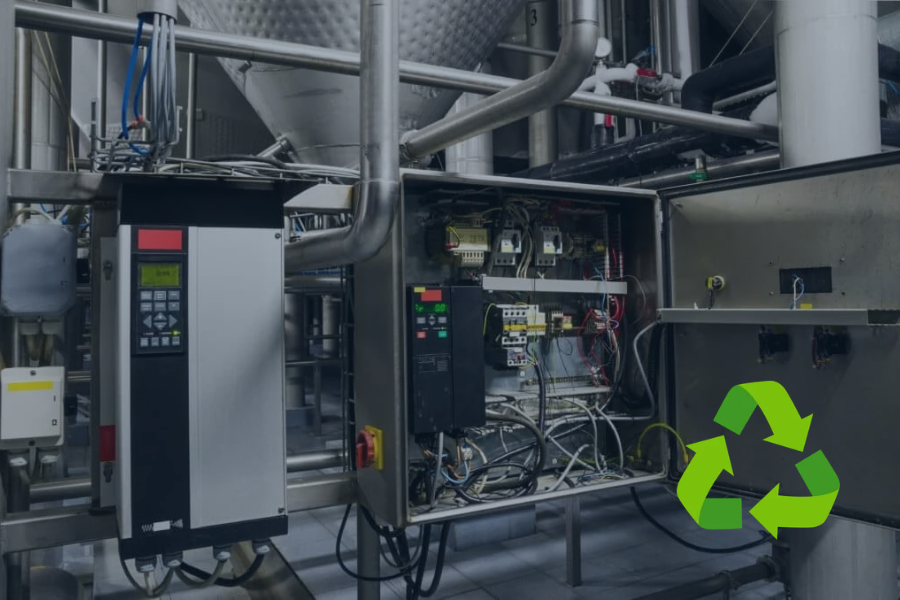
Variable frequency drives (VFDs) are commonly used in factories, commercial buildings, and industrial facilities to control the speed of electric motors. Over time, these devices can become outdated, stop working, or require replacement during equipment upgrades.
Like other industrial electronics, VFDs contain recyclable materials, including copper wiring, aluminum heatsinks, circuit boards, capacitors, and metal components. However, they require proper handling because certain electrical components can retain stored energy after the equipment is disconnected.
At EACR Inc., we’re an electronics recycling company helping businesses, manufacturers, and industrial facilities recycle qualifying electrical equipment. Our services include commercial pickups, facility drop-offs, and collection solutions for larger industrial recycling projects.
Can Variable Frequency Drives Be Recycled?
Yes. Variable frequency drives contain recyclable metals and electronic components that can be recovered through appropriate industrial electronics recycling processes.
Common recyclable materials found inside VFDs include:
- Aluminum Heatsinks and Housings: Used to manage heat and protect internal components.
- Copper Wiring: Found in electrical connections, terminals, and certain internal components.
- Steel Enclosures: Used in protective housings, mounting brackets, and structural hardware.
- Printed Circuit Boards: Contain electronic components that control the drive’s operation.
- Power Semiconductors: Electronic components used to regulate electrical power delivered to motors.
Before recycling, VFDs must be properly disconnected and evaluated. Internal capacitors can retain dangerous electrical charges even after the equipment has been turned off, making professional handling important.
What is a Variable Frequency Drive?
A variable frequency drive, commonly called a VFD, is an electronic device used to control the speed of an alternating-current (AC) electric motor.
Instead of operating a motor at a constant speed, a VFD adjusts the frequency and voltage supplied to the motor based on the equipment’s needs. These devices are also called AC drives or adjustable-frequency drives.
Most VFDs operate through three main stages:
- Rectifier: Converts incoming AC electricity into direct-current (DC) electricity.
- DC Bus: Uses capacitors to smooth the DC voltage and temporarily store electrical energy.
- Inverter: Converts the DC electricity back into controlled AC output to operate the motor at the desired speed.
By controlling motor speed, VFDs can improve equipment operation, reduce unnecessary energy consumption in suitable applications, and provide better control over industrial processes.
Where Are Variable Frequency Drives Commonly Used?
VFDs are found in many commercial and industrial systems that rely on electric motors. They’re commonly replaced during equipment upgrades, renovations, and industrial maintenance projects.
HVAC Systems
Commercial heating, ventilation, and air conditioning systems often use VFDs to control fans, air handlers, and other motor-driven equipment.
These drives allow building systems to adjust motor speeds based on ventilation or cooling requirements.
Older VFDs may be replaced when buildings upgrade their HVAC equipment or install newer control systems.
Industrial Pumps and Compressors
VFDs are commonly used to regulate electric motors powering pumps and compressors.
They’re found in manufacturing plants, water treatment facilities, commercial buildings, and other industrial operations where motor speed needs to change based on demand.
When pumps or compressors are upgraded, their associated VFDs may also be removed or replaced.
Conveyor Systems
Warehouses, distribution centers, and manufacturing facilities use VFDs to control conveyor belt speeds.
These drives help regulate the movement of products, materials, and equipment throughout production and distribution operations.
During facility upgrades or equipment replacements, VFDs may be retired alongside other machinery. Learn more in our conveyor system recycling guide.
Manufacturing and Production Equipment
VFDs are also used in production lines, automated machinery, and manufacturing equipment that requires adjustable motor speeds.
They may be installed in machines used for cutting, processing, moving, or manufacturing materials.
Facilities replacing older equipment can often coordinate recycling for VFDs and related industrial electronics.
What Are Variable Frequency Drives Made Of?
Variable frequency drives contain a combination of metals, electrical components, and electronic control systems. Their construction varies depending on the manufacturer, size, and intended application.
Aluminum Heatsinks and Metal Housings
VFDs generate heat while regulating electrical power, so many contain aluminum heatsinks designed to dissipate that heat.
Steel and aluminum are also commonly used in protective enclosures, mounting brackets, and structural components.
These metals can be separated and recovered through suitable recycling processes. Learn more about aluminum heatsink recycling.
Copper Wiring and Electrical Connections
Copper is commonly found in VFD wiring, electrical terminals, conductive busbars, and certain internal components.
Some drives also contain copper windings in inductors, filters, or transformers.
Copper can be recovered through appropriate metal recycling processes, making it one of the important recyclable materials found in industrial electrical equipment.
Circuit Boards and Power Semiconductors
VFDs contain printed circuit boards that manage motor speed, electrical output, and operating conditions.
They also use power semiconductors, including diodes and insulated-gate bipolar transistors (IGBTs), to convert and regulate electricity.
These assemblies contain metals, electronic components, and other materials that require specialized recycling.
Capacitors and Other Electrical Components
Capacitors are an important part of a VFD’s internal electrical system.
They help smooth DC voltage and temporarily store electrical energy within the drive.
Even after a VFD is disconnected from its power source, these capacitors may retain dangerous electrical charges. This is why proper electrical isolation and verification are necessary before equipment is removed or dismantled.
Cooling Fans, Displays, and Controls
Many VFDs contain additional components such as cooling fans, temperature sensors, digital displays, keypads, and control switches.
These parts help monitor operating conditions and allow users to adjust motor settings.
They also contain metals, plastics, wiring, and electronic materials that may require separation during recycling.
Variable Frequency Drive Recycling Options
EACR Inc. offers several recycling arrangements for businesses and industrial facilities managing outdated variable frequency drives and related equipment.
- Commercial Electronics Recycling Pickups: EACR Inc. coordinates commercial pickups for businesses, manufacturers, and industrial facilities recycling qualifying VFDs and other retired electronics.
- Facility Drop-Off: Approved VFDs may be brought to EACR Inc. at 1950 Rutgers University Blvd, Lakewood, NJ 08701. Call (732) 370-4100 beforehand to confirm acceptance and preparation requirements.
- Industrial Equipment Cleanouts: Facilities upgrading production lines or control systems can inquire about coordinated recycling for VFDs, electric motors, PLCs, and other qualifying industrial equipment.
- E-Waste Recycling Containers: EACR Inc. offers e-waste recycling containers for larger electronics collection projects, subject to equipment dimensions, weight, condition, and acceptance requirements.
Why VFDs Require Special Handling Before Recycling
Variable frequency drives contain electrical components that require careful handling before recycling. Unlike ordinary electronic devices, VFDs can retain dangerous amounts of electrical energy even after being disconnected from their power source.
Stored Electrical Energy in Capacitors
VFDs contain DC bus capacitors that temporarily store electrical energy during operation.
These capacitors can retain dangerous voltage after the drive has been switched off or disconnected. Turning off a VFD doesn’t automatically mean its internal components are safe to touch.
Proper Electrical Disconnection
VFDs are often connected to electrical panels, industrial motors, and building systems.
Qualified personnel should disconnect and remove these devices following the manufacturer’s instructions, including proper electrical isolation and verification that hazardous voltage is absent.
Never attempt to dismantle a VFD without the appropriate training and equipment.
Damaged or Contaminated Drives
VFDs exposed to water, excessive heat, physical damage, or industrial contaminants may require additional precautions before recycling.
Damaged enclosures, leaking components, corrosion, and signs of overheating should be reported to the recycling provider.
These conditions can affect how the equipment is safely handled, transported, and processed.
How to Prepare a Variable Frequency Drive for Recycling
Proper preparation helps industrial facilities manage outdated VFDs while reducing handling risks during removal, storage, and transportation.
Step 1: Identify the VFD
Locate the manufacturer’s label and record the model number, power rating, and other available specifications.
Common VFD manufacturers include ABB, Siemens, Schneider Electric, Danfoss, and Rockwell Automation.
This information helps identify the equipment and its recycling requirements.
Step 2: Arrange Safe Electrical Disconnection
Have qualified electrical personnel disconnect the VFD from its power supply, motor connections, and associated equipment.
Follow the manufacturer’s electrical isolation and voltage-verification procedures before handling or removing the drive.
Step 3: Inspect the Equipment
Check the exterior for visible damage, corrosion, leaking components, or signs of overheating.
Avoid opening the housing or touching internal electrical components. Notify your recycling provider if the VFD has been damaged or exposed to contaminants.
Step 4: Keep the Drive Intact
Businesses generally don’t need to remove circuit boards, heatsinks, capacitors, or other internal components before recycling.
Leaving the VFD assembled helps reduce unnecessary handling and protects its components during collection.
Step 5: Organize Multiple Drives for Collection
If your facility is recycling several VFDs, organize them by size, condition, and equipment type.
Use appropriate packaging or secure storage arrangements to prevent heavy equipment from shifting and to protect exposed electrical connections during transportation.
Step 6: Contact EACR Inc.
Contact EACR Inc. with the manufacturer, model, quantity, approximate dimensions, and condition of your VFDs.
Let us know whether the equipment has already been professionally disconnected and removed. Our team can discuss recycling arrangements for qualifying industrial electronics.
What Happens During VFD Recycling?
Once variable frequency drives reach an appropriate recycling operation, their components may be separated and processed to recover metals and electronic materials.
The process generally includes:
- Collection and Inspection: VFDs are evaluated based on their size, construction, condition, and potential handling requirements.
- Component Separation: Metal housings, wiring, circuit boards, heatsinks, capacitors, and other components may be separated using appropriate procedures.
- Metal Recovery: Copper, aluminum, steel, and other suitable metals are directed toward recycling processes for further use.
- Electronic Component Processing: Circuit boards, power semiconductors, and other electronic assemblies undergo specialized processing to recover applicable materials.
The exact recycling methods and materials recovered depend on the VFD’s construction and the receiving facility’s capabilities.
Frequently Asked Questions About VFD Recycling
Can Variable Frequency Drives Be Recycled?
Yes. Variable frequency drives contain recyclable metals, circuit boards, and electronic components that can be recovered through appropriate industrial electronics recycling processes.
Are VFDs Considered Electronic Waste?
Yes. VFDs are electronic motor-control devices containing circuit boards, power semiconductors, capacitors, and electrical connections, making them a form of industrial electronic waste.
What Does VFD Stand For?
VFD stands for variable frequency drive. It’s an electronic device that controls the speed of an AC motor by adjusting the frequency and voltage supplied to it.
What is the Difference Between a VFD and a PLC?
A VFD controls an electric motor’s speed and power output, while a programmable logic controller (PLC) manages automated processes and equipment operations.
Do Variable Frequency Drives Contain Copper?
Yes. VFDs commonly contain copper wiring, electrical connections, and sometimes copper windings in internal inductors or transformers.
Can You Recycle a Broken VFD?
Yes. Even nonworking VFDs may contain recoverable metals and electronic components. Damaged equipment should be evaluated before recycling to determine whether additional handling precautions are necessary.
Where Can You Recycle Old Variable Frequency Drives?
Contact EACR Inc. about recycling qualifying VFDs at our facility at 1950 Rutgers University Blvd, Lakewood, NJ 08701. Call (732) 370-4100 to confirm acceptance, drop-off requirements, or commercial pickup arrangements.
Recycle Your Variable Frequency Drives With EACR Inc.
Variable frequency drives contain recoverable copper, aluminum, steel, circuit boards, and other electronic components. Whether a VFD has stopped working or is being replaced during an equipment upgrade, proper removal and handling are essential because internal capacitors may retain dangerous electrical energy after shutdown.
At EACR Inc., we’re an electronics recycling company helping businesses, manufacturers, and industrial facilities manage outdated equipment. We offer qualifying commercial recycling pickups, facility drop-offs, and collection solutions for larger industrial equipment recycling projects. Contact our team at (732) 370-4100 to discuss VFD recycling, equipment acceptance, and available collection arrangements.