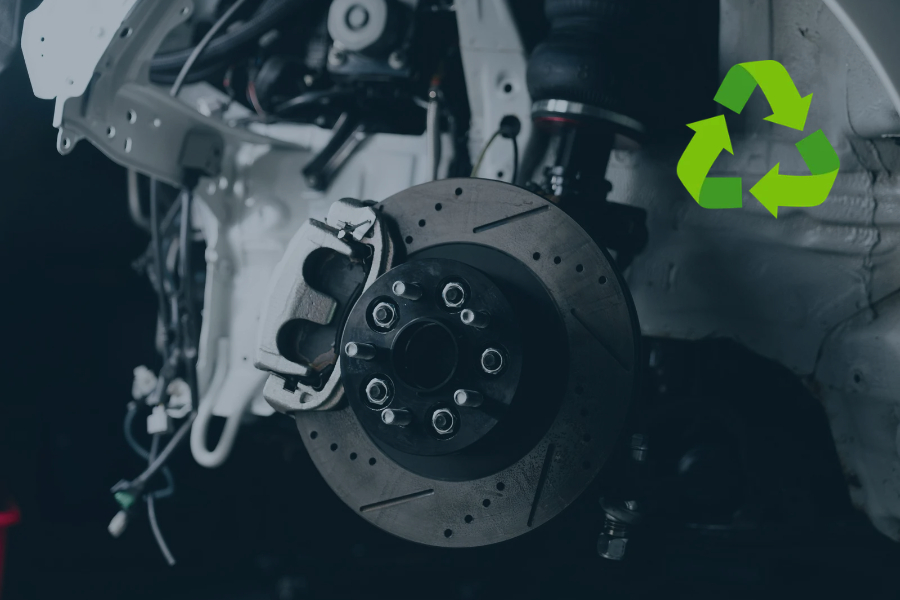
Replacing worn brake rotors is a routine part of vehicle maintenance, but what happens to the old ones? Whether they’re removed from a personal vehicle, repair shop, or commercial fleet, used brake rotors contain recyclable metals that don’t need to go to waste.
Most brake rotors are made from cast iron, which can be recovered and processed into new metal products. While standard cast-iron rotors are commonly recycled as scrap metal, specialty versions like carbon-ceramic rotors may require different handling.
At EACR Inc., we’re an electronics recycling company helping individuals, businesses, municipalities, and organizations manage unwanted scrap metal and equipment. We offer facility drop-offs, scheduled commercial pickups, and recycling container arrangements for qualifying projects. Below, we’ll explain your rotor recycling options and what happens to old brake rotors during the recycling process.
Where Can You Recycle Old Brake Rotors?
Old brake rotors can often be recycled through scrap-metal recycling programs because most contain substantial amounts of iron. The best option depends on the type of rotors, how many you need to recycle, and whether they’re coming from an individual vehicle repair or a commercial automotive operation.
- Facility Drop-Off: EACR Inc. operates a recycling facility at 1950 Rutgers University Blvd, Lakewood, NJ 08701. Call (732) 370-4100 before visiting to confirm brake rotor acceptance. Facility hours are Monday–Friday, 8 AM–4 PM.
- Bulk Recycling Pickups: EACR Inc. coordinates commercial scrap-metal pickups for auto repair shops, dealerships, fleet operators, and other businesses accumulating large quantities of brake rotors. Availability depends on location, material type, and quantity.
- Scrap Metal Recycling Containers: Businesses generating ongoing automotive scrap can inquire about dedicated recycling containers for collecting brake rotors and other accepted metal components. Container availability depends on project size, material weight, and collection requirements.
- Electronics Recycling Events: EACR Inc. organizes community electronics recycling events, but brake rotors are not automatically accepted because they’re classified as automotive scrap metal. Contact our team to confirm acceptance before attending an event.
What Are Brake Rotors Made Of?
Brake rotors are designed to withstand high temperatures, repeated friction, and the pressure generated during braking. Most conventional automotive rotors are made primarily from cast iron, although some vehicles use different materials or multi-piece designs.
Common materials found in brake rotors include:
- Cast iron: The primary material used in most standard brake rotors because of its durability, heat-handling properties, and resistance to wear.
- Steel: Used in certain rotor designs, mounting components, and specialized braking applications.
- Aluminum: Sometimes used in the center mounting hats of two-piece performance brake rotors to reduce weight.
- Carbon-ceramic composites: Used in certain luxury and high-performance vehicles because of their heat resistance and braking characteristics.
- Protective coatings: Some rotors have corrosion-resistant coatings designed to reduce rust and protect exposed surfaces.
The high iron content of conventional brake rotors makes them good candidates for scrap-metal recycling. However, specialized materials such as carbon-ceramic composites may require different processing methods.
Since most brake rotors are made from cast iron, they’re classified as ferrous scrap metal. Understanding the difference between metal types can help explain how materials are sorted and processed during recycling. Learn more in our guide to ferrous vs. non-ferrous metals.
Which Types of Brake Rotors Can Be Recycled?
Most conventional metal brake rotors can be recycled, even when they’re worn out or damaged. However, their construction and material composition can affect how they’re handled.
Standard Cast-Iron Brake Rotors
Cast-iron brake rotors are among the most common types found on passenger cars, SUVs, and trucks.
These rotors are primarily made from iron-based metal, making them suitable for ferrous scrap-metal recycling.
Even when a cast-iron rotor becomes worn, rusted, warped, or cracked, its metal may still be recovered and processed into new products.
Vented, Drilled, and Slotted Rotors
Brake rotors come in several designs intended to manage heat and braking performance.
- Vented rotors: Have internal channels that help dissipate heat.
- Drilled rotors: Feature holes through the braking surface.
- Slotted rotors: Have grooves machined into the braking surface.
These design features generally don’t prevent recycling when the rotor is made from conventional cast iron.
The underlying metal composition matters more than the presence of ventilation channels, holes, or slots.
Two-Piece Brake Rotors
Some performance vehicles use two-piece brake rotors with a separate friction disc and center mounting hat.
The friction disc may be made from cast iron or steel, while the center hat is sometimes made from aluminum.
Because these assemblies can contain different metals, recycling facilities may need to separate the components before processing.
If you’re recycling two-piece rotors, confirm whether your recycling provider requires disassembly.
Carbon-Ceramic Brake Rotors
Carbon-ceramic brake rotors are commonly associated with certain high-performance sports cars and luxury vehicles.
Unlike conventional cast-iron rotors, they’re made from specialized composite materials designed to handle extreme braking temperatures.
These materials are not suitable for ordinary ferrous scrap-metal recycling in the same way as cast iron.
If you have carbon-ceramic rotors, contact your recycling provider to determine whether specialized recycling options are available.
How Are Old Brake Rotors Recycled?
Recycling brake rotors involves collecting, sorting, and processing their metal so it can be used again. The exact process depends on the rotor’s composition and the recycling facility handling the material.
Step 1: Collection and Sorting
Old brake rotors are collected from automotive repair shops, dealerships, fleet facilities, and individual vehicle owners.
At a recycling facility, conventional cast-iron rotors can be identified and separated from nonferrous metals and other materials.
Because cast iron is ferrous, magnetic separation equipment may help identify and sort suitable rotors during processing.
Step 2: Removing Unwanted Attachments
Some brake rotors arrive with attached hubs, mounting hardware, or other vehicle components.
Depending on their construction, certain attachments may need to be removed or separated before recycling.
Two-piece rotors containing different metals may also require additional sorting to keep the materials in appropriate recycling streams.
Consumers generally don’t need to dismantle complicated rotor assemblies unless their recycling provider specifically requests it.
Step 3: Processing the Scrap Metal
Once sorted, suitable brake rotors are prepared for metal recovery.
Depending on the facility, the rotors may be broken down, cut, or processed alongside other compatible ferrous scrap.
The material is then organized according to its composition and scrap-metal grade before being transferred for further processing.
This preparation helps ensure that metal processors receive suitable materials for their manufacturing operations.
Step 4: Melting and Manufacturing New Metal Products
After processing, recovered iron-based scrap can be sent to foundries or other metal production facilities.
There, the material can be melted and used in the production of new metal castings, machinery components, and other manufactured products.
Recycling brake rotors helps return used iron to the manufacturing cycle while reducing reliance on newly extracted raw materials.
How to Prepare Brake Rotors for Recycling
Unlike many electronic devices, conventional brake rotors generally require very little preparation once they’re removed from a vehicle.
However, a few basic steps can help make them easier to handle, transport, and recycle.
Step 1: Make Sure the Rotors Have Been Safely Removed
Before recycling brake rotors, make sure they’ve been properly removed from the vehicle.
Brake systems are important safety components, and rotor removal should be performed according to the vehicle manufacturer’s instructions.
If you’re unfamiliar with brake repairs, consider having a qualified mechanic handle the replacement.
Never remove a brake rotor from a vehicle that will continue being driven without properly completing the necessary brake repairs.
Step 2: Separate Rotors From Brake Pads and Other Parts
Once the rotors have been removed, keep them separate from brake pads, rubber components, and unrelated automotive waste.
Brake pads contain friction materials that may require different disposal procedures from scrap metal.
If your rotors still have attached hubs or other metal assemblies, ask your recycling provider whether those components need to be separated.
Avoid unnecessary dismantling unless specific preparation is required.
Step 3: Check for Excessive Grease or Contamination
Old brake rotors may have surface rust, dust, grease, or other residue from regular vehicle operation.
Ordinary surface rust generally doesn’t prevent conventional cast-iron rotors from being recycled.
However, excessive oil, grease, or other contamination may affect recycling acceptance.
Avoid sanding, grinding, or blowing compressed air across brake dust, as this can release potentially harmful particles into the air.
Contact your recycling provider if the rotors are heavily contaminated or you’re unsure how they should be handled.
Step 4: Organize and Secure Your Rotors
Brake rotors are heavy, especially those removed from trucks and commercial vehicles.
When transporting several rotors, place them in sturdy containers or secure them properly to prevent shifting.
Wear appropriate work gloves when handling old rotors, particularly if they have sharp or damaged edges.
Auto repair shops recycling large quantities should consider designated scrap-metal containers that can safely accommodate the weight.
Step 5: Confirm Recycling Requirements
Before dropping off or arranging pickup for your brake rotors, contact EACR Inc. to confirm acceptance.
Let our team know whether you’re recycling standard cast-iron rotors, mixed-metal assemblies, or specialty carbon-ceramic rotors.
For larger projects, provide an estimated quantity or total weight so appropriate collection arrangements can be discussed.
Once acceptance is confirmed, you can arrange an available facility drop-off or commercial pickup.
Can Rusted or Damaged Brake Rotors Still Be Recycled?
Yes. Rusted, warped, cracked, and worn-out brake rotors can often still be recycled, provided they’re made from materials accepted by the recycling facility.
Surface rust generally doesn’t prevent cast iron from being recovered during scrap-metal processing. Likewise, warping and worn braking surfaces may make a rotor unsuitable for driving without affecting its metal recycling potential.
Even cracked rotors can contain recoverable iron, although they should not be reused on a vehicle when their structural condition makes them unsafe.
The main considerations for recycling are the rotor’s material composition, contamination, and any attached components.
If you have severely damaged or specialty rotors, contact your recycling provider to confirm the appropriate handling requirements.
Frequently Asked Questions About Rotor Recycling
Can Brake Rotors Be Recycled?
Yes. Most conventional brake rotors are made primarily from cast iron, which can be recovered and processed through suitable scrap-metal recycling facilities.
Can You Throw Old Brake Rotors in the Trash?
Scrap-metal recycling is generally a better option because brake rotors contain recoverable iron and other metals. Their weight also makes them unsuitable for ordinary curbside recycling bins.
Are Brake Rotors Considered Scrap Metal?
Yes. Most conventional cast-iron brake rotors are classified as ferrous scrap metal because they contain substantial amounts of iron.
Can Rusted Brake Rotors Be Recycled?
Yes. Surface rust generally doesn’t prevent cast-iron brake rotors from being recycled through appropriate metal recovery processes.
Can You Recycle Warped or Cracked Brake Rotors?
Yes. Warping or cracking may make a rotor unsafe for continued vehicle use, but the underlying metal can often still be recycled.
Are Brake Rotors Made of Cast Iron or Steel?
Most standard automotive brake rotors are made from cast iron. However, certain specialized braking systems use steel, aluminum components, or other materials.
Can Brake Drums Be Recycled With Brake Rotors?
Yes. Traditional metal brake drums are also commonly recyclable, although acceptance depends on their material composition and the recycling facility’s requirements.
Can Auto Repair Shops Recycle Brake Rotors in Bulk?
Yes. Auto repair shops, dealerships, and fleet operators can arrange bulk scrap-metal recycling for accumulated brake rotors, depending on the quantity and recycling provider’s services.
Recycle Your Old Brake Rotors With EACR Inc.
Old brake rotors don’t have to end up in landfills once they’re removed from a vehicle. Most conventional rotors contain recyclable cast iron, and even rusted, warped, or damaged components may still be suitable for metal recovery. Recycling helps return these materials to manufacturing while reducing the need for newly extracted resources.
At EACR Inc., we’re an e-waste recycling company helping individuals, auto repair shops, businesses, municipalities, and organizations manage unwanted scrap metal. We offer facility drop-offs in Lakewood, New Jersey, scheduled commercial pickups, and recycling container arrangements for qualifying projects. Contact our team at (732) 370-4100 to confirm brake rotor acceptance or discuss larger automotive scrap-metal recycling needs.