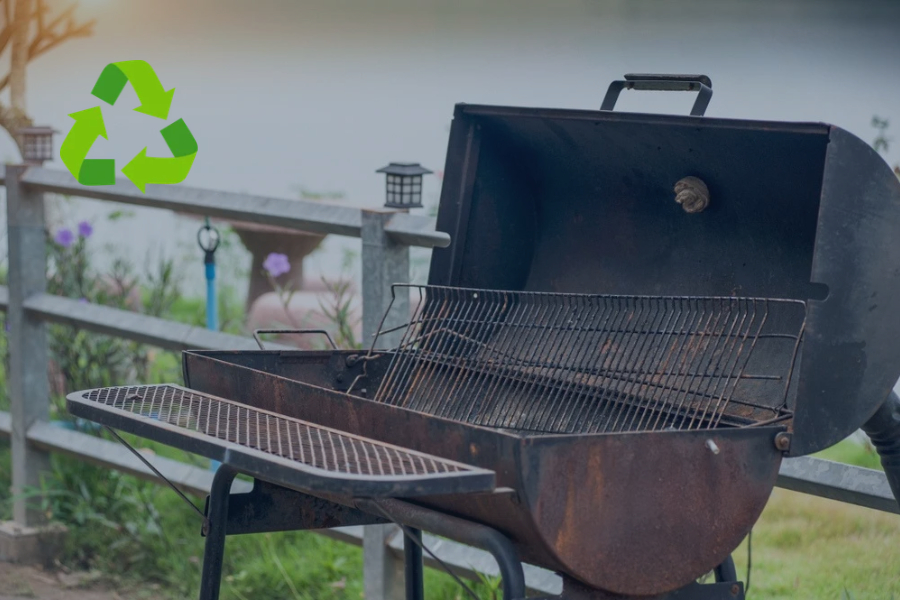
An old backyard grill can take up a surprising amount of space once it’s no longer being used. Whether you’re replacing a rusted gas grill, getting rid of a broken charcoal grill, or upgrading your outdoor cooking equipment, throwing the entire unit away isn’t always the best option.
Most grills contain recyclable metals, including steel, stainless steel, cast iron, and aluminum. However, different types of grills require different preparation before recycling. Gas grills need particular attention because propane tanks must be handled separately from ordinary scrap metal.
At EACR Inc., we’re a metal recycling company helping homeowners, businesses, municipalities, and organizations manage unwanted metal equipment. We offer recycling solutions for qualifying projects, including a dedicated propane tank recycling service. Below, we’ll explain how to recycle different types of grills, which parts can be recovered, and how to prepare your old grill for disposal.
What Types of Grills Can Be Recycled?
Most grills contain metals that can be recovered through appropriate recycling processes. However, their construction, fuel source, and additional components determine how they should be handled.
- Gas Grill Recycling: Gas grills contain recyclable metals such as steel, cast iron, stainless steel, and aluminum. Propane tanks must be removed and recycled separately, while natural gas connections should be disconnected by a qualified professional.
- Charcoal Grill Recycling: Charcoal grills contain recyclable metal bodies, cooking grates, legs, and trays. Remove all charcoal, completely cooled ash, grease, and food residue before recycling.
- Electric Grill Recycling: Electric grills contain recyclable metals, heating elements, wiring, and electronic controls. Unplug the grill, allow it to cool, and confirm whether electrical components require separate processing.
- Pellet Grill Recycling: Pellet grills contain recyclable steel and stainless steel, along with motors, fans, wiring, and electronic controls. Remove leftover pellets and ash, and disconnect the power before recycling.
Where Can You Recycle an Old Grill?
The best way to recycle an old grill depends on its size, construction, condition, and how many units need to be collected. Homeowners may only need to dispose of one backyard grill, while businesses and commercial facilities may accumulate several units during equipment replacements.
- Facility Drop-Off: EACR Inc. operates a recycling facility at 1950 Rutgers University Blvd, Lakewood, NJ 08701. Call (732) 370-4100 before visiting to confirm grill acceptance and preparation requirements. Hours are Monday–Friday, 8 AM–4 PM.
- Bulk Grill Recycling Pickups: EACR Inc. coordinates commercial metal recycling pickups for restaurants, hotels, property managers, and other organizations disposing of multiple grills. Availability depends on equipment type, quantity, and location.
- E-waste Recycling Containers: Businesses replacing multiple grills or outdoor cooking stations can inquire about dedicated containers for collecting recyclable metal components. Propane tanks must be kept separate and handled through an appropriate propane tank recycling program.
How to Recycle a Propane Tank From a Gas Grill
Recycling a gas grill involves two separate considerations: the metal grill itself and the propane tank used to fuel it.
While most conventional gas grills contain recyclable metals, propane cylinders require specialized handling because they’re pressurized containers that may retain flammable gas.
Why Propane Tanks Require Separate Recycling
A propane tank can still contain residual gas even when it no longer provides enough fuel to operate a grill.
If a tank is crushed, punctured, or exposed to improper handling during metal processing, the remaining gas can create a serious fire or explosion hazard.
For this reason, propane tanks should never be placed in ordinary household trash, dumpsters, or general scrap-metal recycling containers.
You should also never attempt to cut open a propane tank, remove its valve, puncture the cylinder, or release remaining gas yourself.
Instead, use a recycling service equipped to handle propane cylinders appropriately.
Recycle Your Grill’s Propane Tank With EACR Inc.
EACR Inc. offers a dedicated propane tank recycling service for residents, businesses, municipalities, and organizations managing unwanted propane cylinders.
Our program accepts several types of propane tanks, including:
- 20-pound BBQ grill tanks: Standard propane cylinders commonly used with backyard gas grills.
- Larger residential propane tanks: Cylinders used for outdoor equipment, heating, and other residential applications.
- Commercial propane tanks: Larger cylinders and bulk quantities generated by restaurants, retailers, and industrial facilities.
Depending on the tank’s condition, suitable cylinders may be recycled, reused, or refurbished through appropriate processes.
If you’re replacing a gas grill and no longer need its propane tank, contact EACR Inc. to discuss your cylinder’s size, condition, and available recycling arrangements.
What Should You Do With a Damaged or Expired Propane Tank?
Propane tanks can become unsuitable for continued use because of corrosion, dents, damaged valves, or age-related concerns.
Some older cylinders may qualify for professional inspection, refurbishment, or continued use after appropriate evaluation. Others may need to be removed from service and recycled.
If your tank is leaking, severely corroded, or visibly damaged, don’t attempt to repair or transport it without professional guidance.
Keep the cylinder away from flames, sparks, and other ignition sources. If you suspect an active gas leak, move away from the area and contact emergency services or your propane supplier from a safe location.
For unwanted cylinders that are not actively leaking, contact EACR Inc. to discuss suitable handling and recycling arrangements.
What Parts of an Old Grill Can Be Recycled?
Grills contain several different materials, and many of their metal components may be recovered during recycling.
However, components made from plastics, rubber, ceramics, or mixed materials may require different processing.
Steel and Stainless Steel Frames
Steel and stainless steel are commonly used in grill bodies, lids, legs, frames, and structural supports.
These metals are widely recycled and can be recovered for use in manufacturing new products.
Even when a grill’s metal frame has significant rust or surface damage, its underlying steel may still be suitable for recycling.
Cast-Iron and Stainless Steel Cooking Grates
Cooking grates are commonly manufactured from cast iron, stainless steel, or coated metals.
Both cast iron and stainless steel can be recycled through suitable metal recovery processes.
Before recycling old cooking grates, remove excessive grease, food residue, and other contamination.
The presence of ordinary rust doesn’t automatically prevent suitable metal grates from being recycled.
Metal Burners and Heat Shields
Gas grills often contain stainless steel burners, metal heat shields, burner covers, and related components.
These parts may contain recyclable metals even after they become corroded or stop functioning properly.
Depending on their construction, some burner assemblies may have attached fittings or nonmetal materials that need to be separated during processing.
Aluminum Components
Certain grills include aluminum fireboxes, panels, handles, and other structural components.
Aluminum is a recyclable nonferrous metal that can be separated from steel and other materials.
Because grills can contain several different metal types, proper sorting helps direct each material toward a suitable recovery process.
To learn more about these differences, explore our guide to ferrous and non-ferrous metals.
Electrical Components and Wiring
Electric grills, pellet grills, and certain gas grills contain electrical components that may require additional processing.
These can include ignition systems, heating elements, temperature controls, motors, circuit boards, and wiring.
Electrical wiring may contain copper, while motors and electronic controls can contain other recoverable materials.
If your grill uses batteries for its ignition system, remove them when safe and accessible, and handle them through an appropriate battery recycling program.
Plastic, Rubber, and Ceramic Components
Grills also contain nonmetal materials such as plastic knobs, rubber wheels, insulated handles, seals, and ceramic components.
These materials can be more difficult to recycle than steel, cast iron, or aluminum.
Some may require separation from the metal components, while others may not be accepted through a particular recycling process.
Check with your recycling provider before attempting extensive disassembly.
How to Prepare an Old Grill for Recycling
Preparing an old grill for recycling usually involves removing leftover fuel-related materials, cleaning away loose debris, and separating components that require special handling.
Follow these steps before arranging a recycling drop-off or pickup.
Step 1: Make Sure the Grill is Completely Cool
Before handling or dismantling your grill, make sure it has completely cooled.
Turn off all burners and controls, and unplug electric or pellet grills from their power sources.
Charcoal and ash can retain heat for an extended period, so never assume they’re cool simply because the grill hasn’t been used recently.
Wait until every component is cool enough to handle safely.
Step 2: Disconnect the Propane Tank or Gas Supply
If you’re recycling a propane grill, close the cylinder valve and disconnect the tank according to the manufacturer’s instructions, provided it is safe to do so.
Keep the propane tank separate from the grill and arrange appropriate recycling through a propane cylinder recycling service.
Never puncture the tank, remove its valve, or attempt to release remaining propane.
For grills connected to a permanent natural gas supply, have a qualified professional disconnect the gas line before removing the equipment.
Step 3: Remove Charcoal, Ash, and Food Waste
Empty the grill of leftover charcoal, ash, wood pellets, and other cooking debris.
Make sure all ashes and charcoal are completely cool before handling or disposal.
Remove significant food residue, accumulated grease, and other materials that could interfere with scrap-metal processing.
Avoid pouring grease into drains or mixing it with recyclable metal.
Step 4: Remove Loose and Nonmetal Components
Gather removable cooking grates, trays, warming racks, and other accessories.
Depending on your recycling provider’s requirements, you may need to separate certain plastic, rubber, or ceramic components.
If your grill has a battery-powered ignition system, remove the battery when safe and accessible.
Avoid dismantling gas valves, sealed electrical components, or complicated assemblies unless you receive specific instructions.
Step 5: Organize the Grill for Transportation
Grills can be heavy, bulky, and difficult to transport, especially larger gas and pellet models.
Secure loose lids, grates, trays, and other removable components before moving the equipment.
Use additional help when lifting large grills, and make sure the load is secured during transportation.
Propane cylinders must remain separate from the grill and should be transported only according to the receiving provider’s instructions. Keep cylinders upright and secured when transportation is permitted.
Step 6: Confirm Recycling Requirements
Before bringing an old grill to a recycling facility, contact EACR Inc. to discuss the equipment.
Explain whether you have a gas, charcoal, electric, or pellet grill and whether it includes a propane cylinder or electrical components.
Our team can help determine whether your equipment qualifies for an available recycling option and explain any preparation requirements.
Should You Repair, Donate, or Recycle an Old Grill?
An old grill doesn’t always need to be recycled just because some of its components are worn out.
Depending on its overall condition, you may have several options:
- Repair: Replacing worn cooking grates, burners, igniters, or other replaceable components may extend the life of a grill that’s otherwise in safe operating condition.
- Reuse or donation: A working grill with no significant safety issues may still be useful to someone else.
- Recycling: Grills with severe corrosion, damaged fireboxes, major structural problems, or repairs that are no longer practical may be better candidates for recycling.
For gas grills, suspected fuel leaks and damaged gas components should be evaluated by a qualified professional before the equipment is used again.
When a grill has reached the end of its useful life, recycling helps recover metals that can be used in other products.
What Happens to a Grill After It’s Recycled?
After an old grill reaches a suitable recycling facility, its materials may go through several processing stages.
- Inspection: The grill is evaluated for its construction, remaining fuel-related components, and electrical equipment.
- Material separation: Steel, stainless steel, aluminum, plastics, ceramics, and other materials may be separated where appropriate.
- Metal recovery: Recyclable metals are sorted and prepared for further processing.
- Manufacturing: Recovered metals may be melted and used to manufacture new equipment, metal components, and other products.
The exact recycling process depends on the type of grill, its materials, and the capabilities of the receiving recycling facility.
Why is Grill Recycling Better Than Throwing It Away?
Recycling an old grill helps recover materials that can be used again instead of sending the entire unit to a landfill.
Some of the main benefits include:
- Recovering metals: Steel, cast iron, stainless steel, and aluminum can often be recycled into new products.
- Reducing landfill waste: Recycling keeps bulky metal equipment out of traditional waste disposal systems.
- Conserving resources: Using recovered metals can reduce demand for newly extracted raw materials.
- Safer material handling: Separating propane tanks, batteries, and electrical components helps reduce potential hazards during recycling and waste processing.
Even a grill with heavy rust, damaged burners, or broken cooking grates may still contain substantial amounts of recyclable metal.
Frequently Asked Questions About Grill Recycling
Can You Recycle an Old Grill?
Yes. Many old grills contain recyclable steel, cast iron, aluminum, and other metals that can be recovered through suitable recycling processes.
Can Gas Grills Be Recycled?
Yes. The metal components of most gas grills can be recycled, but propane tanks must be removed when safe and handled through an appropriate separate recycling process.
Can You Throw a Grill in the Trash?
Recycling is generally a better option because grills contain recoverable metals and can be too large for ordinary household waste collection. Local bulky-item disposal requirements may also apply.
Can Propane Grill Tanks Be Recycled?
Yes. Propane grill tanks can be recycled through suitable cylinder recycling programs equipped to handle pressurized containers and residual gas.
Does EACR Inc. Recycle Propane Tanks?
Yes. EACR Inc. offers a propane tank recycling service that accepts several cylinder types, including standard 20-pound BBQ grill tanks, subject to handling and collection requirements.
Can You Recycle a Charcoal Grill?
Yes. The metal body, cooking grates, and other suitable components of a charcoal grill can often be recycled once charcoal, ash, and food debris have been removed.
Can You Recycle an Electric Grill?
Yes. Electric grills contain recyclable metals, heating elements, wiring, and other electrical components that may require specialized processing.
Can You Recycle a Pellet Grill?
Yes. Many pellet grill components contain recyclable metals, although motors, electronic controls, and wiring may need additional processing.
Recycle Your Old Grill With EACR Inc.
Old gas, charcoal, electric, and pellet grills often contain steel, cast iron, aluminum, and other metals that can be recovered through appropriate recycling processes. Before recycling your grill, remove leftover food waste, ash, and other debris, and make sure propane tanks and electrical components are handled correctly.
At EACR Inc., we’re a recycling company helping homeowners, businesses, municipalities, and organizations manage unwanted metal equipment and related materials. We provide metal recycling solutions for qualifying projects, including commercial pickups, along with a dedicated propane tank recycling program. Contact our team at (732) 370-4100 to discuss recycling an old grill, disposing of unwanted propane tanks, or arranging a larger equipment recycling project.