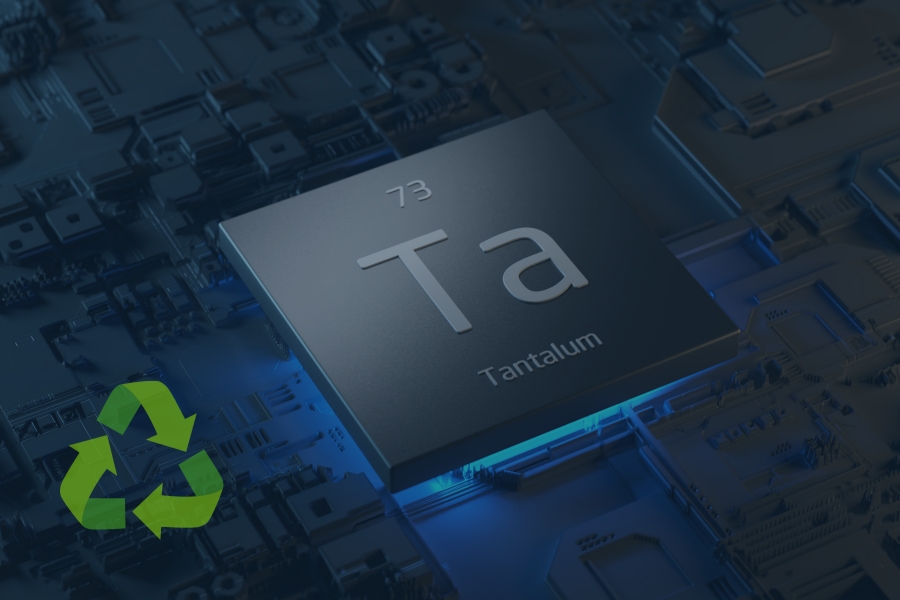
Tantalum plays a major role in modern electronics, aerospace components, medical devices, defense systems, chemical processing equipment, and other high-performance applications.
Businesses generating tantalum-containing scrap can work with EACR Inc.’s metal recycling services to responsibly recycle industrial metals and manufacturing scrap.
Tantalum is especially useful because it resists corrosion, handles extreme heat, and can store electrical charge. That combination makes it important in capacitors, electronic components, surgical implants, aerospace alloys, and equipment exposed to harsh chemicals.
Because tantalum is difficult to replace in many applications, recycling is a practical way to recover reusable material, support manufacturing supply chains, and reduce reliance on newly mined resources.
Quick Answer: What is Tantalum Recycling?
Tantalum recycling is the process of collecting, identifying, sorting, processing, and recovering tantalum-containing materials so they can be reused in manufacturing.
Recycled tantalum may come from:
- Manufacturing scrap
- Capacitors
- Electronic components
- Medical equipment
- Chemical processing equipment
- Aerospace alloys
- Machine turnings
- Industrial equipment
Recycling is preferred over disposal because tantalum-containing scrap can still contain reusable material. Instead of treating it as waste, recycling helps recover a high-performance metal that can be returned to electronics, aerospace, medical, and industrial manufacturing.
What is Tantalum?
A High-Performance Refractory Metal
Tantalum is a transition metal and refractory metal known for its strength, stability, and ability to perform in extreme conditions. Refractory metals have very high melting points, which makes them useful in environments where ordinary metals may weaken or fail.
Tantalum is also highly corrosion resistant. It performs well around many acids and harsh chemical environments, which is why it is often used in chemical processing equipment, laboratory systems, and specialized industrial parts.
Another major advantage is its electrical performance. Tantalum can store electrical charge efficiently, making it especially useful in capacitors used in electronics, medical devices, defense systems, and aerospace applications.
Tantalum is also biocompatible, meaning it can be used in certain medical implants and surgical components. In most cases, tantalum is used in specialty alloys, electronic components, coatings, or precision parts rather than everyday consumer products.
Why Industries Use Tantalum
Industries use tantalum because it performs reliably in places where failure is not an option.
Tantalum can help provide:
- Corrosion resistance
- Heat resistance
- Strong electrical performance
- High reliability
- Long service life
- Chemical resistance
- Strength in demanding environments
Where is Tantalum Commonly Found?
Tantalum is commonly found in electronics, specialty alloys, medical devices, and industrial systems that require reliability, heat resistance, or corrosion resistance.
Capacitors
Tantalum capacitors are one of the most common uses of tantalum. They are found in many electronic devices because they can store electrical charge efficiently in a compact space.
Electronic Devices
Phones, computers, tablets, cameras, automotive electronics, and other devices may contain tantalum in capacitors or other electronic components.
Medical Devices
Tantalum may be used in surgical implants, medical instruments, and certain device components because of its biocompatibility and durability.
Aerospace Components
Aerospace applications may use tantalum-containing alloys and components because they need materials that can handle heat, stress, and demanding performance requirements.
Chemical Processing Equipment
Tantalum is useful in chemical processing equipment because it resists corrosion in harsh environments where many other metals may fail.
Semiconductor Manufacturing Equipment
Semiconductor manufacturing systems may use tantalum-containing parts because they require precision, stability, and resistance to chemical exposure.
Defense Equipment
Defense systems may use tantalum in electronics, specialty alloys, and components where reliability and performance are critical.
Turbine Components
Certain high-temperature turbine and engine components may use tantalum-containing alloys to improve performance in extreme operating conditions.
Industrial Machinery
Industrial machinery may contain tantalum parts or alloys in systems exposed to heat, wear, corrosion, or demanding production environments.
Laboratory Equipment
Laboratory equipment may use tantalum in components that need strong resistance to chemicals, acids, or high temperatures.
Why Recycle Tantalum?
Tantalum recycling helps recover a specialty metal that is difficult and expensive to replace in many applications. Since tantalum is commonly found in electronics and high-performance industrial equipment, recycling helps keep reusable material in circulation.
Conserves Natural Resources
Recycling tantalum helps conserve natural resources by recovering metal that has already been mined, refined, and used in manufacturing.
Reduces Mining Demand
Recovering tantalum from scrap can reduce the need for newly mined material and support a more efficient supply chain.
Supports Manufacturing
Recycled tantalum can support manufacturers that rely on specialty metals for electronics, aerospace, medical, defense, and industrial applications.
Recovers Reusable Metal
Tantalum-containing scrap can still contain reusable metal that may be recovered and returned to production.
Helps Divert Industrial Scrap from Landfills
Recycling helps keep tantalum-containing components, electronic scrap, and industrial materials out of landfills and moves them into a responsible recovery stream.
Facilities that recycle tantalum-containing components often handle magnets and other specialty materials as well. Our magnet recycling guide explains how industrial and rare earth magnets can also be responsibly recovered.
What Types of Tantalum Scrap Can Be Recycled?
Many forms of tantalum-containing scrap can be recycled, especially when they come from electronics, manufacturing, aerospace, medical, chemical processing, or industrial settings.
Common recyclable materials include:
- Manufacturing scrap
- Capacitors
- Electronic assemblies
- Machine turnings
- Offcuts
- Plate
- Rods
- Wire
- Chemical processing equipment
- Aerospace alloys
- Medical components
- Industrial equipment
The exact recycling process depends on the material type, alloy composition, condition, and contamination level. Tantalum scrap should be properly identified and sorted before processing so the reusable metal can be recovered as efficiently as possible.
How Tantalum Recycling Works
Tantalum recycling starts with identifying where the material is coming from and what form it is in. Since tantalum may be found in capacitors, electronics, alloys, medical components, or industrial equipment, proper sorting is especially important.
Collection
Tantalum-containing scrap may be collected from:
- Electronics manufacturers
- Medical device manufacturers
- Aerospace facilities
- Industrial cleanouts
- Data centers
- Manufacturing operations
Collection may include production scrap, obsolete equipment, electronic components, capacitors, alloy scrap, offcuts, turnings, or retired industrial parts.
Identification
After collection, the material needs to be identified. This matters because tantalum can appear in different forms, from small electronic components to specialty alloys.
Identification may involve:
- Material documentation
- Part numbers
- Equipment labels
- Component labels
- Metal analysis
Alloy verification helps confirm whether the material contains tantalum and whether it should be separated from other metals or electronic scrap.
Sorting
Once identified, tantalum-containing materials are sorted by type and condition.
Sorting may be based on:
- Alloy type
- Electronic components
- Scrap type
- Contamination level
This helps reduce mixed materials, improve handling, and support better recovery during downstream recycling.
Processing
Processing depends on the form of the scrap. For electronic materials, it may involve dismantling and component separation. For metal scrap, it may involve cutting, cleaning, and preparing the material for shipment.
Processing may include:
- Dismantling
- Component separation
- Cleaning
- Removing non-metal attachments
- Preparing materials for downstream recycling
The goal is to make the scrap easier to handle, transport, and recover.
Smelting and Refining
At a high level, tantalum-containing scrap may be refined, melted, or chemically processed depending on the material and downstream recycling method.
Because tantalum is often found in specialized components or alloys, the exact process can vary. The purpose is to recover tantalum into a usable form for future manufacturing.
Manufacturing New Products
Recovered tantalum can return to production and support new high-performance products.
Recycled tantalum may be used in:
- Capacitor manufacturing
- Aerospace alloys
- Medical devices
- Chemical processing equipment
- Electronics manufacturing
This keeps reusable material in circulation and supports industries that depend on reliable specialty metals.
Tantalum Recycling Services Through EACR Inc.
Tantalum is commonly recovered from capacitors, electronic components, specialty alloys, manufacturing scrap, and industrial equipment. Whether you’re managing production scrap or replacing outdated equipment, EACR Inc. offers flexible recycling solutions to help businesses recover tantalum-containing materials responsibly.
Scheduled Pickup
Ideal for manufacturers, electronics companies, aerospace facilities, and industrial operations generating larger quantities of tantalum-bearing materials. We coordinate pickup directly from your location.
Drop-Off Recycling
Businesses with smaller quantities of approved tantalum scrap can arrange a convenient drop-off at an EACR Inc. recycling facility.
E-Waste Recycling Containers
For organizations that continuously generate tantalum-containing electronic components or manufacturing scrap, secure on-site collection containers help simplify ongoing recycling programs.
Industries That Generate Tantalum Scrap
Tantalum scrap is most often generated by industries that use electronic components, specialty alloys, medical materials, or corrosion-resistant equipment.
Electronics Manufacturing
Electronics manufacturers may generate tantalum scrap from capacitors, circuit boards, component production, rejected parts, and obsolete inventory.
Medical Device Manufacturing
Medical device companies may generate tantalum-containing scrap from implants, surgical components, instruments, and production waste.
Aerospace
Aerospace manufacturers may use tantalum-containing alloys in components that need heat resistance, strength, and reliability.
Defense
Defense systems may contain tantalum in electronics, specialty alloys, communication systems, and high-performance components.
Semiconductor Manufacturing
Semiconductor operations may use tantalum-containing materials in equipment, components, and specialized manufacturing systems.
Chemical Processing
Chemical processing facilities may generate tantalum scrap from corrosion-resistant equipment, piping, vessels, valves, and other components exposed to harsh chemicals.
Industrial Manufacturing
Industrial manufacturers may generate tantalum scrap from production parts, equipment replacement, machining, maintenance, and obsolete inventory.
Research Laboratories
Research labs may use tantalum in specialized equipment, testing systems, and components that require corrosion resistance or high-temperature performance.
Fabrication Shops
Fabrication shops may generate tantalum scrap from cutting, machining, forming, welding, and finishing specialty metal components.
Tantalum is frequently used alongside other specialty metals that improve strength and corrosion resistance.
Frequently Asked Questions About Tantalum Recycling
Can tantalum be recycled?
Yes. Tantalum can be recycled from capacitors, electronic components, manufacturing scrap, aerospace alloys, medical components, chemical processing equipment, machine turnings, offcuts, and certain industrial equipment.
Where is tantalum commonly found?
Tantalum is commonly found in capacitors, electronics, medical devices, aerospace components, defense equipment, chemical processing systems, semiconductor manufacturing equipment, and laboratory equipment.
Why is tantalum used in electronics?
Tantalum is used in electronics because it can store electrical charge efficiently, perform reliably in compact components, and support long service life in devices where consistent performance matters.
What industries recycle tantalum?
Industries that may recycle tantalum include electronics manufacturing, medical device manufacturing, aerospace, defense, semiconductor manufacturing, chemical processing, industrial manufacturing, research laboratories, and fabrication shops.
Can tantalum capacitors be recycled?
Yes. Tantalum capacitors can often be recycled through specialized recycling processes, especially when collected in larger quantities from electronics, manufacturing scrap, circuit boards, or obsolete equipment.
Is tantalum considered a critical metal?
Yes. Tantalum is often considered a critical or strategically important metal because it is used in electronics, aerospace, defense, medical devices, chemical processing, and advanced manufacturing.
Can manufacturing scrap containing tantalum be recycled?
Yes. Manufacturing scrap such as machine turnings, offcuts, plate, rods, wire, rejected components, and production scrap can often be recycled if the material is properly identified and sorted.
What types of tantalum scrap are accepted?
Accepted materials may include tantalum capacitors, electronic assemblies, manufacturing scrap, aerospace alloys, medical components, machine turnings, offcuts, plate, rods, wire, chemical processing equipment, and certain industrial parts. Materials are typically reviewed based on composition, condition, and contamination level.
Conclusion
Tantalum is a reusable refractory metal used in electronics, medical devices, aerospace, defense, chemical processing, and advanced manufacturing. Its corrosion resistance, heat resistance, electrical performance, and reliability make it difficult to replace in many high-performance applications.
Recycling tantalum helps recover reusable material, supports manufacturing, conserves natural resources, and reduces demand for newly mined metal. It also gives businesses a responsible way to manage tantalum-containing scrap, capacitors, electronic components, and specialty alloys.
If your facility generates tantalum-containing scrap, capacitors, specialty alloys, electronic components, or other industrial metals, EACR Inc.’s metal recycling services provide responsible recycling solutions for businesses looking to recover reusable materials.