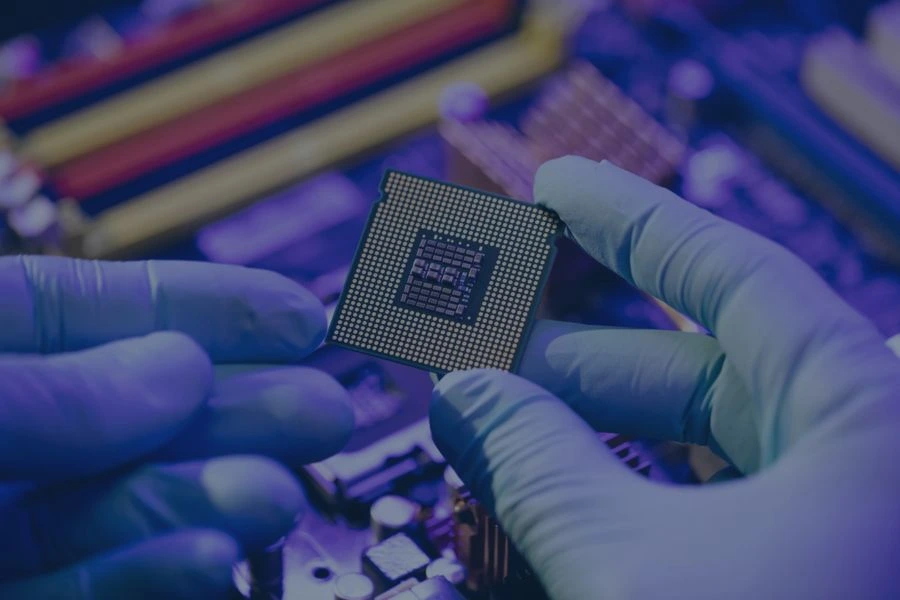
Semiconductors are built into nearly every category of modern electronics. Computers, servers, vehicles, industrial controls, power systems, telecommunications equipment, appliances, and consumer electronics all depend on semiconductor devices to process data, regulate power, store information, or control electrical signals.
The scale of that market continues to grow. According to Statista, worldwide semiconductor revenue increased 21% to $793 billion in 2025, with AI-related hardware contributing to strong demand across the industry. Pasted markdown
When those products reach the end of their useful lives, semiconductor recycling does not always mean simply breaking a chip down into raw materials. Depending on the device, condition, and remaining performance, semiconductors may be:
- Reused
- Tested and repurposed
- Harvested from equipment
- Processed for material recovery
- Recycled as part of circuit boards or larger electronic assemblies
Power semiconductors are especially interesting from a reuse standpoint because the device itself may still have useful operating life even after the equipment around it has been retired.
EACR Inc. is an electronics recycling company that works with businesses, manufacturers, data centers, facilities, and other organizations managing retired electronics, circuit boards, semiconductor-containing equipment, and other electronic components. Contact us to discuss your electronics recycling needs.
Quick Answer: Can Semiconductors Be Recycled?
Yes. Semiconductors can be recycled, reused, reclaimed, or processed for material recovery depending on their type and condition.
Common recycling and reuse paths include:
- Reusing functioning semiconductor devices
- Harvesting and testing components
- Reclaiming silicon wafers
- Recovering metals and semiconductor materials
- Recycling packaging and substrate materials
- Processing semiconductors as part of circuit boards and other e-waste
The right path depends on factors such as the semiconductor type, age, packaging, physical condition, application, and whether the device can still perform reliably.
What is a Semiconductor?
A semiconductor is a material whose electrical conductivity can be controlled. That property makes it possible for electronic devices to switch current on and off, amplify signals, regulate power, store information, and perform calculations.
Silicon is the best-known semiconductor material, but modern electronics also use materials such as silicon carbide, gallium nitride, and gallium arsenide for applications with different performance requirements.
Common Semiconductor Devices
Semiconductor devices come in many forms, including:
- Integrated circuits
- Microprocessors
- Memory chips
- Power semiconductors
- Transistors
- Diodes
- MOSFETs
- IGBTs
- LEDs
- Sensors
Some are tiny individual components, while others are packaged into larger modules or mounted directly onto printed circuit boards.
Power Semiconductors
Power semiconductors are designed to switch, regulate, and control higher levels of voltage and current than many conventional electronic components.
They are commonly found in:
- Electric vehicles
- Renewable energy systems
- Industrial machinery
- Power supplies
- Motor drives
- Charging equipment
- Data centers
Examples include power MOSFETs, IGBTs, power diodes, silicon carbide devices, and gallium nitride devices.
One reason power semiconductor recycling is receiving more attention is that the semiconductor itself may outlast the equipment in which it was originally installed. In some cases, that creates an opportunity to test the device and determine whether it could be reused or assigned to a second-life application instead of immediately being broken down for material recovery.
What Are Semiconductors Made Of?
Semiconductor devices are made from much more than the semiconductor material itself. Chips and modules combine extremely small layers and connections made from several different materials, which is one reason recycling them can be technically difficult. Your supporting source similarly describes semiconductor recycling as complex because devices combine silicon, metals, and other materials in tightly integrated structures.
Silicon
Silicon forms the foundation of a large share of semiconductor devices.
Manufacturers begin with highly purified silicon that is formed into wafers. Those wafers are then processed into integrated circuits, processors, memory devices, sensors, and other semiconductor components.
Used or rejected wafers may sometimes be reclaimed rather than immediately treated as waste.
Compound Semiconductor Materials
Not every semiconductor uses conventional silicon.
Other semiconductor materials include:
- Gallium arsenide (GaAs)
- Gallium nitride (GaN)
- Silicon carbide (SiC)
These materials are used when applications require different combinations of switching speed, voltage capability, heat resistance, frequency performance, or efficiency.
For example, silicon carbide and gallium nitride have become increasingly important in power electronics, charging equipment, renewable energy systems, and electric vehicles.
Copper and Other Conductive Metals
Copper is widely used in semiconductor packaging, electrical connections, leads, interconnects, and circuit-board assemblies.
Other conductive metals may also be present depending on the device design and application.
Gold, Silver, and Other Metals
Some semiconductor components contain small amounts of gold, silver, and other metals in areas such as:
- Bonding wires
- Contacts
- Connectors
- Leads
- Packaging
The amounts in an individual device may be very small, but semiconductor recycling often takes place alongside larger circuit boards and electronic assemblies containing many components.
Packaging Materials
The semiconductor die itself is only one part of the finished device.
Packaging may also contain:
- Epoxy resins
- Plastics
- Ceramics
- Metal frames
- Solder
- Substrates
These materials protect the semiconductor, connect it to the surrounding electronics, and help manage heat and electrical signals.
The combination of silicon, conductive metals, ceramics, plastics, solder, and packaging materials is what makes semiconductor recycling more complicated than recycling a product made mainly from one material.
What Types of Semiconductors Can Be Recycled?
Different semiconductor devices may follow different recycling or reuse paths depending on how they were manufactured, how they were used, and whether they still function.
Silicon Wafers
Silicon wafers used in semiconductor manufacturing may sometimes be reclaimed through processes such as:
- Cleaning
- Chemical etching
- Surface treatment
- Polishing
The goal is to remove surface layers or contamination so the wafer can potentially be used again where its condition and specifications allow.
Your supporting source identifies chemical etching, polishing, and thermal treatment among current approaches used in silicon wafer reclamation.
Integrated Circuits and Microchips
Integrated circuits and microchips can follow several different paths at end of life.
Depending on their condition, they may be:
- Tested for reuse
- Harvested from retired equipment
- Repurposed for another application
- Processed for material recovery
In practice, many chips reach recyclers while they are still mounted on circuit boards rather than as individual loose components.
Power Semiconductor Devices
Power semiconductor devices include:
- MOSFETs
- IGBTs
- Power diodes
- Power modules
- SiC devices
- GaN devices
These devices are used in applications that manage significant amounts of electrical power.
They are also particularly relevant to second-life research because the equipment containing them may become outdated before the semiconductor itself has reached the end of its functional life.
That creates the possibility of testing, grading, and reusing certain devices in applications that match their remaining performance.
Semiconductor Packaging and Substrates
Semiconductor recycling can also involve the materials surrounding the chip itself.
Packaging and substrate materials may include:
- Copper
- Metal frames
- Ceramics
- Plastics
- Solder
- Composite substrate materials
Depending on the recycling process, these materials can be separated and directed into appropriate recovery streams.
Semiconductor-Containing Circuit Boards
Many semiconductors are recycled as part of a larger printed circuit board rather than individually.
Servers, computers, industrial equipment, telecommunications hardware, power electronics, and other systems can contain circuit boards populated with processors, memory chips, controllers, power semiconductors, and other components.
That means semiconductor recycling often overlaps directly with circuit board recycling, where boards are processed to separate metals, electronic components, substrate material, and other fractions.
The rapid growth of AI is also increasing demand for servers, GPUs, accelerators, memory, and other semiconductor-heavy hardware. Read our guide to AI hardware and e-waste for a closer look at how expanding AI infrastructure could affect future electronics waste.
How Are Semiconductors Recycled?
Semiconductor recycling can look very different depending on whether the material arrives as a loose chip, silicon wafer, power module, circuit board, or part of a larger electronic system. In some cases, the best option may be reuse. In others, the focus shifts to recovering materials from the component.
1. Collection and Sorting
The process begins by collecting and sorting semiconductor-containing equipment and components.
Items may be separated based on factors such as:
- Device type
- Physical condition
- Whether the component still functions
- Whether reuse is practical
- The larger equipment or assembly it came from
A functioning power module, for example, may warrant a different path than a damaged chip still attached to a circuit board.
2. Inspection and Functional Testing
Where reuse is realistic, semiconductor devices can be evaluated before being broken down for material recovery.
One approach being explored is graded recycling. Instead of automatically treating every retired semiconductor as waste, devices can be evaluated based on remaining performance, condition, and potential next use.
This is especially relevant for components that may still have substantial operating life remaining.
3. Reuse or Second-Life Applications
A semiconductor does not necessarily stop functioning just because the equipment around it has been retired.
Some power semiconductor devices may still meet performance requirements after their original host equipment reaches end of life. When testing confirms that a component remains suitable, it may be considered for reuse or a second-life application with appropriate performance demands.
This creates an important distinction in semiconductor recycling: sometimes preserving the component itself makes more sense than immediately breaking it down into raw materials.
4. Component Removal and Disassembly
When equipment is being dismantled, semiconductor components may be removed from larger assemblies such as:
- Circuit boards
- Power modules
- Industrial electronics
- Servers
- Power supplies
- Other electronic systems
In many cases, chips are soldered, bonded, or encapsulated into larger assemblies, which can make removal more difficult than simply separating a loose component.
5. Physical Separation
Once equipment or components are dismantled, recycling processes can separate different material groups, including:
- Metals
- Plastics
- Ceramics
- Circuit-board material
- Semiconductor-containing fractions
The exact process depends on the construction of the device and the materials being targeted for recovery.
6. Material Recovery
When reuse is no longer practical, semiconductor-containing materials can move into more advanced recycling processes.
Depending on the device and material, techniques may include:
- Shredding and physical separation
- Smelting
- Hydrometallurgical processing
- Chemical treatment
- Silicon wafer reclamation
Your supporting source identifies physical and chemical separation, smelting, acid-based processing, and wafer reclamation as current approaches used to recover semiconductor materials. It also notes that the layered construction of these devices makes recovery more challenging than with simpler materials.
Challenges of Semiconductor Recycling
Semiconductors contain a large amount of technology in a very small package. That compact design is useful during operation, but it can make recycling more complicated.
Complex Material Construction
Semiconductor devices combine silicon or other semiconductor materials with metals, ceramics, plastics, solder, and packaging materials in extremely small spaces.
Separating those materials efficiently can require specialized equipment and processing.
Difficult Disassembly
Many semiconductor devices are not designed to be removed easily.
Chips may be:
- Soldered to circuit boards
- Bonded to substrates
- Encapsulated in resin
- Integrated into larger modules
That can make individual component recovery difficult or impractical in some applications.
Different Device Designs
There is no single semiconductor design that applies across every manufacturer or application.
Processors, memory chips, silicon wafers, power modules, sensors, MOSFETs, IGBTs, and other devices can all use different materials, packaging, and construction methods.
Your supporting source specifically identifies this lack of standardization as one of the challenges facing semiconductor recycling.
Testing and Reliability
Reuse adds another challenge: a semiconductor must still perform reliably in its next application.
That becomes particularly important when the component could be used in:
- Automotive systems
- Industrial equipment
- Medical electronics
- Power electronics
A device may still function, but testing is needed to determine whether its remaining performance is appropriate for another use.
Economics of Recovery
A material can be technically recoverable without the process always making economic sense.
Separating very small amounts of material from complex components can require significant labor, equipment, energy, or chemical processing. Your supporting source notes that the cost of semiconductor recovery can sometimes exceed the economic return from the recovered materials.
Lack of Recycling-Oriented Design
Most semiconductor packages were designed first for performance, reliability, size, and manufacturing efficiency, not easy disassembly at end of life.
That can make it harder to:
- Remove components
- Separate materials
- Test devices for reuse
- Recover individual material streams
Researchers and manufacturers are increasingly looking at design-for-recycling concepts that could make future components easier to reclaim or reuse.
What About Data Stored on Semiconductor Devices?
Not every semiconductor stores user data. A power transistor or diode, for example, does not serve the same role as flash memory or an SSD controller.
However, semiconductor memory is used throughout data-bearing equipment, including:
- SSDs
- Flash drives
- Smartphones
- Servers
- Embedded storage
- Certain industrial systems
When semiconductor components are part of equipment that stores sensitive information, organizations should address data destruction before the equipment is reused or recycled.
That step is about the data-bearing device, not semiconductor recycling in general.
Frequently Asked Questions About Semiconductor Recycling
Can Semiconductors Be Recycled?
Yes. Depending on the device and condition, semiconductors may be reused, reclaimed, harvested from equipment, or processed for material recovery.
Can Computer Chips Be Recycled?
Yes. Computer chips may be recovered as part of circuit board recycling or, in some cases, tested and reused if they remain functional.
Can Silicon Wafers Be Recycled?
Yes. Some used or rejected silicon wafers can be reclaimed through cleaning, etching, polishing, or other surface-treatment processes.
What Materials Can Be Recovered From Semiconductors?
Depending on the device, recycling may recover materials such as copper, silicon, gold, silver, ceramics, and other metals or packaging materials.
Can Businesses Recycle Semiconductor Equipment in Bulk?
Yes. Semiconductor-containing electronics can often be included in larger electronics recycling projects involving servers, circuit boards, industrial electronics, power equipment, and other retired systems.
Recycle Semiconductor Equipment With EACR Inc.
Semiconductor recycling can involve loose chips, silicon wafers, power modules, printed circuit boards, servers, industrial electronics, and complete electronic systems.
The right recycling path depends on the equipment type, condition, material composition, quantity, and whether reuse remains practical.
EACR Inc. helps businesses and organizations manage semiconductor-containing electronics alongside other retired electronic equipment. Contact us to discuss your electronics recycling project.