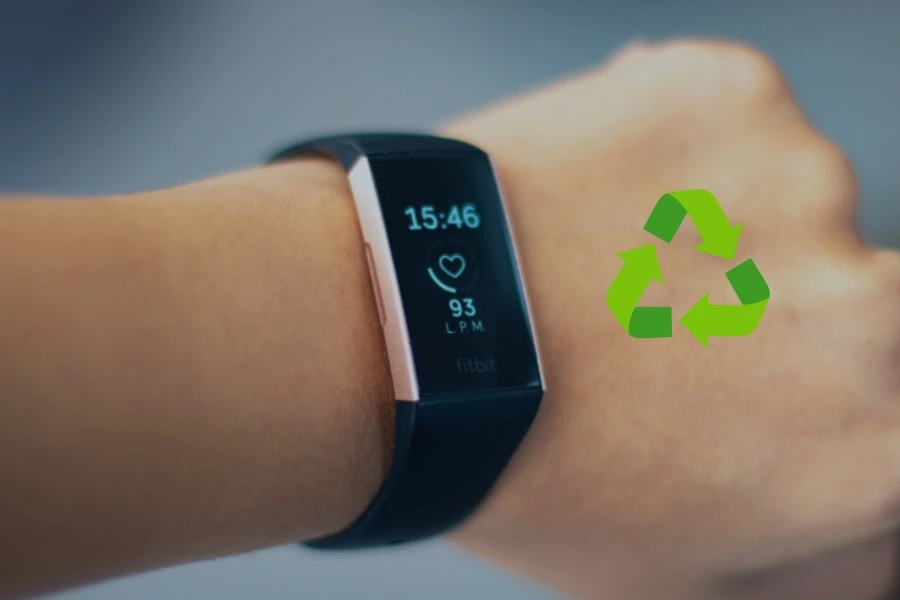
An old Fitbit can end up sitting in a drawer for several reasons. Maybe the battery no longer holds a charge, the screen stopped working, or you’ve upgraded to a newer fitness tracker. Whatever the reason, it doesn’t belong in your regular household trash.
Yes, old Fitbit devices can be recycled. Fitness trackers and smartwatches contain rechargeable batteries, circuit boards, sensors, metals, and other materials that require proper handling. Recycling these devices helps recover reusable materials while keeping electronic waste out of landfills.
At EACR Inc., we’re an electronics recycling company helping individuals, businesses, schools, municipalities, and other organizations dispose of outdated electronics responsibly. We offer facility drop-offs, scheduled bulk pickups, and e-waste container programs. Below, we’ll explain your Fitbit recycling options and how to choose the right one.
Your Fitbit Recycling Options
There are several ways to recycle an old Fitbit, including electronics recycling facilities and manufacturer programs. The best option depends on your location, how many devices you have, and their condition.
Drop Off Your Fitbit at EACR Inc.
EACR Inc. operates an electronics recycling facility in Lakewood, New Jersey, where individuals and organizations can drop off outdated electronic equipment.
- Our address is: 1950 Rutgers University Blvd, Lakewood, NJ 08701.
If you have an old Fitbit, smartwatch, or fitness tracker, you can contact our team about dropping it off for recycling. You can also bring other accepted electronics during the same visit, making it convenient to clear out multiple unused devices.
Before visiting, we recommend confirming Fitbit acceptance, drop-off hours, and any applicable requirements with our team.
Schedule a Bulk Fitbit Recycling Pickup With EACR Inc.
Businesses and organizations sometimes accumulate large quantities of outdated wearable electronics. Fitness centers, schools, healthcare facilities, and corporate offices may have old Fitbits and other electronic devices that need to be removed.
EACR Inc. provides scheduled electronics recycling pickups for organizations managing larger quantities of electronic waste. Fitbits and other wearable devices can be included in broader electronics recycling projects alongside computers, tablets, and other accepted equipment.
Pickup availability depends on your location, the quantity of electronics, and the type of equipment being collected. Contact our team to discuss your recycling needs and available scheduling options.
Find an E-Waste Recycling Container Location
Another option is to use an electronics recycling collection container at a participating location.
EACR Inc. provides e-waste containers for municipalities, businesses, schools, and community organizations. These containers offer designated collection points for outdated electronics, including smaller battery-powered devices when accepted by the individual program.
Some municipalities and organizations make these containers accessible to local residents, employees, or community members.
If you’re looking for somewhere nearby to recycle your Fitbit, contact EACR Inc. to ask about participating collection locations and whether they accept wearable electronics.
Manufacturer and Retailer Fitbit Recycling Programs
Electronics manufacturers also offer recycling programs that may provide another option for disposing of your old Fitbit or other fitness tracker.
Google / Fitbit Recycling Program
Google offers an official recycling program for Fitbit devices through a third-party recycling partner. You can request a free, prepaid shipping label and mail your old Fitbit for recycling.
Before sending your device, Google recommends erasing your personal information or performing a factory reset. Once you’ve prepared the device, place it in a suitable box, attach the provided label, and follow the shipping instructions.
Visit Google’s Fitbit recycling instructions to get started.
Apple Recycling Program
Apple offers electronics recycling through its Apple Trade In program, including free recycling for eligible devices and accessories that no longer qualify for trade-in credit.
Although Apple accepts certain non-Apple electronics, Fitbit acceptance is not guaranteed. Check with Apple before bringing your Fitbit to a retail location or submitting a recycling request.
Visit Apple Trade In and Recycling for more information.
Garmin Recycling Program
Garmin operates a consumer product recycling program for qualifying Garmin devices, including fitness trackers and GPS watches.
Customers can reset their Garmin devices, package them, and ship them to Garmin’s designated recycling facility according to the program’s instructions.
This program is intended for Garmin products rather than Fitbit devices, but it offers an alternative for anyone disposing of an older Garmin wearable.
Learn more through Garmin’s recycling program.
Polar Recycling Guidance
Polar encourages customers to recycle outdated fitness trackers, sports watches, and other electronic equipment through appropriate local recycling facilities.
The company recommends following local electronic waste and battery disposal requirements rather than placing old devices in household trash.
Polar does not advertise a general nationwide Fitbit take-back program, so its guidance is most useful for people recycling Polar-branded equipment.
Visit Polar’s recycling guidance for additional information.
What is a Fitbit Made Of?
Fitbit fitness trackers may be small, but they contain a surprising number of electronic components and different materials. Their exact construction varies by model, with different combinations of metals, plastics, glass, sensors, and rechargeable batteries.
For example, the Fitbit Charge 6 includes an aluminum housing, Corning Gorilla Glass 3, an AMOLED display, a lithium-polymer battery, and a silicone wristband.
Common materials and components found in Fitbit devices include:
- Glass: Used in protective screen covers and displays, helping protect the device from scratches and everyday wear.
- Plastic: Found in certain housings, internal supports, insulation, and other small components.
- Metals: Aluminum, stainless steel, copper, and other metals may be used in the casing, charging contacts, circuit boards, and internal electronics.
- Lithium-ion batteries: Rechargeable batteries power Fitbit devices, with many models using lithium-polymer batteries, a type of lithium-ion technology.
- Circuit boards: Small electronic boards contain processors, connectors, and other components that control the device’s functions.
- Sensors: Heart rate monitors, accelerometers, temperature sensors, and other electronic components collect fitness and activity information.
- Silicone and synthetic materials: Flexible wristbands and certain exterior components use materials designed for comfort, durability, and resistance to moisture.
Because these materials are packed into a compact device, recycling a Fitbit involves more than simply separating plastic and metal. Its battery and electronic components require appropriate handling, while some of its materials can be recovered through specialized electronics recycling processes.
What Parts of a Fitbit Can Be Recycled?
Fitbits contain several materials that can be recovered and reused through electronics recycling. While not every component can be recycled, specialized recycling processes can separate metals, batteries, and other recoverable materials from the device.
Here are the main Fitbit components that can be recycled.
Rechargeable Batteries
Most modern Fitbits use rechargeable lithium-ion or lithium-polymer batteries to power their displays, sensors, and other features. These batteries contain materials that may be recovered through specialized battery recycling processes.
Because lithium batteries can pose fire risks when damaged or improperly handled, they should never be placed in regular household trash or curbside recycling bins.
Circuit Boards and Electronic Components
Inside every Fitbit is a small circuit board that connects its processor, sensors, display, and other electronic components.
These boards contain copper and other metals that can be recovered during electronics recycling. Specialized processing helps separate usable materials from the remaining electronic components.
Metal Housing and Internal Components
Depending on the model, Fitbits may contain aluminum, stainless steel, copper, and other metals in their housings, charging contacts, and internal parts.
During recycling, these metals can be separated and processed for use in manufacturing new products, reducing the need for newly mined raw materials.
Screens and Glass
Fitbit displays typically combine protective glass with electronic display layers. Some models use AMOLED technology, while others have different screen designs.
Although certain display materials may be recoverable, recycling options depend on the screen’s construction and the recycling facility’s processing capabilities.
Wristbands and Charging Accessories
Fitbit wristbands are commonly made from silicone, synthetic fabrics, leather, or other flexible materials. These materials can be difficult to recycle, particularly when they contain multiple materials.
Charging cables and connectors contain metals, plastics, and electrical components that may be accepted through electronics recycling programs.
Before recycling your Fitbit, check whether your chosen facility accepts wristbands and charging accessories along with the device.
How to Prepare Your Fitbit for Recycling
Before recycling your Fitbit, take a few minutes to protect your personal information and prepare the device for proper handling.
Fitbits can store activity data, account connections, payment information, and personal settings. They also contain rechargeable batteries that require appropriate handling during collection and transportation.
Step 1: Sync Any Information You Want to Keep
If your Fitbit still works, sync it with the Fitbit or Google Health app before recycling.
This helps preserve recent activity information, including steps, workouts, sleep records, and other fitness data associated with your account. Check that your information has synced successfully before erasing the device.
Step 2: Factory Reset Your Fitbit
Performing a factory reset removes locally stored personal information, settings, and account connections from your Fitbit.
The process varies depending on your model:
- Fitbit Charge 5, Charge 6, Inspire 3, and Luxe: Open Settings → Device Info → Clear User Data.
- Fitbit Sense and Versa series: Open Settings → About → Factory Reset.
Follow the on-screen instructions to complete the reset.
If you own a different model, refer to Google’s official Fitbit erasure instructions.
Step 3: Remove Your Fitbit From Your Account
After resetting your Fitbit, remove the device from your associated account when applicable.
This is particularly important if you plan to donate or give the device to someone else. Removing the device association is separate from erasing information stored on the watch itself.
Remember that factory resetting a Fitbit does not automatically delete activity information previously synced to your online account.
Step 4: Gather Your Fitbit and Accessories
Collect your Fitbit, charging cable, and any unwanted wristbands or accessories you would also like to recycle.
If your recycling provider requests that detachable accessories be separated, remove them before drop-off or shipping.
Do not attempt to open the Fitbit or remove its internal battery yourself. Many Fitbit batteries are integrated into the device and are not designed for routine removal by users.
Step 5: Check for Battery Damage Before Recycling
Examine your Fitbit for signs of battery damage, including:
- Swelling or a bulging case
- Unusual overheating
- Punctures or visible battery damage
- Leaking or other signs of physical deterioration
Damaged lithium-ion batteries require special handling because they may present fire or safety risks.
If your Fitbit shows signs of battery damage, contact your recycling provider for instructions. Do not place it in a standard electronics collection container or ship it through a regular recycling program without approval.
Step 6: Choose Your Recycling Method
Once your Fitbit is prepared, choose the recycling option that works best for you.
You can contact EACR Inc. about a facility drop-off, schedule a bulk electronics recycling pickup, inquire about participating e-waste collection containers, or use an eligible manufacturer recycling program.
Confirm any packaging, transportation, and acceptance requirements before dropping off or shipping your device.
Frequently Asked Questions About Fitbit Recycling
Can You Recycle an Old Fitbit?
Yes. Old Fitbit fitness trackers and smartwatches can be recycled through electronics recycling facilities, including eligible collection programs and Google’s official Fitbit recycling program.
Can You Throw a Fitbit in the Trash?
No. Fitbits contain rechargeable batteries and electronic components that should be handled through appropriate electronics recycling programs rather than regular household trash.
Does Fitbit Have a Recycling Program?
Yes. Google offers a Fitbit recycling program that allows users to request a free prepaid shipping label through its recycling partner.
Can You Recycle a Broken Fitbit?
Yes. Broken or nonworking Fitbits can often be recycled, although devices with damaged batteries may require special handling.
Do You Need to Remove the Battery Before Recycling a Fitbit?
No. Fitbit batteries are generally integrated into the device, and users should not attempt to remove them without appropriate training or instructions.
Can You Recycle Fitbit Chargers and Wristbands?
Fitbit chargers may be accepted through electronics recycling programs, while silicone and mixed-material wristbands can have more limited options. Check with your recycling provider before including these accessories.
Is Fitbit Recycling Free?
Google offers a free prepaid shipping label for eligible Fitbit recycling requests. Other recycling facilities may have different fees, acceptance requirements, or minimum quantities.
Can You Recycle a Fitbit Without Factory Resetting It?
Yes, recycling may still be possible if your Fitbit is broken or cannot be reset. Contact your recycling provider to discuss data handling before submitting the device.
Recycle Your Old Fitbit With EACR Inc.
Whether your Fitbit has stopped working, no longer holds a charge, or has simply been replaced, recycling is a responsible way to handle the device. Its rechargeable battery, circuit boards, metals, and other components can be directed toward appropriate recycling processes instead of ending up in household waste. Before recycling, remember to remove your personal information whenever possible.
At EACR Inc., we’re an e-waste recycling company helping individuals, businesses, municipalities, and organizations manage outdated electronics. With drop-off options at our Lakewood, New Jersey facility, scheduled bulk pickups, and e-waste container programs, we make electronics recycling convenient. Contact our team today to discuss recycling your old Fitbit or arranging a larger electronics recycling project.