Recycling key fobs matters more than most people think because these devices are everywhere now. Between standard car remotes, EV key systems, and push-start vehicles, old key fobs pile up fast, and a lot of people either throw them away or leave them sitting in drawers for years.
The important thing to understand is that a key fob is not just a piece of plastic. It is a small electronic device with internal components that should be handled through the proper recycling process. EACR Inc. is an electronics recycling company that helps make that process easier. If you need help recycling key fobs in bulk, our electronics recycling company offers secure, compliant pickup and drop-off solutions.
Quick Answer: How to Recycle Key Fobs
Do not throw key fobs in the trash. If possible, remove the battery, store the fobs safely until recycling, use drop-off for small quantities, and arrange pickup for bulk loads or commercial projects.
For a few old key fobs, a drop-off option may be enough. For larger cleanouts, dealership loads, fleet programs, or multi-site projects, pickup is usually the better route. If you are looking for a more organized solution, our electronics recycling services can help handle key fobs the right way.
What is a Key Fob?
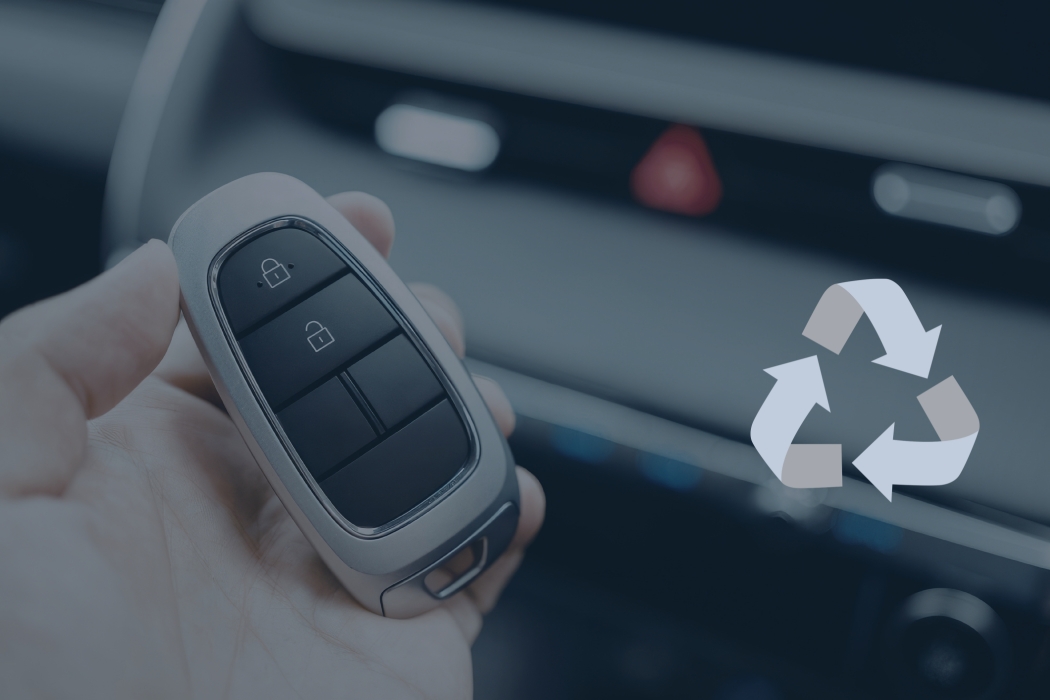
A key fob is a small wireless remote device used to control access to a vehicle. Depending on the system, it may lock doors, unlock doors, open the trunk, trigger alarms, or allow push-button vehicle start.
This applies to standard vehicles, electric vehicles, and newer smart key systems. Some are simple remotes, while others are more advanced and communicate with the vehicle through proximity or encrypted signals. Either way, they are still small electronic devices, not regular trash.
What Key Fobs Are Made Of
Core components
Key fobs may be small, but they contain more than people expect. Inside, they often include circuit boards, microchips, plastic casings, button-cell batteries, and metal contacts. Some models may also include additional internal electronics depending on the brand and vehicle type.
That internal design is exactly why key fobs should be treated as e-waste. They are compact, but they still contain electronic parts that need proper handling.
Why these materials matter
Those materials matter because they are not harmless, and they are not useless. Key fobs can contain metals such as copper and lithium, along with plastics and small electronic components that can be processed through the right recycling stream.
That is the bigger point behind key fob recycling. These devices contain reusable materials, and because they are electronics, they should be handled through proper e-waste recycling instead of being tossed out with general garbage.
Can You Throw Key Fobs Away?
Technically vs recommended
In some areas, people may technically be allowed to throw key fobs away with household trash. But that does not make it the best option. Allowed and recommended are not the same thing.
The better approach is to recycle them. Since key fobs contain batteries and electronics, proper recycling is the more responsible and practical choice.
Why throwing them away is a problem
Throwing key fobs away creates a few avoidable problems. The first is battery leakage risk. Small button-cell batteries can become a problem if they are damaged, degraded, or sent into the wrong waste stream.
The second issue is that electronics end up in the landfill when they could have been managed through proper recycling. The third is that reusable materials get wasted. Even though a key fob is small, it still contains components that should be recovered and handled correctly instead of being buried with general waste.
Why Recycling Key Fobs Matters
Even though key fobs are small, they still create a real recycling issue. They contain electronics, batteries, and materials that should be handled properly instead of being thrown away without a second thought.
Environmental impact
Recycling key fobs helps keep small electronics out of landfills. That matters because once these devices are trashed, the plastic, metal, and electronic parts are wasted instead of being recovered through the proper recycling stream.
It also helps reduce the demand for raw materials. When recyclable parts are recovered and reused, there is less pressure to produce new materials from scratch.
Safety considerations
Safety is another big reason key fobs should be recycled properly. Many of them contain small batteries that can leak over time, especially if they are damaged or stored poorly.
Small electronics are also handled differently in some areas depending on local disposal rules. Even when they are not heavily regulated, it still makes more sense to recycle them through an electronics recycling company than to send them into the regular trash stream.
Resource recovery
Key fob recycling is not just about disposal. It is also about recovering useful materials. Metals, plastics, and electronic components can often be separated and routed into the proper recycling process.
That makes recycling the better option. Instead of treating old key fobs like worthless junk, proper recycling gives those materials another use.
Standard vs Electric Vehicle Key Fobs
Not all key fobs are built the same. Standard vehicle fobs and electric vehicle fobs often serve the same purpose, but EV key systems are usually more advanced and contain more internal electronics.
Standard vehicle key fobs
Standard key fobs usually handle basic remote functions like locking, unlocking, trunk release, and panic alarm activation. Many also use replaceable button-cell batteries, which makes them easier to identify and prepare for recycling.
They may seem simple, but they are still electronic devices with internal boards and small metal components.
Electric vehicle key fobs
Electric vehicle key fobs are often more advanced. Depending on the make and model, they may include proximity sensors, app integration, and encrypted chips that communicate with the vehicle in more sophisticated ways.
That added functionality usually means more electronic components packed into a very small device. So while they may look similar from the outside, EV key fobs can be more complex internally.
Why EV key fobs still need recycling
That extra technology does not change the disposal answer. EV key fobs still need proper recycling because they contain electronics, batteries, and reusable materials just like standard fobs do.
The handling rules are essentially the same. They belong in the e-waste stream, not in the trash.
Where to Recycle Key Fobs
The right recycling option depends on how many key fobs you have and whether you are dealing with personal items or a larger business project.
Electronics recycling companies
Electronics recycling companies are usually the best option, especially for bulk and commercial loads. That is where EACR Inc. stands out. As an electronics recycling company, we can help businesses, dealerships, fleet programs, and organizations handle key fob recycling in a more secure and organized way.
This is usually the best fit when you are dealing with volume, recurring recycling needs, or multiple locations. Instead of trying to piece together disposal through limited local options, you can work with one provider that understands electronics recycling from start to finish.
Local recycling centers
Some local recycling centers may accept key fobs, but acceptance can be limited. Not every location handles small electronic items the same way, and some centers may not want the batteries included.
That is why checking first matters. Local drop off can work for small quantities, but it is not always reliable.
Retail drop-off programs
Retail drop-off programs may exist in some areas, but availability is inconsistent. Some stores accept small electronics, while others do not accept key fobs at all.
This can work in a pinch for a few items, but it is usually not a dependable solution for larger or ongoing recycling needs.
Mail-back options
Mail-back programs are another possibility, especially for users in remote areas, but they often come with fees, packaging requirements, and other limitations.
For one or two items, it may be workable. For larger loads, it usually becomes inefficient fast.
How to Prepare Key Fobs for Recycling
Preparation does not need to be complicated, but it does help the recycling process go more smoothly.
Step 1: Remove batteries if possible
If the battery can be removed safely, take it out before recycling the key fob. This helps separate battery handling from the rest of the device and may make the recycling process easier.
If removal is not practical, do not force it. The key is safe handling.
Step 2: Store in containers
Keep key fobs in containers instead of tossing them loosely into drawers, boxes, or trash bags. This makes them easier to manage and helps prevent pieces from getting lost.
For larger quantities, organized storage also makes pickup or drop off more efficient.
Step 3: Keep units intact
Do not break apart the key fobs before recycling them. Keeping units intact is usually the better approach unless a recycler specifically asks otherwise.
That helps avoid loose batteries, damaged components, and unnecessary handling issues.
Step 4: Separate from general waste
Key fobs should be kept separate from general trash and standard household recycling. They are electronic devices and need to go through the right disposal channel.
Mixing them with regular waste only makes recycling harder later.
Step 5: Plan drop-off or pickup
The final step is deciding how the load will move. A few fobs may be fine for drop off. Bulk quantities, dealership cleanouts, fleet loads, or multi-site projects are usually better suited for pickup.
That decision should be based on volume, convenience, and how much coordination the project actually requires.
What Happens After Key Fobs Are Recycled
A lot of people know they should recycle electronics, but they do not always know what happens next.
Collection and transport
The first step is collection and transport. That could mean a small drop off load or a scheduled pickup for a larger commercial project. Either way, the key fobs are moved into the proper recycling stream instead of being left in storage or sent to the trash.
Sorting and dismantling
Once received, the key fobs are sorted and dismantled based on their materials and components. This helps separate plastic casings, batteries, and electronic parts so each material can move through the proper recovery path.
That sorting stage is what turns a mixed electronic item into recyclable streams.
Material recovery
The recovery process may include metals, plastics, and circuit components. Instead of wasting those materials, recycling helps pull them out for processing and reuse where appropriate.
This is one of the main reasons the process matters. Even small devices can still contain reusable materials.
Final reuse
After recovery, materials can be routed back into the manufacturing cycle. That does not mean the old key fob comes back as a key fob again, but it does mean the recovered materials can still serve a purpose.
That is a better outcome than treating the entire device like disposable waste.
Frequently Asked Questions About Key Fob Recycling
Key fob recycling comes with a few common questions, especially around batteries, disposal options, and recycling availability.
Can key fobs be recycled?
Yes. Key fobs can be recycled through proper electronics recycling channels.
Do key fobs contain batteries?
Yes. Many key fobs contain small button-cell batteries or similar battery components.
Are key fobs considered e-waste?
Yes. Since they contain electronics and often batteries, key fobs are generally treated as e-waste.
Where can I recycle key fobs near me?
You may be able to recycle them through electronics recycling companies, local recycling centers, retail drop-off programs, or mail-back services.
Is pickup available for bulk recycling?
Yes. Pickup is often the better option for dealerships, fleets, rental companies, corporate vehicle programs, and other bulk loads.
What materials are recovered?
Recycling may recover plastics, metals, batteries, and electronic components from key fobs.
Conclusion
Key fobs are small, but they still deserve proper handling. They contain electronics, batteries, and reusable materials, which makes recycling the smarter option over throwing them away or leaving them unused in storage indefinitely.
That is where EACR Inc. can help. If you need help recycling key fobs, our electronics recycling company offers secure drop-off and pickup solutions for any size project.