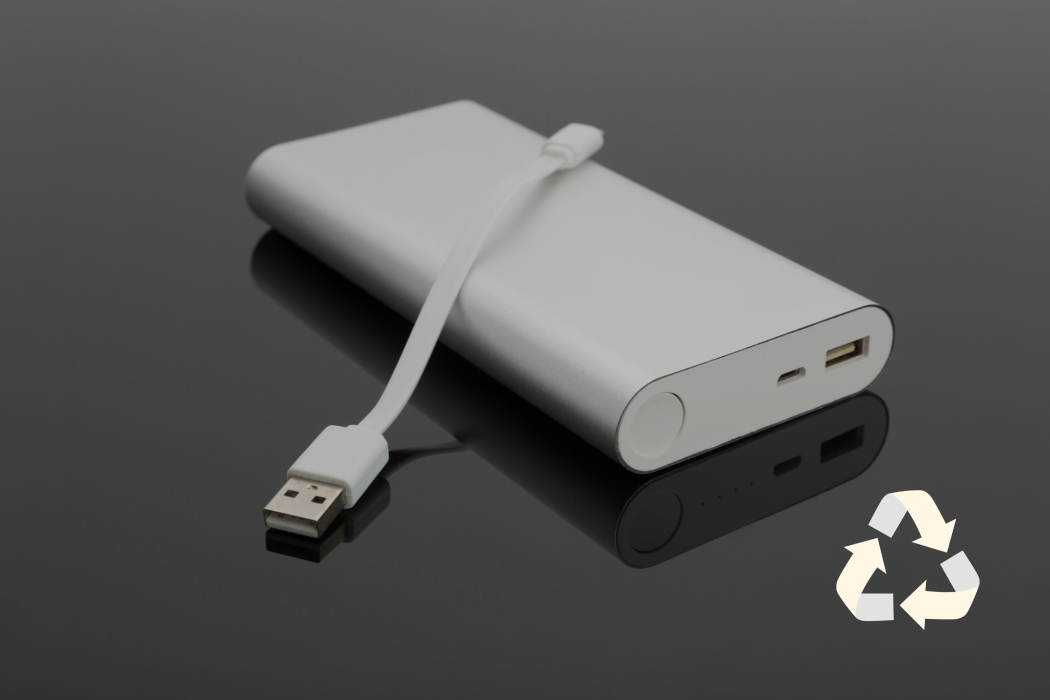
Power banks may look harmless, but inside they contain lithium-ion batteries, wiring, circuit boards, plastics, and electronic components that should not go into regular trash. When they are old, swollen, overheating, leaking, or physically damaged, they need careful handling.
Many old or damaged power banks can become fire hazards when improperly discarded. Throwing them into trash or curbside recycling can create risks in garbage trucks, recycling facilities, and landfills, especially if the battery is crushed, punctured, or short-circuited.
Businesses, schools, warehouses, offices, and households often accumulate old portable chargers over time. If you need help disposing of old power banks or lithium-ion batteries, EACR Inc. provides licensed battery recycling and electronics recycling services for businesses, schools, and organizations.
What is a Power Bank Used For?
A power bank is a portable battery system designed to recharge electronics when you are away from a wall outlet. People use them for convenience, travel, emergency backup power, and everyday device charging.
Common uses for power banks
Power banks are commonly used to charge:
- Phones
- Tablets
- Laptops
- Portable gaming devices
- Cameras
- Wireless headphones
- E-bikes and accessories in some cases
The size and capacity of the power bank usually determines what it can charge and how many times it can charge a device.
Why power banks are everywhere
Power banks have become common because so much of daily life depends on portable electronics. They are useful for travel, worksites, schools, remote work, outdoor events, and backup power during outages.
They are also easy to forget about. Many people have old power banks sitting in drawers, backpacks, offices, warehouses, classrooms, or supply closets long after they stop working well.
Why old power banks become a problem
Most power banks use lithium-ion batteries, and those batteries degrade over time. As the battery ages, charging capacity drops, charging may become slower, and the device may stop holding power.
Old power banks can also become safety concerns. Overheating, swelling, cracking, leakage, or physical damage can increase the risk of battery failure. Once a power bank shows those warning signs, it should be taken out of use and recycled properly.
What is a Power Bank Made Of?
Power banks are small electronic devices, but internally they contain multiple battery and electronic components that require proper recycling. That is why they should be treated as e-waste, not regular trash.
Lithium-ion battery cells
The main component inside most power banks is a rechargeable lithium-ion battery. These battery cells store energy and release it when you plug in a device.
Lithium-ion batteries are useful because they have high energy density, meaning they can store a lot of power in a small package. But that also means they can become dangerous if damaged, overheated, crushed, or punctured.
Depending on the battery type, materials may include lithium, cobalt, nickel, copper, aluminum, and other components.
Electronic components
Power banks also contain electronics that control charging, discharging, safety protections, and power delivery.
Common internal electronic components may include:
- Circuit boards
- Charging controllers
- USB ports
- Internal processors
- Sensors
- Wiring
These electronics help regulate voltage, prevent overcharging, and manage power output. They should be handled through electronics recycling, not landfill disposal.
Plastic and metal materials
Power banks also include outer housings and structural materials. Some have plastic shells, while others use metal casings for durability.
Common materials may include:
- Aluminum casings
- Plastic housings
- Copper wiring
- Connectors
- Shielding materials
Many of these materials may be recoverable through the right recycling process.
Signs a power bank should be recycled
A power bank should be taken out of use and recycled if you notice:
- Swelling
- Overheating
- Cracks or dents
- Leakage
- Charging failure
- Slow charging
- Burn marks
- Unusual smells
Damaged lithium-ion batteries should never be ignored because they may become fire hazards.
Power Bank Recycling Options
Power bank recycling options depend on how many units you have, their condition, and whether you are recycling as a household, school, business, or facility.
Drop-off recycling
For small quantities, drop-off recycling may be the simplest option. Some local electronics recyclers, retailer battery recycling programs, municipal collection events, and hazardous waste facilities accept power banks and other rechargeable batteries.
Before dropping them off, check that the location accepts lithium-ion batteries or portable chargers. Not every recycling bin or facility is equipped to handle damaged or swollen battery devices.
Scheduled pickup services
Businesses, schools, offices, and warehouses may need scheduled pickup services when they have larger quantities of power banks, batteries, laptops, phones, or other electronics.
Pickup services are helpful for:
- Warehouse cleanouts
- Office electronics recycling
- School device collections
- Battery recycling pickups
- Commercial e-waste removal
This is usually the better option when power banks are part of a larger battery or electronics recycling project.
E-waste containers
E-waste containers can help organizations collect power banks, batteries, chargers, cables, and small electronics over time. These programs are useful for schools, municipalities, offices, warehouses, and commercial facilities that generate e-waste regularly.
A container program creates a safer, more organized collection point for mixed electronics and batteries. It also helps prevent old power banks from ending up loose in trash cans, supply closets, or storage rooms.
Why power banks should not go in trash
Power banks should never be thrown into regular trash or curbside recycling bins. Their lithium-ion batteries can create fire risks, toxic leaks, landfill concerns, and environmental hazards.
Trash and curbside recycling systems are not designed to safely manage damaged battery devices. If a power bank is crushed during waste compaction or sorting, the battery may short-circuit, overheat, smoke, or catch fire.
How Power Bank Recycling Works
Power bank recycling follows a controlled process because these devices contain lithium-ion batteries and electronic parts. The goal is to separate the risky components, recover reusable materials, and keep battery waste out of landfills.
Step 1: Collection and sorting
Power banks are first collected through a drop-off program, scheduled pickup, or e-waste container. Once received, they are sorted by type, condition, and potential safety risk.
Damaged, swollen, leaking, or overheating power banks are identified early because they may require separate handling. Intact units can be processed through the standard electronics recycling stream, while damaged units may need more controlled battery handling.
Step 2: Battery handling
The lithium-ion battery is the most important part to manage safely. In some cases, the battery may need to be removed from the power bank before further processing.
Damaged batteries may be isolated, contained, and handled with additional fire prevention procedures. This helps reduce the risk of overheating, short circuits, sparks, or fires during recycling.
Step 3: Electronics separation
After the battery is handled, the remaining electronic parts can be separated. This may include circuit boards, wiring, USB ports, charging components, and internal controls.
The recycler may also separate plastic housings, aluminum casings, connectors, and other materials so they can move into the right processing streams.
Step 4: Material recovery
Power banks contain several materials that may be recovered through recycling. These can include copper wiring, aluminum, plastics, electronic components, circuit boards, and battery-related materials.
Material recovery helps reduce waste and keeps reusable components from being buried in landfills.
Step 5: Responsible downstream recycling
After sorting and separation, materials are sent through licensed recycling streams for proper processing. Battery materials, electronics, metals, and plastics may each follow different downstream recycling paths.
Responsible downstream recycling helps ensure lithium-ion batteries are processed correctly and old power banks do not end up in regular trash or landfill disposal.
Benefits of Recycling Power Banks
Recycling power banks is not just about clearing out old chargers. It helps reduce safety risks, protect the environment, and recover reusable materials from devices that would otherwise become waste.
Reduces fire risks
Power banks contain lithium-ion batteries, which can become dangerous when crushed, punctured, overheated, or damaged. Recycling keeps these batteries out of regular trash, where they can be compacted in garbage trucks or damaged by sorting equipment.
Proper recycling helps prevent garbage truck fires, recycling facility fires, and landfill fire risks.
Protects the environment
When power banks are thrown away, damaged battery materials can leak into the environment over time. That can create soil and water contamination risks, especially if the battery casing breaks down or the device is crushed.
Recycling helps keep hazardous battery materials contained and routed through the proper disposal process.
Supports reusable material recovery
Power banks contain materials that may be recovered and reused, including:
- Copper
- Aluminum
- Battery materials
- Plastics
- Electronic components
Recovering these materials can reduce the need for virgin mining and support a more responsible electronics recycling process.
Helps businesses manage battery waste
Businesses, schools, warehouses, offices, and municipalities may collect power banks and other lithium-ion devices over time. Without a plan, these items often pile up in supply closets, IT rooms, storage areas, or desk drawers.
Power bank recycling helps create cleaner storage areas, safer facility operations, bulk disposal solutions, and better documentation or tracking options when needed.
Frequently Asked Questions About Power Bank Recycling
Can power banks be recycled?
Yes. Power banks contain lithium-ion batteries, wiring, plastics, and electronic components that can often be recycled.
Are power banks considered e-waste?
Yes. Power banks are electronic devices that contain rechargeable batteries and electronic circuitry.
Can swollen power banks explode?
Yes. Swollen lithium-ion batteries can become dangerous and may catch fire or explode if punctured or damaged.
Can you throw away a dead power bank?
No. Dead power banks should still be recycled properly because the lithium-ion battery may still create environmental or fire risks.
Where can I recycle old power banks?
Options may include electronics recyclers, battery recycling programs, hazardous waste facilities, retailer drop-offs, or licensed e-waste recycling companies.
What should I do with a leaking power bank?
Stop using it immediately, isolate it from other batteries or flammable materials, and contact a qualified battery recycler for handling guidance.
Can businesses schedule bulk power bank recycling?
Yes. Businesses, schools, offices, and warehouses can often schedule pickup services for larger quantities of batteries and electronics.
What materials are recovered from power banks?
Common recoverable materials may include copper, aluminum, plastics, circuit boards, and battery-related materials.
Recycle Old Power Banks Safely
Power banks contain lithium-ion batteries and electronics that should not go into trash. Even when they no longer work, they can still create safety risks if they are crushed, punctured, overheated, or improperly stored.
Damaged power banks can create fire and environmental risks, especially if they are swollen, leaking, cracked, or overheating. Recycling helps recover reusable materials and supports safer disposal.
EACR Inc. provides licensed power bank recycling, battery recycling, and electronics recycling services for businesses, schools, municipalities, and organizations. Contact EACR Inc. to schedule pickup or discuss safe disposal options for old lithium-ion batteries and portable electronics.