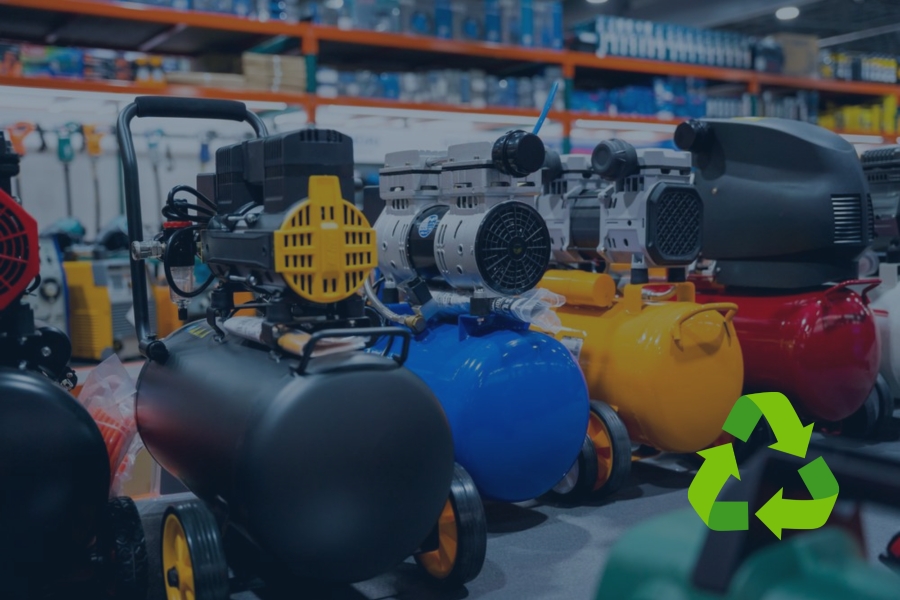
Air compressor recycling is the safest way to handle old compressors that have worn out, become inefficient, failed mechanically, or started costing too much to repair. These machines can contain tanks, motors, copper wiring, oils, steel, and electrical components that should not simply be thrown away, abandoned, or left sitting in a shop.
Proper disposal supports safe handling, material recovery, environmental protection, and workspace cleanup. Whether you manage an industrial shop, automotive facility, manufacturing plant, contracting business, or home workshop, old equipment should be handled the right way. Explore our electronics recycling services, and metal recycling services to safely dispose of old compressors, industrial electronics, motors, and equipment.
What Happens to Old Air Compressors?
Some compressors are still reusable
Not every old air compressor is ready for scrap. If the unit still runs safely, it may be useful as backup equipment, especially for a shop that wants to avoid downtime if a newer compressor fails.
Some compressors may also be good candidates for refurbishment. Replacing worn components, cleaning the unit, repairing minor issues, or updating controls can extend its useful life when the machine still has solid performance left.
There may also be resale potential through secondary markets. Smaller compressors, working shop units, and parts machines may be useful to contractors, hobbyists, schools, repair shops, or facilities looking for lower-cost equipment.
Older compressors may no longer be efficient
Even if an old compressor still works, that does not always mean it is worth keeping. Aging systems can use more energy, require more maintenance, and deliver less reliable performance than newer equipment.
Rising energy costs make this especially important for businesses that use compressed air every day. A compressor that runs inefficiently can quietly increase operating costs month after month.
Frequent repairs are another warning sign. If the compressor constantly needs service, replacement parts, or downtime, it may no longer be practical to keep in operation.
Severely damaged compressors may need full recycling
Some compressors are simply past the point of reuse. Rusted tanks, seized motors, electrical damage, leaks, broken controls, and unsafe operation are all signs that the equipment may need full recycling.
A damaged compressor should not be handed off casually or reused without proper inspection. Tanks and pressure systems can create safety risks if they are corroded, weakened, or improperly modified.
When a compressor is no longer safe or useful, recycling helps recover materials while keeping damaged equipment out of the regular waste stream.
Why Proper Air Compressor Disposal Matters
Compressors contain reusable metals and components
Air compressors are built with materials that can often be recovered. Steel tanks, metal housings, copper motors, aluminum parts, wiring, and electrical components may all have recycling potential.
This is one reason old compressors should not be treated like ordinary trash. Even when the machine no longer works, many of its materials can still be processed and returned to the recycling stream.
Recovering these materials supports better resource use and reduces the amount of industrial equipment sent to landfills.
Oils and fluids require proper handling
Many compressors contain lubricants, compressor oils, condensate, or other fluids that need to be handled carefully. These materials should not leak into shop floors, dumpsters, soil, or storm drains.
Before recycling or disposal, fluids may need to be drained and contained properly. This helps reduce contamination risks and protects workers, facilities, and the environment.
For businesses, proper fluid handling also supports cleaner, more responsible equipment removal.
Old tanks can create safety concerns
Air compressor tanks are pressure vessels, which means they should be treated with care even after the machine is no longer in use. Rust, corrosion, cracks, or improper reuse can make old tanks dangerous.
An old tank that has been weakened over time should not be repurposed casually. If someone takes, modifies, or reuses an unsafe tank, it can create serious liability and safety concerns.
Proper decommissioning and disposal help prevent unsafe reuse and make sure the equipment is handled responsibly at the end of its life.
How Air Compressor Recycling Works
Compressors are inspected and dismantled
The process usually begins with inspection and preparation. The compressor may be checked for obvious hazards, fluid concerns, pressure issues, damage, or reusable components.
From there, the unit can be dismantled. Tanks may be separated, motors removed, wiring disconnected, and fluids drained so each part can be handled properly.
This step matters because compressors are mixed-material machines. Separating components helps improve safety and material recovery.
Materials are sorted for recovery
Once dismantled, materials can be sorted into different recycling streams. Steel from tanks and housings may be separated from copper wiring, motors, aluminum parts, and electronic controls.
Motor recycling is especially important because electric motors often contain copper and other reusable metals. Electronics processing may also be needed for switches, controls, circuit boards, and related components.
Better sorting helps improve recovery and keeps materials from being handled as one mixed pile.
Materials are processed into reusable commodities
After sorting, materials move into the appropriate recycling stream. Metals may be cut, shredded, smelted, or otherwise processed so they can be reused in manufacturing.
Steel, copper, aluminum, and other recovered materials can become part of new products instead of being wasted. This supports a more circular approach to industrial equipment disposal.
For old compressors, the goal is simple: safely remove the equipment, recover what can be reused, and keep unnecessary waste out of landfills.
What Parts of an Air Compressor Can Be Recycled?
Metal tanks and housings
The tank and outer housing are often made from steel or other metals that can be processed through scrap recycling. Even rusted units may still contain recoverable metal, depending on condition and contamination.
These larger metal parts often make up a major portion of the compressor’s weight, which is why they are important in the recycling process.
Proper handling is especially important for tanks because they may need to be depressurized, drained, or decommissioned before processing.
Motors and copper wiring
Electric motors and copper wiring are some of the most important recoverable parts of an air compressor. Motors may contain copper windings, steel, aluminum, and other materials that can be separated during recycling.
Copper is commonly recovered from wiring, motor components, and electrical systems. Separating these materials helps improve recovery and keeps higher-quality metals from being mixed with general scrap.
If the compressor has removable motors, cables, or electrical assemblies, those parts may be handled separately during processing.
Electronics and controls
Many compressors include switches, sensors, control panels, circuit boards, relays, and other electronic components. These parts should be handled as electronic waste when applicable.
Electronic components can contain metals, plastics, and other materials that require a different process than basic scrap metal. Proper sorting helps make sure these parts are not simply discarded.
This is especially relevant for newer compressors with digital controls or more advanced monitoring systems.
Hoses, filters, and accessories
Hoses, filters, belts, fittings, gauges, and accessories may have mixed recycling potential depending on the materials involved. Some parts may be reusable if they are still in good condition, while others may need disposal.
Mixed-material items can be harder to process because they may include rubber, plastic, metal, oil residue, or other contaminants.
Before recycling an air compressor, it helps to separate removable accessories and identify which parts can be reused, recycled, or safely discarded.
Signs It May Be Time to Recycle an Air Compressor
Frequent breakdowns and costly repairs
If your air compressor is constantly breaking down, it may be reaching the end of its practical life. Small repairs can add up quickly, especially when you are replacing belts, motors, valves, fittings, controls, or other worn parts again and again.
For businesses, downtime is often the bigger cost. When a compressor fails, production can slow down, tools may stop running, and employees may be left waiting for repairs.
If the cost of maintenance keeps rising, it may be time to compare repair costs against replacement and responsible disposal.
Excessive rust or tank damage
Rust is one of the biggest warning signs on an older air compressor. Surface rust may not always mean the unit is unsafe, but heavy corrosion, leaks, dents, or visible tank damage should be taken seriously.
Air compressor tanks hold pressure, so structural safety matters. A weakened tank can become dangerous if it is reused, modified, or operated without proper inspection.
If the tank is corroded, leaking, or showing signs of serious wear, the compressor may no longer be safe to keep in service.
The compressor no longer meets operational needs
Sometimes an air compressor still works, but it no longer fits the job. It may not provide enough airflow, pressure, or capacity for your current equipment.
Older compressors can also be less energy efficient, which means they may cost more to run than a newer system. If the unit struggles to keep up, cycles constantly, or slows down daily work, replacement may make more sense.
When a compressor is outdated or undersized, recycling the old unit can help clear space while moving your operation toward better equipment.
Preparing an Air Compressor for Disposal
Disconnect power and depressurize the system
Before moving or disposing of an air compressor, safety comes first. Disconnect the unit from power and make sure the system is fully depressurized.
Stored pressure can create serious hazards if the tank, hose, or fittings are handled incorrectly. For commercial equipment, basic lockout procedures may also be needed so the unit cannot be accidentally powered on during removal.
Never assume an old compressor is safe just because it has been sitting unused. Pressure, electrical connections, and damaged parts should all be addressed before handling.
Drain oils and remove fluids safely
Many compressors contain oil, condensate, or other fluids that should be drained and contained before disposal. These fluids should not spill onto the floor, leak into soil, or enter drains.
Use proper containers, avoid open dumping, and follow any applicable facility or local disposal rules. This helps prevent contamination and keeps the recycling process cleaner.
If the compressor is large, damaged, or difficult to drain safely, it may be better to work with a recycling provider that can help manage equipment handling.
Separate reusable or removable components
Some parts may be worth removing before disposal. Motors, copper wiring, detachable fittings, hoses, gauges, and accessories may be reusable or recyclable depending on their condition.
Separating components can also make processing easier. Motors and copper, for example, may be handled differently than steel tanks or mixed scrap.
For businesses clearing out multiple units, sorting removable parts ahead of time can help make pickup and processing more efficient.
Commercial and Industrial Air Compressor Recycling
Businesses often replace compressors during upgrades
Manufacturing facilities, automotive shops, fabrication shops, warehouses, contractors, and service businesses often replace air compressors during equipment upgrades.
These units may be too large or heavy for normal disposal. They may also include motors, tanks, wiring, controls, oils, and accessories that need proper handling.
Recycling old compressors helps businesses clear space, reduce clutter, recover materials, and keep outdated equipment out of the waste stream.
Bulk equipment disposal may require logistics planning
When a business has multiple compressors or large industrial units, disposal becomes a logistics project. Heavy equipment removal may require forklifts, palletizing, loading access, scheduled pickups, or facility cleanout planning.
Industrial pickups can help make the process safer and more organized, especially when old equipment is stored in maintenance rooms, warehouses, production areas, or outdoor yards.
Planning ahead helps reduce downtime, avoid safety issues, and make sure equipment is routed to the right recycling stream.
Conclusion
Air compressors contain reusable materials, oils, metals, motors, and industrial components that should be handled properly. Responsible disposal supports environmental protection, workplace safety, and cleaner equipment management.
If you have old compressors, motors, or industrial equipment taking up space, contact our recycling team for support. We can help with electronics recycling, and metal recycling for old air compressors, industrial equipment, motors, and electronic components.