PLCs, or Programmable Logic Controllers, are widely used in manufacturing, recycling facilities, warehouses, automation systems, and industrial machinery. They help run conveyor systems, robotic automation, sorting systems, machine controls, and other processes that keep facilities moving. Over time, PLCs can become outdated, replaced during upgrades, damaged by harsh environments, or unsupported by the manufacturer.
Because PLCs contain circuit boards, batteries, wiring, copper, processors, and other electronic components, they should not be thrown into regular trash. Improper disposal can waste reusable materials and send industrial electronic waste into the wrong stream. Explore our electronics recycling services, and industrial equipment recycling services for surplus PLCs, industrial controls, and automation equipment.
What is a PLC?
PLCs are industrial automation computers
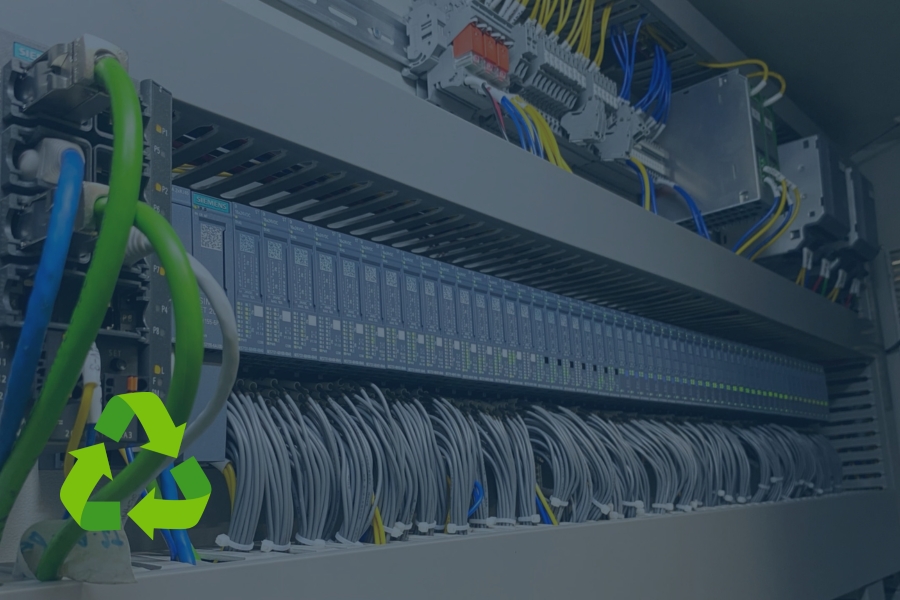
A PLC is a rugged industrial computer designed to control machines, equipment, and automated processes. Unlike a regular computer, it is built for industrial environments where heat, dust, vibration, and constant operation are common.
PLCs use programmable systems to receive inputs, process instructions, and control outputs. In simple terms, they tell equipment what to do based on signals from sensors, switches, motors, and other connected devices.
This input/output control is what makes PLCs so important in modern automation.
PLCs help manage industrial processes
PLCs are used to keep industrial systems running smoothly and consistently. They can help control conveyor systems, sorting equipment, shredders, robotic systems, packaging lines, pumps, motors, and manufacturing controls.
In recycling facilities, PLCs may help manage conveyor timing, material sorting, safety shutdowns, and automated processing equipment. In manufacturing, they may control production lines, machine sequences, and equipment performance.
Because they are tied directly to operations, PLCs often stay in service for years before being replaced or upgraded.
PLCs are used across many industries
PLCs are common in manufacturing, recycling facilities, automotive plants, warehouses, food processing facilities, utilities, and other industrial operations.
Any facility that relies on automation may use PLCs to control equipment and improve consistency. They help reduce manual work, improve accuracy, and keep machines operating according to programmed instructions.
That also means many businesses eventually end up with surplus PLCs when systems are upgraded, replaced, or retired.
Why PLC Recycling Matters
PLCs contain electronic waste components
PLCs may look like small control boxes, but they contain electronic waste components that need proper handling. Inside, they may include circuit boards, processors, batteries, wiring, terminals, metal contacts, plastic housings, and other electrical parts.
Some components may contain materials that should not be dumped or casually discarded. Batteries, boards, and electronic assemblies can create environmental concerns if they end up in a landfill.
Recycling helps make sure these materials are sorted and processed through the right channels.
Industrial controls should not go into dumpsters
Old PLCs and industrial controls should not be thrown into regular dumpsters. These devices are part of the electronic waste stream, and improper disposal can create landfill risks, environmental concerns, and potential compliance issues.
For businesses, throwing away electronics also creates a poor recordkeeping trail. If a facility is trying to document responsible equipment disposal, a dumpster is not the right solution.
Industrial electronics should be collected, sorted, and processed by a recycler that understands e-waste and commercial equipment.
Recycling supports material recovery
PLC recycling supports the recovery of materials that may still have reuse potential. Copper wiring, metal housings, circuit boards, processors, and other components can be separated and routed into appropriate recycling streams.
Some surplus PLCs may even be reusable, repairable, or valuable in secondary markets. When equipment is handled properly, the goal is to recover as much usable material as possible while reducing waste.
This supports industrial sustainability and helps keep old automation equipment from sitting unused in storage rooms.
What Happens to Old PLCs?
Some PLCs can still be reused or resold
Not every old PLC is ready for end-of-life processing. Some units may still work and can be reused as backup equipment, sold as surplus inventory, repaired, or refurbished.
This is common when facilities upgrade automation systems but still have functional controls left over. A working PLC may be useful to another operation that uses the same system, needs replacement parts, or wants backup components.
Before recycling, it is worth identifying whether the unit has reuse or resale potential.
Unsupported PLCs may become obsolete
A PLC can become obsolete even if it still powers on. Older models may be discontinued, unsupported by the manufacturer, or incompatible with newer software, sensors, equipment, or control systems.
Replacement parts may also become difficult to find. If a facility can no longer service or update a PLC, keeping it in production may create downtime risks.
When unsupported controls are replaced, they should be handled as surplus industrial electronics rather than tossed aside.
Damaged PLCs may require electronics recycling
Damaged PLCs are often better suited for electronics recycling. Failed boards, water damage, electrical damage, corrosion, burned components, and broken terminals can make a unit unreliable or unsafe to reuse.
In those cases, recycling allows the device to be dismantled and processed for recoverable materials. Circuit boards, wiring, metals, and other components can be separated instead of going to waste.
For end-of-life automation equipment, responsible recycling is usually the cleanest and safest path forward.
How PLC Recycling Works
Industrial controls are collected and sorted
PLC recycling usually starts with collecting and organizing surplus industrial controls. For businesses, this may include PLCs from old automation systems, control cabinets, production lines, recycling equipment, warehouse machinery, or facility upgrades.
Sorting matters because not every unit is in the same condition. Some PLCs may be reusable, some may be damaged, and others may be obsolete. Inventory management and asset tracking help identify what was collected, where it came from, and how it should be handled.
For larger facilities, this step also helps keep industrial electronics from getting mixed into general scrap or regular waste.
Components are dismantled for recovery
Once PLCs are sorted, they can be dismantled to separate recoverable components. This may include removing circuit boards, copper wiring, batteries, power components, terminals, processors, and metal housings.
Battery handling is especially important because backup batteries should be separated and processed through the proper stream. Circuit boards and wiring also need specific handling because they contain metals and electronic materials that should not be wasted.
This separation process helps improve recovery and makes downstream recycling more efficient.
Materials move through electronics recycling streams
After dismantling, materials move into the right electronics recycling streams. Circuit boards may be processed for metals recovery, wiring may be separated for copper, and metal housings may go into industrial scrap recovery.
The goal is to route each material where it belongs instead of treating the entire PLC as one mixed item. Proper electronics processing supports downstream recycling, reusable commodities, and better material recovery.
For businesses, this also creates a cleaner, more responsible path for old automation equipment.
What Parts of a PLC Can Be Recycled?
Circuit boards and processors
Circuit boards and processors are some of the most important parts of a PLC from a recycling standpoint. These industrial boards can contain electronic components and small amounts of recoverable metals.
Because circuit boards are not the same as basic scrap metal, they should be separated and processed through an electronics recycling stream. This helps recover materials while reducing the chance of electronic waste ending up in a landfill.
Wiring and copper components
PLCs often include wiring, terminals, connectors, and copper-bearing electrical components. Copper recovery is one reason industrial controls should be handled carefully instead of thrown away.
Cable separation helps keep copper and other electrical materials from being mixed with lower-grade scrap. When wiring is removed and sorted properly, more material can be recovered and reused.
Batteries and power components
Some PLCs include backup batteries, capacitors, power supplies, or related electrical components. These parts need proper handling because they may require different processing than the metal enclosure or wiring.
Backup batteries should be separated before recycling whenever possible. Capacitors and power components may also need careful handling depending on the type, age, and condition of the unit.
Proper battery handling helps reduce safety risks and supports cleaner electronics processing.
Metal enclosures and housings
Many PLCs are housed in metal cabinets, racks, or enclosures made from steel, aluminum, or other industrial materials. These housings can often be routed through scrap metal recovery.
Steel cabinets and aluminum housings may not be the most complex parts of the device, but they still matter. Recovering these materials helps reduce waste and supports a more complete recycling process for industrial controls.
Signs It May Be Time to Recycle a PLC
The system is no longer supported
A PLC may still power on but no longer be practical to keep. Discontinued models, unsupported firmware, obsolete hardware, and outdated communication standards can all make older systems difficult to maintain.
If the manufacturer no longer supports the unit, replacement parts may become harder to find and software updates may no longer be available.
At that point, keeping the PLC in service may create downtime risks for the facility.
Repairs are becoming too expensive
Repairing a PLC can make sense when the system is still useful and parts are available. But when sourcing replacement parts becomes difficult or repair costs keep rising, recycling may become the better option.
Downtime is also part of the cost. If a failed PLC slows production, stops a conveyor, interrupts sorting equipment, or affects facility operations, the true cost may be much higher than the repair bill.
When the unit becomes more expensive to maintain than replace, it may be time to retire it.
Your facility is upgrading automation systems
Modernization projects often leave businesses with old PLCs, control panels, wiring, and related automation equipment. During system upgrades, older controls may be replaced with newer hardware that offers better performance, compatibility, monitoring, or safety features.
Instead of letting removed equipment sit in storage, facilities can sort it for reuse, resale, asset recovery, or recycling.
This helps clear space and keeps outdated industrial electronics from becoming long-term clutter.
Industrial PLC Disposal for Businesses
Facilities often accumulate surplus controls
Many businesses end up with surplus PLCs after equipment upgrades, plant changes, production line removals, or automation system replacements. These old controls often sit in storage rooms, maintenance areas, cabinets, or warehouse corners.
Some may have been kept as backup units. Others may be forgotten parts from old automation systems that no longer exist.
A proper disposal plan helps businesses decide what can be reused, what may have resale potential, and what should be recycled.
Bulk electronics recycling may require logistics planning
When a facility has multiple PLCs, control panels, drives, power supplies, or industrial electronics, disposal may require planning. Palletized electronics, warehouse cleanouts, industrial pickups, and equipment staging can make the process smoother.
Businesses should also consider how items are tracked, packed, and separated before pickup. This is especially helpful for facilities handling large volumes of old controls or mixed electronic equipment.
With the right process, bulk electronics recycling can be organized instead of disruptive.
Asset recovery may still provide value
Some surplus PLCs may still have market value. Working units, hard-to-find models, compatible modules, and replacement parts may be useful to other facilities or secondary equipment markets.
Asset recovery can help identify reusable inventory or liquidation opportunities before everything is processed as end-of-life electronics.
This gives businesses a smarter option for surplus equipment while still keeping damaged or obsolete units out of the waste stream.
Why Proper PLC Disposal Matters for Recycling Facilities
PLCs play a major role in sorting and automation
Recycling facilities rely on PLCs to help manage conveyor timing, material detection, automated sorting, safety shutdowns, and other equipment controls.
When these systems work properly, they help improve consistency, reduce manual handling, and keep processing lines moving. But when PLCs fail or become outdated, they can slow down the operation or create maintenance problems.
That is why old PLCs from recycling facilities should be handled just as responsibly as the materials those facilities process every day.
Recycling facilities also generate electronic waste
Recycling operations do not just process e-waste from other businesses. They also generate their own industrial electronic waste through outdated controls, failed automation equipment, damaged sensors, old panels, and retired machinery.
PLC recycling helps close that loop. Instead of leaving obsolete controls in storage or sending them to the wrong waste stream, facilities can recover materials and handle industrial electronics responsibly.
For recycling plants, proper PLC disposal supports both operational cleanup and environmental accountability.
Conclusion
PLCs contain electronic components, copper, batteries, circuit boards, and industrial materials that require proper handling. Responsible disposal supports environmental responsibility, industrial cleanup, and electronics recovery.
If your facility has surplus PLCs, industrial controls, automation equipment, or electronic components, contact our recycling team for support. We can help with electronics recycling services for old industrial electronics and automation systems.