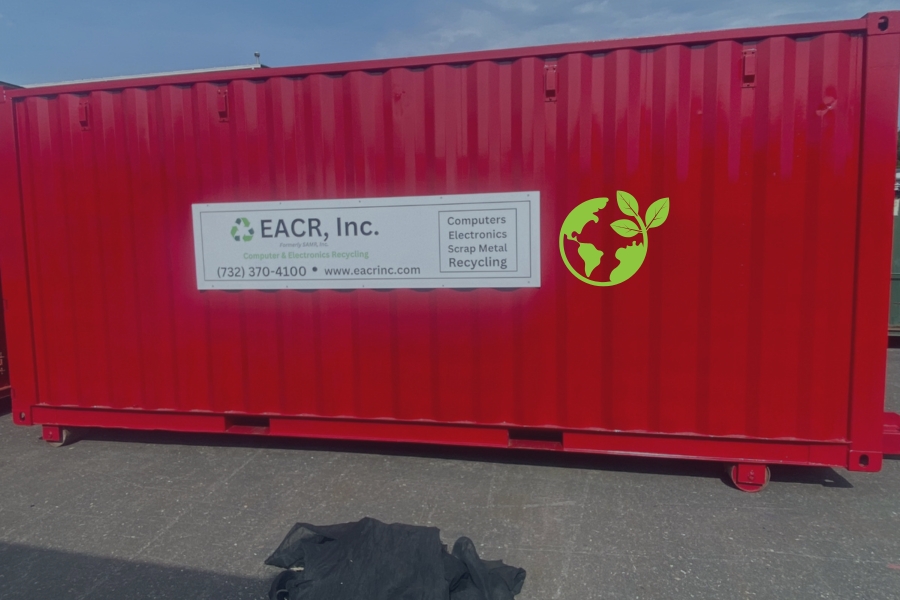
E-waste containers give businesses, schools, warehouses, offices, and facilities a simple place to safely collect old electronics. Computers, monitors, phones, tablets, batteries, printers, wires, and small electronics can pile up quickly when there is no clear disposal process. Without a dedicated collection system, these items often end up in closets, dumpsters, landfills, or outdoor areas where they can create environmental problems.
E-waste containers help protect the environment by keeping electronics separated from regular trash. That supports landfill diversion, soil protection, safer battery handling, material recovery, and easier recycling for businesses. Explore our e-waste container services to make electronics recycling easier, cleaner, and more responsible for your facility.
E-Waste Containers Keep Electronics Out of Landfills
Electronics should not be mixed with regular trash
Electronics are different from normal waste because they often contain batteries, metals, circuit boards, screens, wires, plastics, and other components that need proper handling. A broken monitor, old laptop, damaged phone, or loose battery should not be treated the same way as office trash.
When electronics are tossed into dumpsters, they can be crushed, damaged, exposed to weather, or sent directly to landfills. That increases the risk of batteries breaking, metals corroding, and electronic components entering the wrong waste stream.
The scale of the issue is huge. The Global E-waste Monitor 2024 found that 62 million tonnes of e-waste were generated globally in 2022, while only 22.3% was formally collected and recycled. E-waste containers help close that gap by giving old electronics a clear place to go before pickup and processing.
Containers create a clear collection point
A container makes electronics recycling simple for employees. Instead of wondering whether an old keyboard goes in the trash, where to put outdated phones, or who handles broken monitors, staff have one clear collection point.
That reduces random disposal and helps businesses avoid the common “junk room” problem where old equipment sits for years. It also makes recycling part of daily operations instead of a one-time cleanup project.
For offices, schools, warehouses, and facilities, convenience matters. People are more likely to recycle electronics when the process is obvious.
Better collection improves landfill diversion
Better collection leads to better landfill diversion. When electronics are gathered in a designated container, they can be routed into recycling streams instead of being mixed with regular waste.
That helps reduce the volume of electronics sent to waste facilities and supports a cleaner process for sorting, handling, and recovery.
For companies working on sustainability goals, e-waste containers are a practical step. They turn responsible disposal from a vague idea into a system people can actually use.
E-Waste Containers Help Protect Soil, Grass, and Water
Electronics can contain materials that should not leak into the environment
Old electronics can contain materials that should not be left to break down outdoors or in landfills. Depending on the device, that may include lead, mercury, cadmium, lithium batteries, flame retardants, and circuit board materials.
These materials are exactly why electronics need a separate handling process. When devices are dumped, stored improperly, burned, or recycled through unsafe informal methods, harmful substances can enter the environment. The World Health Organization notes that lead is one substance commonly released when e-waste is dumped, stored, burned, or recycled through unsafe informal activity.
An e-waste container helps reduce that risk by keeping electronics contained, separated, and ready for proper pickup.
Outdoor dumping creates local pollution risks
Electronics left outside can become a local pollution problem. Rainwater can hit cracked screens, exposed wires, damaged batteries, broken plastics, and corroding metal parts.
When electronics sit on grass, pavement, loading docks, or near stormwater areas, the risk becomes more direct. Heat, moisture, and physical damage can make already broken devices even more hazardous.
This is especially important for facilities that collect old equipment over time. A few forgotten devices outside can turn into a larger mess if there is no dedicated container or pickup plan.
Containers reduce loose electronics around facilities
E-waste containers help keep properties cleaner and safer. Instead of loose electronics sitting behind buildings, in storage corners, near dumpsters, or on warehouse floors, old devices can be staged in one controlled area.
That means fewer electronics sitting outside, less exposure to weather, and safer storage before pickup. It also reduces the chance of damaged devices entering soil, grass, drainage areas, or stormwater paths.
For businesses, this is both an environmental and operational win. The property looks cleaner, and old electronics are handled more responsibly.
E-Waste Containers Make Recycling Easier for Businesses
Convenience increases participation
Employees use systems that are easy. If electronics recycling is confusing, inconvenient, or unclear, old devices usually end up wherever there is space.
E-waste containers reduce that confusion. They give offices, schools, warehouses, hospitals, municipalities, and commercial facilities a simple way to collect electronics without every department managing disposal separately.
The easier the process is, the more likely people are to use it consistently.
Businesses can manage electronics over time
Most businesses do not generate e-waste all at once. It builds up over time through retired computers, broken equipment, outdated hardware, IT cleanouts, office upgrades, old printers, damaged monitors, and unused accessories.
A container gives businesses a steady collection system. Instead of waiting for a major cleanout, facilities can place electronics in the right spot as they come out of service.
That keeps old devices from taking over closets, IT rooms, storage cages, and maintenance areas.
Containers support organized pickups
E-waste containers also make pickups easier. When devices are already collected in one place, scheduling service is cleaner and more efficient.
This supports less clutter, safer staging, better inventory control, and easier facility cleanup. It also helps businesses avoid last-minute scrambling when old equipment needs to be removed.
For high-volume facilities, scheduled container service can make electronics recycling feel like a normal part of operations instead of a stressful project.
E-Waste Containers Support Safer Battery Handling
Batteries can create fire and safety risks
Many electronics contain batteries, especially phones, tablets, laptops, power tools, backup devices, and small rechargeable electronics. Lithium-ion batteries can create safety risks when they are damaged, swollen, overheated, crushed, or short-circuited.
A battery that looks small can still be a serious concern if it is punctured or thrown into the wrong waste stream. That risk increases when devices are tossed into compactors, dumpsters, or piles of mixed trash.
E-waste containers help keep battery-containing devices separated before they are handled through the proper recycling process.
Separating electronics helps reduce unsafe disposal
When electronics are separated from regular trash, batteries are less likely to be crushed in waste compactors or damaged during normal trash handling.
This gives recycling teams a better chance to sort devices safely before processing. Phones, laptops, tablets, and other battery-powered electronics can be identified and handled with more care.
That matters because proper handling during recycling starts before the device ever reaches the facility. It starts with how the business collects and stores it.
Businesses need simple battery-aware collection systems
Businesses often have more battery-containing electronics than they realize. Employee electronics, old phones and tablets, laptops, power tools, backup batteries, wireless devices, and small electronics may all contain hidden batteries.
Without a simple collection system, these items can end up mixed with general waste or scattered across the facility.
E-waste containers create a more battery-aware process. They make it easier for staff to separate old electronics and reduce unsafe disposal habits before they become a bigger problem.
E-Waste Containers Help Recover Reusable Materials
Electronics contain metals and components that can be recovered
Old electronics are not just waste. Many devices contain reusable materials like copper, aluminum, steel, circuit boards, plastics, glass, and small amounts of precious metals.
When electronics are thrown into the trash, those materials are lost to the waste stream. When they are collected in an e-waste container, they have a better chance of being sorted, processed, and recovered through the right recycling channels.
This matters for everything from computers and monitors to phones, tablets, printers, cables, and small office electronics.
Recycling reduces pressure on raw material extraction
Recovering materials from old electronics helps reduce the waste of reusable resources. Instead of relying only on newly mined materials, recovered metals and components can re-enter supply chains and support future manufacturing.
This is especially important because electronics often contain materials connected to mining, rare earth processing, and battery production. When e-waste is not collected properly, those resources are wasted while demand for new raw materials continues.
The Global E-waste Monitor has reported that billions of dollars worth of recoverable resources are lost when e-waste is not properly collected and recycled. E-waste containers help businesses capture more of that material before it disappears into landfills, storage rooms, or informal disposal streams.
Proper collection supports a circular economy
A circular economy means products and materials are kept in use for as long as possible instead of being discarded after one life cycle. E-waste containers support that idea by turning old electronics into a source of reusable materials.
With better collection, products become material sources. Less equipment is sent straight to disposal, and more metals, plastics, glass, and components can be routed toward recovery.
For businesses, this is a practical way to support sustainability goals. A container on-site makes recycling easier, and recycling helps turn waste into reusable commodities.
E-Waste Containers Reduce Clutter and Unsafe Storage
Old electronics often pile up in storage rooms
Most businesses have old electronics hiding somewhere. They may be sitting in IT closets, back offices, warehouses, maintenance areas, classrooms, storage cages, or unused corners of the building.
These items usually pile up because no one knows what to do with them. A broken monitor gets moved to a closet. Old laptops sit on a shelf. Boxes of cables and phones stay in storage for years.
An e-waste container gives those items a clear destination instead of letting them spread across the facility.
Unmanaged electronics can become a safety issue
Electronic clutter is not just annoying. It can become a real safety issue. Piles of old equipment can create tripping hazards, damaged cords, leaking batteries, broken screens, and heavy equipment clutter.
Battery-powered devices are especially important to manage. A damaged laptop, swollen phone, or old backup battery should not sit loose in a storage room where it can be crushed, overheated, or forgotten.
Keeping electronics contained helps reduce avoidable risks for employees, maintenance teams, students, and anyone moving through the facility.
Containers keep old devices contained before pickup
E-waste containers make storage cleaner and more organized before pickup. Instead of loose devices being placed around the building, old electronics can be staged in one safer location.
This supports safer staging, cleaner facilities, less random dumping, and easier staff participation. It also helps recycling providers collect materials more efficiently when service is scheduled.
For businesses, that means fewer forgotten devices, less clutter, and a smoother path from old equipment to responsible recycling.
E-Waste Containers Help Organizations Build Better Environmental Habits
A container turns recycling into a normal workplace process
The best recycling systems are simple. When employees have a clear place to put old electronics, recycling becomes part of the normal workplace routine.
A container removes the “where does this go?” confusion. Staff do not have to guess whether a broken keyboard, old laptop, phone, monitor, or cable belongs in the trash.
Over time, that clear system creates more consistent disposal behavior and a repeatable recycling routine.
Containers support sustainability reporting and accountability
E-waste containers can also support better accountability. Businesses can track electronics disposal more easily when items are collected through a dedicated system instead of scattered across departments.
This can support internal environmental goals, sustainability reporting, facility audits, and cleaner operations. It is useful for schools, offices, municipalities, healthcare organizations, warehouses, and industrial facilities.
For organizations trying to improve how they manage waste, electronics collection is a smart and visible place to start.
Small collection changes can have a larger impact
Small electronics add up quickly. Every monitor, laptop, phone, printer, wire, tablet, and battery placed in the right container is one less item that may end up in a dumpster or landfill.
This is especially clear with mobile devices. In 2022, an estimated 5.3 billion mobile phones were expected to fall out of use globally, showing how quickly small electronics can become a massive waste stream (BBC, 2022).
More collection means less landfill pressure, better material recovery, and fewer electronics sitting unused. Proper recycling starts with easy access, and e-waste containers make that access simple.
Conclusion
E-waste containers help keep electronics out of dumpsters and landfills, reduce pollution risks, protect soil, grass, and water, support safer battery handling, improve material recovery, and make recycling easier for businesses.
As an electronics recycling company and e-waste container provider, EACR helps businesses, schools, warehouses, offices, and facilities manage old electronics responsibly. Contact our team to request an electronic waste container for your facility, or explore our electronics recycling services, battery recycling, and IT asset disposition solutions to make responsible electronics recycling easier to manage.