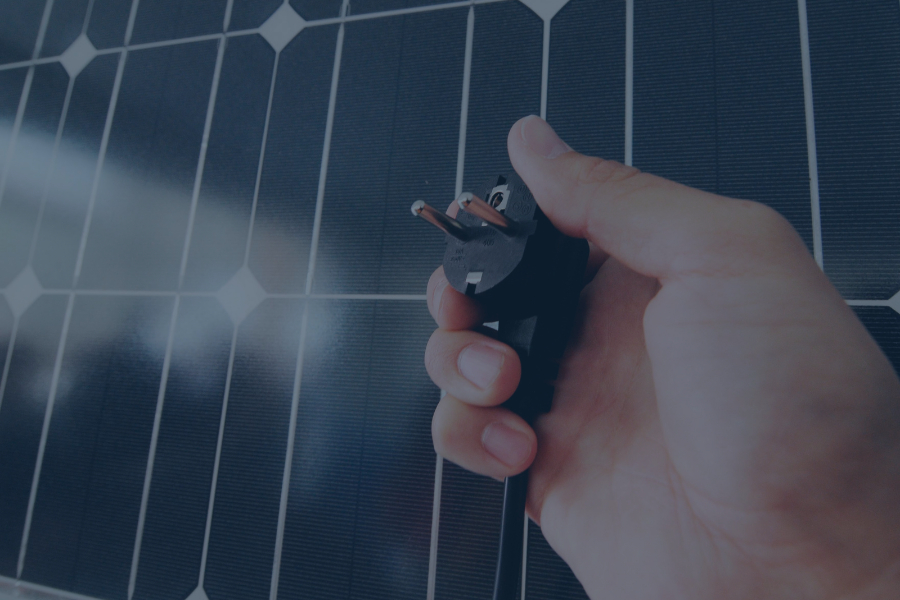
Plug-in solar panels are coming to New Jersey under a new law designed to make solar energy more accessible to homeowners, renters, and apartment residents.
On September 1, 2026, New Jersey officially approved the Garden State Balcony Solar Act, allowing qualifying portable solar systems to operate without many of the permits and utility approvals traditionally associated with solar installations.
But there are important rules concerning system size, electrical safety, certification, and installation.
This guide explains New Jersey’s new plug-in solar law, when it takes effect, and what residents need to know. EACR Inc. also provides solar panel recycling services for qualifying solar equipment when it reaches the end of its useful life.
Are Plug-In Solar Panels Legal in New Jersey?
Yes. New Jersey passed legislation in 2026 permitting qualifying plug-in solar systems, with the new rules scheduled to take effect in early 2027.
Governor Mikie Sherrill signed Senate Bill S2368, also known as the Garden State Balcony Solar Act, on September 1, 2026.
The law establishes a simpler process for residents to use smaller portable solar systems that connect to a home’s electrical system through a standard 120-volt outlet.
Qualifying systems can generate up to 1,200 watts of power without the utility interconnection approvals generally required for larger solar installations.
However, the law is not yet effective as of November 2026. Residents must also comply with applicable product certification, electrical safety, and installation requirements.
You can review the legislation through the New Jersey Legislature’s official S2368 page.
What Is the Garden State Balcony Solar Act?
The Garden State Balcony Solar Act is a New Jersey law intended to expand access to small-scale solar electricity.
Traditional rooftop solar installations can require substantial investments, professional installation, permits, and utility interconnection agreements.
These requirements can make solar energy difficult to access for renters, apartment residents, and homeowners without suitable roofs.
The new law addresses this gap by establishing rules specifically for portable solar generation devices.
Its main provisions include:
- Allowing qualifying plug-in solar systems with a combined maximum output of 1,200 watts.
- Removing utility interconnection agreement requirements for eligible systems.
- Exempting qualifying devices from traditional net metering requirements.
- Preventing municipalities from requiring permits solely for the placement or use of qualifying devices.
- Limiting the ability of landlords and homeowners’ associations to prohibit these systems.
- Establishing certification and electrical safety requirements.
The law does not eliminate every electrical or building requirement. Certain installations and modifications may still require professional work and permits.
When Does New Jersey’s Plug-In Solar Law Take Effect?
The Garden State Balcony Solar Act was signed into law on September 1, 2026, with an effective date set for six months after enactment, around March 1, 2027.
This means the law was approved in 2026, but its new exemptions and protections are not immediately available.
Before installing a system, residents should verify the law’s implementation status and confirm that their chosen equipment meets the required standards.
The New Jersey Board of Public Utilities may also take steps before the effective date to prepare for implementation.
What Are Plug-In Solar Panels?
Plug-in solar panels are small photovoltaic systems designed to generate electricity and deliver it to a home’s electrical system through a compatible connection.
They are sometimes called:
- Balcony solar panels.
- Portable plug-in solar systems.
- Plug-and-play solar panels.
- Mini solar systems.
- Balcony photovoltaic systems.
Unlike traditional rooftop installations, these systems are generally smaller and may be positioned on balconies, patios, terraces, or other suitable locations.
How Do Plug-In Solar Panels Work?
A typical system includes solar panels, a microinverter, electrical connections, and mounting equipment.
The process works as follows:
- Solar panels capture sunlight and generate direct current (DC) electricity.
- A microinverter converts the electricity into alternating current (AC) compatible with the home’s electrical system.
- The system supplies electricity to help offset power being consumed by household appliances.
- The home continues drawing electricity from the grid when its energy needs exceed the solar system’s output.
These systems are primarily intended to reduce household electricity consumption from the utility rather than generate large amounts of power for export.
What Is the Maximum Wattage Allowed in New Jersey?
Under the Garden State Balcony Solar Act, qualifying portable solar systems have a maximum power output of 1,200 watts.
Importantly, this is not simply a limit for each individual panel or device.
The law generally limits the combined output of all portable solar generation devices operated by one electricity customer at a single service address to 1,200 watts.
For multifamily housing, the combined limit applies to the individual dwelling unit.
Systems exceeding this combined output would require an appropriate utility interconnection agreement.
What About Plug-In Solar Systems Under 400 Watts?
The law includes an additional provision for smaller systems.
Devices with a maximum power output to the electrical outlet of 400 watts or less are exempt from provisions that would otherwise require alterations to the building’s premises, wiring, or electrical panels.
This does not eliminate the need to use properly certified equipment or follow applicable safety instructions.
Larger systems within the 1,200-watt limit may still require an assessment of their installation requirements.
Do Plug-In Solar Panels Require a Permit in New Jersey?
Under the new law, municipalities cannot require a permit, application, fee, license, or other approval solely for the placement or use of a qualifying portable solar generation device.
This is one of the law’s most important changes.
However, electrical work and building modifications may still require permits.
For example, if installing the system requires adding an electrical outlet, modifying building wiring, or performing other regulated construction work, applicable permit requirements continue to apply.
New Jersey’s Department of Community Affairs clarified this distinction in its Fall 2026 Construction Code Communicator.
The exemption covers placement and use of qualifying equipment, not every possible modification associated with installing it.
Can Renters Install Plug-In Solar Panels in New Jersey?
Yes. The Garden State Balcony Solar Act includes protections intended to make portable solar available to qualifying renters.
Under the law, landlords generally cannot prohibit tenants who are responsible for paying their electricity bills from using qualifying portable solar devices within their leased premises, including leased balconies or patios.
However, renters must follow several requirements.
Written Notice to the Landlord
Tenants must provide written notice of their intention to use a plug-in solar system at least 14 days before placement or use.
The notice must identify the proposed location and include documentation demonstrating that the equipment meets the law’s requirements.
Notice must also be provided to applicable housing associations or governing entities where required.
Reasonable Placement Restrictions
Landlords may establish reasonable restrictions concerning the size, physical dimensions, and placement of the equipment.
They may also restrict equipment in areas outside the tenant’s leased premises and impose restrictions necessary to satisfy applicable safety requirements.
Tenants remain responsible for damage to the leased premises caused by their solar equipment.
The law expands renters’ access to solar energy, but it does not provide unrestricted permission to attach equipment anywhere on a building.
Can an HOA Ban Balcony Solar Panels in New Jersey?
The Garden State Balcony Solar Act also limits restrictions imposed by homeowners’ associations, condominium associations, and similar governing organizations.
These organizations generally cannot enforce rules that outright prohibit qualifying portable solar generation devices on a unit owner’s or tenant’s premises.
However, they may impose reasonable restrictions involving:
- Equipment size.
- Placement and positioning.
- Mounting methods.
- Compliance with applicable safety requirements.
This means an HOA may regulate how equipment is positioned or secured without necessarily being permitted to prohibit qualifying systems altogether.
Residents should review the law’s notice and installation requirements before purchasing or installing equipment.
What Safety Standards Must Plug-In Solar Panels Meet?
New Jersey’s law establishes specific equipment safety requirements.
Qualifying portable solar generation devices must be listed or certified under UL 3700, the Outline of Investigation for Interactive Plug-In Photovoltaic Equipment and Systems, or qualifying comparable safety standards evaluated by a nationally recognized testing laboratory.
The law also requires equipment to include a feature that prevents it from exporting electricity to the distribution grid during a power outage.
This type of protection helps prevent unsafe power delivery when the grid is not operating normally.
Other important considerations include:
- Following the manufacturer’s installation instructions.
- Using equipment intended for compatible U.S. electrical systems.
- Securing solar panels against movement or falling.
- Ensuring electrical connections are suitable for the installation.
- Following applicable electrical and building codes.
- Avoiding unauthorized modifications or unsafe combinations of multiple systems.
Residents should not assume that every portable solar panel sold online automatically meets New Jersey’s requirements.
Do Plug-In Solar Panels Work During a Power Outage?
Not necessarily.
Qualifying grid-connected plug-in solar systems must include a feature preventing electricity from being exported to the electrical distribution system during a power outage.
As a result, residents should not assume a standard balcony solar system will continue powering their home when utility service is interrupted.
Some specialized systems may offer separate backup capabilities, but those depend on the equipment’s design and applicable safety requirements.
A standard grid-connected plug-in solar system should not be treated as a substitute for an approved home backup power system.
Will Plug-In Solar Panels Lower Electricity Bills?
Plug-in solar panels can reduce the amount of electricity a household needs to purchase from its utility.
However, actual savings depend on several factors:
- System wattage and efficiency.
- Available sunlight.
- Panel orientation and shading.
- Household electricity usage.
- Local electricity rates.
- Equipment cost and installation requirements.
For example, an apartment with a sunny, unobstructed balcony may generate more electricity than one surrounded by taller buildings.
The financial benefit also depends on how much solar electricity the household uses while the system is producing power.
New Jersey’s law exempts qualifying devices from traditional net metering requirements. Residents should not assume they will receive credits for electricity exported to the grid.
Frequently Asked Questions About New Jersey’s Plug-In Solar Law
Are Balcony Solar Panels Legal in New Jersey?
New Jersey approved the Garden State Balcony Solar Act in September 2026, establishing a pathway for qualifying balcony solar systems. The law’s provisions take effect six months after enactment, around March 2027.
How Many Watts of Plug-In Solar Are Allowed in New Jersey?
The law allows qualifying portable solar systems with a combined maximum output of 1,200 watts per customer service address or individual dwelling unit without a traditional interconnection agreement.
Can You Plug Solar Panels Into a Regular Outlet in New Jersey?
The new law covers qualifying portable solar systems designed to connect through standard 120-volt outlets. However, the equipment must meet the required safety standards and applicable installation rules.
Do You Need an Electrician for Balcony Solar Panels?
Not every qualifying system necessarily requires electrical modifications. However, installations requiring changes to wiring, outlets, or electrical panels may require professional electrical work and applicable permits.
Can Apartment Residents Install Plug-In Solar Panels?
Yes. The law provides protections for qualifying renters, including those with leased balconies or patios. Written notice, equipment documentation, and reasonable placement restrictions may apply.
Can a Landlord Refuse to Allow Plug-In Solar Panels?
Landlords generally cannot impose blanket prohibitions on qualifying systems used by eligible tenants within their leased premises. They can establish reasonable placement and safety restrictions under the law.
Are Plug-In Solar Panels the Same as Rooftop Solar?
No. Plug-in solar systems are generally smaller, portable installations designed to offset household electricity consumption. Traditional rooftop systems typically involve larger installations and separate electrical and utility requirements.
Recycle Solar Panels With EACR Inc.
New Jersey’s Garden State Balcony Solar Act represents an important change in how residents can access solar electricity. Beginning in early 2027, qualifying portable solar systems will have a clearer pathway for use without many of the traditional approval requirements.
As portable solar technology becomes more common, proper end-of-life recycling will also be important.
EACR Inc. provides solar panel recycling services for qualifying photovoltaic panels, solar inverters, and related equipment. Our recycling solutions help recover reusable materials while supporting responsible management of retired solar technology.
We work with businesses, municipalities, solar contractors, and other organizations throughout New Jersey and beyond.
Contact EACR Inc. at (732) 370-4100 to discuss solar panel recycling and confirm equipment acceptance and collection arrangements.