Most people use laptop batteries every day without ever thinking about what is actually inside them. Modern laptop batteries pack chemicals, metals, wiring, separators, and energy storage components into a thin, compact shell.
Most laptop batteries today are lithium-ion batteries. Inside, multiple layers and materials work together to store energy, release power, manage heat, and support safe charging. Those materials also affect how laptop batteries should be recycled, why damaged batteries can become risky, and why they should not be thrown in the trash.
If your business or organization is replacing old laptops or damaged batteries, EACR Inc. offers laptop recycling services, battery recycling pickup, and secure electronics recycling solutions for commercial quantities.
What is Inside a Laptop Battery?
Most laptop batteries contain lithium compounds, cobalt or nickel materials, graphite, copper, aluminum, electrolyte solution, plastic separators, and protective circuitry.
These materials work together to store, move, and regulate electrical energy safely inside the battery pack. The battery is not just one solid block. It is a layered system built to charge, discharge, control heat, and reduce safety risks when everything is working properly.
What Type of Battery is Inside a Laptop?
Lithium-ion batteries dominate modern laptops
Most modern laptops use lithium-ion, or Li-ion, batteries. They are lightweight, rechargeable, and able to store a lot of energy in a small space.
That high energy density is exactly why lithium-ion batteries became the standard for portable electronics. A laptop needs enough power to run a screen, processor, storage, keyboard, wireless connections, and cooling systems without making the device too heavy to carry.
Older laptop battery types
Older laptops sometimes used nickel-cadmium, also called NiCad, or nickel-metal hydride, also called NiMH, batteries.
Those older battery types were rechargeable, but they were heavier, less energy-dense, and less efficient compared to modern lithium-ion batteries. Over time, lithium-ion largely replaced them because laptop users needed longer runtime, lighter devices, and batteries that could fit into slimmer designs.
Why lithium-ion batteries became standard
Lithium-ion batteries became standard because they solved several problems at once. They offer longer runtime, lower weight, rechargeability, compact size, and better energy efficiency than many older battery chemistries.
For laptop manufacturers, that means thinner devices with better battery life. For recyclers, it means laptop batteries need to be handled as lithium-ion batteries, not basic scrap or regular household trash.
The Main Materials Inside a Laptop Battery
Lithium compounds
Lithium compounds are one of the core parts of a laptop battery. They help store and move energy by allowing lithium ions to travel between the battery’s internal layers during charging and discharging.
Lithium itself is only part of the chemistry. It is usually combined with other materials, which can vary depending on the battery design. That chemistry is one reason laptop batteries need specialized recycling instead of ordinary disposal.
Cobalt, nickel, and manganese
Many lithium-ion laptop batteries also contain cobalt, nickel, manganese, or similar metal compounds. These materials help stabilize the battery chemistry and improve performance, energy density, and charging behavior.
Not every laptop battery uses the exact same blend. Some chemistries use more cobalt, while others rely more on nickel, manganese, or different combinations. These metals are part of what makes battery recycling important, because they can be recovered instead of wasted.
Graphite
Graphite is commonly used in the anode, which is one of the main internal battery layers. During charging, lithium ions move into the graphite structure and are stored there until the battery releases energy.
It is one of those materials most people never think about, but it plays a major role in how a laptop battery charges and delivers power.
Copper and aluminum
Copper and aluminum help conduct electricity through the battery. They are used in current collectors and internal connections that move electrical current through the battery pack.
These metals matter because they are recyclable and reusable. When laptop batteries are recycled properly, materials like copper and aluminum can be separated and routed back into recovery streams.
Electrolyte solution
The electrolyte is the chemical medium that allows ions to move inside the battery. Without it, the battery cannot charge and discharge correctly.
The electrolyte is also one reason damaged lithium-ion batteries need careful handling. If the battery is punctured, crushed, overheated, or swollen, internal materials can become exposed, and the electrolyte may create fire or safety risks.
Plastic separators
Plastic separators sit between internal battery layers to keep them from touching each other directly. That separation is critical because direct contact between layers can cause a short circuit.
In simple terms, separators help the battery function safely by allowing ion movement while preventing the wrong materials from making contact.
How a Laptop Battery Is Built
Individual battery cells
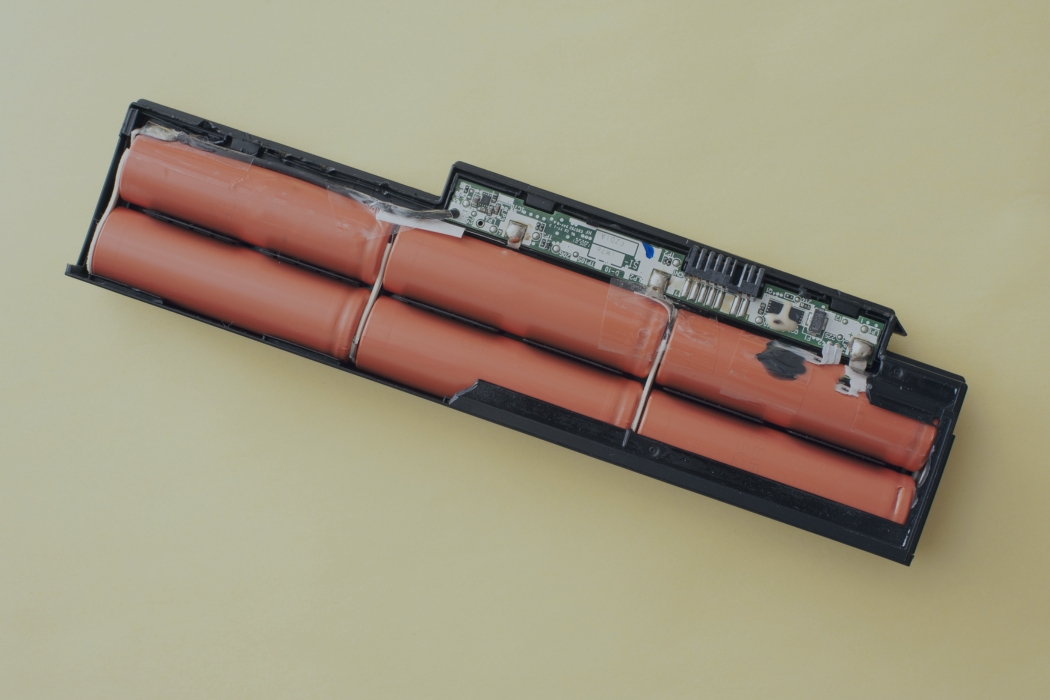
A laptop battery pack is usually made of multiple smaller battery cells. These cells may be cylindrical, pouch-style, or prismatic, depending on the laptop design.
Each cell stores energy, and the battery pack combines them to deliver the voltage and capacity the laptop needs. That is why a damaged laptop battery is not just one damaged part. It can involve several cells inside the pack.
Battery management system (BMS)
The battery management system, or BMS, is the internal safety and control circuitry inside the battery pack. It helps control charging and discharging, monitors voltage, and helps manage temperature.
This system is important because lithium-ion batteries need controlled charging. Overcharging, overheating, or uneven cell behavior can create safety risks. The BMS helps keep the battery operating within safer limits.
Outer battery casing
The outer casing protects the battery’s internal cells, wiring, separators, and circuitry. It helps reduce physical damage and keeps the battery pack contained inside the laptop.
But the casing is not indestructible. If it becomes cracked, swollen, punctured, or warped, the battery should be treated as damaged and handled carefully.
Why Laptop Batteries Can Become Dangerous
Heat buildup
Laptop batteries are designed to handle normal charging and discharging, but heat can become a problem when the battery is stressed. Heavy use, poor ventilation, aging cells, or charging issues can all increase battery temperature.
A laptop that constantly runs hot puts more strain on the battery over time. Heat can speed up degradation, reduce battery life, and make existing damage worse.
Swelling batteries
A swollen laptop battery is a major warning sign. Swelling usually happens when gas builds up inside damaged or failing battery cells.
If the laptop case starts bulging, the trackpad lifts, the keyboard feels raised, or the laptop does not sit flat, stop using it and treat the battery as damaged. Do not press it down, puncture it, or try to force the laptop closed.
Fire risks
Damaged lithium-ion batteries can ignite under the wrong conditions. Punctures, crushing, overheating, and short circuits all increase the danger.
This is why damaged laptop batteries need careful handling. A battery that looks small can still contain enough stored energy to create a fire risk if the internal layers are compromised.
Why damaged batteries should not go in the trash
Damaged laptop batteries should never go in the trash. They can create fire risks in garbage trucks, dumpsters, transfer stations, and landfills.
There are also chemical exposure and environmental concerns. Laptop batteries contain materials that should be recovered or managed properly, not buried in a landfill or crushed with regular waste.
Frequently Asked Questions About Laptop Batteries
What chemicals are inside a laptop battery?
Most laptop batteries contain lithium-based compounds, electrolyte solution, graphite, and metal compounds that may include cobalt, nickel, manganese, aluminum, and copper.
Do laptop batteries contain lithium?
Yes. Most modern laptop batteries are lithium-ion batteries, which use lithium compounds to move ions during charging and discharging.
Are laptop batteries hazardous?
They can be hazardous if damaged, swollen, punctured, overheated, or improperly disposed of. Even intact laptop batteries should be recycled through the right channels.
Why do laptop batteries swell?
Laptop batteries swell when gas builds up inside failing or damaged cells. This can happen from age, heat, overcharging, internal failure, or physical damage.
Can laptop batteries catch fire?
Yes. Damaged lithium-ion laptop batteries can catch fire, especially if they are crushed, punctured, overheated, or short-circuited.
Can laptop batteries be recycled?
Yes. Laptop batteries can be recycled through proper battery recycling programs. Recycling helps recover materials like cobalt, copper, aluminum, lithium, nickel, and other components.
What metals are recovered from laptop batteries?
Common recoverable materials can include cobalt, nickel, copper, aluminum, lithium, manganese, and other battery-related metals, depending on the battery chemistry and recycling process.
Does EACR Inc. recycle laptop batteries?
Yes. EACR Inc. offers laptop recycling services, battery recycling support, pickup coordination, and secure electronics recycling solutions for commercial quantities.
Conclusion
Laptop batteries are small, but they are built from a complex mix of lithium-ion cells, metals, graphite, electrolyte, separators, wiring, protective casing, and safety circuitry.
Those internal materials make the battery useful, but they also make proper handling and recycling important. Damaged batteries can swell, overheat, or create fire risks, while discarded batteries can add to e-waste and waste recoverable materials.
If your business is managing old laptops, damaged laptop batteries, or bulk electronics, EACR Inc. offers laptop recycling services, battery recycling support, pickup coordination, and secure electronics recycling solutions for commercial quantities.