Lawn mower battery recycling starts with one simple reality: mower batteries are common, easy to forget about, and not something to toss in the trash. Whether it came from a riding mower, push mower, electric mower, or landscaping equipment, the battery needs the right recycling route.
This guide gives you the simplest safe path: retailer drop-off, local recycling program, or scheduled pickup, plus how to identify the battery type, prep it safely, and know when business pickup makes more sense. If your business is already managing multiple mower batteries, mixed chemistries, or recurring equipment turnover, learn more about our battery recycling services and how scheduled pickup can simplify collection, transportation, and documentation.
Quick Answer: How to Recycle a Lawn Mower Battery
Most people fall into one of three routes:
- Retailer or battery drop-off: Best for one small lawn mower battery.
- Local recycling or household hazardous waste program: Good for residents with small quantities.
- Scheduled pickup: Best for landscaping companies, golf courses, schools, municipalities, property managers, or businesses with multiple batteries.
If you have one battery, drop-off may be fine. If you have multiple batteries, damaged units, lithium batteries, or equipment from several sites, pickup is usually the cleaner operational move.
What Counts as a Lawn Mower Battery?
Not every lawn mower battery is the same. The recycling path depends on the equipment, battery chemistry, condition, and quantity.
Riding mower batteries
Riding mower batteries are often lead-acid batteries, similar to the small vehicle batteries used in cars, tractors, utility carts, and other equipment. They are common in both residential and commercial riding mowers.
Because they can be heavy, corrosive, and energy-storing, they should be handled carefully and routed through a proper battery recycling option. Even if the battery looks “dead,” it should not be treated like ordinary scrap or household trash.
Electric mower batteries
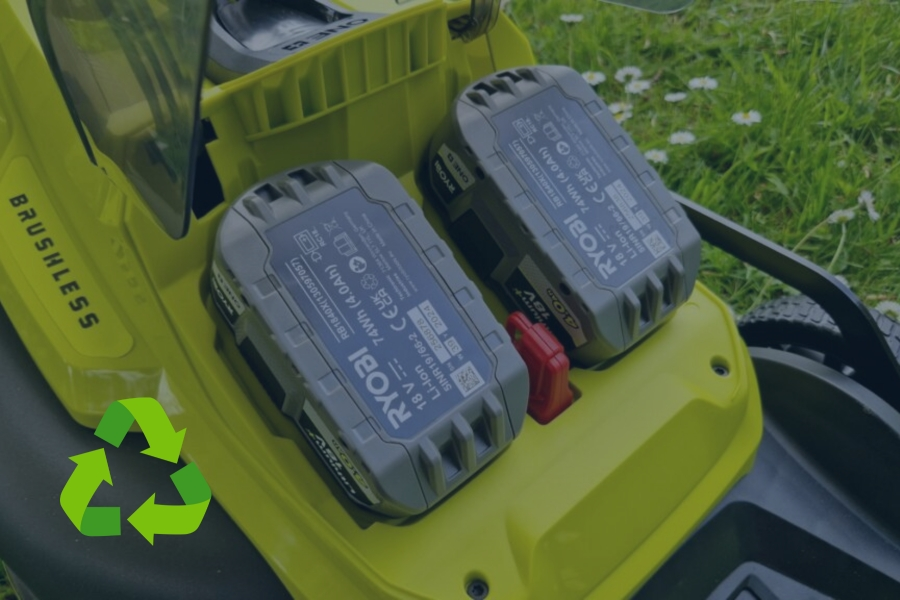
Electric mower batteries are often lithium-ion battery packs. Some are removable packs that slide out of the mower, while others may be built into the equipment and require more careful removal.
These batteries need special attention if they are swollen, damaged, overheating, leaking, or not charging correctly. A questionable lithium battery should be separated from intact batteries and flagged before recycling.
Commercial landscaping equipment batteries
Commercial landscaping batteries may come from electric mowers, trimmers, blowers, utility equipment, and full battery-powered fleets. These jobs often involve multiple battery packs instead of one simple replacement battery.
For landscaping companies, golf courses, schools, municipalities, and property managers, organized collection or scheduled pickup is usually easier than sending employees to drop-off locations one battery at a time.
Why battery type matters
Battery type determines how the battery should be packaged, transported, and recycled. Lead-acid and lithium batteries do not always follow the same handling path, and damaged batteries may need to be separated from intact units.
The safest move is to identify what you have, keep different battery types separated, and clearly flag anything damaged, swollen, leaking, corroded, or unknown.
Option 1: Retailer or Battery Drop-Off
When this option fits
Retailer or battery drop-off can work well when you have one or two intact lawn mower batteries and the battery is easy to transport. This route is most common for homeowners replacing a small mower battery.
Before loading the battery into your vehicle, confirm that the location accepts your battery type. A store that accepts lead-acid mower batteries may not accept lithium mower packs, and some locations may have quantity limits.
Where people typically drop off lawn mower batteries
Common drop-off options may include auto parts stores, home improvement stores, battery retailers, local battery collection sites, and e-waste recycling locations.
The key is to check first. Acceptance rules can vary by location, battery type, condition, and whether the battery is from residential or business use.
Common gotchas
Not every drop-off location accepts every lawn mower battery. Lithium mower batteries may have different rules than lead-acid batteries, and damaged batteries can be a bigger issue.
If a battery is leaking, swollen, badly corroded, cracked, or overheating, do not assume a public drop-off bin is the right place for it. Call ahead and explain the battery condition before transporting it.
Option 2: Local Recycling or Household Hazardous Waste Programs
When this option makes sense
Local recycling or household hazardous waste programs can be useful for residents handling seasonal cleanouts or one-off battery replacements. These programs are often run through counties, towns, or municipal recycling events.
This is a practical route for homeowners who are not sure where to bring a mower battery and want a local option that accepts household battery waste.
What to check before you go
Before showing up, check the program’s accepted battery types, event dates, hours, quantity limits, packaging rules, and damaged battery policy.
Some programs only accept certain battery chemistries. Others may require batteries to be taped, boxed, separated, or brought during a specific collection window.
Why this route can be limited
Local programs can be helpful, but they are not always convenient. Events may only happen a few times per year, hours can be limited, and some programs may not accept commercial quantities.
If you are a business, landscaping company, school, golf course, municipality, or property manager, you may need a dedicated recycling pickup instead of a residential collection event.
Option 3: Scheduled Pickup
Best-fit scenarios
Scheduled pickup is usually the right move for landscaping companies, golf courses, schools and universities, municipal public works departments, parks and recreation departments, property management companies, equipment rental companies, and businesses replacing multiple mower batteries.
It is also a good fit when batteries are coming from several locations, a fleet refresh, an equipment room cleanout, or a storage area where old batteries have piled up over time.
Why pickup reduces headaches
Pickup reduces the amount of employee handling and helps keep the process organized from the start. Instead of figuring out who is driving batteries where, you can collect them, separate them, and route them through one planned removal.
It also gives you cleaner tracking by site, battery quantity, battery type, and condition. That matters when you need internal records, certificates of recycling, or a simple way to prove the batteries were handled properly.
Pickup is also safer for mixed loads, damaged units, or batteries that are too heavy, corroded, or questionable for casual drop-off.
When pickup is better than drop-off
Pickup is usually better when you have several batteries, heavy batteries, leaking batteries, swollen lithium packs, corroded terminals, or batteries from multiple sites.
It also makes more sense if you need documentation, are clearing out a shop or garage, or want to avoid sending employees to multiple drop-off locations with batteries in personal vehicles.
How to Prepare Lawn Mower Batteries for Recycling
Lawn mower battery recycling is easier when you treat the prep work like a small project: identify the battery, check its condition, stage it safely, protect the terminals, and keep the load organized.
That matters even more if you are handling multiple batteries from a landscaping fleet, golf course, school, municipality, or property management site.
Step 1: Identify the battery type
Start by checking the label on the battery or the manual for the mower or equipment. Look for terms like lead-acid, AGM, lithium-ion, or lithium iron phosphate.
If you are not sure what type of battery you have, keep it separate from clearly identified units. Unknown batteries should not be tossed into the same box or pallet as known lead-acid or lithium batteries.
Step 2: Inspect the battery condition
Before moving the battery, look for obvious warning signs. Check for swelling, cracks, leaks, corrosion, burn marks, unusual odor, or loose terminals.
If the battery looks damaged, do not treat it like an intact unit. Separate it, mark it clearly, and avoid charging, crushing, or stacking anything on top of it.
Step 3: Stage batteries safely
Keep batteries upright when applicable and set them somewhere stable so they cannot tip, roll, fall, or get crushed. A cool, dry area away from traffic is usually the safest staging spot.
Keep batteries away from metal tools, loose hardware, debris, and anything that could bridge terminals or cause damage. Damaged batteries should be staged separately from intact batteries.
Step 4: Protect terminals
Exposed terminals should be protected when appropriate, especially if batteries are being boxed, transported, or stored near other batteries. Terminal protection helps reduce the chance of short circuits.
Do not let loose batteries roll around in boxes, bins, truck beds, or vehicles. Prevent battery-to-battery contact and keep the load stable from the start.
Step 5: Label and separate
Label batteries by type if you know it. Keep lithium batteries separate from lead-acid batteries, and clearly mark any units that are damaged, leaking, swollen, corroded, or questionable.
For business pickups, track the site, quantity, battery type, and condition. This makes pickup easier and helps keep documentation clean.
Safety Basics
Why lawn mower batteries are not normal trash
Lawn mower batteries can contain stored energy, corrosive materials, reusable metals, and components that should be handled through the right recycling channel. They are not the same as ordinary household waste.
The main risks include fire, short circuits, acid exposure from lead-acid batteries, corrosion, leakage, and overheating from lithium battery packs. Even a “dead” battery can create a problem if it is crushed, punctured, dropped, or bridged by metal.
The safest default rules
Do not throw lawn mower batteries in the trash. Do not crush, puncture, or take apart batteries. Do not mix damaged batteries with intact units.
Avoid storing loose batteries near metal objects, tools, wire, or hardware. Do not charge a damaged, leaking, swollen, or overheating battery.
Also, do not wait until a major equipment cleanout to figure out disposal. Last-minute handling is when batteries get rushed, mixed, dropped, or stored incorrectly.
Rules and Compliance
Practical recycling expectations
Rules can vary by battery type, location, quantity, and whether the battery is residential or commercial. A homeowner with one riding mower battery may have different options than a landscaping company with dozens of mixed batteries.
The practical move is simple: identify the battery, follow the recycler or program requirements, and keep records when batteries are handled for a business.
Why documentation matters for businesses
Documentation helps businesses prove that batteries were routed properly instead of being tossed, abandoned, or handled casually. It also supports internal tracking, vendor management, sustainability reporting, and safer disposal records.
For companies with multiple sites or recurring equipment turnover, clean records can make battery recycling easier to repeat every season.
Records to keep
At minimum, businesses should keep the pickup or service date, site location, battery type, quantity, condition notes, and certificates of recycling.
This does not need to be complicated. The goal is to know what was collected, where it came from, what condition it was in, and how it was routed.
What Happens After Collection?
After collection, lawn mower batteries are sorted by chemistry and condition. Lead-acid, AGM, lithium-ion, lithium iron phosphate, intact units, and damaged or suspect units may follow different handling paths.
Damaged batteries may be routed separately for safer processing. Lead, plastic, metals, and other reusable materials may be recovered, while lithium batteries are processed through appropriate battery recycling channels.
Remaining materials are handled through approved downstream methods based on battery type, condition, and program requirements. If you are replacing an old mower instead of just the battery, check out our guide to lawn mower recycling for pickup options, recycling prep, and how to handle larger equipment cleanouts safely.
Frequently Asked Questions About Lawn Mower Battery Recycling
Can lawn mower batteries go in the trash?
No. Lawn mower batteries should not go in regular trash because they can contain lead, acid, lithium, stored energy, and other materials that require proper recycling.
Are riding mower batteries recyclable?
Yes. Most riding mower batteries are recyclable, especially lead-acid batteries, which have established recycling pathways.
Are electric lawn mower batteries recyclable?
Yes. Electric mower batteries are recyclable, but many are lithium-based and should be handled carefully, especially if they are damaged, swollen, leaking, or overheating.
Where can I recycle a lawn mower battery?
Common options include battery retailers, auto parts stores, home improvement stores, municipal recycling programs, household hazardous waste events, and electronics recycling companies.
What should I do with a leaking lawn mower battery?
Keep it upright if safe, avoid contact with the leaking material, separate it from other batteries, and contact a recycler or local hazardous waste program for proper handling.
Do landscaping companies need battery pickup?
Often, yes. If a landscaping company has multiple mower batteries, mixed battery types, or batteries from several sites, scheduled pickup is usually easier and safer than drop-off.
Conclusion
Recap: identify the battery type, inspect the condition, keep batteries stable and separated, choose the right recycling route, and keep documentation if you are handling batteries for a business.
For businesses, landscaping crews, municipalities, schools, golf courses, or property managers, EACR Inc. can help coordinate lawn mower battery recycling with pickup, routing, and certificates of recycling. Need help recycling larger quantities of mower batteries or mixed battery loads? Explore our battery recycling services for commercial pickups, safe routing, and recycling support for businesses, municipalities, schools, and landscaping fleets.