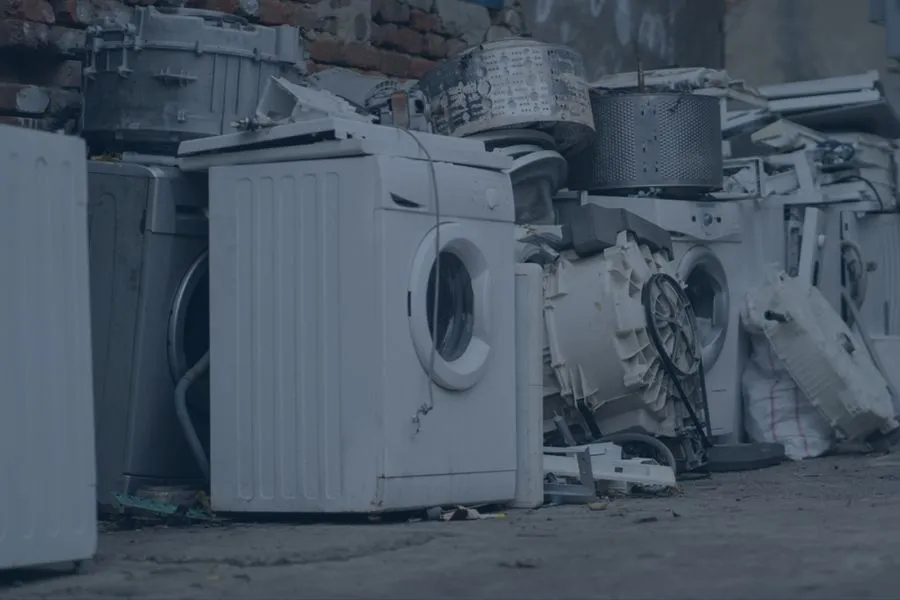
Most residential washing machines last between 10 and 14 years, but the actual lifespan depends on the type of washer, how often it is used, and how well it is maintained.
Top-load, front-load, budget, and heavier-duty machines can all age differently. A washer also does not automatically need replacement just because it reaches 10 years old. Repair frequency, leaks, unusual noises, performance, parts availability, and the cost of keeping the machine running all matter.
If your washer has reached the end of its useful life, EACR Inc. provides washing machine recycling services for old appliances from homes, businesses, property managers, and larger replacement projects.
Quick answer: Most washing machines last about 10 to 14 years.
The expected lifespan can vary quite a bit depending on the type of machine and how heavily it is used.
Typical ranges include:
- Top-load washers: 11 to 14 years
- Front-load washers: 10 to 13 years
- Budget or heavily used washers: 5 to 7 years
- Well-maintained higher-end machines: 15 years or longer in some cases
These are general ranges, not expiration dates. A 12-year-old washer that still runs quietly and reliably may have plenty of life left. A much newer machine that leaks, breaks down constantly, or struggles through every cycle may already be approaching replacement.
Average Washing Machine Lifespan by Type
How Long Do Top-Load Washers Last?
Typical lifespan: 11 to 14 years
Top-load washing machines often have relatively straightforward mechanical systems, which can make some models easier to maintain and repair.
That does not mean every top-loader will automatically last longer. A machine running several loads every day will experience more wear than one used a few times per week.
Maintenance, load size, build quality, and how quickly problems are addressed all play a role.
How Long Do Front-Load Washers Last?
Typical lifespan: 10 to 13 years
Front-load washing machines can last well over a decade when properly maintained.
As they age, several components may need attention, including:
- Door seals
- Drum bearings
- Suspension components
- Pumps
- Electronic controls
Moisture around the door seal is another common issue. Front-load washers can develop odors or mold when the gasket stays damp for long periods.
That alone does not mean the machine needs to be replaced. Regular cleaning and allowing the washer to dry between cycles can help manage the problem.
How Long Do Budget or Heavily Used Washers Last?
Typical lifespan: 5 to 7 years
Lower-cost washers and machines used several times every day can have much shorter lifespans.
This is especially common in:
- Large households
- Rental properties
- Shared laundry areas
- Small commercial environments
Every wash cycle puts wear on the motor, bearings, pump, suspension system, and other mechanical parts. A washer running multiple loads every day can reach the same amount of wear in several years that a lightly used household machine experiences over a decade.
What Affects How Long a Washing Machine Lasts?
How you use a washing machine can matter almost as much as the machine itself.
How Often You Use It
More wash cycles generally mean more mechanical wear.
Regular operation affects components such as:
- Motors
- Pumps
- Bearings
- Belts
- Suspension systems
- Door components
A household running one load every few days puts significantly less strain on a washer than a large family or shared laundry room running several loads every day.
Heavy use does not automatically mean the washer will fail early, but it can shorten the amount of time before major components need repair or replacement.
Load Size
Consistently overloading a washing machine is one of the easiest ways to put unnecessary strain on it.
Oversized loads make the motor work harder and can place additional stress on the drum, bearings, suspension system, and other moving parts.
An occasional large load is different from repeatedly packing the drum beyond what the machine was designed to handle.
Following the washer’s recommended capacity can help reduce unnecessary wear.
Maintenance
Basic maintenance can help prevent avoidable problems.
That can include:
- Cleaning the door seal
- Clearing accessible filters
- Running recommended cleaning cycles
- Checking hoses for wear
- Addressing unusual noises early
- Keeping the drum clean
Small issues are often easier and cheaper to deal with before they turn into major repairs.
A new grinding noise, leak, drainage problem, or unusual vibration should not simply be ignored for months.
Detergent Use
More detergent does not necessarily mean cleaner clothes.
Using too much can contribute to residue buildup inside the washer, particularly in high-efficiency machines that use less water.
Over time, that buildup can contribute to odors, poor rinsing, drainage issues, and additional cleaning needs.
Using the type and amount of detergent recommended for the washer is generally the better approach.
Build Quality
Not every washing machine is designed for the same workload or service life.
Some machines are built primarily for lighter residential use, while others use heavier-duty motors, suspension systems, drums, and internal components designed to handle more cycles.
A heavily built machine used moderately may last much longer than a basic washer operating near its limits every day.
Signs Your Washing Machine May Be Near the End of Its Life
An older washer does not need to be replaced simply because of its age.
The bigger concern is when problems start stacking up.
It Has Started Leaking
A washing machine leak can be something as simple as a loose or damaged hose.
Repeated leaks from the tub, pump, seals, or internal plumbing may point to a more significant problem.
If leaks keep returning after repairs, especially on an older machine, replacement may be worth considering.
It Is Making Loud or Unusual Noises
Washing machines are not silent, but new or increasingly loud noises deserve attention.
Watch for:
- Grinding
- Banging
- Excessive vibration
- Squealing
- Thumping
These sounds can sometimes point to worn bearings, suspension problems, an unbalanced drum, motor issues, or other mechanical wear.
Diagnosing the actual cause matters before assuming the entire machine is finished.
Clothes Are Not Getting Clean
A washer that completes a cycle but consistently leaves clothing poorly cleaned may have a performance problem.
Possible causes can involve:
- Water flow
- Agitation
- Drainage
- Spin performance
- Sensors
- Internal mechanical components
Sometimes the fix is relatively simple. If poor cleaning performance comes with several other problems on an older washer, replacement may make more sense.
Repairs Keep Adding Up
Frequent repairs are one of the clearest signs that an older washing machine may be nearing the end of its practical life.
One repair on a 10-year-old washer does not automatically mean it should be replaced.
Several repairs within a short period are different.
At some point, the combination of service costs, downtime, and uncertainty becomes harder to justify than replacing the machine.
It No Longer Spins or Drains Properly
Persistent spin or drainage problems can involve several components, including pumps, belts, motors, sensors, switches, and electronic controls.
Some of these repairs are straightforward.
Others can become expensive, particularly when several parts are wearing out at the same time.
Replacement Parts Are Becoming Difficult to Find
An older washing machine may still be repairable in theory, but finding the parts can become increasingly difficult.
Manufacturers eventually discontinue components for older models.
When simple repairs require hard-to-find or expensive parts, keeping the washer running can become impractical even if the machine itself is still usable.
Should You Repair or Replace an Old Washing Machine?
There is no single age when every washer should automatically be replaced.
The better question is whether repairing the machine still makes practical sense.
Repair It When
Repair may make sense when:
- The problem is minor
- Replacement parts are readily available
- The repair cost is reasonable
- The washer still performs well
- The machine is not especially old
- There are no other major problems developing
Replacing a hose, pump, belt, or another serviceable component can be worthwhile when the rest of the washer is still in good condition.
Replace It When
Replacement may make more sense when:
- Repairs are becoming frequent
- Major components are failing
- The washer is near or beyond its expected lifespan
- Replacement parts are difficult to find
- Leaks or downtime keep returning
- Repair costs are becoming difficult to justify
Once a washer is actually being retired, the next step is figuring out what to do with the old appliance.
What Should You Do With an Old Washing Machine?
Old washing machines contain much more than a metal cabinet.
Depending on the model, they can contain:
- Steel
- Motors
- Wiring
- Electronic controls
- Circuit boards
- Pumps
- Plastic components
- Drums
- Mechanical assemblies
Rather than treating the entire machine as ordinary trash, appliance recycling allows these components and materials to be separated and managed through appropriate recycling streams.
A few common options include:
- Drop off: A practical option for one washer when an appropriate recycling location accepts the appliance.
- Scheduled pickup: Often easier for property managers, businesses, apartment buildings, appliance replacements, or projects involving several machines.
- Recycling container or coordinated collection: Useful for larger cleanouts or projects involving washing machines alongside other appliances, electronics, motors, wiring, and equipment.
For larger replacement projects, confirm what equipment is accepted before moving or loading the machines.
Frequently Asked Questions About Washing Machine Lifespan
How Many Years Should a Washing Machine Last?
Most residential washing machines last around 10 to 14 years. Actual lifespan depends on the type of washer, frequency of use, maintenance, load size, build quality, and repair history.
Do Top-Load Washers Last Longer Than Front-Load Washers?
They can. Top-load washers commonly last around 11 to 14 years, while front-load washers often fall around 10 to 13 years. That does not mean top-loaders automatically outlast every front-loader. Usage, maintenance, and build quality can have a bigger impact than the basic washer design.
Can a Washing Machine Last 15 Years?
Yes. A well-maintained washing machine can remain in service for 15 years or longer, particularly when the machine is well built, used within its intended capacity, and repaired when necessary. The question eventually becomes whether keeping an older machine running still makes financial and practical sense.
Is a 10-Year-Old Washing Machine Worth Repairing?
Sometimes. A 10-year-old washer with one minor problem may absolutely be worth repairing. A 10-year-old machine with repeated leaks, worn bearings, difficult-to-find parts, and several recent repairs may be a different story. Consider the repair cost, overall condition, replacement cost, and likelihood of additional problems.
How Often Should You Replace a Washing Machine?
There is no fixed replacement schedule. Most washing machines last around 10 to 14 years, but replacement should be based on the actual condition of the machine. Frequent repairs, poor performance, recurring leaks, major component failures, and limited parts availability are usually better indicators than age alone.
What Should I Do With an Old Washing Machine?
Consider appliance recycling rather than simply throwing the washer away. Washing machines contain metals, motors, electronics, wiring, pumps, and other components that can be separated during the recycling process.
Conclusion
Most washing machines last around 10 to 14 years, although top-loaders, front-loaders, budget machines, and heavily used washers can have noticeably different lifespans. How frequently the machine runs, whether it is overloaded, how well it is maintained, its build quality, and how often it needs repairs all affect how long it remains practical to use.
If your washing machine is ready to be replaced, contact EACR Inc. for washing machine recycling options. EACR works with homeowners, businesses, property managers, and organizations managing individual appliances, multiple-unit replacements, and larger recycling projects.