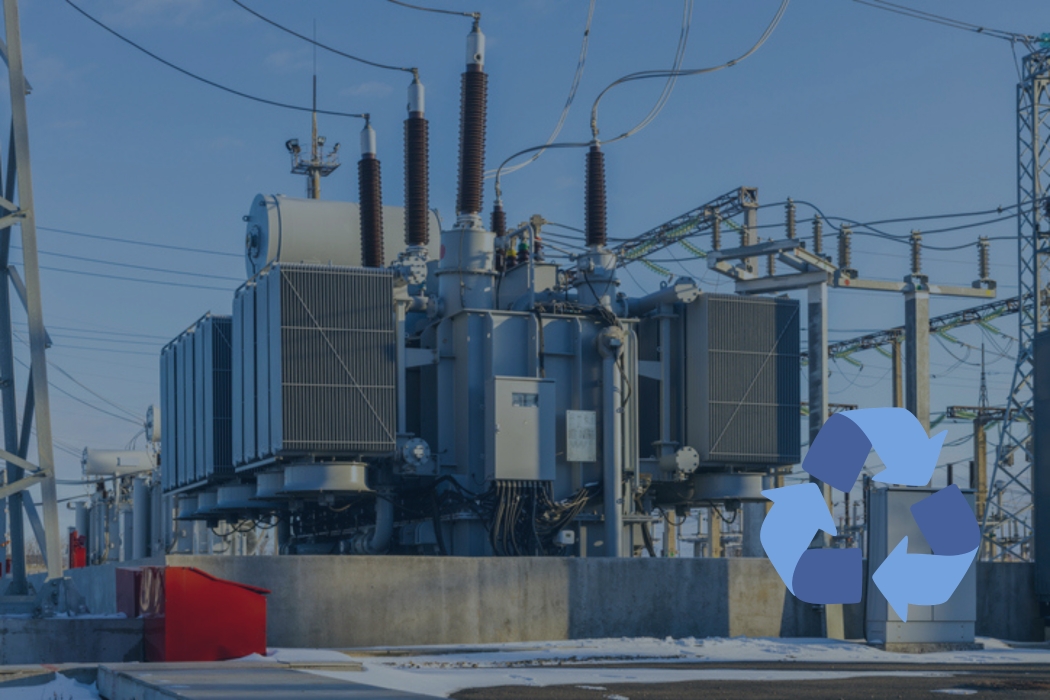
Transformer recycling is not a quick cleanup job. These are large, heavy electrical units that require proper handling, planning, and the right equipment to move safely. Some transformers also contain oil or internal components that need to be identified before anything is touched, which adds another layer to the process. This is not something most people can load up and get rid of without a plan.
That is why transformer disposal escalates fast. Once a unit is decommissioned, it usually sits in a yard, substation, or storage area, taking up space and becoming a safety and liability concern. These projects come from contractors, facilities, demolition jobs, and surplus equipment that is no longer in use. If you need help handling a transformer safely, work with an electronics recycling company like EACR Inc. that can coordinate pickup for larger units or support drop off when the setup actually makes sense.
What is a Transformer?
Basic transformer function
A transformer transfers electrical energy between circuits. Its main job is to step voltage up or down so power can move safely and efficiently through electrical systems.
That function makes transformers a critical part of power distribution. They are one of those pieces of equipment most people do not think about much until one needs to be replaced or removed.
Where transformers are used
Transformers show up in a lot of places. Utilities and substations rely on them heavily, but they are also common in commercial buildings, industrial sites, equipment yards, and backup or distribution systems.
In other words, this is not niche equipment. It is widely used across different industries, which is one reason recycling demand shows up in so many different kinds of projects.
Common transformer categories
There are several common categories of transformers, including pad-mounted transformers, pole-mounted transformers, dry-type transformers, liquid-filled transformers, and larger power or distribution units.
That matters because not every transformer should be handled the same way. Type affects size, weight, internal materials, and how the recycling logistics need to be approached.
What is a Transformer Made Of?
Core structural materials
Most transformers are built from a combination of steel enclosures or cabinets, copper or aluminum windings, and a magnetic steel core. These are some of the main materials that give the unit both its structure and its function.
Internal components
Beyond the main structural materials, transformers also include internal parts such as insulation materials, bushings, connectors, and other electrical components.
These parts may not always be visible from the outside, but they still matter when the unit is being evaluated for removal, recycling, or controlled processing.
Oil and fluid considerations
Some transformers are oil-filled, which adds another layer to handling and disposal. The type of fluid matters, and older units may also raise PCB concerns depending on age and configuration.
This is one of the biggest reasons transformer recycling cannot be treated like ordinary scrap metal disposal. The fluid and age of the unit can change the whole project.
Why material type matters
Material type matters because it affects recycling value, safety precautions, and whether the transformer needs additional testing or more controlled processing before moving forward.
That is why identifying what kind of transformer you have is such an important first step. The more clearly the unit is understood upfront, the cleaner the recycling process tends to be.
Why Recycle a Transformer?
Transformers contain reusable materials
Transformers contain reusable materials like copper, aluminum, steel, and other recoverable components. That alone makes recycling a smarter option than treating the entire unit like waste.
Improper disposal creates bigger problems
Improper disposal creates problems that go beyond just “getting rid of old equipment.” It can create environmental risk, add to storage burdens, raise possible compliance issues, and put unnecessary pressure on landfills. Read our post that explains what happens to electronics in a landfill for further context.
For larger units, it also creates a practical problem. Heavy electrical equipment does not just disappear because it is out of service. It still takes up space and still has to be dealt with properly.
Recycling is often more practical than indefinite storage
In a lot of cases, recycling is simply more practical than letting an old transformer sit around indefinitely. It frees up yard or facility space, removes unused equipment, and supports cleaner decommissioning work.
That can make a big difference for contractors, industrial operations, and facilities that already have enough going on without old transformers taking up valuable room.
Not every transformer should be treated as basic scrap
Not every transformer should be treated as basic scrap right away. Some units may still have reuse, resale, or component value before final material recovery becomes the right path.
That is why a smarter recycling process starts with understanding the unit, not just cutting it apart and hoping for the best.
Environmental Benefits of Recycling Your Transformer
Keeps large electrical equipment out of the waste stream
Transformer recycling helps keep large electrical equipment out of the waste stream. That reduces landfill burden and helps avoid situations where bulky units get abandoned in storage yards or behind buildings.
Supports recovery of reusable metals and components
Recycling also supports the recovery of reusable metals and components. Copper, aluminum, and steel can all be recovered and routed properly, which reduces the need for more virgin raw material extraction.
Helps manage fluid-containing equipment more responsibly
This matters even more for oil-filled units. Controlled recycling helps manage fluid-containing equipment more responsibly and supports better handling of older or potentially regulated units.
Better for long-term operational cleanup
On a broader level, recycling supports better long-term operational cleanup. It encourages responsible end-of-life planning and fits more naturally into sustainability goals than letting old equipment sit indefinitely with no real plan in place.
Preparing a Transformer for Recycling
Step 1: Identify the transformer type
Start by identifying what kind of transformer you are dealing with. That means understanding whether it is dry-type or liquid-filled, and whether it is pad-mounted, pole-mounted, or a larger distribution unit.
This matters because transformer type affects handling, transport, and the overall recycling path. It is hard to plan the project correctly if the unit itself has not been identified first.
Step 2: Review the condition
Next, look at the condition of the transformer. Is it still active or already surplus? Is it intact or damaged? Are there any known issues, leaks, or visible problems? It also helps to know whether the unit was operational when it was decommissioned.
These details help determine whether the transformer is simply ready for recycling, whether it needs more controlled handling, or whether there may be additional evaluation needed before the project moves forward.
Step 3: Check nameplate and basic specs
The nameplate is one of the most useful parts of the unit when planning removal and recycling. Check for kVA, voltages, serial or model information, and age if that is available.
This information helps give a clearer picture of what the transformer is, how large it is, and what kind of handling and logistics may be needed.
Step 4: Assess fluid and environmental considerations
It is also important to determine whether oil is present and whether the unit may need special handling or testing. This is especially important with older liquid-filled transformers, where environmental or fluid-related considerations can change the project.
This step helps avoid turning a manageable job into a bigger issue later.
Step 5: Plan safe staging and access
Before the transformer goes anywhere, plan the staging and access around it. Make sure there is clear room for loading, understand the unit’s weight and lifting requirements, and confirm whether on-site pickup is required.
This is one of the biggest differences between transformer recycling and smaller equipment disposal. Access and logistics are a huge part of the project.
Step 6: Decide between drop-off and pickup
In some cases, drop-off may be possible, but only when the transporter, trailer, and loading setup are actually appropriate for the unit. For larger, heavier, or more complex projects, pickup is usually the right route.
That is the practical reality with transformers. This is not something to improvise.
Our Transformer Recycling Process
Step 1: Review the unit and project scope
The process starts by understanding the unit and the project itself. That includes transformer type, size, location, quantity, and access conditions.
The better the upfront picture, the easier it is to choose the right removal path and avoid unnecessary delays.
Step 2: Determine the right removal path
For most transformer recycling projects, pickup is the better option. Drop-off only makes sense when the customer already has the right vehicle, equipment, and safe transport setup to move the unit properly.
This is where the project either becomes straightforward or starts getting risky. Choosing the right path early matters.
Step 3: Support controlled collection and handling
Once the plan is set, the next step is controlled collection and handling. That means safer loading, better logistics for large or heavy units, and a more consistent process for contractors, facilities, and decommissioning projects.
This is especially important when the transformer is difficult to access or not practical to move casually.
Step 4: Route transformer materials through proper recycling channels
After collection, the transformer materials are routed through the appropriate recycling process. Metals and internal materials are separated, fluids and specialized components are handled appropriately, and the overall project moves through a more controlled downstream process.
The goal is not just removal. It is responsible material handling from start to finish.
Step 5: Keep the project cleaner operationally
A structured recycling process also helps from an operational standpoint. It removes surplus equipment from the site, reduces storage clutter, and makes decommissioning, demolition, or yard cleanup easier to manage.
That is one reason these projects are often about more than recycling alone. They are also about cleaning up the operation.
Why Pickup is Usually the Best Option for Transformer Recycling
Weight and size make self-transport unrealistic for many projects
Transformers are often too heavy and awkward for most people to transport on their own, especially without the right equipment. That alone makes pickup the practical route in a lot of cases.
Oil-filled units often require more controlled handling
Oil-filled transformers can involve extra considerations that make casual transport a bad idea. When fluids are part of the unit, handling becomes more controlled by default.
Better for substations, industrial sites, and commercial properties
Pickup is also a better fit for substations, industrial sites, and commercial properties where the equipment is larger, access may be more limited, and site logistics matter more.
Easier for multi-unit or recurring transformer removal
If the project involves multiple transformers or recurring equipment removal, pickup creates a much cleaner process than trying to manage one-off transport every time.
Safer than trying to improvise transport
At the end of the day, pickup is usually safer than trying to improvise with a trailer, forklift, or loading plan that is not really built for the unit. For real-world transformer projects, EACR Inc. is the practical option because the process is built around controlled removal, not guesswork.
Frequently Asked Questions About Transformer Recycling
Can transformers be recycled?
Yes. Transformers can often be recycled through the proper electrical equipment recycling process.
Can I throw a transformer away?
No. Transformers should not be treated like ordinary waste.
What are transformers made of?
Transformers commonly include steel, copper or aluminum windings, core materials, insulation, and sometimes oil or other internal components.
Do transformers contain copper?
Many do. Copper is a common material in transformer windings, though some units use aluminum instead.
Are all transformers oil-filled?
No. Some are dry-type, while others are liquid-filled.
Do old transformers need special handling?
Yes, some older units may need more controlled handling, especially when oil or other regulated considerations are involved.
Can I drop off a transformer for recycling?
Sometimes, but only when the transporter, equipment, and loading setup are appropriate. Many projects are better handled through pickup.
When is pickup the better option?
Pickup is usually the better option when the unit is large, heavy, oil-filled, difficult to access, or part of a larger cleanup project.
What happens to transformers after collection?
They are processed through the appropriate recycling path so reusable materials can be separated and handled properly.
Are surplus transformers always just scrap?
No. Some surplus transformers may still have reuse, resale, or component value before final material recovery is the right path.
Do transformer fluids affect disposal?
Yes. Fluids can change the handling and disposal requirements for the unit.
Can businesses recycle multiple transformers at once?
Yes. Businesses can recycle multiple transformers as part of a larger equipment removal or decommissioning project.
Conclusion
Transformers are heavy electrical units that contain reusable materials, and some also include oil or other specialized internal components. That is why recycling is safer and more practical than abandonment, improper disposal, or letting old units sit in storage indefinitely. Preparation matters, and for most real-world transformer projects, pickup is usually the best option.
If you’re dealing with transformer recycling for a facility, substation, contractor yard, or decommissioning project, EACR Inc. can help with practical pickup and controlled recycling support built for real-world equipment removal. Contact us today to get started.