Millions of discarded phones, batteries, and monitors don’t just disappear—they break, leach, and float. While most people imagine e-waste ending up in dusty landfills, a growing amount ends up contaminating something far more vital: our oceans.
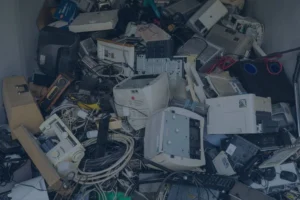
E-waste refers to any discarded electronic device or component—laptops, TVs, wires, chargers, batteries, printers, smartphones. And globally, we generate over 60 million tonnes of it each year, according to the Global E-Waste Monitor. But here’s the real issue: only a fraction of that waste is recycled correctly. The rest often finds its way into informal dumps, unregulated recycling centers, or export streams that lead directly to coastlines.
The result? A largely invisible crisis—e-waste in the ocean—that poses serious threats to marine ecosystems, coastal communities, and human health. And while plastic straws and bags dominate headlines, the chemical stew leaking from electronics may be even more toxic—and far less understood.
How E-Waste Reaches Our Oceans
Dumping, Burning, and Informal Processing
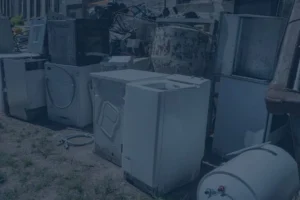
One of the most direct pathways for e-waste to reach the ocean starts at informal dumpsites near water. In places like Agbogbloshie in Ghana and Guiyu in China, massive piles of discarded electronics are burned, picked apart, and washed away by rainfall and tidal floods.
Informal recycling in these regions often involves burning wires and melting circuit boards in open air. These processes release lead, mercury, cadmium, and other heavy metals directly into the surrounding soil and water table. Once in the groundwater, these pollutants follow rivers and storm drains into coastal waters—where they begin their destructive journey through the ocean’s ecosystem.
Studies like the NSWAI report on Accra document how rivers near e-waste sites carry a heavy load of toxins downstream, affecting everything from drinking water to fisheries and beach ecosystems.
These sites aren’t rare outliers—they’re the default destination for much of the world’s “recycled” electronics.
Urban Runoff and Waste Infrastructure Gaps
In more developed countries, urban runoff is another key source of e-waste pollution. Many cities lack proper systems to isolate electronic waste from general trash. When people illegally dump old electronics on sidewalks or in household garbage, they often end up in landfills not built to handle toxic components.
Rain and flooding can leach these toxins into storm drains, creeks, and rivers. In the U.S., this is made worse by gaps in e-waste regulation. While the CERCLA Act (Superfund Law) laid the groundwork for hazardous waste clean-up, it doesn’t fully address modern electronic waste streams—especially from smaller consumer items.
The result is a slow, steady trickle of pollutants making their way from everyday urban areas into the ocean.
Global Export Chains
The third pathway is global—and arguably the most insidious.
Many Western nations export e-waste to other countries under the label of “reuse” or “refurbishing.” In reality, a large percentage of these shipments are dumped or dismantled in nations with little oversight or environmental protection.
Once offshore, even well-meaning electronics are quickly stripped for parts in dangerous ways. Items that can’t be salvaged—like cracked monitors or dead lithium batteries—are often tossed in open fields or along coastlines. Local recyclers, facing little regulation and even less funding, have no choice but to dispose of this waste wherever possible.
This global waste chain has effectively outsourced the ocean pollution problem, pushing the burden onto vulnerable communities—while the toxins float back into the global ecosystem.
What’s Inside E-Waste That Harms the Ocean
Heavy Metals and Their Long-Term Effects
One of the most dangerous aspects of e-waste in the ocean is the heavy metal content hiding inside electronics. Lead, mercury, cadmium, and hexavalent chromium (chromium VI) are just a few of the toxins found in phones, monitors, circuit boards, and batteries.
When exposed to saltwater, these metals don’t just dissolve—they leach slowly, contaminating everything in their path. Unlike biodegradable waste, heavy metals never break down. They build up in sediment and inside living organisms, a process called bioaccumulation.
Over time, small fish absorb the toxins. Larger fish eat them. Then dolphins, sharks, and even humans feel the ripple effect. The damage is silent, long-term, and often irreversible.
Flame Retardants, PCBs, and Brominated Plastics
To make electronics fire-resistant, manufacturers use flame retardants, PCBs (polychlorinated biphenyls), and BFRs (brominated flame retardants). These chemicals are stable, persistent, and fat-loving—meaning they bond easily with animal tissues and linger for years.
When these substances enter the ocean, they embed into fish fat, disrupting hormone systems, stalling development, and weakening immune responses. In marine animals, they’ve been linked to deformities, reproductive failure, and population crashes.
What’s worse? These compounds often don’t cause immediate death. Instead, they silently impair future generations, making marine life more vulnerable over time.
Microplastics and Synthetic Shell Fragments
Electronics also shed plastics—resin bits from casings, insulation from cables, and shavings from keys and devices. Once in the ocean, these break down into microplastics, adding to the trillions already floating in our seas.
But microplastics don’t just pollute—they act like sponges, soaking up oil-based toxins and binding to bacteria. Many also resemble plankton, which means they get swallowed by filter feeders, seabirds, and fish.
Even small fragments of e-waste can become vectors for disease, pollutants, and invasive microbes, turning trash into toxic time bombs.
How E-Waste Devastates Marine Life
Coral Reefs and Plankton Die-Offs
Corals are the ocean’s rainforests—complex, delicate ecosystems that protect coastlines and nurture biodiversity. But e-waste in the ocean weakens them from all sides.
Heavy metals cause acidification and oxidative stress, reducing coral resilience to bleaching events. Meanwhile, toxins floating in the water block photosynthesis in plankton, which corals rely on for food.
When plankton dies, the entire base of the marine food web starts to collapse. And with coral reefs already under climate pressure, e-waste pollution is pushing them closer to the brink.
Fish, Invertebrates, and Mammals
The impact of toxic e-waste doesn’t stop at the microscopic level.
Fish exposed to heavy metals experience neurological damage, impaired navigation, and lowered reproduction rates. Dolphins and seals show signs of immune suppression and behavioral shifts after consuming contaminated prey.
Even the smallest creatures—like mussels, clams, and oysters—are affected. As filter feeders, they soak up everything in the water, making them perfect bioindicators of ecosystem health. And right now, many are showing signs of early-stage collapse.
The Human Impact via Seafood
The most direct link between e-waste and human health is what ends up on our plates.
Methylmercury, one of the most dangerous forms of mercury, is found in high concentrations in predatory fish like tuna, swordfish, and mackerel. And that mercury can often be traced back to e-waste toxicity loops—where improperly disposed electronics leak into aquatic environments and concentrate up the food chain.
For pregnant individuals and children, exposure to methylmercury can cause developmental delays, cognitive issues, and neurological disorders. Even for healthy adults, long-term consumption can be risky.
Eating seafood should nourish us—not poison us. But without proper e-waste management, that’s the reality we’re drifting toward.
The Legal & Regulatory Landscape (And Where It Fails)
CERCLA & Superfund: Patchwork Protections
The U.S. has had environmental protection laws in place for decades, but they weren’t built for today’s digital waste problem. CERCLA, the Comprehensive Environmental Response, Compensation, and Liability Act (a.k.a. Superfund), was passed in 1980 to clean up hazardous waste sites—not prevent them.
And that’s the problem. E-waste in the ocean isn’t just a cleanup issue—it’s a flow issue. CERCLA allows for retroactive accountability but doesn’t do much to stop illegal dumping, offshore disposal, or the steady leak of toxins from landfills near coastal zones.
The result? Enforcement is scattered. Cleanups are slow. And e-waste keeps flowing downstream.
Global Inconsistency
The Basel Convention was designed to stop wealthy nations from dumping hazardous waste—including e-waste—on developing countries. It’s been signed by 190+ nations. But the United States never ratified it.
That leaves a loophole in global e-waste regulation—one that many exporters exploit by classifying used electronics as “refurbishable commodities” instead of “hazardous materials.”
Depending on the country, an old laptop might be regulated like toxic waste—or like a secondhand toaster. This patchwork system has allowed millions of tons of e-waste in the ocean to originate far from the coastlines where it ends up.
State-Level Progress: Massachusetts Example
While federal and global regulation lag, some states are stepping up. Massachusetts offers a strong model through Chapter 21C, which bans most electronics from regular trash and provides structured pathways for safe recycling.
What makes it work?
- Enforcement: Real penalties for improper disposal.
- Education: Public awareness campaigns about safe e-waste handling.
- Access: State-supported drop-off programs and recycling events.
The result: less illegal dumping, cleaner communities, and reduced ocean-bound pollution. It proves that when policy, awareness, and access align, change is not only possible—it’s scalable.
What EACR Inc. Does Differently
A. Zero-Landfill Policy
At EACR Inc., we don’t just “handle” electronics—we commit to keeping them out of landfills, rivers, and oceans entirely. Every item we collect is either dismantled for parts, ethically destroyed, or recycled through approved downstream partners.
That means nothing we process contributes to e-waste in the ocean—ever.
What You Can Do Right Now
If You’re a Consumer
Think your old phone doesn’t matter? It does. Tossed electronics can leak toxic metals for decades.
- Never throw e-waste in the trash—even if your town allows it.
- Use licensed recycling services like EACR.
- Attend local e-waste collection events and avoid shady “we buy electronics” trucks with no credentials.
If You Run a Business, School, or Municipality
E-waste isn’t just a storage problem—it’s a liability.
- Schedule regular e-waste pickups to keep your tech stockpiles manageable.
- Vet your vendors. Demand landfill-free policies, recycling proof, and secure logistics.
- Partner with EACR to develop long-term, responsible recycling strategies.
If You’re in Policy or Compliance
The future depends on proactive leadership.
- Advocate for expanded e-waste bans, especially in states that haven’t updated disposal laws.
- Support Extended Producer Responsibility (EPR) laws to make manufacturers accountable.
- Push for U.S. ratification of the Basel Convention to close global dumping loopholes.
Conclusion: Protecting Oceans Starts with What You Plug In
The threat of e-waste in the ocean is not distant—it’s here. It’s already in our seafood, our beaches, and our marine ecosystems. It’s not just an environmental issue—it’s a public health crisis and a supply chain failure.
But here’s the good news: we know how to fix it.
EACR Inc. proves every day that responsible electronics recycling isn’t just possible—it’s scalable. With better laws, informed consumers, and true zero-landfill solutions, we can cut off the flow of e-waste before it reaches our oceans.
If we stop treating electronics like disposable trash, we can start treating our oceans like the lifelines they truly are.