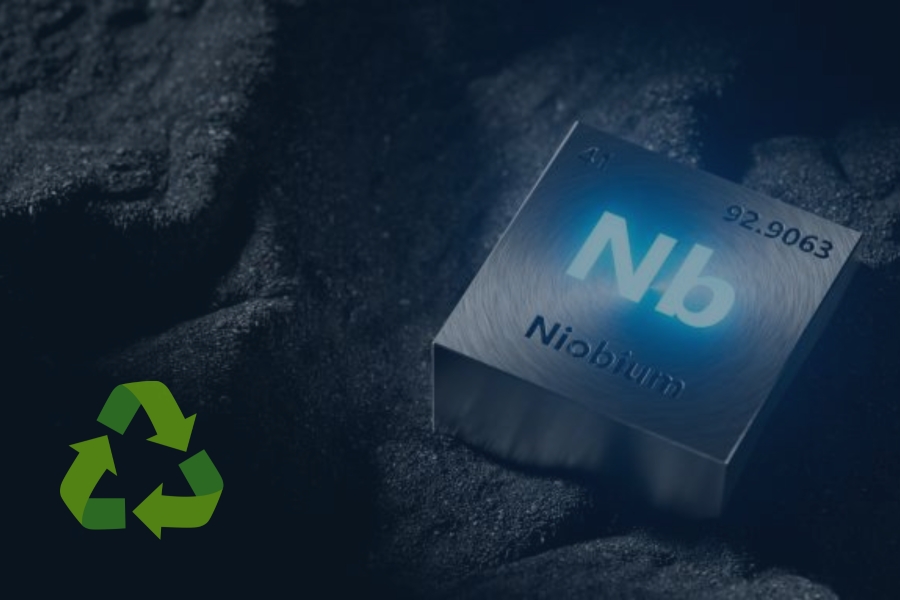
Niobium is one of those metals that most people never think about, yet it plays an important role in some of the world’s strongest and most durable products. It is commonly added to steel and specialty alloys to improve strength without adding significant weight, making it useful across industries that demand high performance. Businesses generating niobium-containing scrap can work with EACR Inc.’s metal recycling services to responsibly recycle industrial metals and manufacturing scrap.
You’ll find niobium in structural steel, pipelines, aerospace components, automotive parts, energy infrastructure, superconducting equipment, and other industrial applications where strength, durability, and reliability matter. Although it typically makes up only a small percentage of an alloy, its impact on performance is significant.
As industrial equipment reaches the end of its service life or manufacturing facilities generate scrap during production, niobium-containing materials can often be recycled instead of discarded. Recovering this reusable metal helps conserve natural resources, supports manufacturing supply chains, and keeps reusable industrial materials in circulation.
What is Niobium Recycling?
Niobium recycling is the process of collecting, identifying, sorting, processing, and returning niobium-containing materials back into manufacturing for use in new steel, specialty alloys, and industrial products.
Recycled niobium may come from:
- Manufacturing scrap
- Alloy steel
- Stainless steel
- Superalloys
- Machine turnings
- Offcuts
- Industrial equipment
- High-strength steel
Recycling is preferred over disposal because niobium-containing scrap often still contains reusable material. Rather than sending these metals to a landfill, recycling helps recover reusable resources that can be used to manufacture new industrial products.
What is Niobium?
A High-Performance Alloying Metal
Niobium is a transition metal known for its exceptional strength, corrosion resistance, and ability to improve the performance of other metals. While it can be used on its own in certain specialized applications, it is most commonly added to steel and other alloys in relatively small amounts.
One of niobium’s biggest advantages is its high strength-to-weight ratio. It allows manufacturers to produce lighter materials that maintain excellent strength and durability. It also performs well in high-temperature environments and helps improve resistance to corrosion and wear, making it useful in demanding industrial applications.
Rather than replacing steel, niobium enhances it. Even a small amount can significantly improve the mechanical properties of an alloy, which is why it has become an important material in modern manufacturing.
Why Industries Use Niobium
Industries rely on niobium because it improves the performance and longevity of many common engineering materials.
Niobium can help improve:
- Strength
- Toughness
- Weldability
- Corrosion resistance
- Heat resistance
- Weight reduction
- Overall service life
These benefits make niobium an attractive choice for industries where equipment must withstand heavy loads, harsh environments, extreme temperatures, or decades of continuous use.
Where is Niobium Commonly Found?
Niobium is commonly found in steel, specialty alloys, and industrial equipment designed for demanding applications.
Structural Steel
Niobium is widely used in structural steel for bridges, buildings, stadiums, and other infrastructure projects where additional strength can be achieved without significantly increasing weight.
High-Strength Low-Alloy Steel
High-strength low-alloy (HSLA) steels often contain niobium to improve mechanical properties while maintaining excellent weldability and toughness.
Stainless Steel
Some stainless steel grades contain niobium to improve stability, corrosion resistance, and performance in high-temperature environments.
Aerospace Components
Aircraft and aerospace systems use niobium-containing alloys in components that require exceptional strength while minimizing overall weight.
Pipelines
Oil, gas, and water pipelines frequently use niobium-enhanced steel because it offers improved strength, durability, and resistance to cracking under pressure.
Automotive Components
Automotive manufacturers use niobium-containing steel to produce lighter, stronger vehicle components that improve safety, fuel efficiency, and overall performance.
Energy Infrastructure
Power plants, transmission systems, renewable energy facilities, and other energy infrastructure often rely on niobium-containing materials that can withstand demanding operating conditions.
Chemical Processing Equipment
Chemical processing facilities use corrosion-resistant alloys containing niobium in tanks, piping, reactors, and other equipment exposed to harsh chemicals.
Superconducting Equipment
Niobium is one of the most important metals used in superconducting technology, including MRI systems, scientific research equipment, and particle accelerators that require extremely powerful magnetic fields.
Industrial Machinery
Heavy industrial equipment, manufacturing machinery, and specialized processing systems may contain niobium alloys in components that need long-term durability and resistance to wear.
Why Recycle Niobium?
Niobium recycling allows manufacturers and industrial facilities to recover reusable metal instead of treating it as waste. Since niobium is commonly found in high-value industrial alloys, recycling helps keep these materials available for future manufacturing.
Conserves Natural Resources
Recycling niobium reduces the need to extract new raw materials and helps keep existing metal in productive use for longer.
Reduces Mining Demand
Recovering niobium from industrial scrap can reduce the demand for newly mined material while supporting a more efficient supply chain.
Supports Manufacturing
Many manufacturers rely on recycled metals to help produce new steel, specialty alloys, and industrial components used across multiple industries.
Recovers Reusable Metal
Niobium-containing scrap often retains significant value because the metal can be recovered and processed into new industrial products.
Helps Divert Industrial Scrap from Landfills
Instead of disposing of reusable alloy scrap, recycling helps divert industrial materials away from landfills and into responsible recovery programs.
Many facilities that recycle niobium-containing alloys also generate magnetic materials. Be sure to read our magnet recycling guide to learn how industrial magnets and rare earth magnets can also be responsibly recovered.
What Types of Niobium Scrap Can Be Recycled?
Many forms of niobium-containing scrap can be recycled, particularly those generated during manufacturing, fabrication, construction, and industrial maintenance.
Common recyclable materials include:
- Manufacturing scrap
- Machine turnings
- Offcuts
- Plate
- Rods
- Wire
- Pipe
- Alloy steel
- Stainless steel
- Superalloys
- Industrial equipment
- Fabrication scrap
The exact recycling process depends on the alloy composition, condition of the material, contamination level, and the requirements of the downstream recycling process. Proper identification and sorting help maximize material recovery and improve the quality of recycled metal.
How Niobium Recycling Works
Niobium recycling starts with proper material identification. Since niobium is often found inside steel or specialty alloys, the goal is to confirm what the material is, keep it separated, and prepare it for responsible downstream recycling.
Collection
Niobium-containing scrap may be collected from manufacturing facilities, construction projects, fabrication shops, industrial cleanouts, equipment replacement jobs, or maintenance operations.
Common collected materials may include alloy scrap, stainless steel, machine turnings, offcuts, pipe, plate, rods, and obsolete industrial equipment.
Identification
Once collected, the material needs to be identified. This step matters because niobium is usually part of an alloy, not a standalone material.
Alloy verification may involve:
- Material records
- Supplier documentation
- Equipment labels
- Grade markings
- Metal analysis
Correct identification helps prevent mixed loads and improves the quality of the recycling stream.
Sorting
After identification, niobium-containing scrap is sorted by material type, alloy grade, size, condition, and contamination level.
Keeping materials separated helps make processing more efficient and supports better recovery of reusable metal.
Processing
Processing may include cutting, separating attachments, removing non-metal components, cleaning materials, or preparing scrap for shipment to downstream processors.
The goal is to make the material easier to handle, transport, and recycle.
Smelting and Refining
At a high level, niobium-containing scrap may be melted, refined, or processed into a reusable form depending on the alloy type and downstream recycling method.
The exact process depends on the material composition and how the recovered metal will be reused.
Manufacturing New Products
Once recovered, niobium can return to manufacturing and be used in new industrial products.
Recycled niobium may support:
- Steel production
- Specialty alloys
- Infrastructure materials
- Transportation components
- Industrial manufacturing
This keeps usable material in circulation and helps reduce reliance on newly mined resources.
Niobium Recycling Services Through EACR Inc.
If your facility generates niobium-containing steel, specialty alloys, fabrication scrap, or industrial equipment, EACR Inc. offers several ways to keep reusable metals out of the waste stream and back into manufacturing.
Recycling Options
- Scheduled Pickup: A convenient solution for construction companies, fabrication shops, manufacturers, and industrial facilities with large volumes of niobium-bearing scrap.
- Drop-Off Recycling: Ideal for businesses with smaller quantities of alloy steel, stainless steel, machine turnings, offcuts, pipe, rods, or other approved niobium-containing materials.
- On-Site Collection Containers: Perfect for facilities that generate niobium scrap throughout daily operations. Dedicated e-waste collection containers help centralize recyclable material and make ongoing recycling more efficient.
Industries That Generate Niobium Scrap
Niobium scrap is most often generated by industries that use strong, lightweight, corrosion-resistant, or high-performance materials.
Construction
Construction projects may generate niobium-containing steel scrap from structural components, beams, supports, and infrastructure materials.
Manufacturing
Manufacturing facilities may produce niobium scrap through cutting, machining, forming, stamping, and rejected parts.
Aerospace
Aerospace companies may generate niobium-containing scrap from specialty alloys, high-performance components, tooling, and maintenance operations.
Automotive
Automotive manufacturers may use niobium-enhanced steel in vehicle structures and components where strength and weight reduction matter.
Energy
Energy facilities may generate niobium-containing scrap from power generation equipment, renewable energy systems, and high-performance industrial components.
Oil and Gas
Oil and gas operations may use niobium-containing steel in pipelines, pressure equipment, and components exposed to harsh environments.
Infrastructure
Infrastructure projects involving bridges, rail, utilities, and public works may generate niobium-bearing steel scrap during construction, repair, or replacement.
Fabrication Shops
Fabrication shops may generate niobium scrap from offcuts, turnings, plate, pipe, rods, and other materials used in custom metalwork.
Heavy Equipment Manufacturing
Heavy equipment manufacturers may use niobium-containing alloys in machinery, wear-resistant parts, and components built for strength and durability.
Niobium is often used alongside specialty metals such as molybdenum in demanding industrial applications. Learn more in our molybdenum recycling guide.
Frequently Asked Questions About Niobium Recycling
Can niobium be recycled?
Yes. Niobium can be recycled from alloy steel, stainless steel, superalloys, manufacturing scrap, machine turnings, offcuts, pipe, plate, rods, wire, and certain obsolete industrial equipment.
Where is niobium commonly found?
Niobium is commonly found in structural steel, high-strength low-alloy steel, stainless steel, aerospace components, pipelines, automotive parts, energy infrastructure, superconducting equipment, and industrial machinery.
Is niobium used in steel?
Yes. Niobium is often added to steel to improve strength, toughness, weldability, and corrosion resistance while helping reduce weight.
What industries recycle niobium?
Industries that may recycle niobium include construction, manufacturing, aerospace, automotive, energy, oil and gas, infrastructure, fabrication, and heavy equipment manufacturing.
Can niobium alloys be recycled?
Yes. Niobium-containing alloys can often be recycled, but they should be properly identified and sorted by alloy type before processing.
Why is niobium considered an important industrial metal?
Niobium is important because it helps make steel and specialty alloys stronger, lighter, more durable, and more resistant to heat, corrosion, and stress.
Can manufacturing scrap containing niobium be recycled?
Yes. Manufacturing scrap such as machine turnings, offcuts, plate, rods, pipe, wire, stampings, and rejected parts can often be recycled if the material can be properly identified.
What types of niobium scrap are accepted?
Accepted materials may include niobium-bearing alloy steel, stainless steel, superalloys, machine turnings, offcuts, plate, pipe, rods, wire, fabrication scrap, and industrial equipment. Materials are typically reviewed based on alloy type, condition, and contamination level.
Conclusion
Niobium is an important industrial alloying metal used to make steel and specialty alloys stronger, lighter, and more durable. Although it is often used in small amounts, it plays a major role in construction, transportation, energy, aerospace, and industrial manufacturing.
Recycling niobium helps recover reusable material, supports manufacturing, conserves natural resources, and reduces demand for newly mined metals. For facilities that generate niobium-containing scrap, recycling is a practical way to keep useful material in circulation instead of sending it to disposal.
If your facility generates niobium-containing scrap, alloy steel, stainless steel, or other industrial metals, EACR Inc.’s metal recycling services provide responsible recycling solutions for businesses looking to recover reusable materials.