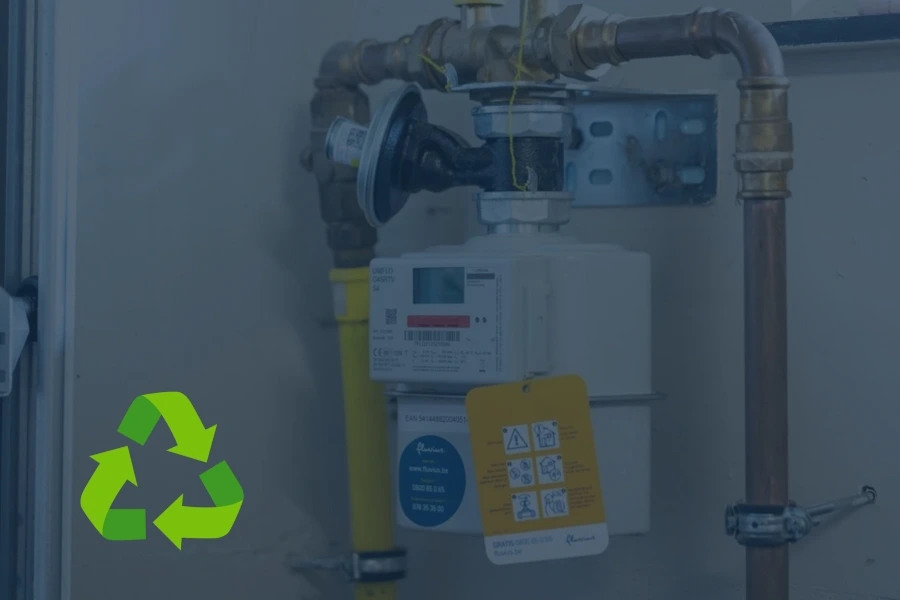
Gas meter recycling commonly comes up during utility upgrades, service replacements, building renovations, infrastructure projects, and demolition work.
Old gas meters should not be placed in a dumpster. They may contain steel, aluminum, brass, copper, glass, mechanical parts, electronic registers, and remote-reading components that should be sorted through the proper recycling process.
Before recycling, every meter must be fully disconnected and decommissioned by the utility or another authorized professional. This guide explains the main recycling options, preparation steps, safety considerations, documentation, and business logistics. EACR Inc. can help coordinate electronics recycling, pickup, and project documentation.
Quick Answer: How to Recycle Gas Meters
Most gas meters are recycled through one of three routes:
- Utility or manufacturer return program: Best for utility-owned meters or equipment covered by an existing replacement agreement.
- Recycling drop-off: Practical for a small number of accepted meters.
- Scheduled commercial pickup: Best for utilities, contractors, municipalities, property managers, demolition companies, and larger projects.
For one or two meters, a confirmed drop-off location may be enough. For utility upgrades, pallets of equipment, recurring replacements, or multiple sites, scheduled pickup is usually the simplest option.
What Counts as a Gas Meter?
Gas meters measure natural gas use at residential, commercial, and industrial properties. The correct recycling route depends on the meter’s size, design, ownership, and electronic components.
Residential Gas Meters
Residential properties commonly use:
- Standard diaphragm meters
- Digital gas meters
- Smart meters with remote-reading technology
Older models are mainly mechanical. Newer meters may also contain digital registers, transmitters, wiring, and communication modules.
Commercial and Industrial Gas Meters
Larger properties may use:
- Commercial diaphragm meters
- Rotary meters
- Turbine meters
- Industrial metering equipment
These units may be heavier and more complex than residential meters. Some require palletized handling or special loading arrangements.
Meter Components
Depending on the model, gas meters may contain:
- Steel or aluminum housings
- Brass fittings
- Copper components
- Glass dials
- Mechanical assemblies
- Electronic registers
- Communication modules
Meters with electronic components should not automatically be treated as ordinary scrap metal.
Why Meter Type Matters
The meter type helps determine:
- Who owns it
- Who is authorized to remove it
- Whether a return program applies
- Whether electronics are present
- How it should be packaged
- What transportation or loading equipment is needed
Providing this information upfront helps the recycler plan the correct route.
Option 1: Utility or Manufacturer Return Programs
When This Option Fits
Return programs may be appropriate for:
- Utility replacement projects
- Smart meter upgrades
- Utility-owned equipment
- Manufacturer agreements
- Contractor work performed for a utility
How These Programs Usually Work
Meters are removed, counted, consolidated, packaged, and sent to an approved recycling or equipment-management partner.
Large programs may collect meters from several sites before arranging one shipment.
Things to Verify
Before returning equipment, confirm:
- Meter ownership
- Program eligibility
- Packaging requirements
- Quantity requirements
- Whether electronic registers stay attached
- What documentation will be provided
Do not assume every meter qualifies simply because it came from the same manufacturer.
Option 2: Drop-Off Recycling
Best for Small Quantities
Drop-off generally works best for:
- Small contractors
- Property owners
- One-time replacements
- Minor renovation projects
- Maintenance teams with a few meters
Meters should be inactive, dry, intact, and manageable without specialized loading equipment.
Possible Drop-Off Locations
Depending on local acceptance rules, options may include:
- Electronics recyclers such as EACR Inc.
- Metal recycling facilities
- Municipal collection programs
- Utility collection sites
- Manufacturer return locations
Option 3: Scheduled Pickup
Best-Fit Situations
Scheduled pickup is often the best option for:
- Utility companies
- Mechanical and plumbing contractors
- Municipal public works departments
- Commercial property managers
- Apartment complexes
- Hospitals and schools
- Industrial facilities
- Demolition contractors
- Large replacement projects
- Multi-site programs
Why Pickup Simplifies Large Projects
Pickup can provide:
- Centralized staging
- Less manual handling
- Easier scheduling
- Multi-site coordination
- Inventory tracking
- Pickup records
- Recycling documentation
For larger projects, the main benefit is having one repeatable process from removal through final collection.
How to Prepare Gas Meters for Recycling
Step 1: Confirm Removal and Inventory
Verify that every meter has been properly disconnected and decommissioned.
Then:
- Count the meters.
- Separate residential and commercial units.
- Identify meters with electronic registers.
- Record the project location.
- Estimate pallet or container quantities.
- Note unusually large or damaged meters.
For multi-site work, track quantities by property.
Step 2: Stage Materials
Keep meters in a dry, secure area away from active construction zones.
Separate damaged units from intact equipment and organize meters by:
- Type
- Project
- Location
- Condition
Avoid loose stacking that could damage glass, dials, or electronic components.
Step 3: Package and Label
Use sturdy pallets, bins, or containers that can support the weight of the meters.
Prevent movement during transport and label each load with:
- Meter type
- Quantity
- Project location
- Residential or commercial classification
- Presence of electronic registers
- Condition notes
Clear packaging and labeling make pickup faster and reduce handling problems.
Safety Basics
Why Gas Meters Require Careful Handling
Gas meters can be heavy, awkward, and more complex than they look. Depending on the model, they may contain metal housings, glass covers, mechanical assemblies, electronic registers, and communication components.
The most important safety rule is simple: every meter must be fully disconnected and decommissioned before it reaches a recycler. Recycling crews should never be expected to remove equipment from an active gas line.
Practical Safety Tips
- Never disconnect an active gas meter yourself.
- Confirm removal was completed by the utility or another authorized professional.
- Separate cracked, crushed, or partially dismantled meters.
- Avoid breaking glass dials or display covers.
- Use proper lifting techniques for heavier commercial meters.
- Protect electronic registers from impact and moisture.
- Keep meters in a secure staging area until collection.
- Do not leave loose meters where they can shift, fall, or be struck by equipment.
Rules and Compliance
Gas meter recycling is usually less about complicated legal language and more about following the correct operational steps.
Before recycling, confirm:
- Who owns the meter
- Who was authorized to remove it
- Whether the utility requires the meter to be returned
- Whether a manufacturer or replacement program applies
- Whether smart components need to enter an electronics recycling stream
- What records the project requires
Many gas meters remain utility property even when installed at a privately owned building. Contractors and property owners should not assume they have permission to dispose of them.
For business projects, the safest process is to confirm ownership, verify authorized removal, document the quantity, and check recycler acceptance before arranging transportation.
Records to Keep
Clear records help with project closeout, vendor management, internal reporting, and customer questions.
Businesses should keep:
- Pickup or drop-off records
- Project or property location
- Total meter quantity
- Residential and commercial meter counts
- Meter condition notes
- Ownership or utility information when applicable
- Internal inventory records
- Certificates of recycling
For multi-site projects, keep quantities separated by property or service location.
What Happens After Collection?
After collection, gas meters are inspected and sorted by type, size, condition, and internal components.
The recycling process may include:
- Separating residential, commercial, and industrial meters.
- Identifying meters with electronic registers or communication modules.
- Removing electronic components when necessary.
- Separating steel, aluminum, brass, copper, glass, and plastics.
- Routing each material through the appropriate downstream recycling channel.
Mechanical meters and smart meters may follow different processing paths. Electronic parts are generally separated from the main metal housing before materials move into their respective recycling streams.
Frequently Asked Questions About Gas Meter Recycling
Can gas meters be recycled?
Yes. Gas meters may contain steel, aluminum, brass, copper, glass, plastics, mechanical parts, and electronics that can be separated and processed.
The correct recycling route depends on the meter type, ownership, condition, and quantity.
Who owns a gas meter?
In many cases, the gas utility owns the meter even though it is installed on private property.
Ownership should always be confirmed before removal, transportation, or recycling.
Can I throw away an old gas meter?
No. Gas meters should not be placed in household trash or construction dumpsters.
They may contain recyclable metals, glass, and electronic components, and the meter may still belong to the utility.
Do smart gas meters contain electronics?
Yes. Smart gas meters may include electronic registers, transmitters, circuit boards, wiring, and communication modules.
These components may need to be handled through an electronics recycling process rather than ordinary metal recycling.
Should gas meters be removed before demolition?
Yes. Gas meters should be properly disconnected and removed before general demolition begins.
Leaving them in mixed debris can damage the equipment, break glass, and make sorting more difficult.
Can damaged gas meters still be recycled?
Often, yes.
Damaged meters should be separated from intact units and clearly identified. Cracked glass, loose components, or exposed electronics may require additional packaging.
Do gas meters need to be disconnected before recycling?
Yes. Every gas meter must be fully disconnected and decommissioned before recycling.
Only the utility or another authorized professional should remove equipment connected to an active gas service.
What documentation should businesses keep?
Businesses should retain pickup records, project locations, meter quantities, residential and commercial counts, ownership information when applicable, inventory records, and certificates of recycling.
Conclusion
Gas meter recycling starts with confirming ownership and making sure the equipment has been properly disconnected.
From there:
- Identify the meter type.
- Choose a return program, confirmed drop-off location, or scheduled pickup.
- Separate damaged and electronic units.
- Package and stage the meters safely.
- Keep clear project and recycling records.
Small quantities may be manageable through drop-off or an existing return program. Commercial replacements, utility upgrades, demolition work, and infrastructure projects often benefit from coordinated pickup and centralized logistics.
EACR Inc. can help utilities, contractors, municipalities, property managers, and businesses coordinate safe e-waste recycling, commercial pickup, project logistics, and recycling documentation.