Palladium is a precious metal used in automotive, industrial, electronic, and manufacturing applications. Its catalytic performance, corrosion resistance, and electrical properties make it useful in products that must operate reliably under demanding conditions.
Although palladium is most commonly associated with catalytic converters, it may also be recovered from electronic components, industrial equipment, manufacturing scrap, laboratory equipment, dental materials, and other specialized products.
EACR Inc. helps businesses recycle palladium-containing materials through licensed metal recycling programs designed to recover reusable metals and simplify commercial collection.
Quick Answer: How Does Palladium Recycling Work?
Palladium recycling involves collecting palladium-bearing materials, identifying and separating them, evaluating the scrap, and sending it through specialized refining.
The basic process is:
- Palladium-containing materials are collected.
- Scrap is separated by material type, alloy, and condition.
- The material is evaluated to determine its palladium content.
- Specialized refining processes recover the palladium.
- The recovered metal may be returned to manufacturing.
Small quantities may be suitable for an approved drop-off option. Businesses generating larger volumes often benefit from scheduled pickup, dedicated containers, or recurring recycling programs.
What is Palladium?
A Precious Platinum Group Metal
Palladium is part of the platinum group metals, commonly called PGMs. This group also includes platinum, rhodium, iridium, ruthenium, and osmium.
Palladium is an effective catalyst, meaning it can help chemical reactions occur without being consumed in the process. It is also resistant to corrosion and offers useful electrical conductivity.
These characteristics make palladium important in automotive manufacturing, electronics, chemical processing, medical products, and other industrial applications.
Why Palladium Is Used
Palladium is used when a product requires reliable catalytic activity, corrosion resistance, or dependable electrical performance.
In automotive manufacturing, it helps reduce certain pollutants in vehicle exhaust systems. In electronics, it may be used in contacts, connectors, capacitors, relays, and other components.
Palladium may also appear in medical equipment, dental alloys, laboratory instruments, chemical processing systems, and industrial catalysts.
What Items Contain Palladium?
Catalytic Converters
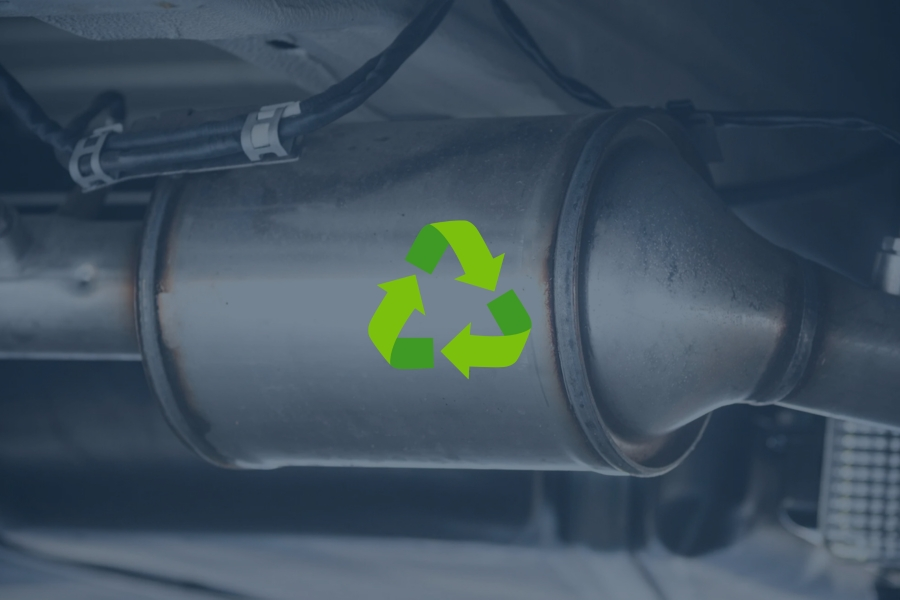
Catalytic converters are one of the largest commercial sources of recyclable palladium.
Palladium helps convert harmful exhaust gases into less harmful emissions. The amount present varies by converter type, vehicle, model year, and emissions-system design.
Catalytic converters should be kept intact and separated by type whenever possible. Identification and evaluation usually require specialized knowledge and equipment.
Electronic Components
Palladium can be found in certain electronic components, including:
- Circuit boards
- Connectors
- Capacitors
- Multilayer ceramic capacitors
- Relays
- Switches
The amount of palladium in individual components may be small, but larger quantities of electronic scrap can contain recoverable concentrations.
Businesses should avoid assuming that every circuit board or capacitor contains palladium. Component age, manufacturer, design, and material specifications all affect composition.
Industrial Equipment
Industrial equipment may contain palladium in catalysts, sensors, controls, coatings, and specialized components.
Potential sources include:
- Chemical processing equipment
- Industrial sensors
- Process-control systems
- Emissions-control equipment
- Industrial catalysts
- Laboratory systems
The palladium may be present as a coating, alloy, powder, catalyst material, or part of a larger assembly.
Manufacturing Scrap
Manufacturers may generate palladium-bearing scrap through production, fabrication, testing, and quality-control processes.
Common examples include:
- Production offcuts
- Defective components
- Rejected parts
- Machine scrap
- Fabrication waste
- Spent catalyst material
- Residues from specialized processes
Keeping this material separate from general scrap can make identification and recycling more efficient.
Dental and Medical Materials
Palladium has also been used in certain dental alloys, medical devices, and laboratory equipment.
Possible sources include:
- Dental crowns and bridge alloys
- Specialized medical components
- Diagnostic equipment
- Laboratory instruments
- Research materials
Healthcare and laboratory organizations should follow their internal procedures for decontamination, privacy, and equipment release before arranging recycling.
Recycling Options for Palladium
Scheduled Pickup
Scheduled pickup is generally the best option for businesses with larger quantities, bulky equipment, multiple pallets, or recurring material.
It may be suitable for:
- Manufacturers
- Electronics recyclers
- Auto recyclers
- Industrial facilities
- Laboratories
- Warehouses
- Equipment decommissioning projects
Before pickup, the recycling provider may ask for photos, estimated weights, pallet counts, material descriptions, and loading information.
Providing accurate details helps determine the correct vehicle, containers, labor, and processing route.
Drop-Off Recycling
Drop-off may work for small commercial quantities that can be transported safely and accepted by the recycling location.
Businesses should confirm acceptance before arriving. Not every metal recycler accepts palladium-bearing electronics, catalysts, laboratory materials, or mixed industrial scrap.
Materials should remain organized, contained, and clearly identified during transportation.
Recurring Collection Programs
Recurring collection programs are useful for businesses that generate palladium-bearing scrap on an ongoing basis.
A program may include:
- Dedicated e-waste collection containers
- Scheduled service intervals
- Material-separation guidance
- Pickup coordination
- Weight or quantity records
- Recycling documentation
This approach can help manufacturers, laboratories, electronics companies, and industrial facilities avoid mixing palladium-bearing material with general scrap.
How to Prepare Palladium Scrap for Recycling
Identify Palladium-Containing Materials
Start by identifying which materials are known or suspected to contain palladium.
Review:
- Product specifications
- Part numbers
- Safety data sheets
- Manufacturing records
- Supplier documentation
- Equipment manuals
- Alloy or catalyst information
Do not dismantle unfamiliar equipment or process materials solely to look for palladium. Some components may contain hazardous substances or require controlled handling.
Keep Materials Separated
Keep palladium-bearing materials separate from:
- Aluminum
- Copper
- Stainless steel
- Mixed electronics
- General scrap
- Trash and packaging debris
Avoid combining catalysts, circuit boards, capacitors, industrial components, and manufacturing residues in one container unless instructed to do so.
Separation makes evaluation easier and reduces the risk of contamination.
Organize by Material Type
Group materials into clear categories, such as:
- Catalytic materials
- Electronic components
- Industrial equipment
- Manufacturing scrap
- Dental or laboratory materials
- Known alloys
- Unknown or mixed materials
Label each container or pallet with the material type, source, condition, and any available identifying information.
Estimate Quantities
Before requesting service, gather basic information about the load.
Useful details include:
- Estimated weight
- Number of pallets
- Number and size of containers
- Individual equipment counts
- Material dimensions
- Clear photos
- Pickup location
- Loading-dock availability
- On-site loading equipment
- Access restrictions
Accurate estimates help the recycler recommend the right collection and transportation plan.
Why Proper Identification Matters
Palladium is rarely found by itself in finished products or industrial scrap. It is often combined with other metals, including:
- Platinum
- Rhodium
- Silver
- Gold
- Nickel alloys
These combinations can appear in catalytic converters, electronic components, industrial catalysts, dental alloys, and manufacturing materials.
Proper identification helps determine the correct processing route. It also reduces contamination, improves sorting efficiency, and helps the recycler evaluate the material more accurately.
Businesses should keep known palladium-bearing scrap separate and provide any available records, part numbers, alloy details, or product specifications.
What Happens After Collection?
Sorting
After collection, palladium-bearing materials are sorted by type, source, condition, and composition.
Catalytic converters, circuit boards, capacitors, industrial catalysts, manufacturing scrap, and dental materials may all require different processing methods.
Evaluation
The material is then evaluated to determine what it contains and how it should be processed.
This may involve reviewing product information, inspecting components, testing the material, or analyzing a representative sample. The goal is to identify palladium and any other metals present.
Refining
Once the material has been identified, it is sent through an appropriate refining process.
At a high level, refining separates palladium from other metals and non-metal materials. The exact method depends on the scrap type, concentration, contamination, and physical form.
Recovery of Reusable Palladium
Recovered palladium can be refined into reusable material and returned to manufacturing.
It may support the production of:
- Electronic components
- Automotive emissions systems
- Industrial catalysts
- Chemical processing equipment
- Medical and dental applications
The final use depends on the purity of the recovered material and the requirements of the manufacturer.
Why Palladium Recycling Matters
Palladium is a finite natural resource with important industrial uses. Recycling helps keep existing material in circulation and reduces reliance on newly mined supplies.
It also supports manufacturers that depend on palladium for electronics, automotive systems, catalysts, chemical processes, and specialized equipment.
For businesses, proper recycling provides a more responsible way to manage palladium-bearing scrap from production, maintenance, equipment replacement, and decommissioning projects.
Other benefits include:
- Conserving natural resources
- Reducing demand for new mining
- Recovering reusable metals
- Supporting circular manufacturing
- Keeping industrial scrap out of general waste streams
- Improving material tracking and recycling records
Frequently Asked Questions About Palladium Recycling
Can palladium be recycled?
Yes. Palladium can be recovered from catalytic converters, electronic components, industrial catalysts, manufacturing scrap, dental alloys, and other specialized materials.
The recycling process depends on the form, concentration, and condition of the material.
What products contain palladium?
Common sources include catalytic converters, circuit boards, connectors, capacitors, relays, switches, industrial catalysts, sensors, dental alloys, laboratory equipment, and certain medical components.
Not every product in these categories contains palladium, so identification is important.
Can catalytic converters be recycled?
Yes. Catalytic converters are one of the most common commercial sources of recyclable palladium.
They may also contain platinum and rhodium. The exact metal content varies by vehicle, converter design, model year, and emissions requirements.
Is palladium found in electronics?
Yes. Palladium may be found in certain circuit boards, connectors, multilayer ceramic capacitors, relays, switches, and other electronic components.
The amount in each item is often small, but larger quantities of electronic scrap may contain recoverable material.
How do I know if my scrap contains palladium?
Start by checking part numbers, product specifications, supplier records, equipment manuals, alloy information, and safety data sheets.
A recycler or specialized refiner may also evaluate or test the material. Appearance alone is usually not enough to confirm palladium content.
Can manufacturers recycle palladium scrap?
Yes. Manufacturers can recycle production offcuts, rejected components, defective parts, catalysts, fabrication waste, residues, and other palladium-bearing materials.
Keeping these materials separate from general metal scrap makes the recycling process more efficient.
Can EACR Inc. coordinate palladium recycling pickup?
Yes. EACR Inc. can help businesses coordinate recycling for palladium-containing electronics, industrial materials, manufacturing scrap, catalysts, and specialized equipment.
Service options may include scheduled pickup, recurring collection, transportation coordination, and recycling documentation.
What information should I provide before requesting recycling services?
Provide as much information as possible, including:
- Material type
- Estimated weight or quantity
- Number of pallets or containers
- Pickup location
- Clear photos
- Known part numbers or alloy details
- Material condition
- Loading equipment available
- Dock, elevator, or access restrictions
- Preferred pickup schedule
These details help the recycler recommend the right collection and transportation plan.
Recycle Palladium Today
Palladium is an important precious metal used in automotive, electronics, industrial, medical, dental, and manufacturing applications.
Proper recycling helps recover reusable palladium that may be returned to future manufacturing. It also helps businesses keep specialized scrap organized and out of general waste streams.
The best approach is to identify the material, keep palladium-bearing scrap separate, estimate the quantity, and choose a recycling option based on the material type and volume.
EACR Inc. helps businesses coordinate licensed metal recycling services, including scheduled pickups, recurring recycling programs, transportation coordination, and documentation for commercial recycling projects. Contact the team to discuss your material and request a recycling plan.