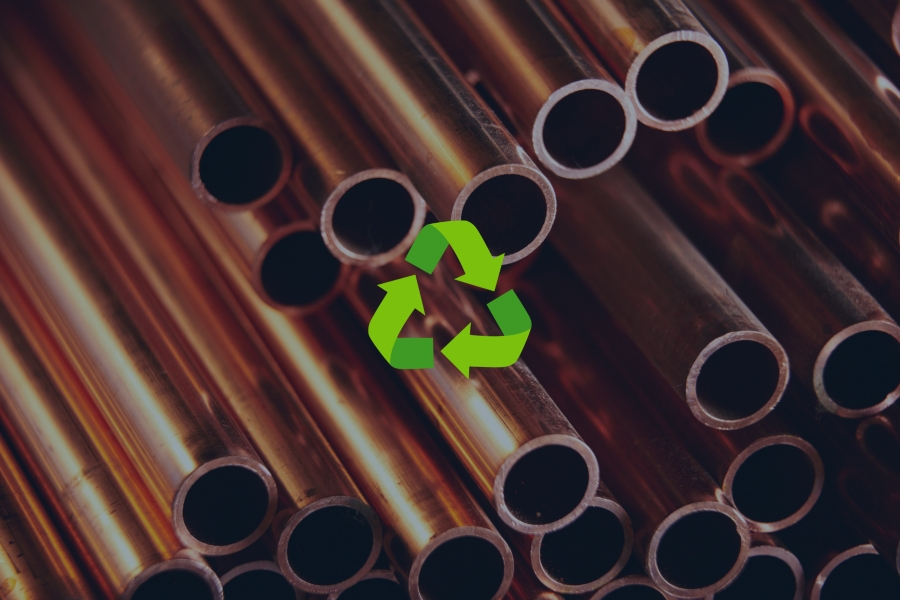
Copper is one of the most important industrial metals in the world. It is widely used because it conducts electricity and heat extremely well, resists corrosion, lasts for decades, and can be shaped into many different forms.
Nearly every major industry relies on copper in some way. It is found in electrical systems, plumbing, telecommunications, manufacturing equipment, HVAC systems, renewable energy infrastructure, and commercial buildings.
When copper wire, pipe, machinery, or manufacturing scrap reaches the end of its useful life, the metal can often be collected, processed, and returned to manufacturing as reusable material.
Recycling copper helps businesses recover reusable metal, reduce waste, and manage industrial materials more responsibly.
If your business also needs to recycle computers, electronics, batteries, or industrial equipment, learn more about EACR Inc.’s electronics recycling services.
Quick Answer: How to Recycle Copper
Copper recycling starts with separating the material from other metals whenever possible.
Copper scrap may come from construction, demolition, electrical work, manufacturing, telecommunications, plumbing, HVAC projects, or industrial maintenance. The best recycling option depends on the amount, condition, and type of material being collected.
Small quantities may be suitable for drop-off recycling. Larger commercial loads are usually better handled through scheduled pickup. Businesses that generate copper regularly may also benefit from dedicated recycling containers placed at their facility.
A licensed recycler can identify, sort, and process the material so reusable copper can return to manufacturing.
What is Copper?
Copper is a naturally occurring nonferrous metal known for its reddish color, conductivity, durability, and corrosion resistance.
It is especially important in manufacturing because it can carry electricity efficiently, transfer heat, and withstand years of use in demanding environments. Copper is also easy to bend, shape, roll, draw into wire, and combine with other metals.
These properties make it useful in everything from electrical wiring and plumbing systems to motors, transformers, electronics, and industrial machinery.
Copper can often be recycled repeatedly while retaining the qualities that make it useful.
Why Copper Is Widely Used
Copper offers several practical advantages:
- Excellent electrical conductivity
- High thermal conductivity
- Strong corrosion resistance
- Long service life
- Easy fabrication and forming
- Broad use across industrial systems
- Strong potential for repeated recycling
Common Types of Copper Scrap
Copper scrap is usually grouped by condition and the amount of attached material.
Bare Bright Copper
Bare bright copper is clean, uncoated copper wire with no insulation, paint, solder, or other attachments.
It is commonly generated during electrical work, wire replacement, manufacturing, and cable processing.
#1 Copper
#1 copper usually includes clean copper pipe, tubing, wire, and solid pieces with very little contamination.
The material should generally be free from paint, solder, fittings, heavy oxidation, and other attachments.
#2 Copper
#2 copper may contain solder, paint, oxidation, coatings, or minor attachments.
It is still recyclable, but it usually requires more sorting and processing than cleaner copper grades.
Insulated Copper Wire
Insulated copper wire contains copper surrounded by plastic, rubber, or another protective coating.
It can be recycled, but the insulation must be separated during processing before the copper can be recovered.
Where is Copper Found?
Businesses generate copper scrap in many different settings. Some material comes from ongoing operations, while other scrap is created during upgrades, repairs, demolitions, equipment replacements, or facility cleanouts.
Industries that commonly generate copper scrap include:
- Electrical contractors
- Construction companies
- Manufacturers
- Telecommunications providers
- Utilities
- HVAC contractors
- Plumbing companies
- Renewable energy companies
- Data centers
- Industrial facilities
- Hospitals
- Commercial buildings
Common Copper Items That Can Be Recycled
Recyclable copper may include:
- Copper wire
- Electrical cable
- Bus bars
- Copper pipe
- Tubing
- Roofing
- Flashing
- Heat exchangers
- Radiators
- Electric motors
- Transformers
- Plumbing materials
- Industrial machinery
- Manufacturing offcuts
- Sheet copper
- Copper turnings
- Electrical components
Many computers, servers, power supplies, circuit boards, and other electronics also contain recoverable copper. These items should usually be routed through an electronics recycling program rather than treated as loose metal scrap.
Benefits of Copper Recycling
Copper recycling offers practical benefits for businesses that generate electrical, plumbing, manufacturing, or demolition scrap.
Conserves Natural Resources
Producing copper from newly mined ore requires extensive extraction, processing, and transportation.
Recovering copper that is already in circulation reduces the need to rely entirely on new mining and helps conserve natural resources.
Keeps Reusable Copper in Circulation
Copper can often be recycled repeatedly without losing the properties that make it useful.
Once processed, recovered copper can return to the supply chain and be used in new wiring, pipe, equipment, and industrial products.
Supports Manufacturing
Recovered copper is commonly used to manufacture:
- Electrical wire
- Cable
- Plumbing products
- Motors
- Transformers
- Industrial components
- Building materials
- Electronic equipment
Recycling helps keep reusable material available for future production.
Reduces Industrial Waste
Copper scrap can take up significant space when it is mixed into general waste or stored without a clear plan.
A recycling program gives businesses a consistent way to manage wire, pipe, offcuts, damaged equipment, and other copper-containing materials.
It can also help reduce disposal costs by keeping reusable metal out of the general waste stream.
Supports Sustainability Goals
Copper recycling can support waste reduction, landfill diversion, ESG reporting, and internal environmental programs.
Businesses can use pickup records, material counts, and recycling documentation to track how scrap was handled and demonstrate progress toward sustainability goals.
Copper Recycling Options
The right recycling option depends on how much copper you have, how often you generate it, and whether the material is easy to transport.
Small amounts may be suitable for drop off. Larger commercial quantities are usually easier to manage through scheduled pickup. Businesses that generate copper regularly may benefit from dedicated collection containers and recurring service.
Scheduled Pickup
Scheduled pickup is often the best option for:
- Electrical contractors
- Manufacturers
- Plumbing companies
- Industrial facilities
- Demolition contractors
- Data centers
- Commercial cleanouts
One time pickups work well for renovation projects, electrical upgrades, equipment replacements, demolitions, and facility cleanouts.
Businesses that generate copper continuously may prefer an ongoing recycling program. Recurring service helps prevent scrap from piling up and creates a more consistent process for collection and removal.
Commercial pickup can also simplify loading, transportation, scheduling, and bulk copper removal.
Drop Off Recycling
Drop off recycling may work well for:
- Smaller quantities
- Local businesses
- Small renovation projects
- Individual equipment replacements
- Contractors with limited scrap
Before transporting the material, confirm that the facility accepts the specific type of copper you have and ask about any sorting or preparation requirements.
Drop off may be practical for a few coils of wire, small sections of pipe, limited fabrication scrap, or a single equipment replacement.
Recycling Containers
E-waste recycling containers can help businesses that generate copper scrap regularly.
Common uses include:
- Wire and cable scrap
- Manufacturing offcuts
- Copper pipe
- Machine shop scrap
- Electrical upgrades
- Facility maintenance projects
Containers give employees a clear place to store recyclable copper and help keep it separate from other metals and general waste.
Pickup schedules can be arranged based on how quickly the container fills. Some businesses may need service only when requested, while others benefit from weekly, monthly, or project based collection.
How to Prepare Copper for Recycling
A little preparation can make copper recycling faster, easier, and more efficient.
Separate Copper
Keep copper separate from:
- Aluminum
- Brass
- Stainless steel
- Steel
- Electronics
- Mixed wire
Different metals follow different recycling paths, so separating them early helps reduce sorting and keeps the load organized.
If you are not sure whether a material is copper, keep it separate and ask the recycler to help identify it.
Remove Non Metal Attachments
Remove unnecessary materials when practical, including:
- Plastic insulation
- Rubber
- Wood
- Packaging
- Excess debris
Not every attachment needs to be removed before recycling. Insulated wire, motors, and mixed equipment can often still be processed by the recycler.
For larger or more complicated items, ask what should stay attached and what should be removed.
Keep Copper Organized
Group copper by:
- Wire
- Pipe
- Sheet
- Solids
- Turnings
- Condition
For example, keep clean pipe separate from insulated wire and copper turnings separate from larger solid pieces.
Organized scrap is easier to inspect, count, load, and document.
Estimate the Quantity
Before requesting pickup, gather basic information about the material.
Helpful details include:
- Approximate weight
- Number of pallets
- Number of boxes
- Number and size of containers
- Photos of the material
- Whether loading equipment is available
Also mention any oversized items, access restrictions, stairs, loading dock limitations, or security requirements.
Coordinate Pickup or Drop Off
Choose the recycling method based on volume and logistics.
Drop off may work for a small amount that can be transported safely. Scheduled pickup is usually better for heavy, bulky, recurring, or commercial quantities.
Provide the recycler with the material type, estimated quantity, location, condition, and preferred timeline.
Frequently Asked Questions About Copper Recycling
Can copper be recycled?
Yes. Copper can be collected, processed, and returned to manufacturing as reusable metal.
It can often be recycled repeatedly while retaining the conductivity, durability, and corrosion resistance that make it useful.
What copper items can be recycled?
Common items include wire, cable, pipe, tubing, bus bars, sheet copper, flashing, radiators, heat exchangers, transformers, motors, turnings, and manufacturing offcuts.
The exact recycling process depends on the material’s condition and any attached components.
Can insulated copper wire be recycled?
Yes. Insulated copper wire can be recycled.
The insulation is separated during processing so the copper inside can be recovered. Businesses should keep insulated wire separate from bare copper whenever possible.
Should copper be separated from other metals?
Yes. Copper should be kept separate from aluminum, brass, steel, stainless steel, and other metals whenever possible.
Separation makes sorting easier and helps the recycler identify the material more efficiently.
Does copper need to be cleaned before recycling?
Copper does not need to look new, but excess debris, packaging, dirt, and unnecessary attachments should be removed when practical.
Copper with paint, solder, oxidation, insulation, or minor attachments can often still be recycled, although it may require additional processing.
Can businesses schedule copper pickup?
Yes. Businesses can schedule one time or recurring pickups for copper scrap.
Pickup is often the most practical option for electrical contractors, manufacturers, plumbing companies, industrial facilities, demolition contractors, and data centers.
Does EACR Inc. provide recycling containers?
Yes. EACR Inc. can help businesses coordinate collection containers for ongoing copper and metal recycling programs.
The best container size and pickup schedule depend on the type, quantity, and frequency of material being generated.
How do I request copper recycling services?
Contact EACR Inc. with the type of copper, estimated quantity, location, condition, and whether you need pickup, drop off, or a collection container.
Photos, pallet counts, approximate weights, and access details can help simplify scheduling.
Conclusion
Copper is one of the most widely recycled industrial metals, but the process works best when material is separated and organized before collection.
Small quantities may be suitable for drop off, while larger commercial loads are usually easier to manage through scheduled pickup. Businesses that generate copper regularly may also benefit from dedicated containers and recurring service.
Working with a licensed recycler helps simplify collection, transportation, processing, and documentation.
If your business has copper wire, pipe, electrical components, manufacturing scrap, demolition materials, or other commercial copper waste, EACR Inc. can help coordinate pickup, recycling, and documentation through our metal recycling services.