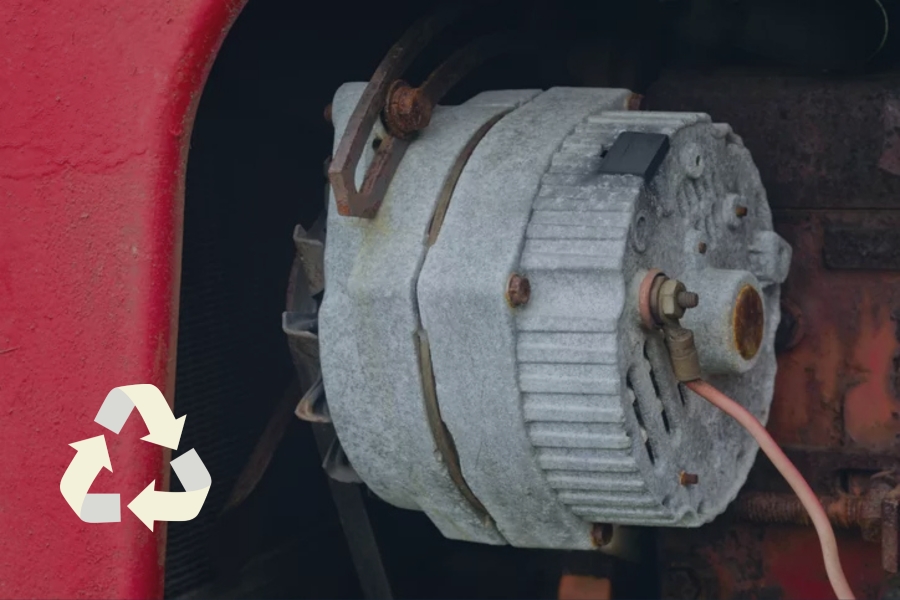
Old alternators are common, heavy, and easy to pile up in auto shops, fleet garages, scrap areas, and parts rooms. They may look like basic vehicle parts, but they are not just random chunks of metal.
Alternators usually contain steel, aluminum, copper windings, wiring, bearings, pulleys, and other reusable materials. That makes them worth separating from general waste, especially for businesses that collect them regularly.
Auto shops, mechanics, dealerships, fleet maintenance teams, salvage yards, and parts recyclers may end up with used alternators every week. Instead of tossing them into trash bins or letting them sit in storage, businesses should separate, store, and route them properly.
Alternators are also commonly collected alongside starters, batteries, wiring, motors, catalytic converters, oxygen sensors, and other automotive components. A clean process keeps these parts organized and makes recycling easier to manage.
If your business collects used alternators, automotive electronics, wiring, motors, or related vehicle components, EACR Inc., an electronics recycling company can help coordinate recycling, pickup routing, and documentation.
Quick Answer: How to Recycle an Alternator
Most alternators can be handled through one of three routes: core return or reuse, drop-off for small quantities, or scheduled pickup for business quantities.
Core Return or Reuse
Core return or reuse is usually the first option to check. This works best when the alternator is eligible for a core return, rebuild, resale, or reuse program.
If the part still has supplier information, a core charge, or rebuild potential, keep it separate from damaged scrap until you know whether it can be returned or reused.
Drop-Off for Small Quantities
Drop-off can work for one-off alternators, DIY repairs, or small batches from repair shops. This route usually makes sense when the alternator is already removed, dry, contained, and easy to transport.
Before taking it anywhere, confirm that the recycler accepts alternators and ask whether attached wiring should stay on or be removed.
Scheduled Pickup for Business Quantities
Scheduled pickup is often the best option for auto shops, fleet operators, dealerships, salvage yards, and businesses with bulk alternators or mixed automotive components.
For one or two alternators, drop-off may be fine. For businesses collecting alternators regularly, bulk storage and scheduled pickup usually create a cleaner, more organized recycling process.
What Counts as an Alternator?
An alternator is the vehicle component that helps keep the battery charged and powers electrical systems while the engine is running. For recycling purposes, the type, condition, and quantity all matter.
Standard Vehicle Alternators
Common alternators that may be recycled include:
- Passenger car alternators
- Truck alternators
- Fleet vehicle alternators
- Heavy-duty alternators
- Remanufactured alternators
- Failed or damaged alternators
Some are small enough to handle individually. Others, especially from trucks, fleets, or heavy equipment, may be larger, heavier, and harder to store or move.
Alternators vs. Related Vehicle Parts
Alternators are different from starters, batteries, and generators. They may be collected in the same shop or recycling load, but they are not the same part.
An alternator helps charge the vehicle battery and power electrical systems while the engine runs. A starter helps start the engine. A battery stores electrical energy. A generator may refer to a different type of power-producing equipment depending on the vehicle or machine.
Businesses may recycle these parts together, but they should still identify them correctly. That makes sorting, pickup planning, and documentation much cleaner.
Why Type and Condition Matter
Working or rebuildable alternators may have a reuse or core return route. Damaged, burned, corroded, or broken alternators may need to be recycled instead.
Larger alternators from trucks, fleets, or heavy equipment may need different handling than small passenger vehicle alternators. Quantity matters too. A single alternator from one repair job is very different from a full bin of alternators collected across several shop locations.
Option 1: Core Return, Reuse, or Rebuild Route
Before sending alternators directly into recycling, check whether any can go through a core return, reuse, or rebuild route.
When This Option Fits
This option fits when the alternator was recently replaced and has a core charge. It may also apply when the part is eligible for return through a parts supplier, can be rebuilt, or may still be useful for resale.
For businesses, this is worth checking before everything gets mixed into one scrap container. If there is a reuse option, keep those parts separate from damaged or questionable units.
High-Level Steps
Start by checking whether the alternator has a core return value. If you have model numbers, part numbers, supplier labels, or purchase information, keep that with the part when possible.
Store the alternator separately from damaged scrap until you know whether it qualifies. If eligible, return it through the correct supplier, parts store, rebuild shop, or reuse route.
If the alternator is not reusable or not accepted as a core, route it for recycling instead.
Common Gotchas
Not every alternator qualifies for core return. Missing labels, severe damage, fire damage, heavy corrosion, or incomplete parts may affect eligibility.
Mixed bins can also create problems. If reusable cores are tossed in with broken, burned, or contaminated scrap, they may be harder to identify later. Businesses should avoid assuming every old alternator has the same route.
Option 2: Drop-Off Locations for Small Quantities
Drop-off works best when you only have a small number of alternators and they are easy to move safely.
When Drop-Off Makes Sense
Drop-off may make sense if you have one or two alternators, the part is already removed from the vehicle, and it is dry, contained, and simple to transport.
This is usually not the best route for a large business cleanout, ongoing shop volume, or a mixed pile of automotive components. Larger loads are easier to manage with scheduled service.
Where People Typically Drop Off Alternators
People commonly drop off alternators at scrap metal recyclers, auto parts recycling facilities, automotive recycling centers, and local recycling providers that accept vehicle components.
Some e-waste or mixed metal collection programs may accept alternators, but acceptance can vary. Always confirm before showing up with parts.
What to Confirm Before Drop-Off
Before drop-off, ask whether the recycler accepts alternators and whether attached wiring should stay on or be removed.
Also confirm whether mixed automotive parts can be included in the same load, whether documentation is available for business records, and whether larger quantities need to be scheduled ahead of time.
Option 3: Scheduled Pickup for Businesses
For businesses that collect alternators regularly, scheduled pickup is usually the cleanest option. It gives the shop or facility a more organized way to remove heavy parts and keep records.
Best-Fit Scenarios
Scheduled pickup is usually the right tool for:
- Auto repair shops
- Dealerships
- Fleet maintenance facilities
- Salvage yards
- Municipal garages
- Truck repair shops
- Heavy equipment service centers
- Multi-site automotive businesses
- Facility cleanouts with mixed parts and electronics
These locations often collect alternators alongside starters, wiring, motors, sensors, batteries, control modules, and other automotive components.
Why Pickup Reduces Headaches
Pickup keeps heavy parts from piling up around the shop. It also reduces ad-hoc employee handling, which matters when alternators are stored in bins, pallets, or mixed scrap areas.
A scheduled process makes it easier to track site, quantity, and removal date. It can also allow alternators to be collected with wiring, motors, sensors, control modules, and other automotive components when appropriate.
For businesses, cleaner documentation is a major benefit. You know what left the site, when it was removed, and who handled it.
What to Tell Your Recycler Before Pickup
Before scheduling pickup, share the approximate count or weight of the alternators. Note whether the parts are whole, damaged, burned, corroded, or mixed with other materials.
Also explain whether wiring, starters, motors, batteries, sensors, or other vehicle parts are included. Provide the site location, loading access, and whether the material is stored in a pallet, bin, gaylord, drum, or other container.
If your business needs certificates of recycling or service records, mention that before pickup so documentation expectations are clear from the start.
How to Prepare Alternators for Recycling
Alternator recycling goes smoother when the parts are counted, separated, staged, and labeled before pickup or drop-off. You do not need to overcomplicate it, but you do need a clean process.
Step 1: Inventory What You Have
Start by estimating the count or weight of the alternators. If you only have a few, a simple count is fine. If you have a full bin, pallet, or container, an estimated weight may be more useful.
Separate alternators from unrelated trash, fluids, oil-soaked materials, and general shop waste. Note whether the parts came from passenger vehicles, trucks, fleet vehicles, or heavy-duty equipment.
Flag anything that is damaged, burned, leaking, or heavily corroded. If you manage multiple shops or service locations, track where each load came from so pickup records stay organized.
Step 2: Stage Safely
Keep alternators in a sturdy bin, pallet box, or container that can handle heavy metal parts. Avoid leaving them loose on floors, shelves, work benches, service counters, or near active work areas.
Keep the parts dry and away from fluids, solvents, oil-soaked rags, and general shop waste. This helps keep the load cleaner and easier to route.
Do not stack heavy alternators in unstable piles. They are dense, awkward parts that can shift quickly. Keep walkways, loading areas, service bays, and emergency paths clear.
Step 3: Package and Label
Use durable containers that can handle the weight of alternators, brackets, pulleys, and attached wiring. If the container is not strong enough, it can fail during movement or loading.
Label containers clearly as used alternators or automotive components. If some units may be reusable cores, keep them separate from scrap alternators so they do not get mixed into the wrong stream.
Mark damaged or unusual units clearly. Include the site name, quantity estimate, condition notes, and contact person so the load is easy to identify when it is time for removal.
Safety Basics: Non-Negotiables
Alternators may seem simple, but they are still heavy vehicle parts with sharp edges, attached hardware, and possible contamination risks. A little shop discipline goes a long way.
Why Alternators Are Not Just “Normal Trash”
Alternators are heavy for their size. They can also have sharp edges, attached brackets, pulleys, wiring, broken housings, and damaged metal that can cut hands or snag clothing.
Loose alternators can create trip, cut, and lifting hazards. When they are left around service bays or parts rooms, they become clutter fast.
Mixed automotive waste can also create contamination problems. If alternators are thrown in with oil filters, leaking fluids, solvents, or damaged parts, the load may be harder to process.
The Safest Default Rules
Do not toss alternators into regular trash. Keep them separated for recycling whenever possible.
Do not mix them with oil filters, leaking fluids, solvents, or contaminated shop waste. Keep reusable cores separate from scrap alternators so they can be reviewed before recycling.
Do not leave loose alternators where employees can trip over them. Do not overload containers beyond safe lifting or loading limits. If wiring is attached, ask your recycler whether it should stay attached or be separated.
Rules and Compliance: Practical, Not Legalese
Alternator recycling is usually more straightforward than some battery or hazardous material streams, but businesses should still keep records.
Documentation helps support internal controls, vendor management, sustainability reporting, and cleaner shop operations. It also gives teams a simple way to answer basic questions like what was removed, when it left, and who handled it.
For businesses with multiple locations, one repeatable process is especially helpful. If every shop collects and labels alternators the same way, pickups are easier to manage and records are much cleaner.
Records to Keep: Minimum Set
Keep a simple record for each pickup or recycling load. Useful records include:
- Pickup or service record
- Site location
- Estimated count or weight
- Material description
- Condition notes
- Date of removal
- Vendor information
- Certificates of recycling
What Happens After Collection?
After collection, alternators are sorted by material type, condition, and processing route. The exact process depends on the recycler, the volume, and whether the alternators are mixed with other automotive components.
Sorting and Consolidation
Alternators may be sorted as whole units or separated from wiring, mixed motors, starters, and other auto parts depending on the recycler’s process.
If any units are reusable or rebuildable, those may be identified when applicable. Scrap alternators are routed based on their material profile and condition.
Material Recovery
Alternators commonly contain aluminum housings, steel parts, copper windings, wiring, bearings, pulleys, and internal components. These materials are routed for recovery where possible.
Copper and metal recovery are the main reasons alternators should not be wasted. The exact recovery path depends on condition, volume, and processing method.
Downstream Routing
Alternators may move through automotive scrap, motor recycling, wire recovery, or electronics-adjacent recycling channels.
Loads that include wiring, sensors, control modules, or electronic components may need more careful sorting. The goal is to recover reusable materials and route remaining fractions responsibly.
Frequently Asked Questions About Alternator Recycling
Can Alternators Be Recycled?
Yes. Alternators can often be recycled because they contain metal housings, copper windings, wiring, bearings, pulleys, and other reusable materials.
Are Alternators Worth Recycling?
Yes. Alternators are worth recycling because they contain reusable metals, especially copper, aluminum, and steel.
Can Auto Shops Recycle Alternators in Bulk?
Yes. Auto shops, dealerships, fleet maintenance teams, and salvage yards can collect used alternators in bulk and route them for recycling.
Should Alternators Go in the Trash?
No. Alternators should be separated for recycling when possible instead of being thrown into regular trash.
Can Alternators Be Recycled With Starters?
Often, yes. Alternators and starters may be collected together depending on the recycler’s accepted materials and sorting process.
Should Wiring Be Removed From Alternators Before Recycling?
Ask the recycler first. Some may prefer wiring attached, while others may ask for wires to be separated.
Can EACR Inc. Help With Alternator Recycling?
Yes. EACR Inc. can help businesses coordinate alternator recycling, automotive component recycling, pickup routing, and documentation.
Conclusion
Alternator recycling starts with identifying what you have and separating old alternators from general waste. From there, businesses should check whether parts are eligible for core return, store alternators safely, label containers, and keep clean records.
The right recycling route depends on quantity, condition, site access, and whether alternators are collected with other automotive components. For one or two alternators, drop-off may work. For ongoing business quantities, scheduled pickup is usually cleaner than casual drop-off.
If your shop, fleet facility, salvage yard, or automotive business is collecting used alternators, starters, wiring, motors, sensors, or other vehicle components, EACR Inc., an e-waste recycling business can help coordinate recycling services, pickup routing, staging guidance, and documentation.