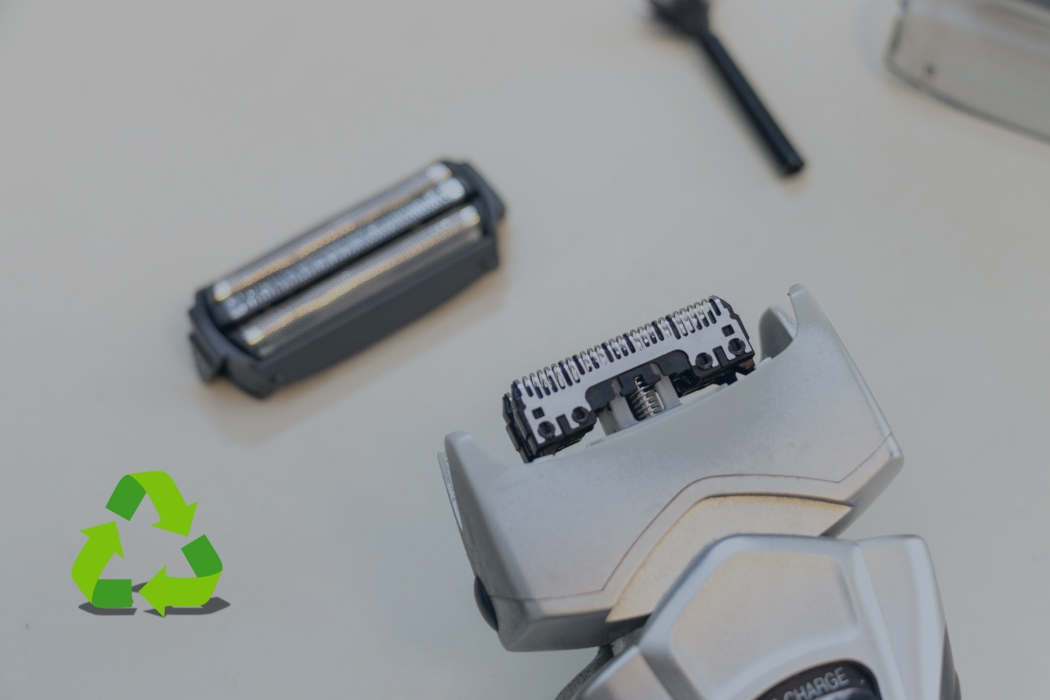
Electric shaver recycling is one of those things people skip because the device is small. Quick reality check: it’s still a battery + electronics + metal blades, which makes it not trash-safe. Here’s exactly what to recycle, how to handle the battery, when drop-off vs mail-in vs pickup makes sense, and what businesses should document.
Quick Answer — Can You Recycle an Electric Shaver?
Yes — recycle it through an electronics recycling program (not the trash, not scrap metal).
Two streams to plan for:
- Battery-powered device (the shaver body / handle)
- Add-ons (chargers, cords, cleaning docks, travel cases, blades/foil heads)
The big reason it’s not “bin simple”
Built-in or removable batteries can short, overheat, and ignite if the shaver gets crushed or compacted during hauling and processing. And even if your shaver is corded (no battery), it’s still an electronic device and should be routed as e-waste.
What Counts as an “Electric Shaver” for Recycling?
Common types you’ll see
- Foil shavers, rotary shavers
- Trimmers/clippers (beard, body, hair)
- Grooming kits with charging bases
What to include in the same project
- Charging cords, power adapters, docks/clean-and-charge stations
- Replacement heads (foil/cutters) and guards (sort separately)
What’s Inside an Electric Shaver
Most electric shavers are a mixed-material bundle that needs proper routing:
- Metals (steel/aluminum), plastics, wiring, circuit boards
- Battery (often lithium-ion or NiMH depending on model)
- Small motors and electronics that shouldn’t go into trash or loose scrap
Why You Shouldn’t Throw Electric Shavers in the Trash
- Battery fire risk in trucks and transfer stations (crushing + compaction is where problems start)
- Electronics and plastics don’t belong in landfills
- For organizations: bulk disposal creates avoidable compliance and reporting headaches (especially when you’re moving lots from multiple sites)
Battery First: Identify What You’re Dealing With
Removable vs built-in battery
- Removable battery: separate it and protect terminals (tape terminals or bag each battery so it can’t short).
- Built-in battery: keep the shaver intact and treat it as battery-powered electronics.
Common battery chemistries
- Lithium-ion (common in newer rechargeable shavers)
- NiMH / NiCad (more common in older rechargeable units)
- AA/AAA alkaline (some units still use replaceable household batteries)
When to treat it as “unknown battery”
If there’s no label, you’re dealing with mixed lots, or the devices are older: assume battery risk. Keep the shavers out of scrap, prevent crushing, and route them as battery-bearing electronics until a recycler sorts and confirms what’s inside.
How to Prepare an Electric Shaver for Recycling
Step 1: Keep it intact
Don’t open the housing or start taking the shaver apart.
- If it has replaceable batteries and can remove them safely, remove them.
- If the battery is built-in (or you’re not sure), leave it whole and treat it as battery-powered electronics.
Step 2: Separate by category
A little sorting up front prevents mess, damage, and rejected loads later.
- Shaver bodies/handles
- Chargers / cords / docks
- Blades / foil heads (sharp metal component stream)
- Loose batteries (bag them + protect terminals)
Step 3: Pack so it won’t get crushed
Most “oops” moments happen because stuff gets smashed in a bin or box.
- Use a box or tote, add light padding, and don’t overstack.
- Keep “damaged/suspect” devices in their own labeled bag/container so they don’t rub, puncture, or short against other items.
What If the Shaver or Battery is Swollen, Leaking, Hot, or Damaged?
Immediate steps
This is the “don’t mess around” category.
- Don’t charge it. Don’t “test it one last time.”
- Isolate it away from other batteries/devices.
- Store in a stable, non-conductive setup and minimize handling.
Why damaged rules are stricter
Damaged batteries have a higher short risk, which means a higher incident risk during storage, transport, and processing. Many programs require special packaging or pre-approval for damaged or suspect battery-bearing devices.
Recycling Options — The Three Most Common Paths
Option 1: Drop-off
Best when you’ve got one or two shavers plus cords.
- Upside: simple, fast. EACR Inc’s e-waste containers are a perfect solution in this context.
Option 2: Mail-in programs
Good if you want predictable logistics and you can package correctly.
- Upside: straightforward process when items are intact.
Option 3: Scheduled pickup (best for business volume)
Best for barbershops, gyms, hotels, schools, and bulk refreshes.
- Upside: Easier for the client themselves, clear certificates of recycling provided.
What Happens After Collection
Intake + sorting
At intake, items get separated so they can be routed correctly:
- Devices separated from cords/docks/metal accessories
- Battery-powered items routed for controlled handling
Demanufacturing + materials separation
Then it becomes a materials job:
- Electronics boards, metals, and plastics are separated for downstream processing
- Reuse pathways may apply when equipment is suitable; otherwise it’s material recovery
Rules and Compliance
This feels confusing because it is layered: state rules, program acceptance rules, and transport expectations don’t always match perfectly.
What matters in practice is simple:
- Controlled handling
- Proper routing
- Documentation that matches what left your site
Minimum records to keep
At a minimum, keep:
- Site/location, removal date, total weight recycled
- Condition notes (intact vs damaged)
- Service record/receipt + any recycling documentation provided
Costs, Logistics, and Why Projects Get Stuck
What drives cost/complexity
- Volume
- Mixed-condition lots
- Packaging labor
- Multi-site coordination
- Documentation requirements
Common failure points
- No inventory (nobody knows what’s in the pile)
- Mixed loads (shavers + random batteries + scrap)
- Unlabeled bins
- Last-minute cleanouts (everything becomes urgent and messy)
Simple fixes
- Standardize bins and separate categories early
- Label by site/location
- Schedule pickup windows before storage becomes the problem
Frequently Asked Questions About Electric Shaver Recycling
Can I throw an electric shaver in the trash?
No. Treat it like battery-powered electronics (even if it’s small). Trash and dumpsters are where shavers get crushed, and that’s how battery incidents start.
Do electric shavers have lithium batteries?
Many newer rechargeable shavers do use lithium-ion. Older rechargeable units are often NiMH (and sometimes NiCad). Some models still run on replaceable AA/AAA alkaline batteries.
Should I remove the battery before recycling?
Only if it’s easy and safe to remove (like a normal battery door). If removing it requires tools, prying, or opening the housing, don’t—leave the shaver intact and recycle it as a battery-bearing device.
Can I recycle charging cords and docks too?
Yes. Chargers, cords, and docks are standard electronics accessories and can usually go in the same electronics recycling stream—just keep them separate from the shaver bodies so nothing gets lost or damaged.
What about razor blades, foil heads, and cutters?
Those are sharp metal components. Bag them or tape the edges so they don’t cut someone during handling, and keep them in a separate “sharp metal accessories” container/bag. Don’t toss loose blades into a general electronics box.
What’s the easiest option for bulk shavers from a business?
Scheduled pickup. It’s the cleanest way to handle volume (barbershops, gyms, hotels, schools, facility refreshes).
Conclusion
Electric shavers are small, but they’re still a mix of battery + electronics + metal, which means they need controlled recycling—not trash and not scrap. If you sort them into a few simple streams (devices, accessories, sharps, loose batteries), everything gets easier and safer.If you’re sitting on a bulk pile or managing multiple sites, EACR Inc., an electronics recycling company can help with pickup scheduling, clear staging guidance, and clean documentation so the project closes out fast and correctly.