Oxygen sensor recycling is often overlooked because O2 sensors are small compared to catalytic converters, batteries, and other automotive parts. But for auto shops, mechanics, dealerships, fleet operators, scrap yards, and parts recyclers, these little sensors can add up fast.
Oxygen sensors matter because they can contain reusable materials, including metals used in exhaust and emissions systems. Instead of tossing old sensors into general waste, businesses should separate them, store them properly, and route them through the right recycling channel.
This is especially important for shops that collect oxygen sensors alongside automotive electronics, wiring, catalytic converters, spark plugs, control modules, and other vehicle components. When everything gets thrown into the same pile, it becomes harder to sort, track, and recycle properly.
If your business collects used oxygen sensors, automotive electronics, wiring, or related vehicle components, EACR Inc., an electronics recycling company can help coordinate recycling, pickup routing, and documentation.
Quick Answer: How to Recycle Oxygen Sensors
Most businesses have three realistic options for oxygen sensor recycling: collect and store sensors in bulk, drop off smaller quantities, or schedule pickup for business volume.
Collect and Store Sensors in Bulk
Bulk collection works best for auto shops, mechanics, dealerships, fleet maintenance teams, and auto recyclers that generate oxygen sensors regularly.
Instead of treating each sensor like a one-off item, set up a labeled container and collect them over time. This keeps sensors separated from general trash and makes recycling easier once there is enough volume to process or schedule for pickup.
Drop-Off for Smaller Quantities
Drop-off can work for small batches of oxygen sensors, especially when they are already removed, clean, and separated from other automotive waste.
This route is usually best for one-time repairs, DIY vehicle work, or small shops that only collect a few sensors at a time. Before dropping them off, confirm that the recycler accepts oxygen sensors and ask whether wiring should stay attached.
Scheduled Pickup for Business Quantities
Scheduled pickup is usually the better option for businesses with bulk sensors, mixed automotive electronics, wiring, control modules, or other recyclable vehicle components.
For one or two sensors, drop-off may be fine. For businesses collecting oxygen sensors regularly, bulk storage and scheduled pickup create a cleaner, more organized recycling process.
What is an Oxygen Sensor?
An oxygen sensor, also called an O2 sensor, is a vehicle component that helps monitor exhaust conditions and support emissions control. It may be small, but it plays an important role in how a vehicle runs.
What an Oxygen Sensor Does
An oxygen sensor measures oxygen levels in a vehicle’s exhaust. The sensor sends that information to the vehicle’s computer system, which uses the reading to adjust the air-fuel mixture.
That adjustment helps the engine run more efficiently and supports the emissions system. When oxygen sensors fail, the vehicle may run poorly, burn more fuel, or trigger a check engine light.
Where Oxygen Sensors Are Found
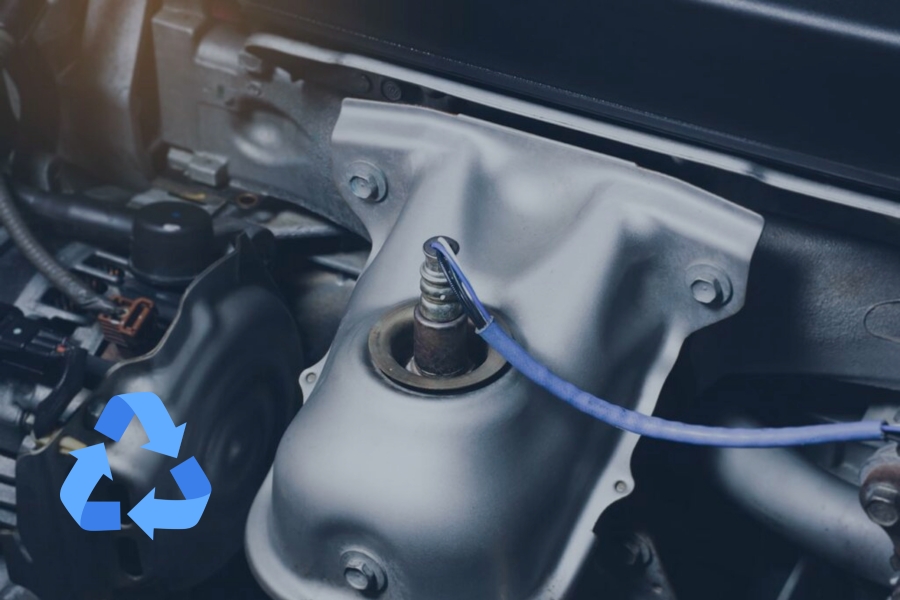
Oxygen sensors are usually located along the exhaust system. They may be found in or near the exhaust manifold, before the catalytic converter, after the catalytic converter, or at other key points along the exhaust stream.
Many modern vehicles have multiple oxygen sensors. That means one repair job, fleet maintenance cycle, or parts recycling operation can generate more than one used sensor per vehicle.
Why Oxygen Sensors Are Replaced
Oxygen sensors are commonly replaced because of normal wear, check engine light diagnostics, emissions issues, poor fuel economy, failed inspections, exhaust system repairs, or catalytic converter service.
For repair shops and fleet teams, these replacements can happen regularly. That is why it makes sense to have a simple collection and recycling process in place.
Why Oxygen Sensor Recycling Matters
Oxygen sensor recycling matters because these parts contain materials that should not be wasted. They are small, easy to ignore, and often get mixed into general shop waste, but that is not the best route.
Oxygen Sensors Can Contain Reusable Metals
Oxygen sensors may contain metals used in automotive emissions systems. Some sensors may contain precious metals such as platinum, palladium, and rhodium.
The exact metal content depends on the sensor type, age, design, and manufacturer. Older sensor designs may contain more recoverable metal than newer designs because automotive technology has changed and manufacturers have reduced material use in some newer sensors.
Small Parts Add Up for Businesses
One oxygen sensor may not seem like much. But auto repair shops, dealerships, fleet maintenance operations, exhaust repair shops, and auto recyclers can collect many sensors over time.
Bulk collection makes recycling more practical. It also helps keep small automotive components from being scattered across workbenches, storage shelves, trash bins, and scrap piles.
Recycling Keeps Automotive Waste Out of Landfills
Oxygen sensors should not be thrown into regular waste when recycling options exist. Recycling helps recover reusable materials and keeps automotive components in proper recovery channels.
For shops, service centers, and automotive businesses, this supports better waste handling and cleaner internal processes. It also makes it easier to document where materials went after they left the facility.
What Materials Are Inside Oxygen Sensors?
Oxygen sensors are mixed-material parts. They may look like simple metal sensors with wires attached, but inside, they can include several different materials that affect how they should be recycled.
Metal Housing and Wiring
Most oxygen sensors include a metal shell or body. They may also have attached wiring, connectors, protective coverings, and small hardware.
The wiring can contain copper and other reusable materials. If sensors are collected with wiring still attached, they should be kept together and routed properly unless the recycler gives different instructions.
Ceramic Sensing Element
Oxygen sensors often contain a ceramic sensing element. This element helps detect oxygen levels in the exhaust stream and allows the sensor to send useful information back to the vehicle’s computer system.
Different sensor generations and designs may use different internal structures. That is one reason older and newer oxygen sensors may not have the same recovery profile.
Precious Metal Content
Some oxygen sensors contain platinum, palladium, or rhodium. The amount can vary widely based on sensor type, age, and design.
Older oxygen sensors may have higher precious metal content than many newer sensors. Newer sensor designs often use less precious metal because automotive technology has changed over time.
Oxygen Sensor Recycling Options
The best oxygen sensor recycling option depends on how many sensors you have, where they came from, and whether they are being recycled with other automotive electronics or components.
Option 1: Bulk Collection for Auto Businesses
Bulk collection is usually the best starting point for auto repair shops, mechanics, dealerships, fleet maintenance teams, auto recyclers, scrap yards, and exhaust repair shops.
Set up a labeled collection container for used oxygen sensors. Keep sensors separated from general trash, fluids, contaminated parts, and unrelated waste. This keeps the material cleaner and easier to manage.
It also helps to track approximate quantities over time. If your business already recycles automotive electronics, wiring, control modules, or related components, oxygen sensor recycling can often be coordinated as part of a broader recycling process.
Option 2: Drop-Off for Small Quantities
Drop-off may work for small shops, DIY repairs, one-time sensor replacements, or small batches of removed sensors.
Before dropping anything off, confirm that the recycler accepts oxygen sensors. Keep sensors separated and contained, and do not bring mixed automotive waste unless the facility says it can accept it.
Drop-off is usually easier for small amounts. For ongoing commercial volume, a pickup or structured collection process is usually cleaner.
Option 3: Scheduled Pickup for Larger Quantities
Scheduled pickup works best for businesses with ongoing sensor accumulation, multi-location operations, shops cleaning out old parts, auto recyclers with mixed vehicle electronics, and facilities collecting wiring, modules, sensors, and control components.
Pickup helps businesses avoid piles of small parts sitting around. It also makes documentation easier because material is collected in an organized way.
EACR Inc. can help with recycling coordination, pickup routing, and records for businesses managing oxygen sensors and related automotive electronic components.
How to Prepare Oxygen Sensors for Recycling
Oxygen sensor recycling is much easier when used sensors are separated, stored, and tracked before they leave your shop or facility. The goal is simple: keep them out of the trash, keep them clean, and make the recycling process easier to manage.
Step 1: Separate Sensors From General Waste
Start by keeping oxygen sensors out of trash bins. Even though they are small, they should not be treated like regular shop garbage.
Separate used O2 sensors from fluids, oil-soaked materials, non-recyclable waste, and loose debris. Do not toss them into the same container as filters, rags, solvents, broken parts, or general cleanup waste.
Clean separation helps keep the recycling process smoother. It also makes it easier to estimate what you have when it is time to schedule pickup or arrange drop-off.
Step 2: Store Sensors in a Labeled Container
Use a durable bin, pail, or box to collect used oxygen sensors. The container does not need to be complicated, but it should be sturdy enough to handle metal parts and attached wiring.
Label the container clearly as used oxygen sensors or O2 sensors so employees know where the parts belong. Keep the container in a dry, secure area of the shop, parts room, or storage space.
Avoid leaving sensors loose across work benches, floors, shelves, or tool carts. Loose sensors create clutter, get lost easily, and make the recycling process harder to organize.
Step 3: Track Quantities and Condition
Once sensors start accumulating, track a basic count or estimated weight. This is especially helpful for auto shops, dealerships, fleet teams, and multi-location businesses.
Note whether the sensors are whole, cut, damaged, or mixed with wiring. If you manage multiple sites, track the location and collection dates so each load stays organized.
Photos can also help when requesting a pickup or recycling service. A quick image of the container, estimated volume, and attached wiring can make planning much easier.
Safety and Handling Basics
Used oxygen sensors are small, but they still need basic handling controls. A little organization prevents clutter, contamination, and avoidable workplace hazards.
Keep Sensors Dry and Contained
Keep used oxygen sensors in a contained area instead of letting them pile up around the shop. Loose wiring, sharp metal edges, and scattered parts can create trip hazards or cut risks.
A dry, labeled container also makes it easier for employees to follow the process. When everyone knows where used sensors go, they are less likely to end up in trash bins or mixed scrap piles.
Avoid Contamination
Do not mix oxygen sensors with leaking fluids, oil filters, solvents, absorbents, or contaminated shop waste. Contaminated loads can be harder to process and may require extra review before recycling.
Clean separation keeps things simple. Oxygen sensors should be collected as their own material group when possible, especially if your business is building up a regular recycling stream.
Do Not Cut or Break Sensors Unnecessarily
Oxygen sensors do not need to be smashed, crushed, or broken apart before recycling. In most cases, keeping them whole makes sorting and handling easier.
If wiring is attached, ask the recycler whether to leave it attached or separate it. Different recycling providers may have different preferences, so it is better to confirm before cutting anything.
Rules and Documentation: Practical, Not Legalese
Oxygen sensor recycling does not need to feel complicated, but businesses should still keep clear records. Good documentation helps you show what was collected, where it came from, and how it was handled.
Why Records Matter
Documentation helps businesses track what was recycled. This matters for internal waste handling policies, vendor management, audits, and sustainability reporting.
Records are especially helpful for multi-site shops, dealerships, fleet operators, and businesses that collect automotive electronics or small vehicle components on a regular basis. A consistent process makes it easier to manage volume across locations.
Records to Keep
At minimum, keep a simple record of each recycling load. This does not need to be overbuilt, but it should be clear enough to support your internal process.
Useful records include:
- Pickup or service record
- Site location
- Estimated count or weight
- Material description
- Condition notes
- Date of removal
- Vendor information
- Certificates of recycling
What Happens After Oxygen Sensors Are Collected?
After collection, oxygen sensors are sorted and routed based on material type, condition, quantity, and the recycler’s process. Not every oxygen sensor has the same material profile, so proper sorting matters.
Sorting and Consolidation
Sensors are usually sorted and consolidated by material type, condition, or processing route. Whole sensors, attached wiring, connectors, and mixed automotive components may be handled separately depending on the recycler.
If sensors arrive clean, contained, and separated from general waste, the sorting process is much more efficient.
Material Recovery
Metal housings, wiring, connectors, and internal components are routed for material recovery. Some oxygen sensors may contain precious metals, but recovery depends on the sensor type, generation, and processing method.
Not every oxygen sensor has the same recovery value or material profile. Older sensors may differ from newer designs, and whole sensors may be evaluated differently than cut or damaged ones.
Proper Downstream Routing
Oxygen sensors may be processed through automotive scrap, electronics recycling, or specialized metal recovery channels. The right route depends on quantity, condition, and what other materials are included in the load.
That is why businesses should avoid mixing sensors with unrelated waste. A cleaner load is easier to identify, document, and route properly.
FAQs About Oxygen Sensor Recycling
Can Oxygen Sensors Be Recycled?
Yes. Oxygen sensors can often be recycled because they contain metal, wiring, connectors, and internal materials that may be recovered through proper recycling channels.
Do Oxygen Sensors Contain Precious Metals?
Some oxygen sensors may contain precious metals such as platinum, palladium, or rhodium. The amount depends on the sensor type, age, and design.
Can Auto Shops Recycle Oxygen Sensors in Bulk?
Yes. Auto shops, mechanics, dealerships, and fleet maintenance teams can collect used oxygen sensors in bulk and route them for recycling.
Should Oxygen Sensors Go in the Trash?
No. Oxygen sensors should be separated for recycling when possible instead of being thrown into regular trash.
Can Oxygen Sensors Be Recycled With Other Automotive Electronics?
Often, yes. Oxygen sensors may be collected with related automotive electronics, wiring, control modules, and small vehicle components depending on the recycler’s accepted materials.
Can EACR Inc. Help With Oxygen Sensor Recycling?
Yes. EACR Inc. can help businesses coordinate oxygen sensor recycling, automotive electronics recycling, pickup routing, and documentation.
Conclusion
Oxygen sensor recycling starts with separating used sensors from general waste. From there, businesses should store sensors in labeled containers, track quantities, and choose the recycling route that fits their volume and workflow.
The best option depends on how many sensors you have, their condition, your site needs, and whether they are being collected with other automotive electronics. For one-time small batches, drop-off may work. For ongoing business quantities, scheduled pickup is usually cleaner than casual drop-off.
If your shop, fleet facility, or automotive business is collecting used oxygen sensors, wiring, control modules, or other vehicle electronics, EACR Inc., an e-waste recycling company can help coordinate recycling services, pickup routing, and documentation.