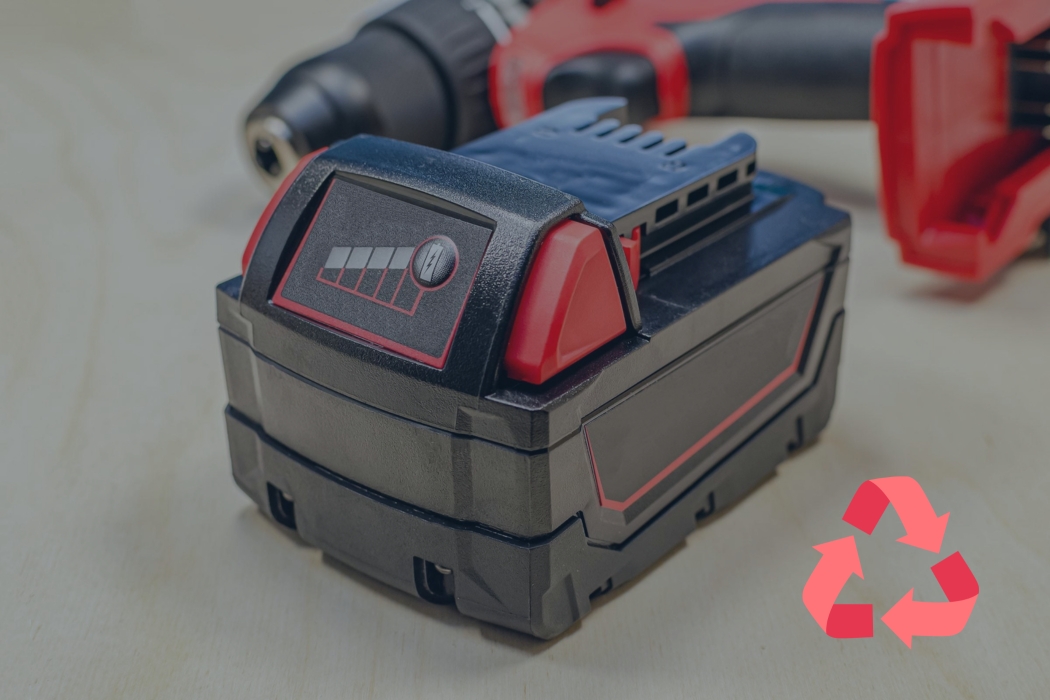
Drill battery recycling starts with one simple reality: these batteries are common, easy to store, and easy to forget about until they start piling up. They are small, but they are not something you should throw in the trash. Many modern drill batteries are lithium ion, while older ones may be NiCd or NiMH, and once a few dead packs start collecting in a garage, van, job box, or maintenance room, most people are not totally sure what the right next step is.
That is how the problem usually builds. Homeowners replace old drill batteries and keep the dead packs on a shelf. Contractors cycle through worn batteries as tools age. Maintenance teams manage tool inventory across buildings and job sites. Construction, facility, and property management operations often end up with boxes of old batteries that sat around longer than planned. If you’re dealing with drill battery recycling as part of a cleanup or tool turnover project, EACR Inc. is an electronics recycling company that can help with battery drop off, containers, and pickup support.
This guide shows what kind of batteries are in drills, how to recycle them, what options actually work, how to prep them safely, and what happens after collection.
Quick Answer: How to Recycle Drill Batteries
Most drill battery recycling projects fall into one of three routes:
- Manufacturer take-back or return label
Available through some brands for individual batteries or replacements - Battery drop-off containers
Best for small quantities like homeowner use or a few loose batteries - Scheduled pickup through EACR Inc.
Best for businesses, larger volumes, or ongoing battery disposal
Quick takeaway: A few batteries are easy to handle through drop-off. Larger quantities or repeat disposal usually make pickup the better option.
What Kind of Batteries Are in Drills?
Lithium ion batteries in modern drills
Modern cordless drills almost exclusively use lithium ion batteries. That is the standard now because they are lighter, deliver higher power output, and generally last longer than older battery types.
The most common voltages are 12V, 18V, and 20V. Common capacities usually range from 1.5Ah and 2.0Ah up through 4.0Ah, 6.0Ah, and higher for more demanding use. So while the tool may look simple from the outside, the battery packs themselves can vary a lot in size and output.
Older drill battery chemistries
Older drills may still use Nickel Cadmium, known as NiCd, or Nickel Metal Hydride, known as NiMH. These are less common in newer cordless tools, but they are still out there, especially in older homeowner tools, backup kits, and long kept equipment.
That matters because older battery chemistries should still be handled properly and not mixed into general trash.
Why battery type matters
Battery type matters because it affects handling, storage, prep, and the recycling stream itself. It also helps avoid the common mistake of tossing every old battery into one box without any idea what is actually in there.
The more clearly you identify the battery type upfront, the easier it is to manage the recycling process safely and cleanly. Read our entire post on the importance of battery chemistry when it comes to recycling.
Drill Battery Recycling Options
Option 1: Manufacturer take back or return label
This is usually best for single batteries, replacement purchases, or specific participating brands that already offer some kind of battery return support.
It can be a useful option when brand support is available, but not every battery qualifies and program rules vary. That is why it works well in some cases and not at all in others.
Option 2: Battery drop off
Battery drop off is usually best for homeowners, small contractors, or anyone dealing with a few loose batteries instead of a larger project.
The main thing is to confirm acceptance before going. It also helps to keep the batteries protected during transport and to separate damaged batteries if needed so the load stays cleaner and easier to handle.
Option 3: E-waste containers
E waste containers work well for property managers, offices, maintenance departments, and businesses with ongoing battery disposal. This is especially useful when old drill batteries tend to build up gradually over time.
The advantage is consistency. A container creates a central collection point, supports a cleaner storage process, and makes repeat battery turnover easier to manage instead of letting old packs pile up in random drawers, shelves, or job boxes.
Option 4: Scheduled pickup through EACR Inc.
Scheduled pickup is the strongest fit for contractors, construction companies, facilities, warehouses, and businesses dealing with large quantities, recurring battery disposal, or mixed battery collection projects.
The benefit is simple. There is no hauling required on your end, the process works better for larger loads, the logistics are easier to manage, and the handling is more controlled from the start. For recurring operational cleanup, pickup is often the most practical way to keep battery disposal organized.
Drill battery recycling gets a lot easier when you prepare the batteries the right way before they go anywhere. A little organization upfront makes the whole process safer, cleaner, and easier to manage whether you are dealing with a few loose packs or a larger battery cleanup.
How to Prepare Drill Batteries for Recycling
Step 1: Identify the battery type
Start by identifying what kind of batteries you actually have. Most modern drill batteries are lithium ion, but older ones may be NiCd or NiMH.
If it helps, note the brand or battery pack information too. That can make it easier to sort the batteries correctly and avoid mixing different types together without a plan.
Step 2: Separate damaged batteries
Take a quick look through the load and separate any batteries that look damaged. That includes swollen packs, cracked housings, leaking batteries, overheated units, or anything else that seems off.
Damaged or suspect batteries should not just be tossed in with the rest. Identifying them early helps keep the load safer from the start.
Step 3: Protect terminals
Battery terminals should be protected so exposed contact points are not bumping into each other during storage or transport. This helps reduce shorting risk and makes the load easier to handle safely.
It is a small step, but it matters, especially when multiple batteries are sitting together in one box or container.
Step 4: Store in a stable area
Keep the batteries in a cool, dry, organized location until they are ready for drop off or pickup. Try to keep them away from clutter, loose metal objects, and random storage conditions that make the project messier than it needs to be.
A stable setup helps prevent avoidable problems and makes the next step much easier.
Step 5: Sort by quantity and project type
Think about what kind of project you are actually dealing with. A few batteries from around the house is one thing. A mixed box of old tool batteries is another. Contractor or business volume is something else entirely.
Sorting by quantity and project type helps you choose the right recycling route instead of treating every situation the same way.
What Happens During Drill Battery Recycling?
Collection and sorting
Once collected, drill batteries are sorted by chemistry and condition. That helps determine what kind of downstream handling they need and keeps different battery types from being lumped together without a plan.
Routing into proper recycling channels
Lithium ion batteries usually go through one recycling path, while NiCd and NiMH batteries may follow different downstream processes. That is one reason identifying battery type earlier in the process makes such a difference.
Material recovery
During recycling, metals and other battery materials are separated and processed through the appropriate channels. The exact details vary by battery type, but the main goal is to route reusable materials properly instead of sending the whole pack into the trash stream.
Controlled handling for damaged units
Damaged or suspect batteries may need more careful handling during recycling. That is why swollen, cracked, leaking, or overheated packs should be identified early instead of being mixed into a general battery load and ignored.
Why Proper Drill Battery Recycling Matters
Safety
Drill batteries should not go in the trash. Damaged packs can create handling risks, and loose terminals can create avoidable problems during storage and transport.
A little prep goes a long way toward making the process safer.
Cleaner job sites and storage areas
Recycling gets dead battery packs out of vans, job boxes, shelves, and maintenance rooms. That alone makes a difference, especially when old batteries have been sitting around longer than they should.
Better battery management for businesses
For businesses, proper drill battery recycling creates a repeatable system instead of random storage piles and last minute cleanup. That makes future battery turnover easier to manage too.
Supports reusable material recovery
Battery recycling helps route battery materials through the right process so reusable components are handled properly instead of being wasted.
Frequently Asked Questions About Drill Battery Recycling
Can drill batteries be recycled?
Yes. Drill batteries can often be recycled, including lithium ion, NiCd, and NiMH battery packs.
Can I throw drill batteries in the trash?
No. Drill batteries should not be thrown in the trash.
Are drill batteries lithium ion?
Most modern cordless drill batteries are lithium ion, but older tools may use NiCd or NiMH.
Can old NiCd drill batteries be recycled too?
Yes. Older NiCd drill batteries can still be recycled through the proper battery recycling process.
Where can I take old drill batteries?
That depends on the quantity and the condition of the batteries. A few may be manageable through drop off, while larger loads are often better handled through containers or pickup.
Is pickup available for drill battery recycling?
Yes. Pickup is often the better option for businesses, larger quantities, or recurring battery disposal projects.
Do drill battery terminals need to be covered?
Protected terminals are a smart step because they help reduce shorting risk during storage and transport.
What should I do with a damaged drill battery?
Separate it right away and keep it out of the general battery load so it can be handled more carefully.
Can businesses recycle large quantities of drill batteries at once?
Yes. Businesses can recycle large quantities of drill batteries through container programs or scheduled pickup.
What happens to drill batteries after collection?
They are sorted by chemistry and condition, routed into the correct recycling channels, and processed so battery materials can be handled appropriately.
Conclusion
Most modern drill batteries are lithium ion, while older tools may still use NiCd or NiMH. Manufacturer take back, drop off, containers, and pickup are the main recycling routes, and proper prep helps keep the process safer and cleaner from the start. As battery volume increases, pickup usually becomes the better option.
If you’re dealing with drill battery recycling for a business, jobsite, or tool inventory cleanup, EACR Inc. is an electronics recycling company that can help with battery containers, pickup, and practical recycling support.