Thermostats are found in homes, offices, schools, healthcare facilities, warehouses, and commercial buildings. They are commonly replaced during HVAC upgrades, smart thermostat installations, renovations, and routine building maintenance.
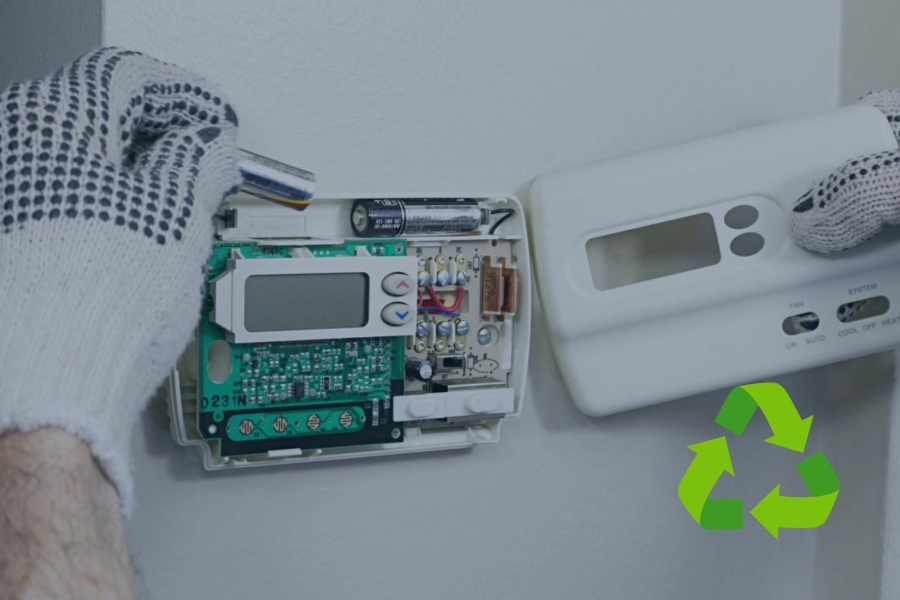
Although small, thermostats contain electronics, circuit boards, wiring, metals, plastics, and in some older models, sealed mercury switches. Because of these materials, they should not simply be thrown away. Responsible thermostat recycling helps recover reusable materials while keeping electronic waste out of landfills.
If your business or organization is replacing thermostats during an HVAC upgrade or facility renovation, EACR Inc., an electronics recycling company, can help through thermostat recycling services, e-waste pickup, collection containers, and electronics recycling programs.
Quick Answer: How Do You Recycle a Thermostat?
The best recycling option depends on the type of thermostat and how many you need to recycle.
Most Common Recycling Options
Most thermostats are recycled through one of three methods:
- Drop-off recycling
- Scheduled pickup
- E-waste collection containers
Drop-off recycling is often a good choice for homeowners or small quantities. Businesses, schools, healthcare facilities, and property managers replacing multiple thermostats often benefit from scheduled pickup or ongoing e-waste collection programs.
If you are recycling an older mechanical thermostat, keep in mind that some models contain sealed mercury switches. These units require special handling and should never be placed in household trash.
What’s Inside a Thermostat?
Although thermostats are relatively small, they contain a variety of electronic and recyclable materials.
Electronic Circuit Boards
Modern thermostats use printed circuit boards to control heating and cooling functions.
These circuit boards may include:
- Control electronics
- Microprocessors
- Sensors
- Electrical connectors
They allow the thermostat to monitor temperature, communicate with HVAC equipment, and operate programmable or smart features.
Wiring and Metal Components
Thermostats also contain several metal components that can often be recovered during recycling.
These may include:
- Copper wiring
- Steel fasteners
- Aluminum components
- Electrical contacts
These materials help provide electrical connections and structural support inside the thermostat.
Plastic Housing
The outer shell of a thermostat is usually made from durable plastic materials.
Plastic components commonly include:
- Front cover
- Display housing
- Internal supports
- Protective covers
Many of these plastics can be separated from the electronic components during the recycling process.
Temperature Sensors
Every thermostat contains a method for measuring room temperature.
Older thermostats often relied on mechanical sensing components, while newer digital and smart thermostats use electronic temperature sensors that provide more accurate readings and improved system control.
Batteries (Some Models)
Some programmable and smart thermostats use replaceable batteries.
These batteries provide backup power or help maintain settings during power interruptions. When present, batteries should typically be removed and recycled through the appropriate battery recycling stream.
Mercury Switches (Older Thermostats)
Some older mechanical thermostats contain sealed mercury switches.
Mercury was commonly used because it provided reliable electrical switching for heating and cooling systems. While the mercury is sealed inside the switch, these thermostats require special recycling and should be handled carefully to prevent damage.
What Can Be Recycled From a Thermostat?
A surprising amount of a thermostat can be recovered through responsible electronics recycling.
Recoverable Metals
Several metals commonly found inside thermostats can be separated during processing.
These include:
- Copper
- Steel
- Aluminum
Electronic Components
Thermostats also contain electronic components that may be recovered through electronics recycling.
Common examples include:
- Circuit boards
- Connectors
- Wiring
These components contain materials that can enter specialized recycling streams after processing.
Plastics
Many thermostat housings contain recyclable plastic components.
These may include:
- Outer housing
- Internal plastic pieces
- Covers
- Mounting components
The exact plastics vary by manufacturer and model.
Batteries (When Present)
When thermostats contain replaceable batteries, those batteries should typically be removed before recycling.
Because batteries often require their own recycling process, separating them helps ensure they are managed through the proper battery recycling stream.
Mercury Components (Older Models)
Mercury-containing thermostats require additional care.
Rather than being dismantled with other electronics, these units are managed separately to help ensure the mercury switch remains intact and is processed through the appropriate recycling channel.
Proper handling helps protect workers, reduce environmental risks, and support responsible mercury recovery.
Thermostat Recycling Options
There are several ways to recycle thermostats depending on the quantity, type of thermostat, and the needs of your organization.
Option 1: Drop-Off Recycling
Best For
Drop-off recycling is often appropriate for:
- Homeowners
- Single thermostats
- Small quantities
What to Expect
Before visiting a drop-off location, verify what materials are accepted.
Acceptance policies may vary, especially for older mercury-containing thermostats, which may require separate collection or additional handling procedures.
Option 2: Scheduled Pickup
Best For
Scheduled pickup is often the most practical option for:
- Businesses
- Schools
- Healthcare facilities
- Property management companies
- HVAC contractors
- Multi-building organizations
Benefits
Pickup services help simplify larger recycling projects by providing:
- Easier logistics
- Safe transportation
- Documentation
- Large quantity handling
This is especially useful during building renovations, HVAC replacements, and facility-wide thermostat upgrades.
Option 3: E-Waste Collection Containers
Ideal For
Organizations that regularly replace electronics often benefit from collection containers.
Common examples include:
- Facility maintenance departments
- Office buildings
- Schools
- Healthcare systems
- Warehouses
- Ongoing electronics recycling programs
Benefits
E-waste collection containers provide several advantages:
- Centralized collection
- Easier employee participation
- Supports continuous recycling efforts
Instead of waiting until equipment accumulates, organizations can collect thermostats and other electronics throughout the year before scheduling recycling.
Step-by-Step Thermostat Recycling Process
Thermostat recycling is fairly straightforward when you know what type of equipment you have and choose the right recycling option. Whether you’re replacing one thermostat or upgrading hundreds across multiple buildings, following a simple process helps make recycling safer and more efficient.
Step 1: Identify the Thermostats
Start by identifying exactly what you plan to recycle.
Make note of:
- Quantity
- Manufacturer
- Smart vs. mechanical thermostat
- Mercury-containing or electronic model
- Overall condition
If you’re managing a large facility, creating a simple inventory before removal can make scheduling pickup and organizing recycling much easier.
Step 2: Separate Batteries (If Applicable)
Some programmable and smart thermostats contain replaceable batteries.
When appropriate, remove these batteries before recycling the thermostat itself. Batteries should be routed through the proper battery recycling process rather than left inside collection containers intended for electronics.
If the batteries are not designed to be removed by the user, leave the unit intact and follow the manufacturer’s guidance.
Step 3: Identify Mercury Thermostats
Older mechanical thermostats may contain sealed mercury switches.
These units require additional care because mercury should be managed through the proper recycling process.
If you suspect a thermostat contains mercury:
- Handle it carefully.
- Do not break or dismantle the unit.
- Keep it intact until it reaches the appropriate recycling stream.
Proper handling helps prevent accidental mercury releases and supports responsible environmental management.
Step 4: Stage Equipment for Collection
Once the thermostats have been removed, prepare them for recycling.
Good staging practices include:
- Packaging equipment carefully
- Keeping mercury-containing units protected
- Separating damaged items
- Organizing equipment for pickup or drop-off
For larger projects, keeping equipment together in a designated collection area helps simplify transportation and inventory.
Step 5: Choose a Recycling Method
Select the recycling option that best fits your project.
Common choices include:
- Drop-off recycling
- Scheduled pickup
- E-waste collection containers
Homeowners with one or two thermostats may prefer drop-off recycling, while businesses, schools, healthcare facilities, and property managers often benefit from scheduled pickups or ongoing collection container programs.
Step 6: Processing and Material Recovery
After collection, thermostats move through the electronics recycling process.
Depending on the type of thermostat, processing may include:
- Sorting
- Component separation
- Electronics recycling
- Metal recovery
- Plastic recovery
- Proper mercury management when applicable
The goal is to recover as many reusable materials as possible while ensuring components that require specialized handling receive the appropriate treatment.
Frequently Asked Questions About Thermostat Recycling
Can thermostats be recycled?
Yes. Most thermostats contain recyclable electronics, metals, plastics, and wiring. Older mercury-containing models can also be recycled through the proper recycling channels.
Can I throw a thermostat in the trash?
It is generally not recommended. Older thermostats may contain mercury, and even newer electronic models contain materials that are better recovered through electronics recycling.
Do thermostats contain mercury?
Some older mechanical thermostats do. Many modern digital and smart thermostats do not contain mercury, but older models should always be checked before disposal.
Can smart thermostats be recycled?
Yes. Smart thermostats contain electronic components that can typically be recycled through electronics recycling programs.
Should thermostat batteries be removed before recycling?
If the batteries are user-replaceable, they should generally be removed and recycled through the appropriate battery recycling stream.
What materials are recovered from thermostats?
Depending on the model, recycling may recover copper, steel, aluminum, plastics, wiring, circuit boards, electronic components, and, when applicable, mercury through recycling programs.
Does EACR Inc. recycle thermostats?
Yes. EACR Inc. provides thermostat recycling services for businesses and organizations through e-waste pickup, collection containers, and responsible electronics recycling solutions.
Conclusion
Thermostats may be small, but they contain recyclable electronics, metals, plastics, wiring, and in some older models, batteries or sealed mercury switches that require proper handling.
Recycling these devices helps recover reusable materials while keeping electronic waste out of landfills. It also ensures older mercury-containing thermostats are managed safely instead of being discarded with regular trash.
Whether you’re recycling one thermostat or replacing hundreds during a facility upgrade, there are several convenient options available, including drop-off recycling, scheduled pickup, and e-waste collection containers.
If your business, school, healthcare facility, property, or organization is replacing thermostats during an upgrade or renovation, EACR Inc., an e-waste recycling company, can help simplify thermostat recycling through pickup services, e-waste containers, and responsible electronics recycling solutions.