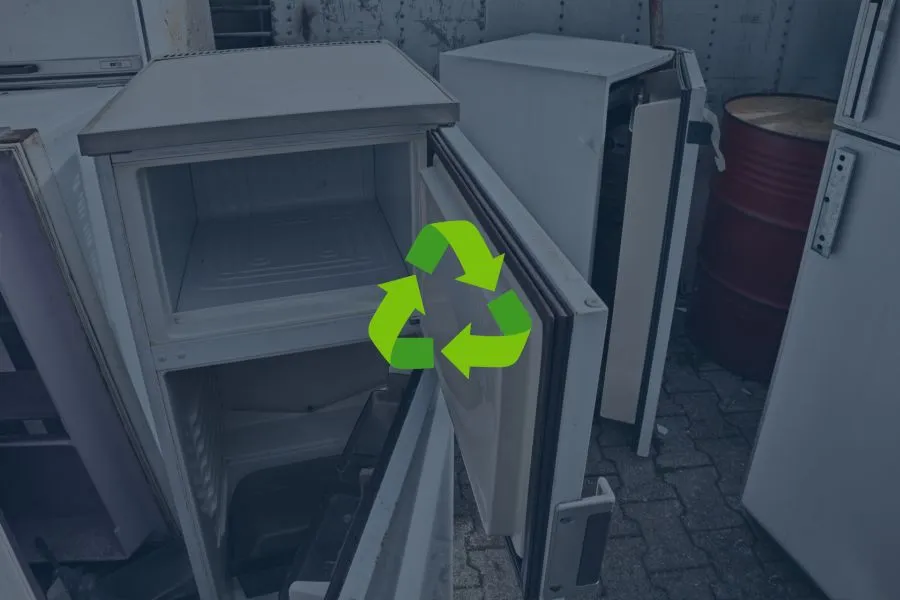
Old refrigerators contain more than scrap metal. Refrigerants, compressors, electronics, oils, plastics, insulation, wiring, and reusable metals all need to be handled through the proper recycling process.
This guide explains how refrigerator recycling works, where to take an old fridge, how to prepare it, and what businesses should know when managing multiple units. For larger projects, explore EACR Inc.’s e waste recycling services for pickup, drop off, and container options.
Quick Answer: How Do You Recycle a Refrigerator?
The best way to recycle a refrigerator depends on how many units you have and what services are available in your area. The main options include:
- Scheduled pickup: Best for businesses, facilities, property managers, schools, retailers, and larger refrigerator replacement projects.
- Drop off recycling: A practical choice when you can safely transport one or a few refrigerators to a recycling facility that accepts refrigerant containing appliances.
- E waste containers: Useful for organizations replacing refrigerators alongside electronics, appliances, computers, wiring, and other approved recyclable equipment.
Before choosing an option, confirm that the recycler accepts your type of refrigerator. Quantity, condition, location, transportation requirements, and the refrigerant inside the appliance can all affect how it should be handled.
What is Inside a Refrigerator?
A refrigerator contains several different materials and systems packed into one appliance. Some are reusable recyclable commodities, while others need more controlled handling during the recycling process.
Understanding what is inside also helps explain why a refrigerator should not simply be treated like ordinary household trash.
Refrigerant
Refrigerant circulates through the refrigerator’s cooling system and makes it possible for the appliance to transfer heat away from its interior.
Older refrigerators may contain different refrigerants than newer models, but the basic rule is the same: refrigerant should not simply be released when the appliance is dismantled.
That is one of the main reasons refrigerators should be sent through an appropriate appliance recycling process rather than taken apart casually.
Compressor
The compressor is one of the heaviest components inside a refrigerator. It circulates refrigerant through the cooling system and is generally housed in a sealed metal casing near the bottom or rear of the appliance.
A compressor may contain:
- Steel
- Copper windings
- Mechanical components
- Oil
- Residual refrigerant
Because it is part of the sealed refrigeration system, the compressor should not be punctured or cut open as a DIY recycling project.
Copper, Aluminum, and Steel
Refrigerators contain a significant amount of recyclable metal.
- Copper: can be found in wiring, tubing, motors, and other electrical components.
- Aluminum: may be present in cooling components, interior parts, and other sections of the appliance.
- Steel: makes up much of the refrigerator’s cabinet, frame, compressor shell, and structural components.
Recovering these materials keeps usable metals in circulation instead of disposing of an entire appliance as waste.
Electronics and Wiring
Modern refrigerators can contain much more electronics than older appliances.
Depending on the model, components may include:
- Circuit boards
- Control panels
- Digital displays
- Temperature sensors
- Wiring
- Motors
- Smart appliance electronics
Refrigerators with touchscreens, internet connectivity, ice makers, water dispensers, and advanced temperature controls can contain particularly complex electronic systems.
These components add another reason to treat an old refrigerator as recyclable equipment rather than ordinary trash.
Plastic, Glass, and Interior Components
The inside of a refrigerator also contains materials such as:
- Shelving
- Drawers
- Plastic liners
- Glass shelves
- Door bins
- Handles
- Interior panels
Not every material follows the same recycling path. During processing, components may need to be separated and routed according to material type and condition.
Insulation and Other Materials
Refrigerators rely on insulation to maintain a cold interior temperature efficiently. That insulation is built into the walls and doors of the appliance and is handled differently than straightforward commodities such as steel or copper.
There may also be seals, foam, adhesives, oils, and other materials that require separate downstream handling.
That mixture of reusable and regulated materials is why complete refrigerator recycling involves more than simply removing the metal shell.
Refrigerator Recycling Options
There is no single recycling option that works for every refrigerator.
Someone getting rid of one kitchen refrigerator may have very different needs from a property manager replacing 30 units or a business clearing appliances and electronics from an entire facility.
Scheduled Refrigerator Pickup
Scheduled pickup is often the most practical refrigerator recycling option for businesses and organizations dealing with multiple units.
It can be especially useful for:
- Commercial kitchens
- Apartment buildings
- Hotels
- Schools
- Hospitals
- Offices
- Retail stores
- Property renovations
- Facility cleanouts
- Appliance replacement projects
Instead of requiring employees or maintenance teams to transport appliances individually, a scheduled pickup allows the removal to be coordinated as part of the overall project.
This can reduce unnecessary handling, provide a clearer record of what was removed, and make it easier to route equipment through an appropriate recycling process.
Organizations replacing refrigerators together with computers, monitors, appliances, or other equipment can also coordinate the project through an electronics recycling pickup rather than treating each waste stream as a separate job.
Refrigerator Recycling Drop Off
Drop off recycling can work well when you only have one or a few refrigerators and have a safe way to transport them.
Before loading the refrigerator, contact the recycling facility and confirm that it accepts the appliance.
Ask about:
- Facility hours
- Recycling fees
- Refrigerant appliance acceptance
- Quantity limits
- Commercial versus residential restrictions
- Unloading requirements
Do not assume that every scrap yard or electronics recycling location accepts refrigerators. Appliances containing refrigerant may require different equipment, procedures, or approvals than ordinary electronics or metal.
E Waste Containers
For commercial projects, an e waste container program can be useful when refrigerator recycling is part of a larger cleanout or equipment replacement.
Depending on the program and what the recycler approves for the container, a project may include items such as:
- Refrigerators
- Electronics
- Computers
- Monitors
- Small appliances
- Wiring
- IT equipment
- Other approved recyclable equipment
Containers can be particularly useful for facilities that generate equipment gradually or need a central staging area during a renovation, technology refresh, or property cleanout.
Before loading refrigerators, always confirm the container’s acceptable materials, weight requirements, and loading rules.
Retailer or Manufacturer Take Back
Buying a new refrigerator may give you another disposal option.
Some appliance retailers offer haul away services when delivering a replacement refrigerator. Depending on the retailer and purchase, this may be included with delivery or available for an additional fee.
Manufacturer or utility sponsored programs may also be available in certain areas.
Before using one of these programs, confirm:
- Whether your old refrigerator qualifies
- Whether there is a fee
- When it will be removed
- Whether there are size or condition restrictions
- How the appliance will ultimately be managed
A haul away service is convenient, but it is still worth understanding where the refrigerator is going after it leaves your property.
How to Recycle a Refrigerator Step by Step
Preparing a refrigerator correctly makes transportation and recycling much easier.
You do not need to dismantle the appliance. In fact, some of the most important preparation steps involve leaving key components alone.
Step 1: Empty the Refrigerator
Remove everything from the refrigerator and freezer compartments.
That includes:
- Food
- Ice
- Liquids
- Containers
- Personal belongings
Businesses should also check drawers, freezers, storage bins, and shelving to make sure no inventory or facility materials remain inside.
If multiple refrigerators are being removed from a commercial property, assign someone to check each unit before it is staged for pickup.
Step 2: Unplug the Unit
Disconnect the refrigerator from electrical power before moving or staging it.
Avoid unnecessary dismantling.
You generally do not need to remove wiring, compressors, cooling lines, motors, or electronic components yourself. Keeping the unit intact makes it easier for the appropriate recycling process to take place later.
Step 3: Defrost and Drain It
If the refrigerator or freezer contains built up ice, allow it to defrost before transportation.
Remove any resulting water and make sure the interior is reasonably dry.
This reduces leaking during transportation and makes the appliance easier to handle.
For refrigerators with water dispensers or ice makers, disconnecting water connections may require additional preparation depending on the installation.
Step 4: Remove Loose Interior Items
Loose shelves and drawers can slide or break while the refrigerator is being moved.
Consider removing or securing items such as:
- Glass shelves
- Drawers
- Trays
- Ice bins
- Loose door compartments
If these components are staying with the refrigerator, secure them so they cannot shift during transportation.
Step 5: Do Not Remove the Refrigerant Yourself
One of the most important rules of refrigerator recycling is to leave the sealed refrigeration system alone.
Do not:
- Cut refrigerant lines
- Puncture the compressor
- Drain refrigerant
- Break open sealed cooling components
- Attempt DIY refrigerant recovery
Removing refrigerant requires appropriate equipment and knowledge.
Trying to turn an old refrigerator into scrap metal yourself can create unnecessary environmental, safety, and compliance problems.
If the unit still contains refrigerant, let the appropriate professional or recycling facility handle that part of the process.
Step 6: Choose Your Recycling Method
Once the refrigerator is emptied and prepared, select the most appropriate recycling option.
As a general rule:
- Drop off can work well for one or a few units.
- Scheduled pickup is usually more practical for business quantities.
- Containers can work for ongoing equipment recycling or larger mixed equipment projects when refrigerators are approved for the program.
Confirm acceptance before transporting or loading the refrigerator.
Step 7: Keep Records for Business Recycling
Businesses and institutions should treat refrigerator recycling as part of their equipment management process.
Useful records may include:
- Pickup records
- Number of refrigerators removed
- Equipment descriptions
- Facility or site information
- Service dates
- Condition notes
- Certificates of Recycling
Keeping organized records can support internal sustainability reporting, property management documentation, vendor oversight, and future equipment replacement projects.
When available, retain a certificate of recycling with your other disposal records.
Why Refrigerators Should Not Go in the Trash
A refrigerator is not just a large metal box.
Its size, refrigerant system, electronics, compressor, insulation, and recoverable materials make ordinary trash disposal a poor fit.
- Refrigerants require proper handling: If the sealed cooling system is damaged, refrigerant can escape instead of being managed through the proper recycling process.
- Reusable materials can be recovered: Refrigerators contain steel, copper, aluminum, wiring, electronics, plastics, and compressor components that may be recycled instead of discarded.
- Refrigerators are difficult to dispose of as ordinary trash: Their size, weight, and sealed components make appliance specific recycling or collection programs a much better option.
- Businesses may need a more coordinated process: Facilities replacing multiple refrigerators often need to manage pickups, loading access, inventory, documentation, and other appliance or electronic waste at the same time.
For a closer look at how large this waste stream really is, explore our refrigerated appliance waste statistics, including U.S. end of life estimates, global recycling rates, and refrigerant recovery data.
Frequently Asked Questions About Refrigerator Recycling
Can refrigerators be recycled?
Yes. Refrigerators contain recyclable materials such as steel, copper, aluminum, wiring, and electronics, but refrigerants and sealed cooling components require proper handling.
Can I throw a refrigerator in a dumpster?
Generally, no. Refrigerators may contain refrigerants and other components that require special handling, and local disposal rules can vary.
Where can I recycle an old refrigerator?
You may be able to use an appliance recycling facility, an electronics recycler that accepts refrigerators, a municipal program, a retailer take back program, or a scheduled commercial pickup. Always confirm acceptance before transporting the unit.
Do refrigerators contain Freon?
Some older refrigerators contain refrigerants commonly associated with the Freon name, while newer models may use different refrigerants. Check the appliance label or manufacturer information if you need to identify the specific type.
Do I need to remove the refrigerant before recycling a refrigerator?
No. Consumers and businesses should generally leave the sealed cooling system intact and let a qualified recycler or service provider handle the refrigerant.
Can refrigerator compressors be recycled?
Yes. Refrigerator compressors contain materials such as steel and copper, but they may also contain oil or residual refrigerant and should remain part of the controlled recycling process.
Will EACR Inc. pick up refrigerators from businesses?
EACR Inc. can help businesses and organizations coordinate recycling for qualifying refrigerator and appliance projects. Pickup options depend on factors such as location, quantity, equipment type, and access requirements.
Can multiple refrigerators be placed in an e waste container?
Potentially, but refrigerators should only be placed in a container if the recycler confirms they are accepted. Container requirements can vary based on equipment type, quantity, size, weight, and project conditions.
Conclusion
Refrigerator recycling is much easier when you approach it as a simple process: empty and prepare the refrigerator, keep the refrigerant system intact, confirm where the appliance is accepted, and choose the right drop off, pickup, or container option.
For businesses, the process becomes even more important when several appliances or locations are involved.
If your organization is replacing refrigerators, electronics, appliances, or other equipment, explore EACR Inc.’s electronic recycling services. EACR Inc. can help coordinate scheduled pickups, container programs, responsible recycling, and documentation for qualifying commercial projects.