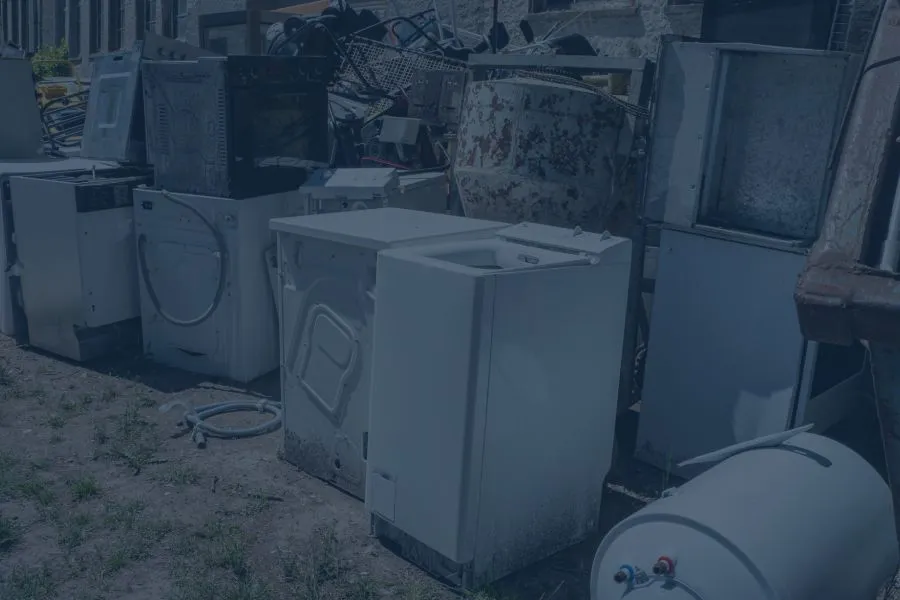
According to the U.S. Environmental Protection Agency, an estimated 11 to 13 million refrigerated household appliances reach the end of their life in the United States every year. The category includes refrigerators, freezers, window air conditioners, and dehumidifiers.
The scale is also significant globally. According to the International Telecommunication Union’s Global E-waste Monitor 2024, 13.3 million tonnes of temperature exchange equipment became e-waste worldwide in 2022. Only 3.6 million tonnes, or 27%, was documented as formally collected and recycled.
Refrigerated appliances are different from many other large appliances because their end of life management involves more than recovering steel, plastics, and other materials. Refrigerants must also be properly managed because some can contribute significantly to climate change or ozone depletion when released.
Businesses, facilities, municipalities, and property managers replacing old refrigeration equipment can learn more about EACR’s refrigerator recycling services.
Refrigerated Appliance Waste Statistics at a Glance
The available data shows both the size of the waste stream and the importance of properly managing the appliances that enter it.
- 11 to 13 million appliances: Estimated refrigerated household appliances reaching end of life in the United States each year.
- 13.3 million tonnes: Temperature exchange equipment that became e-waste worldwide in 2022.
- 3.6 million tonnes: Temperature exchange equipment documented as formally collected and recycled worldwide in 2022.
- 27%: Documented formal collection and recycling rate for temperature exchange equipment.
- More than 9 million appliances: Refrigerated appliances processed through EPA’s Responsible Appliance Disposal program between 2006 and 2025.
- 1.5 billion pounds: Metals, plastics, and other durable materials recycled through the RAD program.
- More than 543,000 components: Internal appliance components containing hazardous substances safely managed through the program.
- 41 million tonnes CO2e: Estimated greenhouse gas emissions avoided globally in 2022 through the recovery of refrigerants from temperature exchange equipment.
These numbers measure different things. The U.S. figure counts individual refrigerated household appliances, while the global figures measure the weight of a broader equipment category. They should not be treated as interchangeable.
How Many Refrigerated Appliances Reach End of Life?
EPA estimates that 11 to 13 million refrigerated household appliances reach end of life every year in the United States.
That includes millions of refrigerators, freezers, window air conditioning units, and dehumidifiers that eventually need to be removed from service and managed.
The number is important because these products are not ordinary household trash. A refrigerator or freezer can contain refrigerant, compressor oil, metals, plastics, insulation, and other components that may require different handling once the appliance is retired.
What Does End of Life Mean?
An appliance reaching the end of life does not automatically mean it goes directly into a landfill.
EPA notes that collected appliances can follow several paths. Some may be resold or reused. Others may be recycled. Appliances that are ultimately disposed of still require appropriate refrigerant recovery and management of certain components before final disposal.
The important statistical point is that 11 to 13 million refrigerated appliances require some form of end of life management in the United States every year.
That creates a large recurring stream of equipment rather than a one time waste issue.
13.3 Million Tonnes of Cooling Equipment Became E-Waste
The Global E-waste Monitor provides a broader picture of the problem.
In 2022, the world generated 13.3 million tonnes of e-waste classified as temperature exchange equipment.
This category is broader than refrigerators alone. It includes equipment such as:
- Refrigerators
- Freezers
- Air conditioners
- Heat pumps
- Other temperature exchange equipment
That distinction matters.
It would be inaccurate to say that 13.3 million tonnes of refrigerators became waste in 2022. The statistic measures the entire temperature exchange equipment category.
Still, the category is one of the largest individual components of the global e-waste stream. The Global E-waste Monitor reported 62 million tonnes of total e-waste in 2022, meaning temperature exchange equipment represented more than one fifth of the global total.
Only 27% Was Formally Collected and Recycled
Of the 13.3 million tonnes generated, approximately 3.6 million tonnes was documented as formally collected and recycled.
That equals a formal collection and recycling rate of 27%.
Put another way, approximately 73% was not documented as entering formal collection and recycling systems.
That does not mean 73% went directly into landfills.
Equipment outside documented formal recycling systems can follow different pathways, including reuse, storage, informal processing, disposal, export, or other undocumented channels. The 27% figure tells us what was formally documented. It does not tell us that every remaining appliance had the same outcome.
Even with that qualification, the collection gap is substantial. More than 9 million tonnes of temperature exchange equipment generated in 2022 was outside the documented formally collected and recycled total.
Why Refrigerants Make Appliance Waste Different
A refrigerator is valuable as a recycling stream partly because of the physical materials it contains, but refrigerated appliances also present another issue: refrigerants.
Older refrigerators, freezers, window air conditioners, and dehumidifiers may contain chlorofluorocarbons or hydrochlorofluorocarbons. Later equipment increasingly moved toward other refrigerants, including hydrofluorocarbons.
Some older appliances can also contain ozone depleting substances in their insulation foam.
That means proper recycling can address two separate issues at once.
The appliance contains metals, plastics, and other materials that may be recovered, while its refrigerant and certain other components require appropriate management.
Refrigerant Recovery Avoided 41 Million Tonnes of CO2e
The climate impact of refrigerant recovery is measurable.
The Global E-waste Monitor estimates that formal e-waste management avoided approximately 93 million tonnes of carbon dioxide equivalent emissions in 2022.
Of that total, approximately 41 million tonnes CO2e came from recaptured refrigerants.
Another 52 million tonnes CO2e was associated with avoiding emissions from primary metal mining through the use of recovered materials.
For refrigerated appliances, the 41 million tonne figure is particularly important.
It shows that the environmental value of appropriately managing temperature exchange equipment extends beyond scrap metal recovery. Capturing refrigerants before they are released can produce a separate and substantial emissions benefit.
What EPA’s Responsible Appliance Disposal Program Accomplished
EPA’s former Responsible Appliance Disposal program provides a useful real world example of what organized refrigerated appliance recovery can accomplish.
The voluntary program operated from 2006 through 2025 and worked with utilities, retailers, manufacturers, governments, and other organizations.
During its lifetime, RAD partners processed more than 9 million refrigerated appliances.
EPA also reports that the program avoided ozone depleting substance and HFC emissions equivalent to the energy needed to power approximately 5 million homes annually.
The program ended in 2025, but its cumulative figures provide a documented record of large scale refrigerated appliance management.
1.5 Billion Pounds of Materials Were Recycled
RAD participants recycled approximately 1.5 billion pounds of metals, plastics, and other durable materials from the refrigerated appliances they processed.
That equals roughly 750,000 tons of materials.
This is why an old refrigerator should not simply be viewed as one bulky object.
The cabinet, structural materials, wiring, compressor, and other components contain substantial quantities of material that can potentially move into recovery streams when appliances are properly processed.
Across millions of appliances, those individual quantities become a large material stream.
More Than 543,000 Hazardous Components Were Managed
RAD participants also safely managed more than 543,000 internal appliance components containing hazardous substances, including components associated with mercury and contaminated oils.
This reinforces why refrigerator recycling involves more than recovering the largest pieces of metal.
Older appliances may contain several components or substances requiring specific handling before the remaining materials move through recycling.
More Than 9 Million Appliances Were Processed
The program’s 9 million plus appliances also needs context.
EPA currently estimates that 11 to 13 million refrigerated household appliances reach end of life in the United States every single year.
RAD’s more than 9 million appliances were processed across the program’s entire 2006 through 2025 lifespan.
That does not mean the program handled most refrigerated appliances discarded in the United States. RAD was a voluntary partnership program representing one documented portion of the much larger national appliance stream.
The comparison actually demonstrates how large that broader stream is.
What Happens When Refrigerated Appliances Are Recycled?
The exact recycling process varies by appliance, age, condition, and equipment type, but refrigerated appliance processing can involve several separate steps.
These may include:
- Recovering refrigerant
- Managing compressor oil
- Removing certain hazardous components
- Recovering metals
- Separating plastics and other materials
EPA notes that almost all materials contained in refrigerators and freezers can potentially be recycled or otherwise managed.
The important point for this article is not the step by step recycling process. It is what that process means when multiplied across millions of retired appliances.
Proper collection creates an opportunity to recover refrigerant, manage specific components, and return significant amounts of durable material to recycling streams.
Conclusion
Millions of refrigerated appliances reach retirement every year, while global temperature exchange equipment waste is already measured in tens of millions of tonnes.
The available data also shows a significant collection gap. Only about 27% of temperature exchange equipment waste was documented as formally collected and recycled in 2022.
For refrigerators and similar equipment, proper end of life management also has benefits beyond recovering metals and plastics. Refrigerant recovery alone accounted for an estimated 41 million tonnes of avoided CO2 equivalent emissions globally in 2022.
Organizations replacing refrigerators, freezers, display coolers, ice makers, and other refrigeration equipment can learn more about EACR’s refrigerator recycling services and available options for retired equipment.