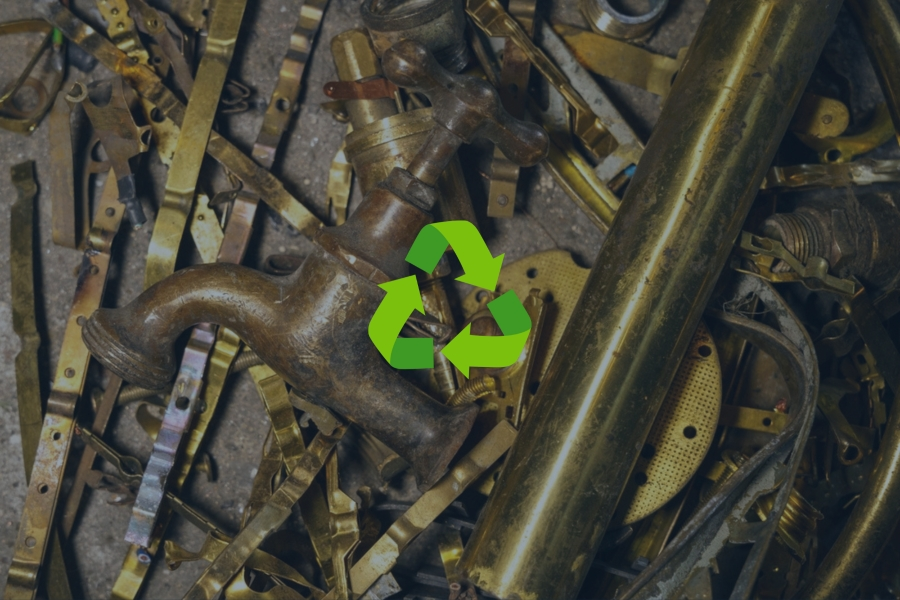
Brass recycling involves collecting, sorting, identifying, and processing brass scrap so reusable metal can be recovered instead of discarded. If your business generates brass scrap, EACR Inc. offers metal recycling services that can help with pickup, collection containers, and ongoing recycling programs. The best recycling option depends on how much brass you have, what form it is in, and whether it is mixed with other materials.
Common brass recycling options include:
• Scheduled pickup for businesses with larger quantities
• Drop off recycling for smaller loads
• Scrap collection containers for ongoing programs
• Manufacturing scrap recycling for production waste
• Industrial recycling programs for facilities generating brass regularly
Clean, sorted brass is usually easier to handle than mixed loads containing plastic, steel, aluminum, or other metals.
What is Brass?
Brass is a metal alloy made primarily from copper and zinc. The exact amount of each metal can vary depending on how the brass will be used.
Brass is known for being:
• Strong
• Corrosion resistant
• Easy to machine and shape
• Naturally antimicrobial
• Suitable for both decorative and industrial uses
It is commonly found in plumbing systems, electrical components, architectural hardware, marine equipment, machinery, and manufacturing materials.
Because brass comes in many grades and compositions, two items that look similar may contain different amounts of copper, zinc, lead, tin, or other alloying elements. That is why proper identification and sorting matter during recycling.
Why Brass Should Be Recycled
Brass can be processed and used again without losing the properties that make it useful. Recycling helps keep reusable copper and zinc in circulation instead of sending them to landfills.
Brass recycling can help:
• Recover reusable metal
• Reduce unnecessary landfill waste
• Lower demand for newly mined copper and zinc
• Support more responsible manufacturing
• Help businesses manage production scrap
• Clear out obsolete fixtures, equipment, and components
For manufacturers, contractors, and industrial facilities, recycling also creates a more organized way to manage offcuts, rejected parts, machining scrap, and old equipment.
Common Brass Materials That Can Be Recycled
Brass scrap can come from finished products, manufacturing operations, construction projects, repairs, and equipment replacements.
Brass Plumbing Fixtures
Plumbing systems are one of the most common sources of brass scrap.
Recyclable items may include:
• Faucets
• Valves
• Pipe fittings
• Hose bibs
• Water meters
• Plumbing hardware
• Connectors and couplings
Some plumbing fixtures may still have plastic, rubber, steel, or other materials attached. Removing those materials when practical can make sorting easier.
Brass Manufacturing Scrap
Manufacturers often generate brass scrap during cutting, stamping, forming, and assembly.
Common examples include:
• Offcuts
• Bar stock
• Plate
• Rods
• Tubes
• Stampings
• Production scrap
• Rejected components
• Excess inventory
Keeping known brass grades separate from mixed production scrap can help simplify recycling.
Brass Turnings and Machining Scrap
Machine shops generate brass turnings, chips, shavings, and grindings during CNC machining, milling, drilling, and finishing.
Common forms include:
• CNC turnings
• Milling chips
• Drill shavings
• Grinding scrap
• Small machined offcuts
Brass machining scrap should be kept separate from steel, aluminum, and stainless steel whenever possible. Excess cutting oil, coolant, and shop debris can also complicate processing, so clean and dry material is generally easier to recycle.
Brass Electrical Components
Brass is widely used in electrical products because it conducts electricity, resists corrosion, and can be machined into precise shapes.
Recyclable electrical materials may include:
• Connectors
• Electrical terminals
• Switch components
• Bus bars
• Electrical contacts
• Plug components
• Connector pins
These parts may be attached to plastic housings, wires, circuit boards, or other materials that need to be separated during processing.
Brass Hardware and Industrial Components
Brass is also common in hardware, machinery, marine equipment, and architectural products.
Examples include:
• Bearings
• Bushings
• Gears
• Locks
• Hinges
• Marine hardware
• Fasteners
• Decorative architectural components
• Pumps
• Industrial valves
• Machine components
Even small brass parts can add up quickly during facility cleanouts, renovations, or equipment replacement projects.
Common Brass Alloys Recycled
Brass is available in many alloy families. Each one has a different balance of copper, zinc, and other elements based on its intended use.
Yellow Brass
Yellow brass is one of the most common types of brass. It is widely used in plumbing fixtures, hardware, fittings, locks, and decorative products.
It usually has a bright yellow or gold appearance and contains a higher percentage of zinc than red brass.
Red Brass
Red brass contains more copper than yellow brass and often includes small amounts of tin or lead.
It is known for strong corrosion resistance and is commonly found in:
• Valves
• Pumps
• Water meters
• Plumbing fittings
• Marine components
Its reddish appearance can help distinguish it from yellow brass, but visual identification alone is not always reliable.
Cartridge Brass
Cartridge brass is known for its strength, flexibility, and ability to be formed into precise shapes.
It is commonly used in:
• Cartridge casings
• Radiator components
• Tubing
• Precision stamped parts
• Industrial components
Spent casings and production scrap should be properly inspected and handled before recycling.
Naval Brass
Naval brass is designed for marine and high moisture environments. It typically includes tin, which helps improve corrosion resistance.
Common applications include:
• Marine hardware
• Propeller shafts
• Valves
• Pumps
• Ship fittings
• Coastal industrial equipment
Free Machining Brass
Free machining brass is designed to cut cleanly and efficiently during CNC machining.
It is commonly used for:
• Precision fittings
• Fasteners
• Connectors
• Valves
• Instrument components
• Small machined parts
This alloy often generates consistent turnings and chips, making it common in machine shop recycling programs.
How to Prepare Brass for Recycling
A little sorting before pickup can make brass recycling much easier.
Separate Brass from Other Metals
Keep brass separate from copper, bronze, stainless steel, aluminum, and general mixed scrap whenever possible.
Brass and bronze can look similar, but they are different alloys and may need to be processed separately.
Separate Clean Brass from Mixed Scrap
Clean brass usually means brass with little or no other material attached. Mixed brass may include plastic handles, rubber seals, steel screws, wiring, or other components.
Keeping clean brass separate helps reduce sorting later.
Remove Non-Metal Materials When Practical
Remove easy-to-separate materials such as:
• Plastic
• Rubber
• Wood
• Insulation
There is no need to completely dismantle every item, but removing obvious attachments can simplify recycling.
Sort by Material Type
When possible, separate brass into groups such as:
• Plumbing fixtures
• Turnings and machining scrap
• Electrical components
• Manufacturing scrap
• Hardware and industrial parts
Label Large Loads
For drums, pallets, or containers, include:
• Material type
• Estimated quantity
• Source or department
• Condition
What Affects Brass Recycling Options?
The best recycling option depends on several factors:
• Brass alloy
• Cleanliness
• Total quantity
• Turnings versus solid pieces
• Mixed metals or attached materials
• Transportation requirements
• Whether the scrap is generated once or on an ongoing basis
A few clean brass fixtures may be suitable for drop-off, while drums of turnings or pallets of production scrap may require scheduled pickup.
Brass Recycling Options Through EACR Inc.
Scheduled Pickup
Scheduled pickup is often best for:
• Manufacturers
• Plumbing companies
• Machine shops
• Contractors
• Industrial facilities
This option works well for larger loads, facility cleanouts, and ongoing production scrap.
Drop-Off Recycling
Drop-off may be suitable for smaller quantities of sorted brass.
Businesses should confirm accepted materials and any preparation requirements before arriving.
E-Waste Collection Containers
E-waste collection containers help facilities manage brass generated on a regular basis.
They are especially useful for machine shops, manufacturers, maintenance departments, and contractors with recurring scrap.
What Happens After Brass is Collected?
After collection, brass is typically:
- Received and inspected
- Sorted by alloy and material type
- Separated from contaminants and attached materials
- Consolidated with similar brass scrap
- Sent through the appropriate recycling channels
The recovered brass can then return to manufacturing supply chains as reusable material.
Frequently Asked Questions About Brass Recycling
Can brass be recycled?
Yes. Brass can be recovered from plumbing fixtures, manufacturing scrap, hardware, electrical components, and industrial equipment.
What brass items can be recycled?
Common items include valves, faucets, fittings, rods, tubes, turnings, electrical terminals, locks, hinges, bearings, and production scrap.
Is brass worth recycling?
Yes. Brass contains reusable copper and zinc that can be recovered and returned to manufacturing.
Can brass plumbing fixtures be recycled?
Yes. Faucets, valves, fittings, hose bibs, and water meters are commonly recycled.
Can brass turnings be recycled?
Yes. Brass turnings and machining chips can be recycled when kept separate from other metals and excess fluids.
Should brass be separated from copper?
Yes. Brass and copper should be kept separate because they have different compositions and recycling paths.
What industries recycle brass?
Plumbing, manufacturing, machining, construction, electrical, marine, and industrial facilities commonly generate recyclable brass.
Can EACR Inc. pick up brass scrap?
Yes. EACR Inc. can help businesses coordinate pickup for brass scrap, production waste, fixtures, and industrial components.
What documentation should businesses keep?
Keep records of pickup dates, quantities, material types, locations, and certificates of recycling.
How do I request brass recycling services?
Contact EACR Inc. with the material type, estimated quantity, location, and whether you need pickup, drop-off, containers, or multi-site support.
Conclusion: Recycling Brass the Right Way
Brass recycling is easier when businesses identify what they have, separate it from other metals, keep materials organized, and work with a licensed recycling company. Whether you have brass fixtures, machining scrap, production offcuts, or industrial components, EACR Inc.’s metal recycling services can help with scheduled pickups, collection containers, ongoing recycling programs, and documentation for manufacturers, contractors, machine shops, and industrial facilities.