New Jersey battery disposal rules depend on the type of battery involved. Household alkaline batteries are treated differently from rechargeable batteries, nickel-cadmium and sealed lead rechargeable batteries have specific disposal restrictions, and EV propulsion batteries are covered under a separate state law.
For residents and businesses, the main takeaway is simple: identify the battery chemistry first, then follow the disposal or recycling requirements that apply to that battery type.
EACR Inc. provides battery recycling services for New Jersey businesses, schools, municipalities, facilities, and other organizations managing spent batteries.
Quick Guide to New Jersey Battery Rules
| Battery Type | New Jersey Rule |
| Household alkaline | Generally may go in regular trash |
| Rechargeable batteries | Should be recycled |
| Nickel-cadmium | Cannot be disposed of as solid waste |
| Sealed lead rechargeable | Cannot be disposed of as solid waste |
| Button cell | Should be handled separately |
| Lithium-ion | Should be recycled |
| EV propulsion batteries | Covered by separate NJ end-of-life rules |
Household Battery Disposal in New Jersey
Alkaline Batteries
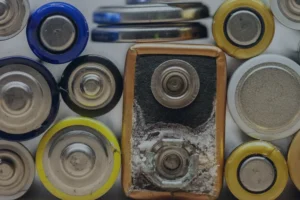
According to the New Jersey Department of Environmental Protection (NJDEP), modern household alkaline batteries fall below applicable federal and state hazardous-waste standards and can generally be placed in regular household trash.
Residents who prefer to recycle alkaline batteries can still check local collection programs for available options.
Rechargeable Batteries
According to NJDEP, rechargeable batteries should be recycled. Its household guidance specifically identifies nickel-cadmium, nickel-metal hydride, lithium-ion, nickel-zinc, and small sealed lead batteries. batteries
Residents may be able to use participating retailers, county collection programs, or household hazardous waste events depending on the battery and location.
Button Cell Batteries
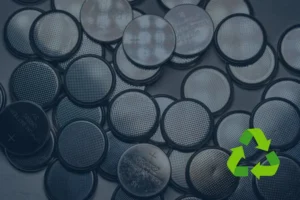
According to Union County, button cell batteries require separate handling and can be brought to applicable household hazardous waste events.
Batteries should also be prepared for transportation in a way that prevents short circuits. NJDEP guidance instructs residents to individually bag certain batteries or tape their terminals before recycling. batteries.
Nickel-Cadmium and Sealed Lead Battery Rules
Solid Waste Disposal is Prohibited
According to New Jersey Revised Statutes § 13:1E-99.69, used nickel-cadmium rechargeable batteries and used sealed lead rechargeable batteries may not knowingly be disposed of as solid waste.
For household batteries, the statute provides options that can include retailer take-back, county household hazardous waste programs, municipal recycling programs where applicable, or another approved battery management option.
Recycling Options
Residents should use an appropriate battery collection or recycling program instead of placing these batteries in the trash.
Businesses managing larger quantities can work directly with EACR Inc. to coordinate battery collection and recycling based on chemistry, quantity, and condition.
Lead-Acid Battery Recycling in New Jersey
Lead-acid batteries should be directed into an appropriate recycling stream rather than ordinary waste. This can include batteries used in:
- Vehicles
- Marine equipment
- Backup power systems
- Industrial equipment
For sealed lead rechargeable batteries specifically, New Jersey law prohibits disposal as solid waste.
Businesses handling larger quantities should also consider battery condition, storage, transportation, and whether any batteries are damaged before arranging recycling.
New Jersey EV Battery Recycling Regulations
Electric and Hybrid Vehicle Battery Management Act
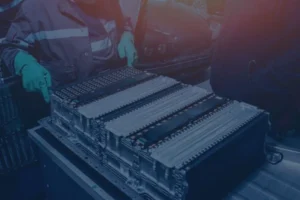
The Electric and Hybrid Vehicle Battery Management Act applies to propulsion batteries used in electric and hybrid road vehicles. The law specifically includes lithium-ion and nickel-metal hydride propulsion batteries.
EV Batteries Cannot Be Disposed of as Solid Waste
Propulsion batteries, battery modules, and battery cells cannot be disposed of as solid waste, and solid waste facilities cannot knowingly accept them for disposal.
The law’s disposal prohibition becomes explicit beginning in January 2027, when unauthorized disposal of EV batteries and their subcomponents as solid waste is prohibited.
Producers Are Responsible for End-of-Life Management
New Jersey’s law places responsibility on EV battery producers for managing propulsion batteries at the end of their useful life, including collection, transportation, recycling, reuse, and repurposing.
The New Jersey legislation also requires producer battery management plans to address collection, transportation, remanufacturing, reuse, recycling, and financing.
Where EV Batteries Can Go
A propulsion battery can be directed to a location identified through the producer’s battery management plan or to an authorized recycling center.
EACR Inc. works with organizations managing retired EV batteries and other large-format battery systems. Contact us to discuss the battery type, condition, quantity, and recycling needs.
How New Jersey Businesses Should Handle Used Batteries
Businesses should first identify:
- Battery chemistry
- Quantity
- Condition
- Whether any batteries are damaged
- Storage requirements
- Transportation requirements
Commercial battery management can differ from household guidance, especially when larger quantities, lithium batteries, or damaged batteries are involved.
Related guides from EACR Inc. can help with battery shipping labels, damaged, defective, and recalled batteries, and battery recycling services.
Recycle Batteries in New Jersey With EACR Inc.
New Jersey does not regulate every battery the same way. The correct recycling or disposal method depends on battery chemistry and use, with specific requirements applying to rechargeable batteries, nickel-cadmium batteries, sealed lead batteries, and EV propulsion batteries.
EACR Inc. helps New Jersey businesses, schools, municipalities, facilities, and other organizations recycle batteries based on chemistry, quantity, and condition.
Contact EACR Inc. to discuss your battery recycling project.