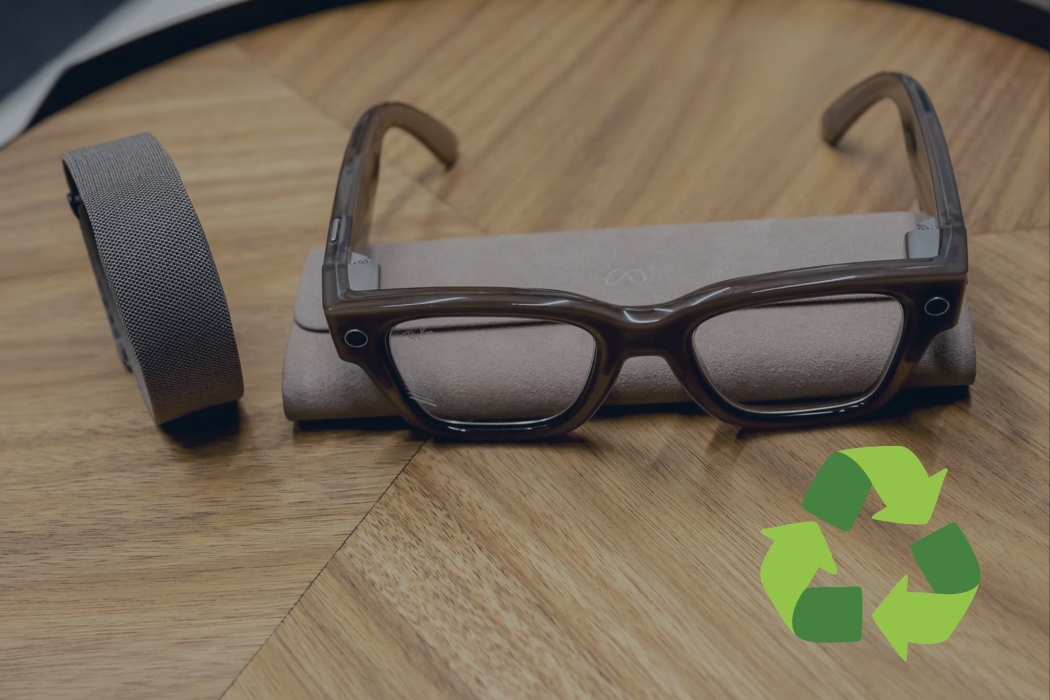
Smart glasses are not just eyewear anymore. Meta Ray-Ban glasses combine traditional frames and lenses with batteries, cameras, microphones, speakers, microprocessors, and circuit boards.
That means they should not be treated like regular sunglasses when they stop working. Because they contain electronic components and lithium-ion batteries, they should not be thrown in the trash. As wearable technology becomes more common, planning for proper Meta glasses recycling is becoming more important for both individuals and businesses.
Need to recycle smart glasses, electronics, or other e-waste? Contact our e-waste recycling company for pickup, drop-off, or container options.
What Are Meta Glasses Made Of?
Meta glasses look simple from the outside, but they are built with a mix of eyewear materials and electronic components. That combination is exactly why they need proper e-waste handling.
Frames and Lenses
The frames are commonly made with lightweight recycled acetate, which helps keep the glasses comfortable enough for daily wear. The lenses may include TAC polarized lenses for glare reduction and UV protection, while some versions use Transitions lenses that adjust to changing light.
Even though the frame and lens design feels similar to regular eyewear, the built-in electronics make these glasses much more complex at the end of their life.
Batteries and Electronics
Meta Ray-Ban glasses include a rechargeable lithium-ion battery, microprocessors, a 12MP camera, microphones, small speakers, and internal wiring. These parts allow the glasses to capture photos, record video, take calls, play audio, and support smart features.
They also use flexible circuit boards that route power and signals through the frame. These small components are not designed to be tossed in regular trash, especially when a battery is involved.
Advanced Display Components
Newer smart glasses with display features may include more advanced parts, such as an LCOS projector and reflective waveguides built into the lens system. Meta’s Orion AR prototype has also used a lightweight magnesium frame to support a slimmer wearable design.
As smart glasses become more advanced, recycling becomes more important because the products contain an even wider mix of materials, electronics, and battery components.
Why Should You Plan to Recycle Meta Glasses?
Meta glasses should be recycled because they contain mixed materials that need to be separated and processed properly. They are not just plastic frames or regular lenses. They are small electronic devices built into eyewear.
Lithium-ion batteries can also create fire risks when they are damaged, crushed, or handled incorrectly. That is one of the biggest reasons smart glasses should go through an e-waste recycling process instead of a household trash bin.
Another issue is repairability. Smart glasses can be difficult to take apart, and non-replaceable batteries may make them more likely to become e-waste once the battery stops holding a charge.
Recycling helps route reusable metals, plastics, and electronic components into the proper recovery process while keeping batteries and electronics out of landfills.
Meta Glasses Recycling Options
The right recycling option depends on how many devices you have, where they are located, and whether you are recycling as an individual or a business.
Scheduled E-Waste Pickups
Scheduled pickups are best for businesses, offices, schools, retailers, healthcare facilities, and organizations with bulk electronics. If you have multiple pairs of smart glasses, phones, laptops, tablets, batteries, chargers, or other devices, pickup is usually the easiest option.
This is especially helpful when electronics are spread across multiple departments or locations. A pickup keeps the process organized and reduces the chance of devices ending up in regular waste.
E-Waste Drop-Offs
Drop-offs are usually best for individuals or small quantities. If you only have one or two pairs of Meta glasses, a drop-off option may be the simplest way to recycle them properly.
The key thing to remember is that smart glasses should be handled as electronics, not regular eyewear. Even if the frames look like normal glasses, the battery and internal components make them e-waste.
E-Waste Containers
E-waste containers are ideal for ongoing electronics collection. They work well for offices, campuses, municipalities, apartment buildings, property managers, schools, and tech-heavy facilities.
Instead of scheduling one-off recycling every time electronics pile up, a container gives people a clear place to put old devices. This can include smart glasses, small electronics, batteries, chargers, phones, accessories, and other approved e-waste items.
The Rise of Smart Electronics
Wearable technology is growing fast. Glasses, watches, fitness trackers, earbuds, badges, cameras, and other everyday products now include batteries, sensors, microphones, speakers, and circuit boards.
That shift changes how we think about disposal. Items that used to be simple accessories are now electronic devices. When they stop working, they need the same kind of planning as other e-waste.
Smart glasses are part of a bigger trend: electronics are being built into normal consumer products. For individuals, that means knowing where to recycle them. For businesses, it means having a clear system for managing small devices before they pile up.
As more products become “smart,” e-waste recycling is not just a cleanup task. It is part of responsible technology management.
Benefits of Recycling Meta Glasses
Recycling Meta glasses helps keep small electronics out of the wrong waste stream. Even though they look like regular eyewear, they contain batteries, cameras, microphones, speakers, and circuit boards that need proper handling.
Keeps Electronics Out of Landfills
Meta glasses should not end up in regular trash. Their batteries and electronic parts can create safety and environmental concerns when they are crushed, damaged, or sent to landfills.
Proper e-waste recycling helps route these components through a safer process instead of letting them enter the general waste stream.
Supports Material Recovery
Smart glasses contain materials that may be recovered through the recycling process, including reusable metals, plastics, and electronic components.
The goal is to separate and process these materials correctly so they can be routed into appropriate recovery channels instead of being wasted.
Reduces Environmental Impact
Recycling helps reduce the need for raw material extraction by recovering materials already built into old devices. That matters as more consumer products rely on batteries, circuit boards, and specialty electronics.
It also helps ensure batteries and electronic components are handled with the right safety steps instead of being mixed into household or commercial trash.
Helps Businesses Stay Organized
For businesses, recycling smart glasses is also about organization. Offices, schools, retailers, municipalities, and tech-heavy facilities can quickly build up small electronics over time.
Scheduled pickups and e-waste containers make disposal easier, cleaner, and more consistent, especially when old devices are collected across multiple departments or locations.
Frequently Asked Questions About Meta Glasses Recycling
Can Meta glasses be thrown in the trash?
No. Since Meta glasses contain batteries and electronic components, they should be recycled through an e-waste program.
Do Meta glasses contain lithium-ion batteries?
Yes. Meta Ray-Ban smart glasses include rechargeable lithium-ion batteries.
Are Meta glasses considered e-waste?
Yes. Once they are no longer usable, they should be treated as electronic waste because they contain built-in electronics and battery components.
Can businesses schedule pickup for smart glasses?
Yes. Businesses with smart glasses, phones, laptops, batteries, chargers, and other electronics can schedule e-waste pickup.
Are Meta glasses hard to recycle?
They can be more complex than regular glasses because they combine frames, lenses, batteries, cameras, speakers, microphones, and circuit boards.
Read Related Posts Here
- iPod recycling guide
- iPad recycling guide
- Macbook recycling guide
- Airpod recycling guide
- Apple watch recycling guide
Conclusion
Meta glasses are useful tech, but they need proper end-of-life handling. Because they contain batteries and electronic components, recycling is the responsible next step when they stop working or are no longer needed.
Whether you have one pair or a larger batch of smart devices, proper e-waste recycling helps keep materials out of landfills and supports safer recovery.
Ready to recycle Meta glasses or other electronics? Contact our e-waste recycling company to schedule a pickup, request a drop-off, or set up an e-waste container.