How are electronics recycled once they leave your office, school, or home? Most people picture a massive shredder chewing everything into pieces. In reality, the process is staged, controlled, and regulated long before any machine turns on.
Electronics are not uniform materials. A single device can contain steel, copper, aluminum, circuit boards, plastics, glass, lithium batteries, and sometimes hazardous components. Many devices also contain stored data. That means environmental compliance and data security must be addressed before anything is dismantled.
There are also recoverable metals inside electronics — copper windings, aluminum heat sinks, circuit boards with specialty metals — which require careful separation. On top of that, environmental regulations and e-waste laws dictate how materials must be handled, transported, and processed.
Electronics recycling is a structured industrial process, not junk removal.
If your organization needs secure and licensed electronics recycling, EACR is an electronics recycling company that provides structured pickup, documentation, and zero-landfill processing.
What is Electronics Recycling?
Electronics recycling is the controlled process of collecting, securing, dismantling, and recovering materials from end-of-life electronic equipment in a compliant way.
At a high level, it includes:
- Collection of devices
- Secure transportation
- Data protection measures
- Manual dismantling
- Material separation and recovery
- Responsible downstream processing
What Happens Before Recycling Even Begins?
Most articles jump straight to shredding. In reality, recycling starts well before that.
Intake & Identification
When electronics arrive at a facility, they are not immediately processed. They are:
- Cataloged
- Assessed for condition
- Tagged if part of a commercial pickup
Data Security Protocols
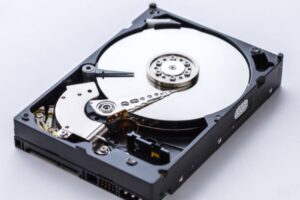
Data-bearing devices are identified immediately. That includes:
- Hard drives
- Solid-state drives
- Servers
- Laptops
- Network equipment
Facilities determine whether devices will undergo software wiping or physical data destruction. Wiping happens before shredding because once a device is destroyed, verification of data erasure is no longer possible.
Want to see the process in action? Watch our YouTube video showcasing the EACR electronics recycling facility and how we securely process, separate, and recover materials step by step.
Electronics Recycling Process: Step 1: Collection & Secure Transportation
Before electronics ever reach a recycling line, they must be transported correctly.
On-Site Pickup
Electronics are collected from environments such as:
- Offices
- Schools
- Hospitals
- Government agencies
Collection is scheduled to minimize disruption and maintain security.
Logistics Handling
Material is staged for safe movement using:
- Palletization
- Gaylord boxes
- E-waste containers
- Wrapped loads
Step 2: Dismantling
Shredding does not happen first.
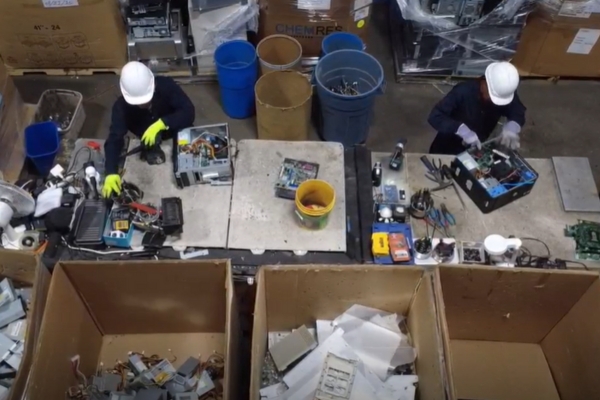
Electronics are initially dismantled by trained technicians in a process called de-manufacturing. This allows for safe removal of sensitive and hazardous components before mechanical processing.
During manual dismantling:
- Equipment is opened and separated into primary components
- Batteries are removed
- Toner cartridges are removed
- Mercury switches are extracted where applicable
- Capacitors are discharged
- Circuit boards are separated
Hazardous components must be removed before shredding to prevent fire, contamination, or equipment damage.
This step protects workers, equipment, and the environment. It also increases material recovery efficiency by isolating key components early in the process.
Step 3: Data Destruction
For businesses and institutions, data destruction is often the most critical stage.
Software Wiping
When possible, storage devices undergo controlled wiping, which may include:
- Multi-pass overwrite
- Sector rewriting
- Randomized data patterns
- Verification testing
Each wipe is confirmed to ensure data cannot be reconstructed.
Physical Destruction
If wiping fails or the device is damaged, physical destruction is used:
- Hard drive shredding
- SSD destruction
- Crushing or shearing of media
Physical destruction ensures complete elimination of stored data when software methods are not viable.
Documentation
Professional electronics recycling includes documentation such as:
This reporting supports compliance audits, internal recordkeeping, and risk management.
Step 4: Industrial Shredding
Once devices are dismantled, cleared of hazardous components, and data-bearing media is handled, industrial shredding begins.
This is not random destruction. Facilities use controlled industrial shredders designed specifically for electronics.
Material entering shredders has already been:
- Cleared of batteries
- Stripped of toner cartridges
- Discharged of capacitors
- Screened for hazardous components
Shredding reduces equipment into smaller pieces so materials can be separated efficiently. Size reduction is essential for downstream sorting systems to isolate metals, plastics, and glass accurately.
Safety matters here. Pre-clearing devices prevent fires from lithium batteries, explosions from pressurized components, and contamination from toxic materials. Proper preparation is what makes shredding safe and effective.
Step 5: Mechanical Material Separation
After shredding, the real engineering begins. Electronics recycling facilities use multiple mechanical systems to separate materials by physical properties.
Magnetic Separation
Large industrial magnets remove ferrous metals first.
This step extracts:
- Steel
- Iron
These metals are pulled from the material stream quickly and efficiently, leaving behind non-ferrous materials.
Step 6: Rare Earth & Circuit Board Processing
Circuit boards are one of the most complex components in electronics recycling.
They contain recoverable materials such as:
- Copper
- Gold
- Palladium
- Silver
After separation, boards are sent to specialized downstream processors. These facilities use controlled smelting and chemical extraction methods to recover metals safely.
Rare earth elements and specialty metals require advanced refinement processes. Proper handling prevents contamination and ensures materials can re-enter manufacturing supply chains.
The goal is controlled recovery, not crude melting.
Step 7: Final Material Refinement
After separation and processing, materials are refined for reuse.
- Metals are melted and formed into raw stock
- Plastics are cleaned, shredded further, and pelletized
- Glass is processed according to type
- Circuit board fractions are sent to approved refineries
At this stage, materials re-enter the manufacturing stream.
Steel becomes a new construction material. Copper is reused in wiring. Plastic pellets become new molded products. Electronics recycling closes the loop by returning raw materials to production.
What Materials Are Recovered From Electronics?
Electronics contain a wide range of recoverable materials.
Ferrous Metals
- Steel
- Iron
Common in frames, housings, and internal structural components.
Non-Ferrous Metals
- Copper
- Aluminum
Found in wiring, heat sinks, and circuit traces.
Precious & Specialty Metals
- Gold
- Silver
- Palladium
Used in connectors and circuit boards for conductivity and corrosion resistance.
Plastics
- ABS
- Polycarbonate
Used in device housings and internal structural parts.
Glass
- CRT glass (leaded)
- Flat panel display glass
Each requires different handling protocols.
Batteries
- Lithium-ion
- Lead-acid
- Nickel-cadmium
These must be removed and processed separately due to fire and contamination risk.
What Happens to Hazardous Components?
Improper disposal of electronics can create serious environmental and safety risks.
Hazardous components include:
- Lithium batteries, which can ignite in waste streams
- Lead solder found on circuit boards
- Mercury in switches and older displays
- Toner dust, which is combustible
- CRT leaded glass
- Capacitors that may hold residual charge
If electronics are dumped in landfills or handled improperly, these materials can:
- Leach into soil and groundwater
- Cause fires at waste facilities
- Release toxic substances
Professional electronics recycling companies isolate and process these components under controlled conditions. Hazardous materials are handled through regulated downstream channels.
How Electronics Recycling Differs From Junk Removal
There is a clear difference between junk hauling and structured electronics recycling.
Junk Removal
- Mixed hauling
- No data protocol
- No reporting
- Landfill possible
Licensed Electronics Recycling
- Segregated material handling
- Data wiping and physical destruction
- Certificates and reporting
- Zero landfill goal
Electronics recycling is compliance-driven and material-focused. Junk removal is volume-driven.
For businesses, the difference affects risk exposure, data security, and regulatory compliance.
Step-by-Step: How to Recycle Electronics Properly
For individuals and businesses, proper recycling is straightforward.
- Identify devices for recycling
- Separate data-bearing equipment
- Remove batteries if safe to do so
- Do not dismantle internal components
- Schedule licensed electronics recycling
- Request documentation if you are a commercial generator
Avoid teardown attempts. Improper disassembly can create safety risks and compliance issues.
How Are Electronics Recycled Near You?
Electronics recycling services may include:
- East Coast coverage
- On-site pickup options
- Drop-off locations
- E-waste container programs
- Residential and commercial service
Choosing a licensed provider ensures structured handling, documentation, and environmental compliance.
Conclusion: Electronics Recycling Is a Structured Industrial Process
Electronics recycling is not junk hauling.
- It is not landfill diversion alone.
- It is not just shredding.
It is a controlled, compliant, secure process designed to protect data, recover materials, and prevent environmental harm.
When handled properly, electronics do not become waste. They become resources re-entering the manufacturing cycle through engineered recovery systems. Contact EACR Inc. to recycle your electronics and learn more about the importance of companies like ours.