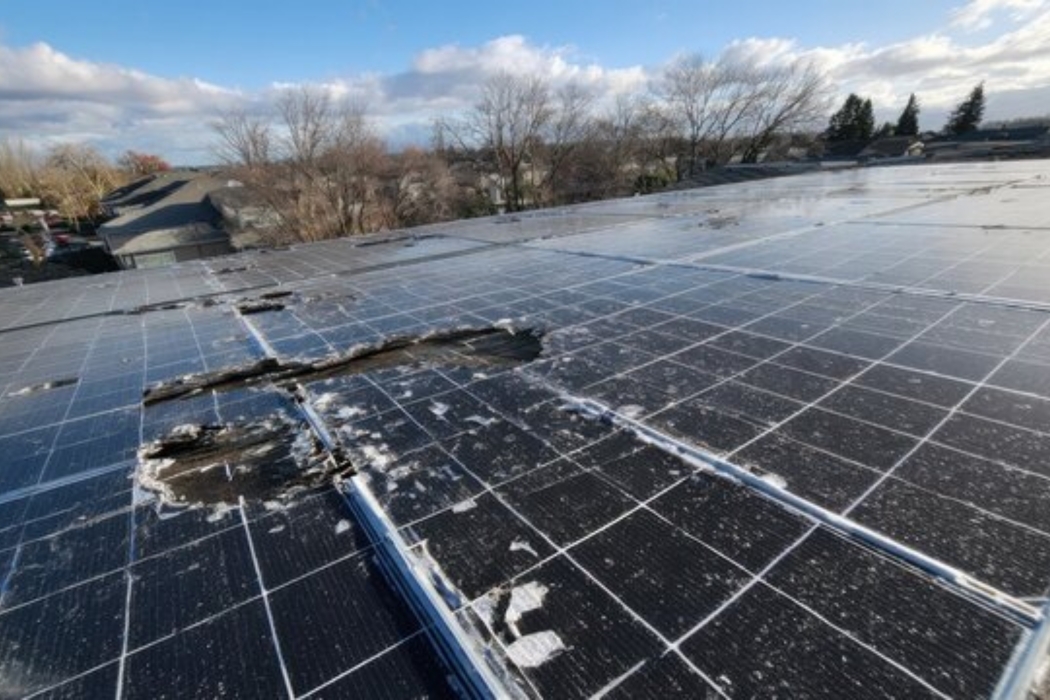
Damaged solar panels can reduce performance, create safety concerns, and leave owners unsure what to do next. In some cases the damage is obvious, like cracked glass or visible storm impact. In other cases it shows up more quietly through moisture intrusion, burnt spots, or lower-than-normal energy output.
This guide breaks down the main things to know if a panel has been damaged. That includes how solar panels get damaged, the risks involved, whether repair or replacement makes more sense, and what recycling options exist when a panel needs to come out of service. If your damaged panels need to come out of service, EACR Inc. offers solar panel recycling services to help businesses and organizations handle them responsibly.
How Solar Panels Get Damaged
Storms, hail, and severe weather
Severe weather is one of the most common causes of solar panel damage. Hail, wind-driven debris, heavy storms, and hurricanes can crack glass, stress the frame, or damage internal components.
Even if the outside damage looks minor, storms can still affect how the panel performs. In some cases, the damage is not fully visible until output starts to drop.
Falling objects and physical impact
Solar panels can also be damaged by falling branches, tools, construction materials, or other heavy objects. Any direct impact can crack the glass, damage the frame, or affect the cells inside the panel.
This kind of damage can happen suddenly and be easy to spot. But even a smaller impact can create internal issues that are more serious than they first appear.
Age, wear, and long-term exposure
Not all panel damage happens in one event. Over time, long-term exposure to sun, rain, temperature swings, and outdoor conditions can wear materials down.
That can lead to seal failure, moisture intrusion, frame issues, or gradual breakdown in the panel itself. Older panels are more likely to show these kinds of problems as they age in service.
Installation problems or electrical faults
Poor installation or electrical issues can also damage solar panels. Stress on the frame, loose mounting, improper handling, connection issues, or hot spots can all affect panel performance and safety.
This type of damage may not always be obvious from the ground. Sometimes the first sign is a warning from the system or a noticeable drop in production.
Signs a Solar Panel is Damaged
Cracked or shattered glass
Cracked or shattered glass is one of the clearest signs a panel has been damaged. Even if the panel still produces some power, broken glass usually means the panel needs closer evaluation.
Burn marks or discoloration
Burn marks, dark spots, or unusual discoloration can point to electrical problems or overheating. These signs should not be ignored because they may indicate deeper internal damage.
Moisture inside the panel
If moisture gets inside the panel, it can affect both performance and reliability. Fogging, water intrusion, or visible condensation inside the panel are all warning signs.
Loose frame or visible warping
A loose frame, bent edges, or visible warping can mean the panel has been physically stressed or damaged over time. Structural damage like this can affect how securely the panel stays in place and how well it performs.
Drop in energy production
Sometimes the biggest clue is not visual at all. If a solar panel suddenly produces less power than expected, internal damage may be the reason.
Inverter or system warnings
System alerts, inverter warnings, or monitoring issues can also point to a damaged panel. These warnings are often one of the first signs that something is wrong, even before major visible damage is noticed.
Risks of Damaged Solar Panels
Lower system performance
Damaged solar panels often produce less power than they should. Even a crack, internal cell damage, or moisture intrusion can reduce output and make the system less efficient overall.
Electrical safety concerns
Once a panel is damaged, the electrical side of the system can become more of a concern. Exposed components, damaged wiring, or compromised internal parts can create safety issues that should not be ignored.
Fire risk from hot spots or faults
Damaged panels can develop hot spots or other electrical faults. In more serious cases, that can increase fire risk, especially if the panel stays in service without being properly assessed.
Damage getting worse over time
Some panel damage gets worse the longer it is left alone. A small crack can lead to moisture intrusion, and a minor problem can turn into a more expensive or more serious issue later.
One damaged panel affecting the rest of the system
Damaged solar panels do not always act as isolated problems. Depending on the setup, one bad panel can affect the performance of the rest of the system and drag down overall production.
Should Damaged Solar Panels Be Repaired or Replaced?
Minor damage that may be repairable
Some minor damage may be repairable, especially if it involves limited frame issues, small external problems, or certain connection-related issues. If the core panel structure and internal cells are still in good shape, repair may be possible.
Damage that usually means replacement
More serious damage usually points toward replacement. Cracked or shattered glass, internal cell damage, moisture inside the panel, burnt sections, or major output loss are all signs that replacement is often the better option.
When replacement makes more sense than repair
Replacement usually makes more sense when repair costs start getting too close to the cost of a new panel. It is also the better move when there is no clear way to restore safe, reliable long-term performance.
Why professional assessment matters
Damaged solar panels are not something to guess about. A professional assessment helps confirm whether the issue is cosmetic, repairable, or serious enough to require replacement.
Can Damaged Solar Panels Be Recycled?
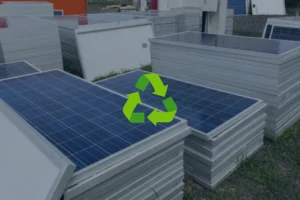
Damaged solar panels can often be recycled, especially when they are no longer safe, effective, or worth keeping in service. Instead of leaving them in storage or sending them to landfill, recycling gives those panels a more responsible end-of-life path.
Solar panels can contain recoverable materials such as aluminum, glass, silicon, and other internal components. Recycling matters because it helps recover usable material, reduce waste, and avoid letting broken panels sit around indefinitely without a plan.
Solar Panel Recycling Options
Drop-off options
Drop-off can be a practical option when the number of damaged panels is smaller and transportation is manageable. It gives businesses and organizations a direct way to move panels into a recycling stream without waiting for a larger project.
Pickup for larger panel loads
Pickup makes more sense for larger panel loads, especially when multiple damaged panels need to be removed at once. This is often the better option for businesses, facilities, and larger properties dealing with bulk solar panel removal.
Recycling during system replacements or decommissioning
Damaged solar panels are often removed during system replacements, upgrades, or full decommissioning projects. Recycling during that process helps keep the project cleaner and avoids pushing broken panels into storage after they come off the roof or rack.
Working with a solar panel recycling company
Working with a solar panel recycling company makes the process more practical when panels need proper end-of-life handling. It gives businesses and organizations a clearer path for moving damaged or outdated panels out responsibly.
Frequently Asked Questions About Damaged Solar Panels
Can a damaged solar panel still work?
Yes, sometimes it can still produce some power. But even if it still works, damage can reduce output, affect reliability, or create bigger concerns over time.
Is a cracked solar panel dangerous?
It can be. A cracked panel may create electrical safety concerns, allow moisture intrusion, or lead to deeper internal damage.
Should a broken solar panel be removed right away?
That depends on the severity of the damage, but broken panels should be assessed quickly. If the damage affects safety or performance, removal or replacement may be the right next step.
Can damaged solar panels cause a fire?
In some cases, yes. Electrical faults, hot spots, or internal damage can increase fire risk, which is one reason damaged panels should not be ignored.
Can solar panels be repaired after storm damage?
Some minor issues may be repairable, but more serious storm damage often leads to replacement. Cracked glass, internal cell damage, or moisture inside the panel usually make replacement the better option.
Can damaged solar panels be recycled?
Yes, many damaged solar panels can be recycled. That is often a better option than landfill disposal or leaving broken panels in storage.
Final Takeaway
Damaged solar panels should not be ignored. Some problems affect output, some affect safety, and some affect both.
In most cases, the right next step is to inspect the damage, get the panel assessed, repair it if possible, replace it if needed, and recycle it when it is no longer usable. If your panels are damaged beyond repair, EACR Inc. provides solar panel recycling services to help you move them out safely and responsibly.